Buyers will be Running up that (Maryborough) Hill to see Woodford, a perfect trade up, for €925,000
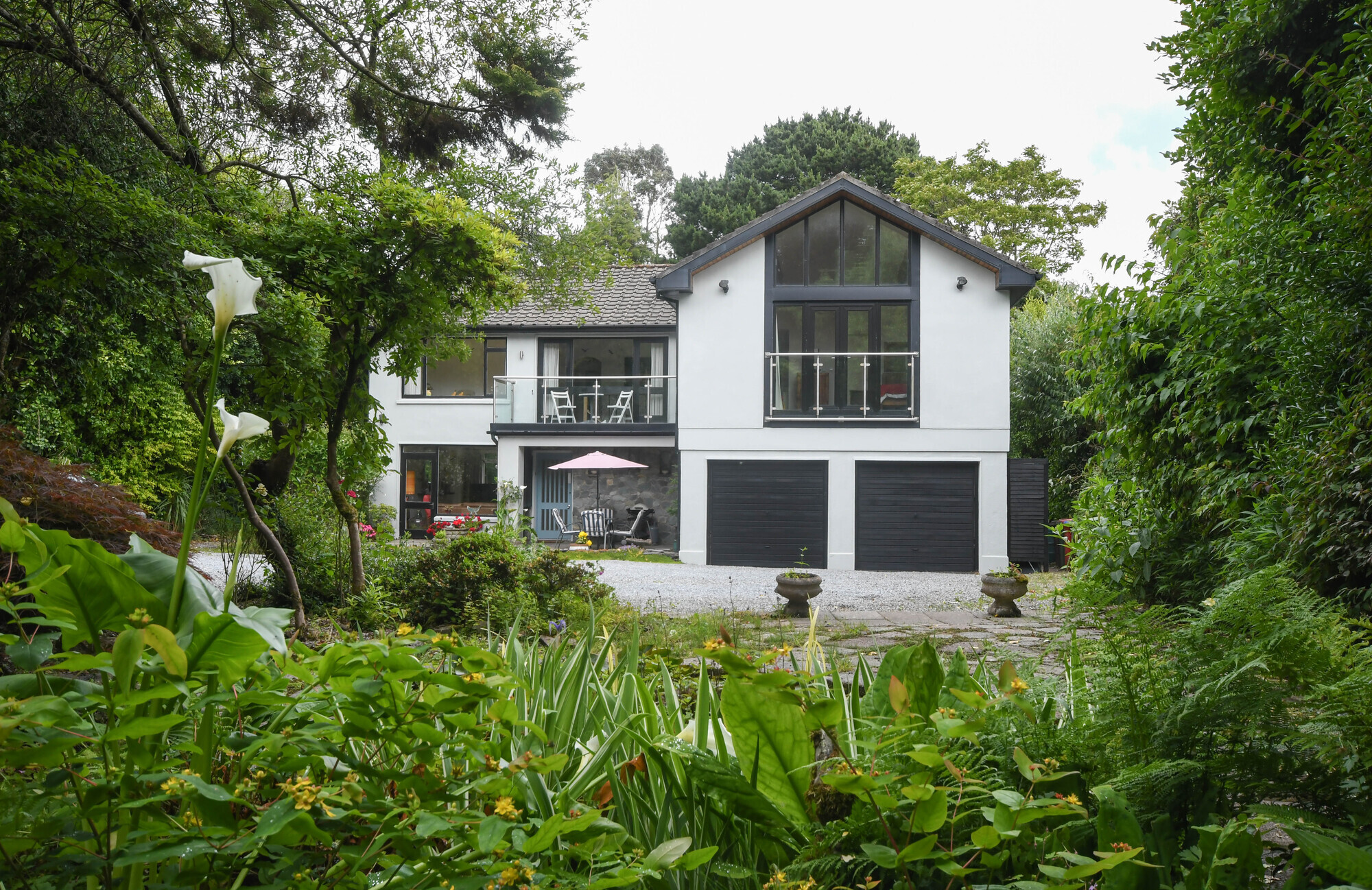
Nestled into Maryborough Hill, Woodford's setting is idyllic. Picture: Howard Crowdy
|
Maryborough Hill, Cork city |
|
|---|---|
|
€925,000 |
|
|
Size |
177 sq m (1910 sq ft) |
|
Bedrooms |
4 |
|
Bathrooms |
4 |
|
BER |
F |
If you’re not familiar with those names, here’s some more context: Chillingworth and Levie are behind some of Cork city’s most beloved and distinctive buildings, from the Beamish Counting House on South Main Street, to the Winthrop Arcade, to Patrick’s Street’s former Debenhams’ store, to the upper section of the Odlums’ Mills building on Kennedy Quay to the Square Deal (formerly Lee Boot Manufacturing Company premises) on Washington Street, to the Oval Bar on South Main Street, to the now-demolished Sextant Pub, formerly of Albert Quay.
The aesthetic and heritage value of these Chillingworth and Levie designs and their contribution to the cityscape were never so apparent as they are now, with many having their lifespans extended as they become the centrepieces of modern, multimillion euro developments. Prime examples include the Counting House, now the focal point of a €30m office development; Lee Boot premises, which is at the heart of Bróga House, a €35m student accommodation development, and the Odlums’ building, which is poised to take centre stage in phase one of a proposed €350m development of the South Docks by O’Callaghan Properties (OCP).
So, even though the Chillingworth/ Levie architectural partnership (it started in 1911 on South Mall with Cork architect and engineer Robert Chillingworth and Scotsman Daniel Andrew Levie) delivered some landmark industrial and commercial buildings to the city, when the firm wound up in the 1980s, its collection of drawings ended up in a building skip. Thankfully, they were retrieved and subsequently acquired by the Crawford Art Gallery, Cork, before being transferred in 1988 to the Cork City and County Archives.
The collection was the subject of an online exhibition in 2014 curated by architectural and landscape historian Louise Harrington and it highlights their contribution to housing in the city too, including schemes in Capwell, Evergreen Road and Turners Cross, where they are behind the design of about 300 houses built between 1928 and 1930. Ms Harrington notes that while the “volume of social and subsidised housing undertaken was significant”, Chillingworth and Levie “were also prominent private house architects”, creating customised brochures for private clients “with watercolours and attractive landscaping to the elevations”.
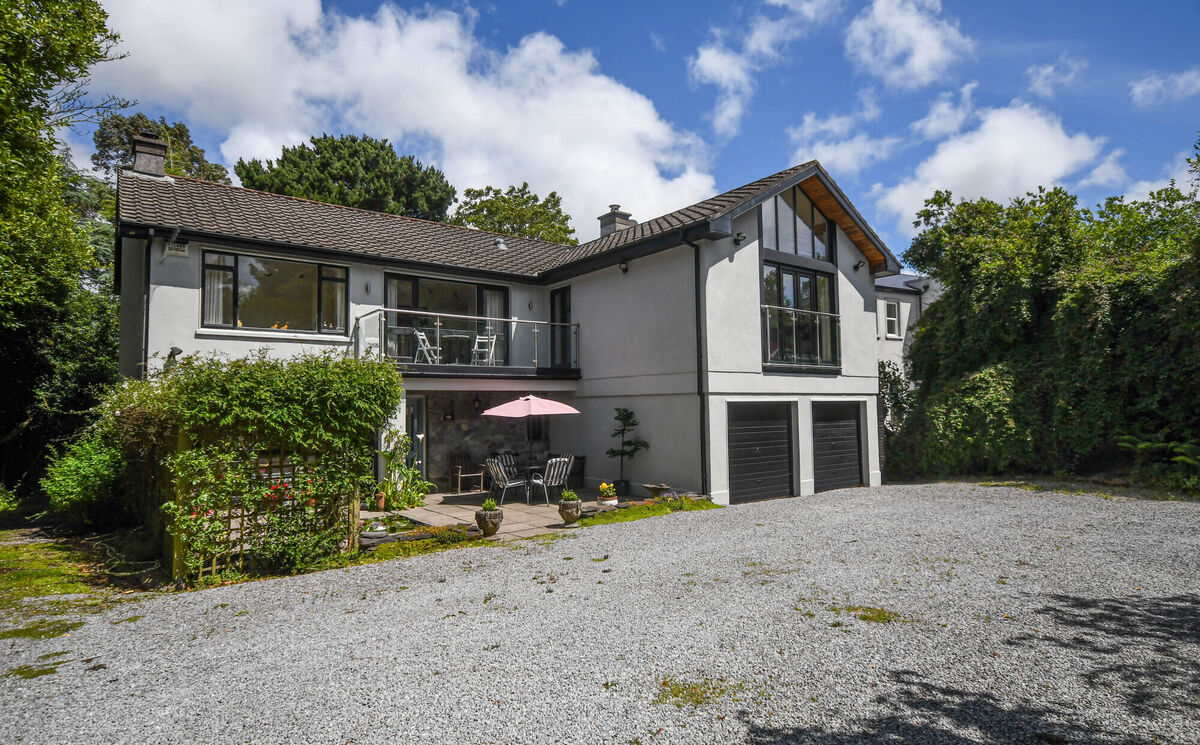
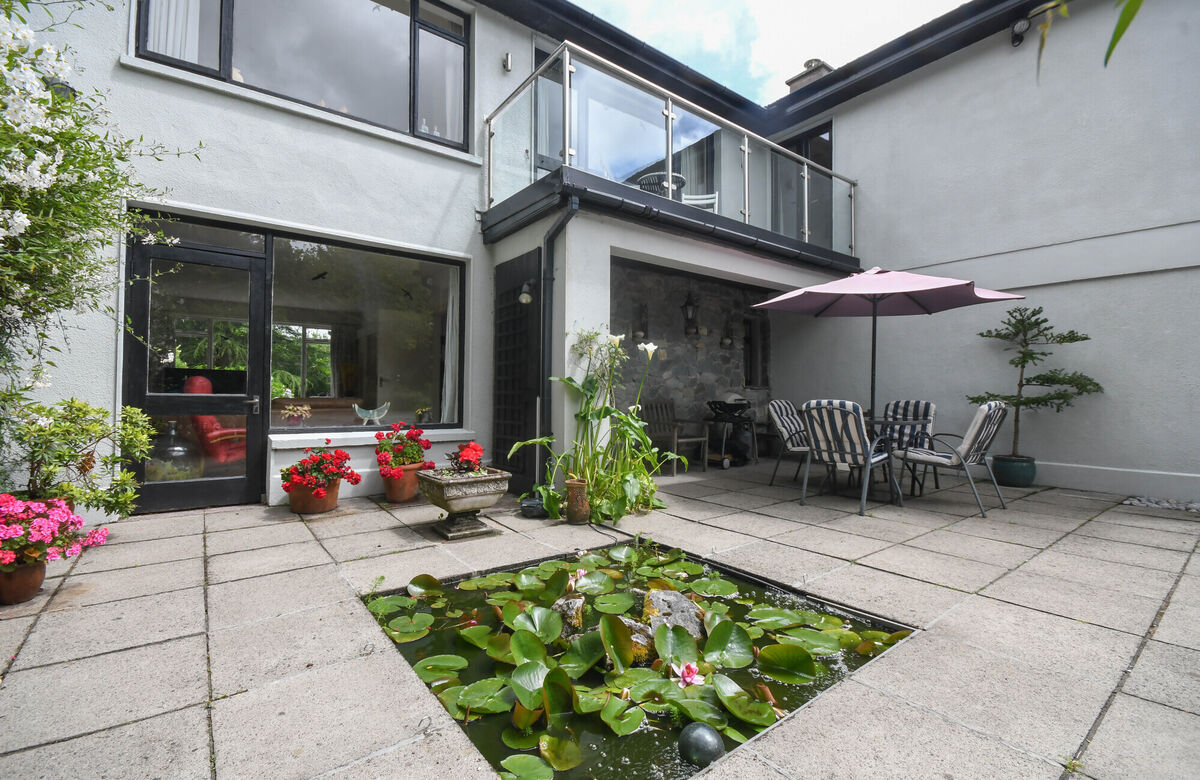
Woodford house was one of those private commissions and one of its most striking features is how light-filled it is, even though its gardens are now surrounded on all sides by tall shrubs and trees. It helps that the front of the house is south-facing and a patio just outside the front door is a suntrap.
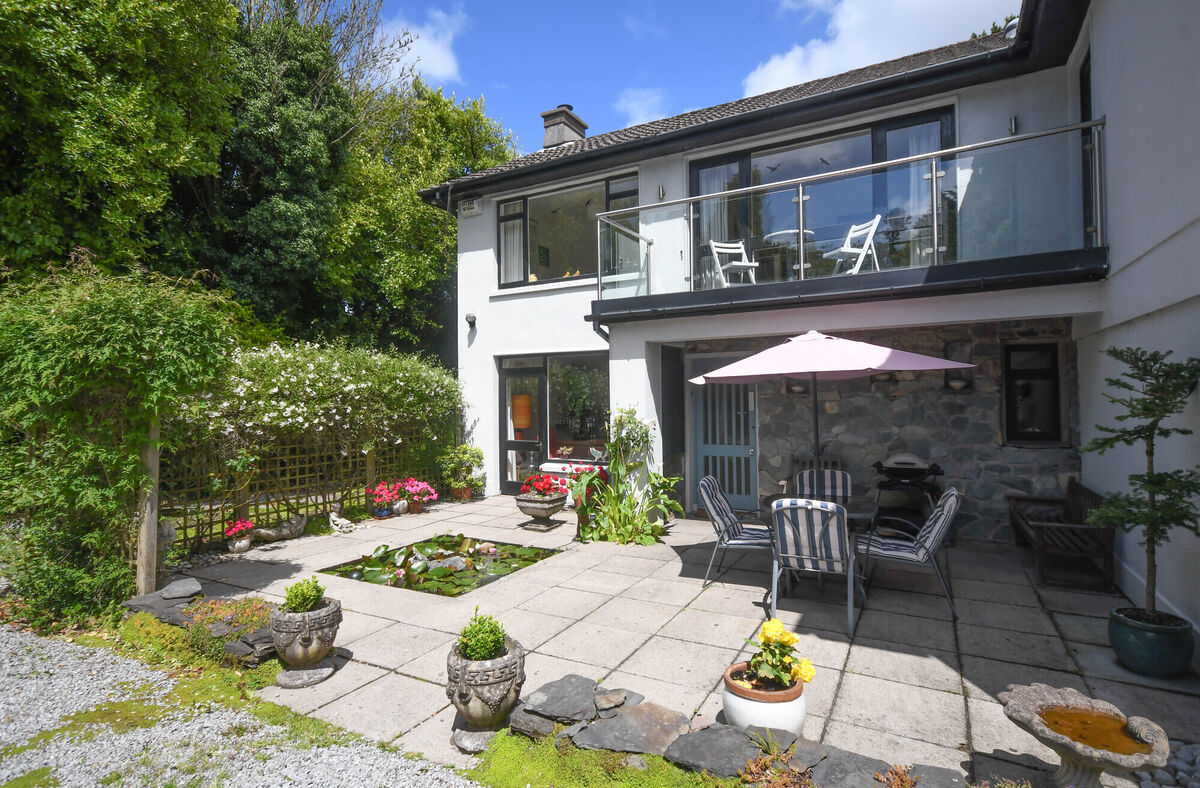
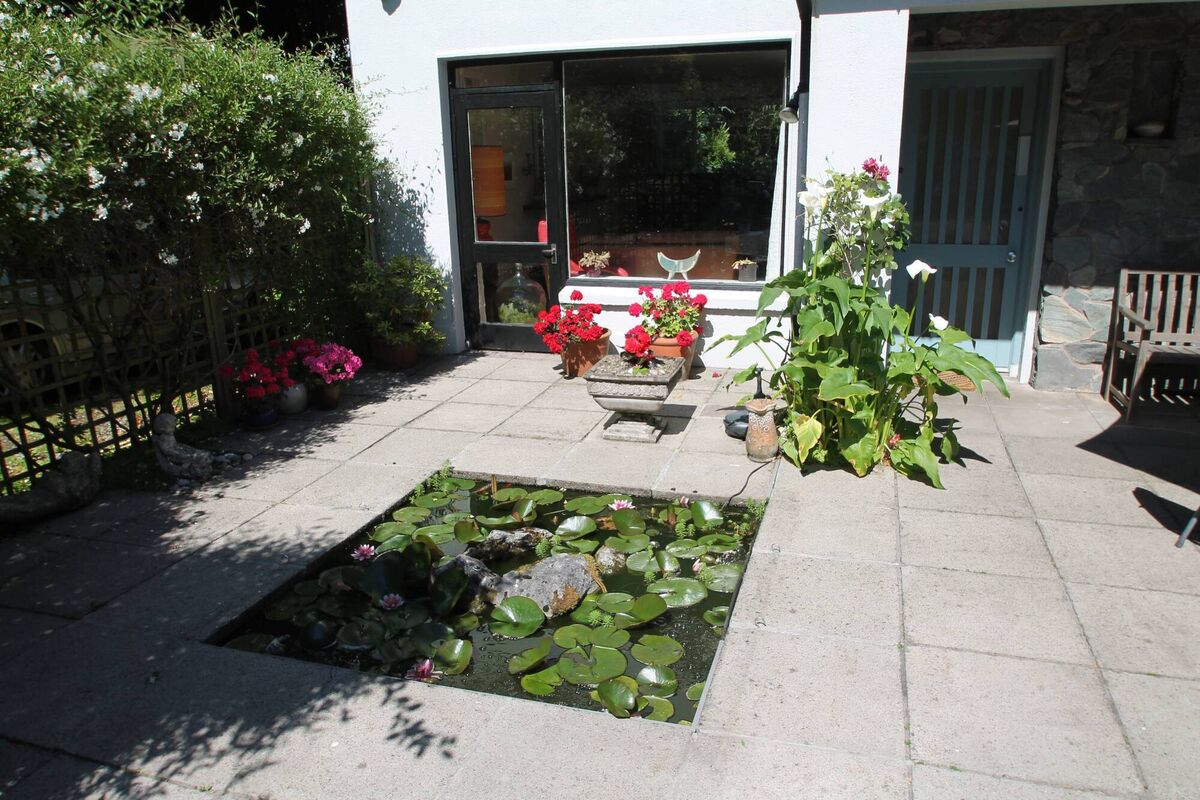
Next to it is one of two garden ponds, where stout goldfish share the limelight with pink water lilies.
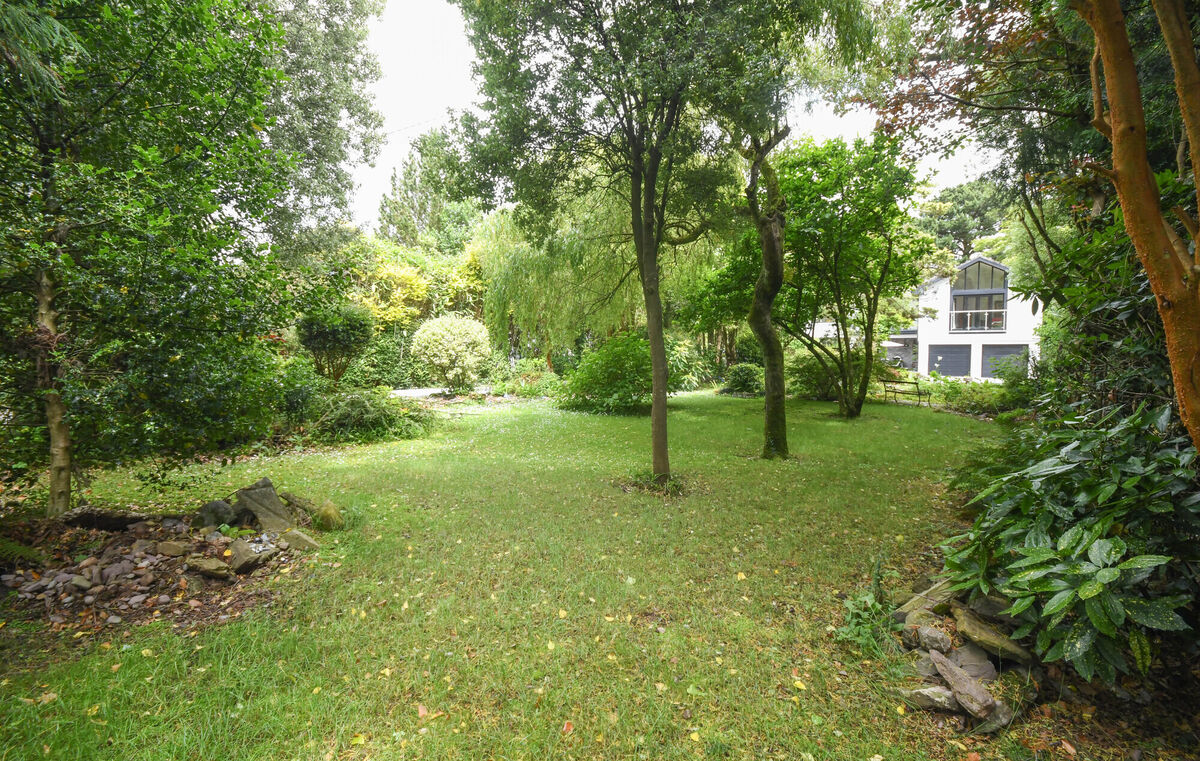
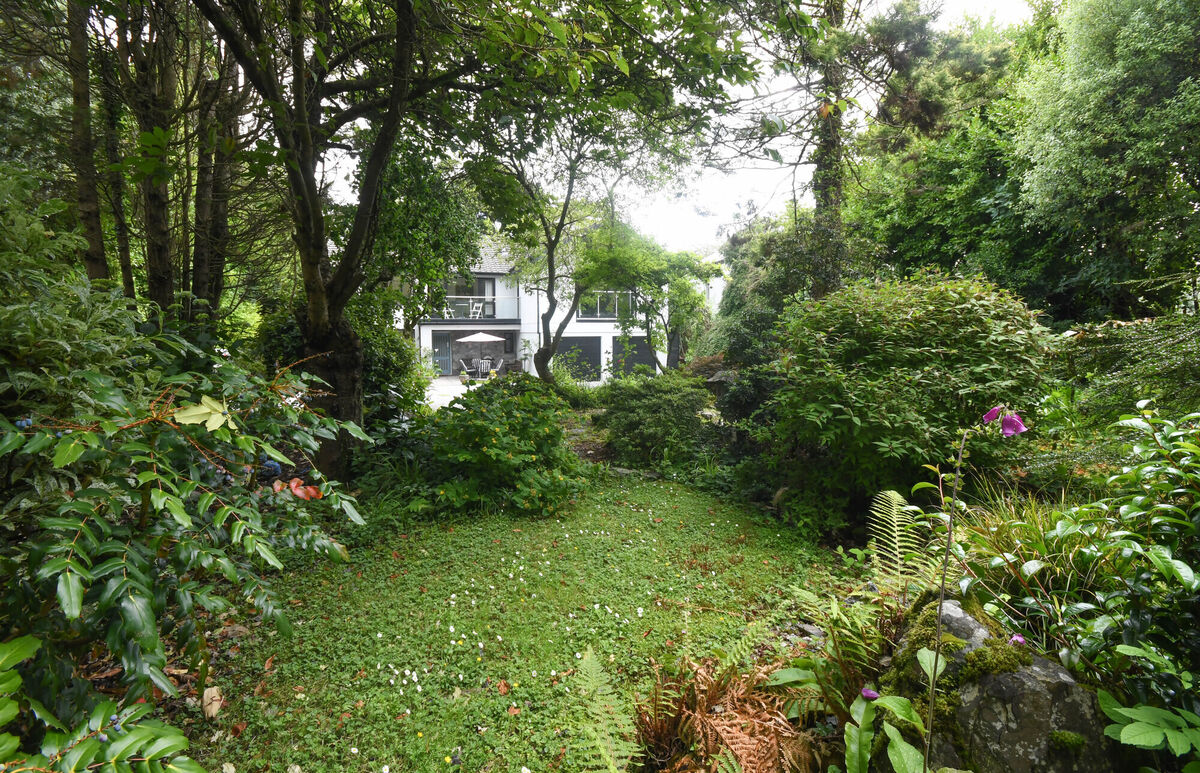
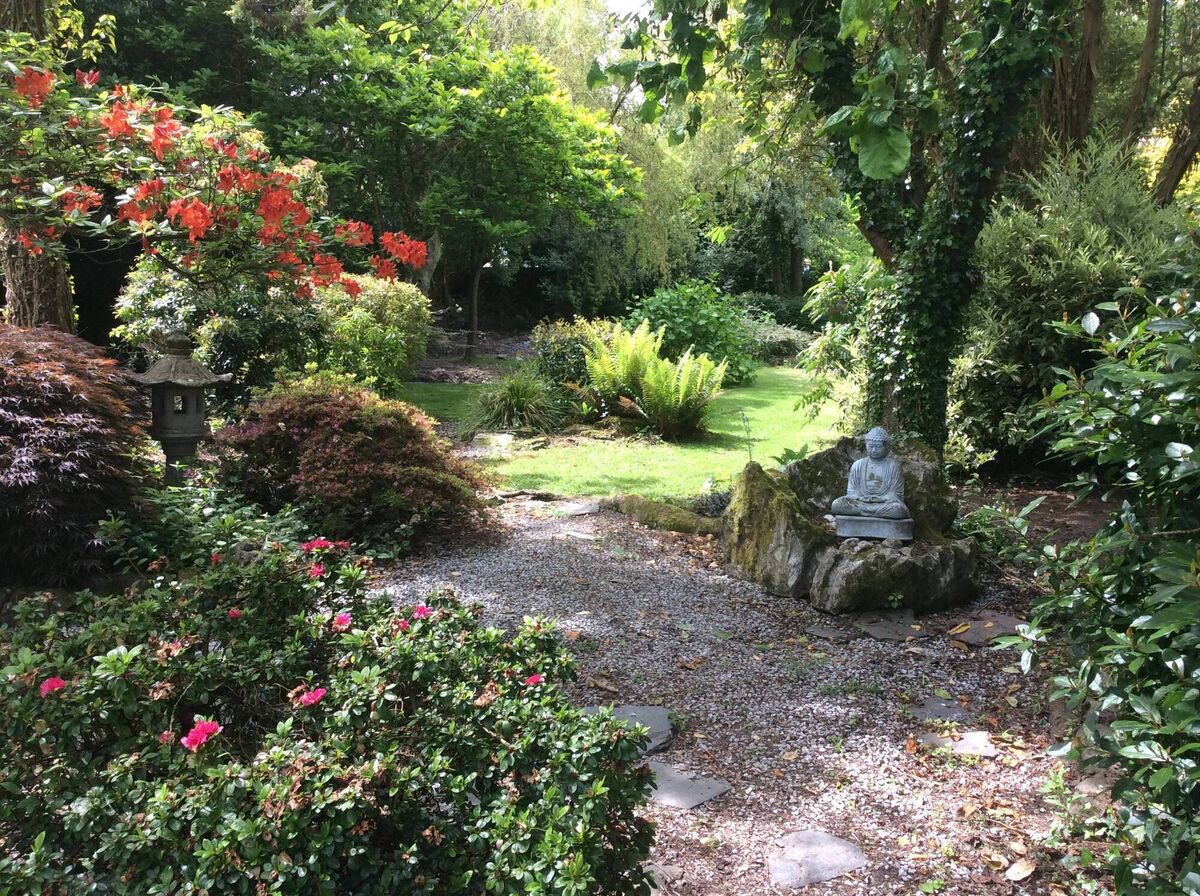
Just as there are two garden ponds to the front of the house – the second is further down the front garden, a gorgeously informal space packed with shrubs, trees, wild ferns, and flowers such as foxgloves, and scattered gravel areas to add texture – there are also two prime seating areas.
Above the patio is a large balcony with glass balustrade, accessed via a door from the first floor. Spoilt for choice then, when it comes to soaking in any sunshine.
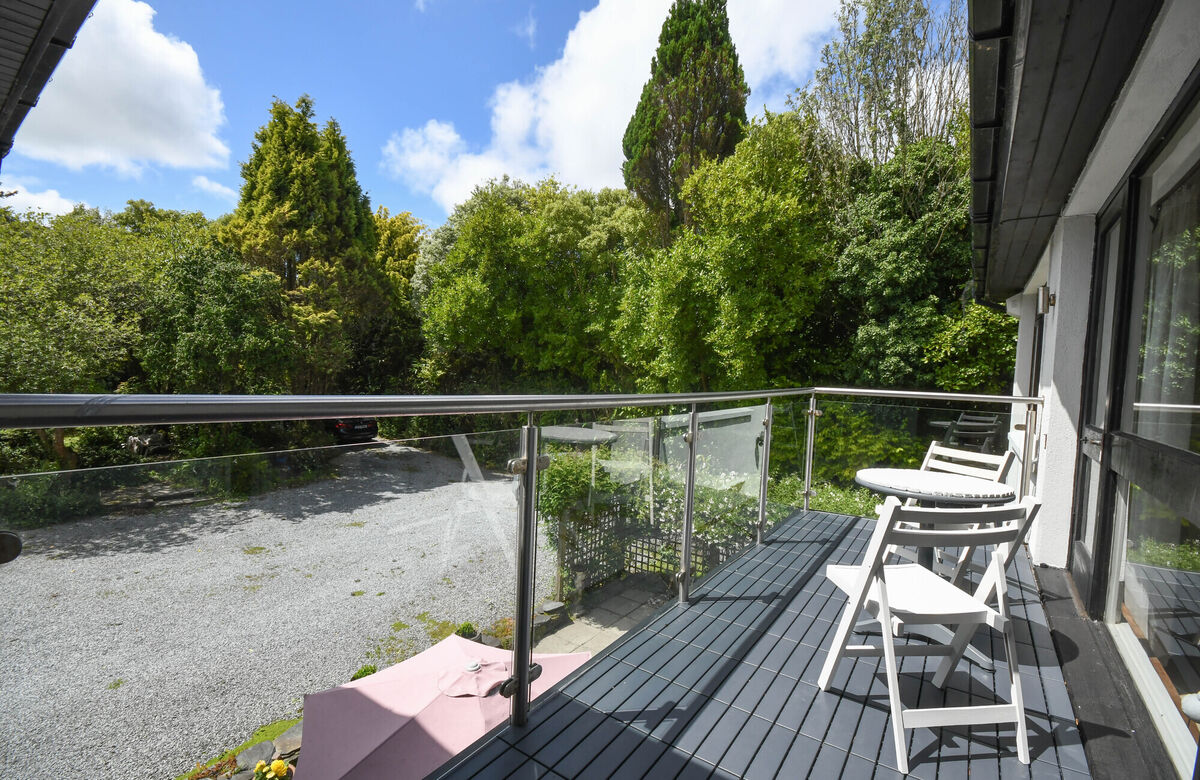
The overhead balcony was added in 2007 along with the showstopper main bedroom.
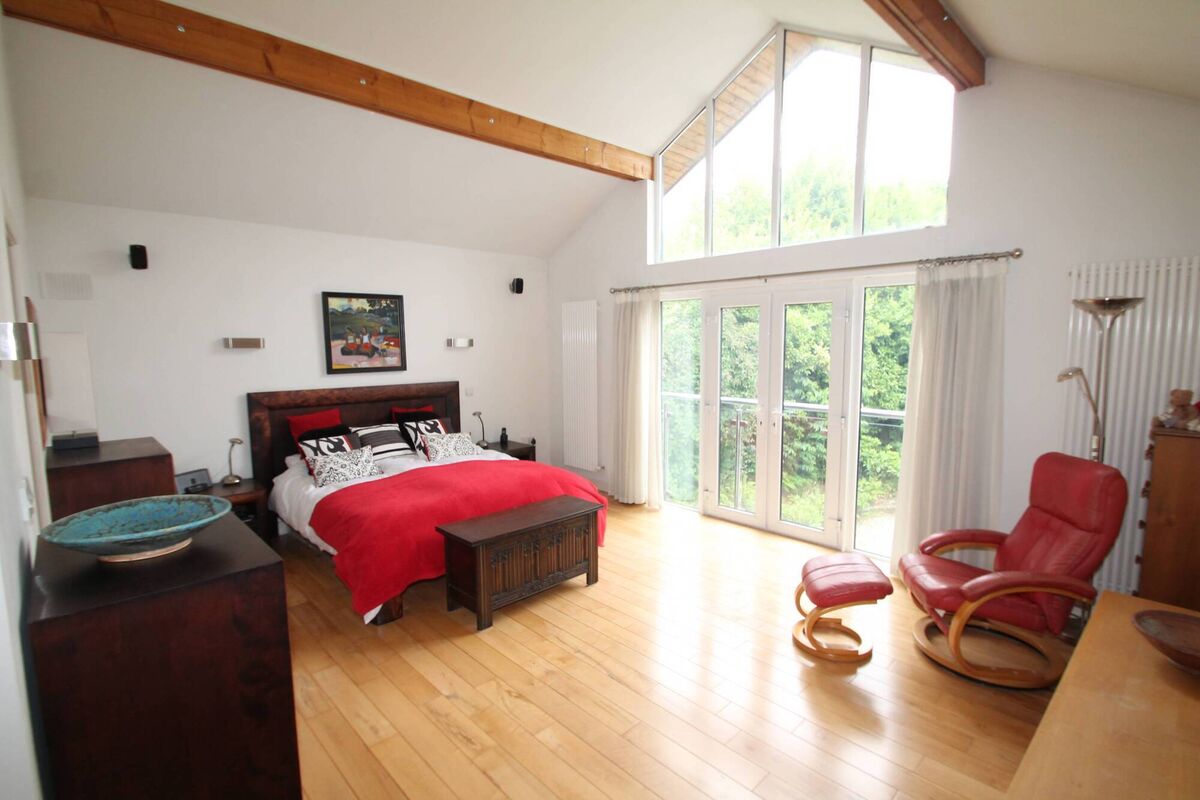
The original builders, the Colman Brothers, returned to do the job and it changed what was largely a flat-faced 1970s home into a more interesting L-shape, with an extension built over a double garage. What you have now is a huge bedroom suite rather than a bedroom, where a giant apex window overlooks the beautiful front garden and rises into a vaulted 3.9m-high ceiling.
This suite also has a very large ensuite, a Juliette balcony and Canadian maple hardwood flooring.
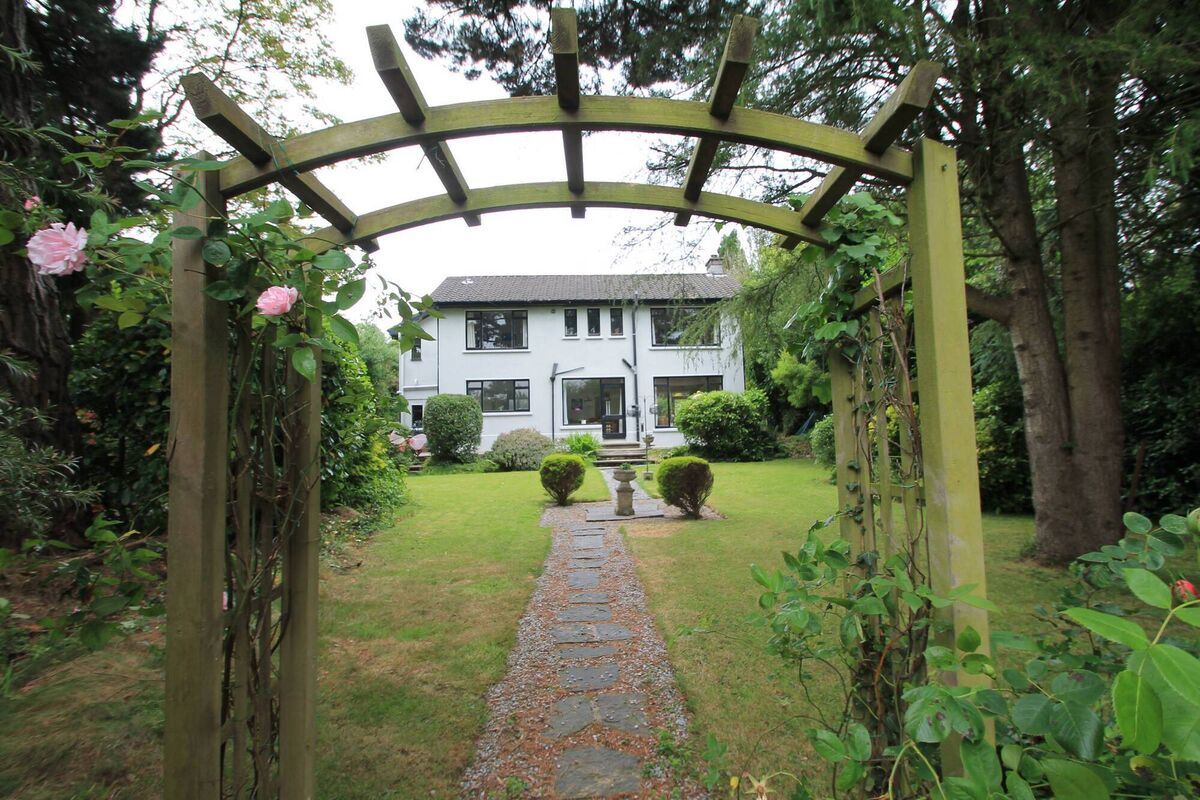
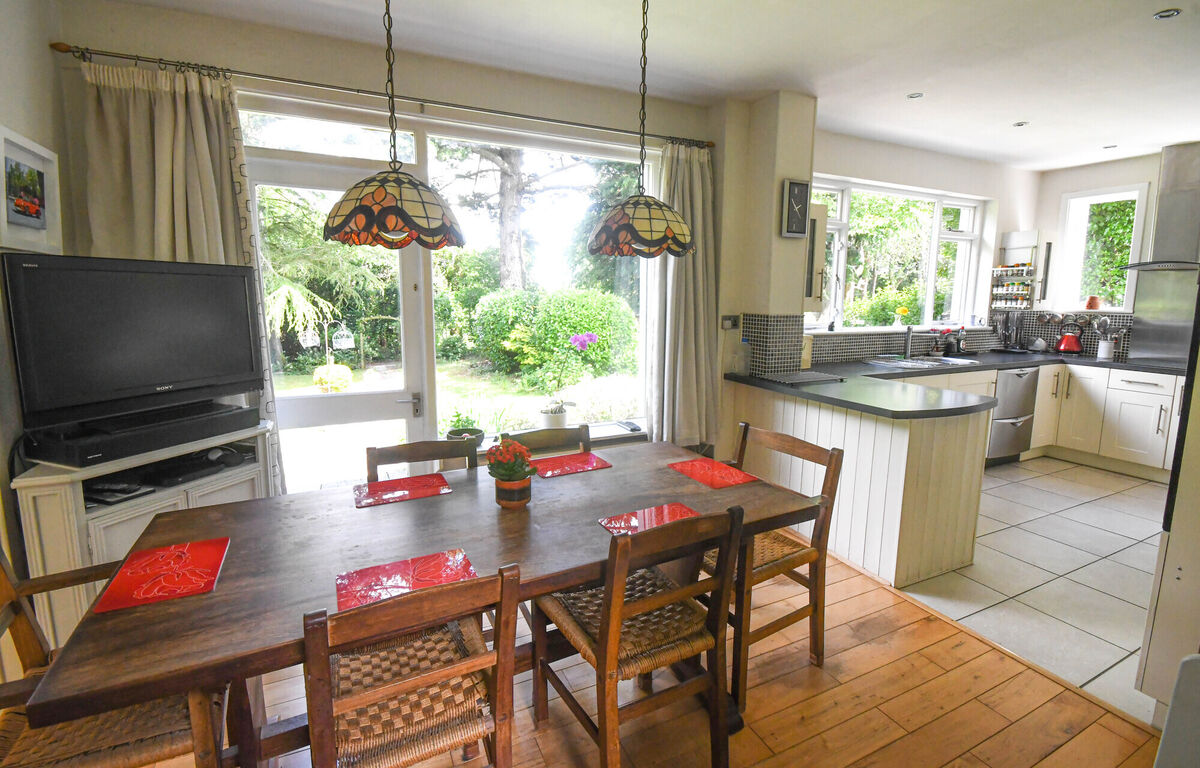
Big windows are a theme in Woodford and the dining area of the kitchen has a large window overlooking the rear garden which has a mixture of exotic-looking trees and plants, along with more native-looking species.
A ginormous and striking Scots Pine takes centre stage in this enclosed, private space, where everything the owners planted has matured beautifully over the years.
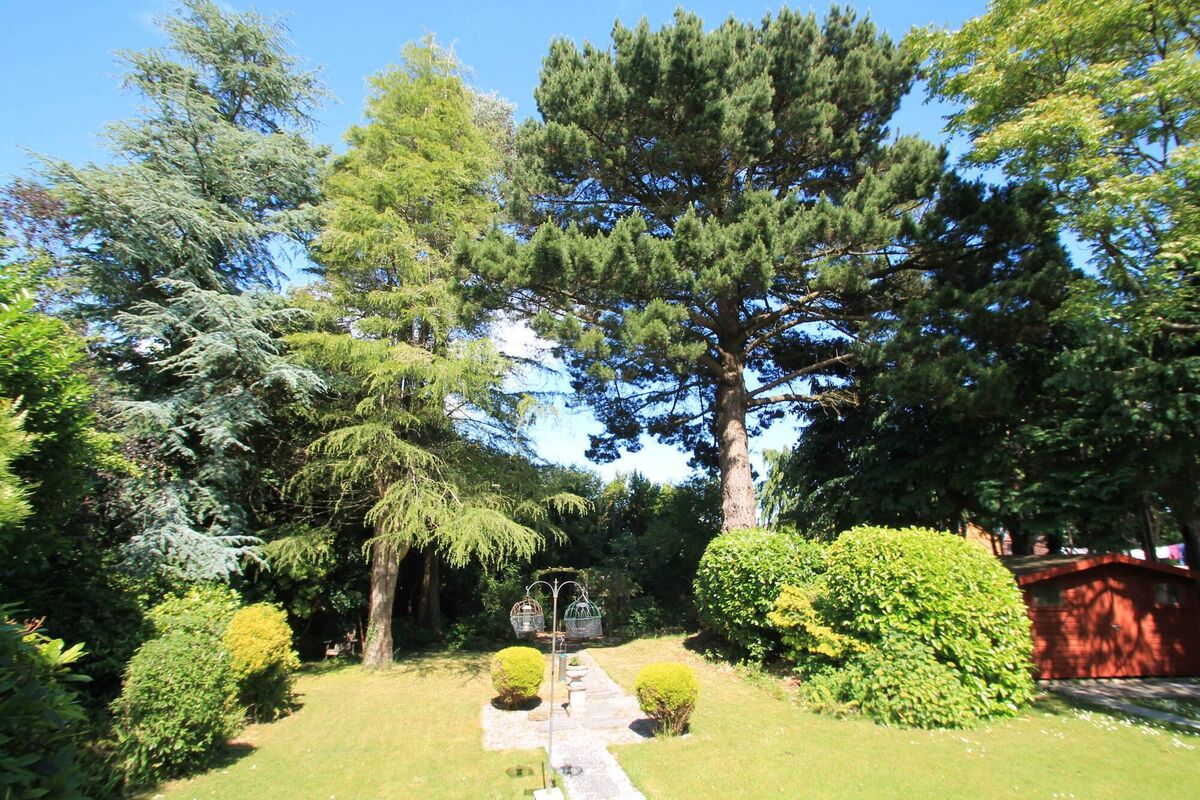
As selling agents Malcolm Tyrrell and Jackie Coholan of Cohalan Downing point out, you’d be hard pressed to guess that these ancient-looking trees are just 52-years-old.
Mr Tyrrell has photographs of the site as it was back in 1970 and it was largely mounds of earth with a valley stretching away behind it. Those mounds of earth have been transformed into magnificently landscaped gardens and the lands beyond, between Woodford and the N28 roadway, are filled with housing estates. The owners of Woodford – and about a dozen other homeowners in this particular stretch of Maryborough Hill – got in decades ahead of all the estate development, hence some very large homes in the area, on very large sites.
The house next door to Woodford has a fine site too, and it is in fact a new build, as the owners levelled the old house after buying it four or five years ago.
Woodford measures just over 1900 sq ft, so while it’s a generous size, it’s manageable. A lovely bright lounge inside the front door runs the depth of the property, and has large picture windows overlooking the gardens front and rear.
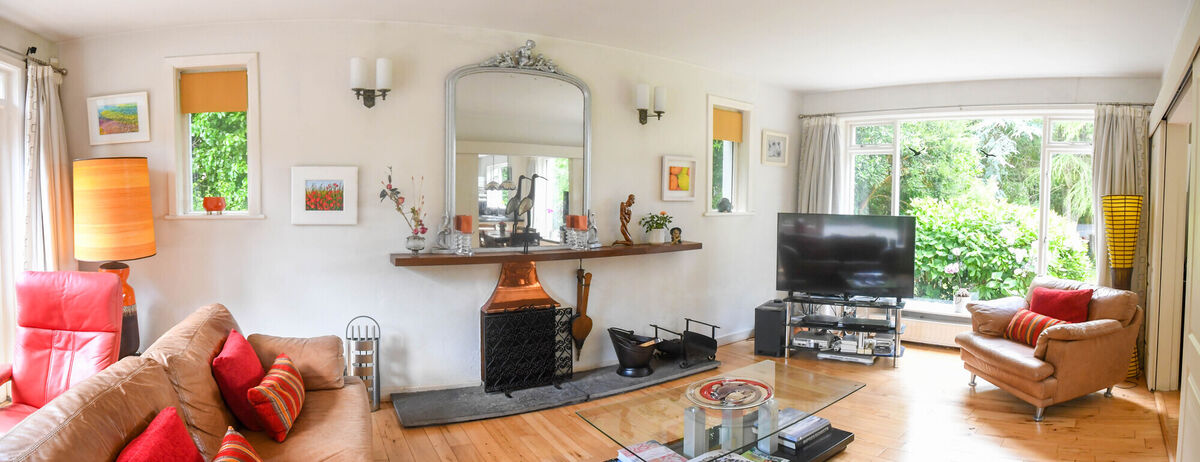
The fireplace has a Liscannor stone hearth and a copper hood.
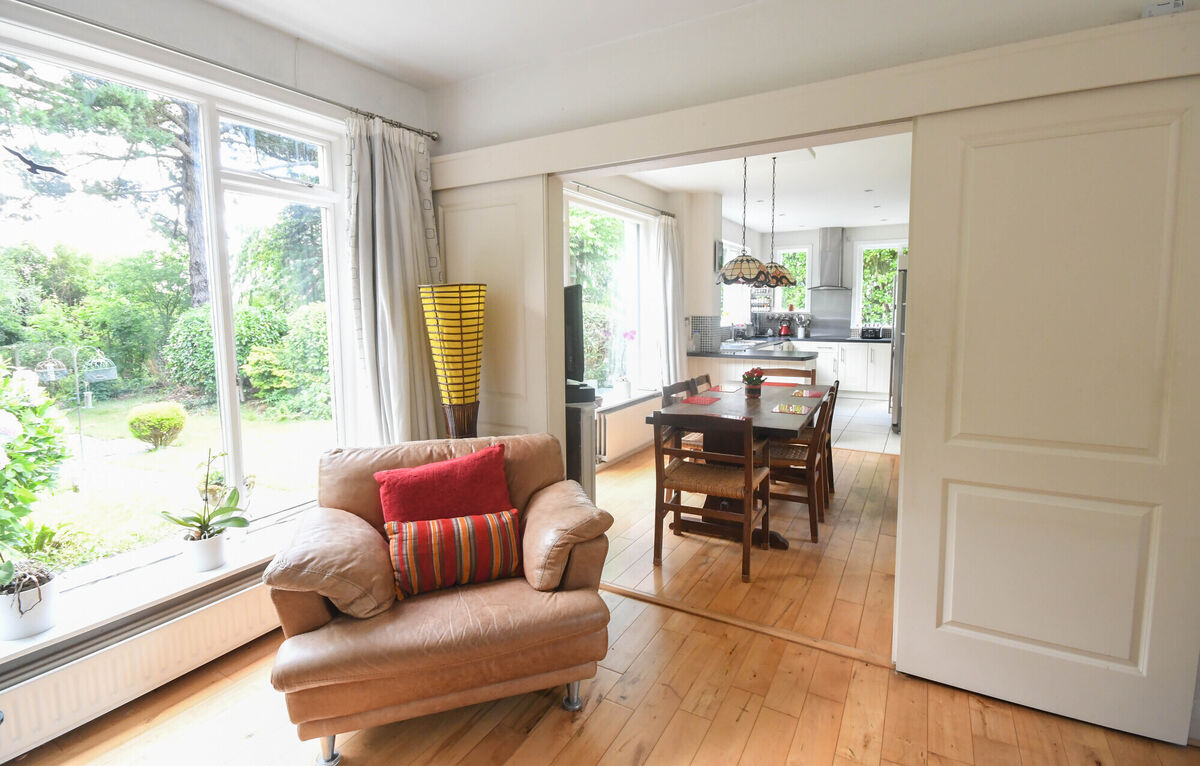
Double doors lead from the lounge to the dining area, with the kitchen at the far end, and a deck area off it. A patio runs the length of the house to the rear, and can be accessed off the kitchen diner.
A back hall behind the utility leads to the garage, and there’s a WC along the way, with a second WC off the double garage (they do things in twos here).
As Mr Tyrrell points out, anyone who wanted to further extend the property could do so easily by incorporating the double garage, taking out a few stud partitions along the way.
“It’s a no-brainer and it could be relatively easily done. Then you could have another bright room at the front of the house and another patio area with bifold doors leading to it and all that light would come through to the back too,” he says.
The main hallway is another bright space and the staircase twists around above it to a gallery landing from where there is access to the main upstairs balcony.
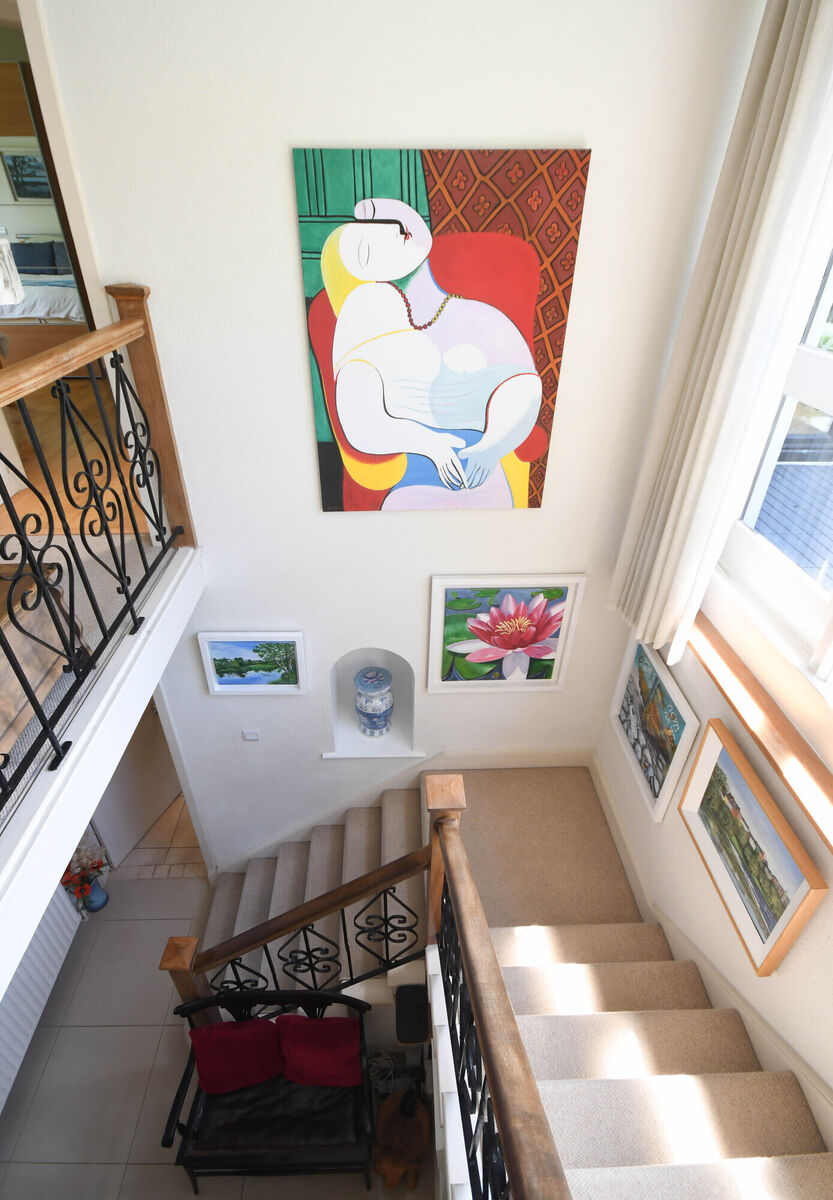
Along with the bedroom suite, there are three more bedrooms upstairs and the main bathroom, which has three windows. The layout is quirky, with cubby spaces along the way for bookshelves.
Just as the gardens are not over manicured, the house is pretty down-to-earth too, not overly-modernised, but bright and inviting and hung with vibrant paintings, the output of the woman of the house, Rose Barton, an artist. Her husband is the man whose parents built Woodford a half century ago and it’s understandably been in the family since. As Mr Tyrrell and Ms Cohalan point out, it’s the first time Woodford has been on the market and given the cachet that comes with a Maryborough Hill address, and the site size and maturity in this particular case, they believe interest will be very strong.
With a guide price of €925,000, it will attract the upper end of the market, families looking to trade up to a rock solid location. With gardens to die for - the mother of the man who now lives there was a wizard with plants – it’s on a site bigger than those on which houses in Maryborough Hill's The Paddocks stand. Mr Tyrrell says a smaller home (170 sq m) on no site to speak of in The Paddocks, sold recently for in the region of €800,000. Two doors down from Woodford, Igls, a 3,500 sq ft hous on half an acre, sold for just under €1m earlier this year.
Woodford's proximity to Douglas Golf Club is a likely attraction too, while Douglas village, with a multitude of retail/hospitality/schools is another pull factor.
Ringaskiddy is also easily accessed, which may make Woodford attractive to a buyer working in pharma in Janssen or Pfizer, Mr Tyrrell says.
A wonderfully bright and inviting house with superb gardens, Woodford has served the same family well since the 1970s. It's the kind of home you will never want to leave.

CONNECT WITH US TODAY



Be the first to know the latest news and updates