The challenge of renovating a home whilst maintaining its character
Building advice on dealing with old walls and stonework
The challenge of renovating a home whilst maintaining its character

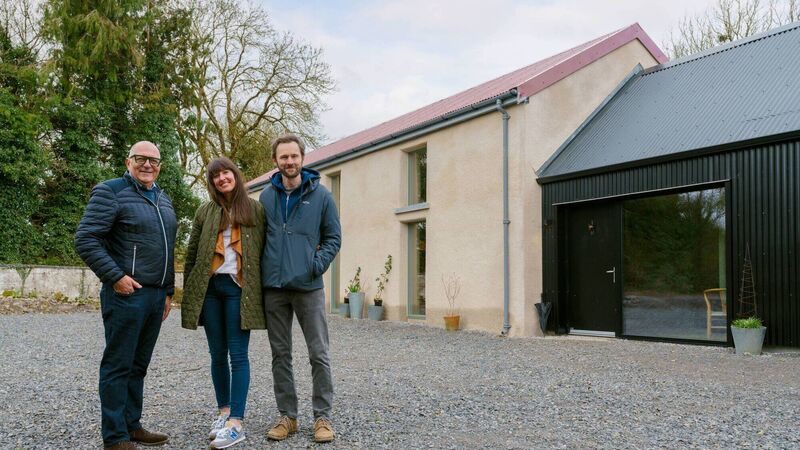
Great House Revival saw Linsday and Kevin Deely and family with Hugh Wallace after they bought a Craughwell with traditional cottage with thatch replaced by tiles. They threw themselves into a loving restoration and barn conversion, and used lime and hemp renders, with a red  galvanised roof on the barn end

HI Kieran, we want to improve energy efficiency in our house, which is an old stone construction. We’ve done a lot of draught proofing and upped the attic insulation already.

What are our best options now for walls, eg, for them to be able to breathe, but hold in heat?

We were surprised recently by an RTÉ TV house renovation programme which showed a house redone with lime render outside and hemp render inside but they also seemed to say this aided insulation. Is that true? Thanks,

Denis, Macroom

Hi Denis, Great to hear you are looking after an old stone building. I always think it is a privilege to be handed an old house with the task of sympathetically giving it a new lease of life.

So the challenge here is to create an efficient and cosy living space whilst maintaining the character of the original building which is, of course, what attracted you to the house in the first place. So, where to start?

You didn’t mention it, but I would certainly have a quick check of your roof to ensure it is in good long term condition. From a budget point of view it is important to allocate funds in the right amount and, equally important, in the right order. Once you are happy all is good on top, we proceed to the walls.

Kieran McCarthy: 'When it comes to a stone building; modern techniques may not be as sympathetic to the original construction.'

There is no doubt living in a stone building brings a connection to times gone past. What was it like to live in your house back then, you wonder? This is the magic of stone but it brings with it many other characteristics and considerations. Let’s consider three of the key elements.

Structure: Is the wall in good, sound condition? As old walls are built from a series of randomly sized stones, they don’t really show us where the structure may be under pressure (as cracked masonry does today), so we need to look at the most vulnerable areas which are typically over doors and window heads.

These are often built from timber which eventually rots and fails. These heads may need to be replaced in to ensure the long term stability of the building.

I would also check chimneys and of course the chimney cap to ensure all the weathering details are in place and in good order. This is a specialised field, particularly when it comes to a stone building, so best to seek someone experienced in this type of construction; modern techniques may not be as sympathetic to the original construction.

I would also look at the damp proofing of these walls. If all the walls are currently holding out ground moisture then you may not need further intervention but in any areas where rising damp is evident (paint discoloration or plaster deterioration local to the floors), I would again seek assistance from a stone wall expert as there are a wide variety of remedies available and some more appropriate than others.

External plaster: When it comes to stone buildings, one of the most important aspects to keep in mind is that stone needs to breathe. I have often seen stone buildings rendered with sand cement externally, and, though this is all but guaranteed to keep moisture at bay, it leaves no room for the stonework to breathe externally.

This is where a lime render comes into its own. Lime rendering is how stone buildings would traditionally have been plastered (initially seen as the preserve of the wealthy) to protect against damp ingress and the elements. In the absence of render, the integrity of the stone and particularly the pointing is your sole line of defence.

Lime was produced in a local lime kiln and used to create a lime-based render instead of using modern cement. This approach partially sealed the external face of the stonework; enough to keep driving rain at bay but leaving enough permeability for the stonework (which often contains a base level of dampness) to breathe, particularly when the house is heated, and to maintain a healthy living environment.

Internal Plaster: Once you have checked structural integrity and weather-proofed external walls, next turn to the internal face. I am not very familiar with hemp render but I know it is a breathable natural solution which does offer some level of insulation. As this is a highly specialised field, I would certainly advise you to seek advice from a company or indeed a supplier who specialise in this bespoke approach and be sure to consult with your engineer and BER assessor.

It does however offer you a solution whereby you can sympathetically plaster your house, turning it into a home alive with character and history whilst revitalising the fabric of the building and saving it for generations to come.

  • Civil engineer Kieran McCarthy is founder, and design and build director with KMC Homes. He is a co-presenter of the RTÉ show Cheap Irish Houses.

More in this section

Revoiced

Newsletter

Sign up to the best reads of the week from irishexaminer.com selected just for you.

Cookie Policy Privacy Policy Brand Safety FAQ Help Contact Us Terms and Conditions

© Examiner Echo Group Limited