Walled-in wonderland in West Cork woods for €800k
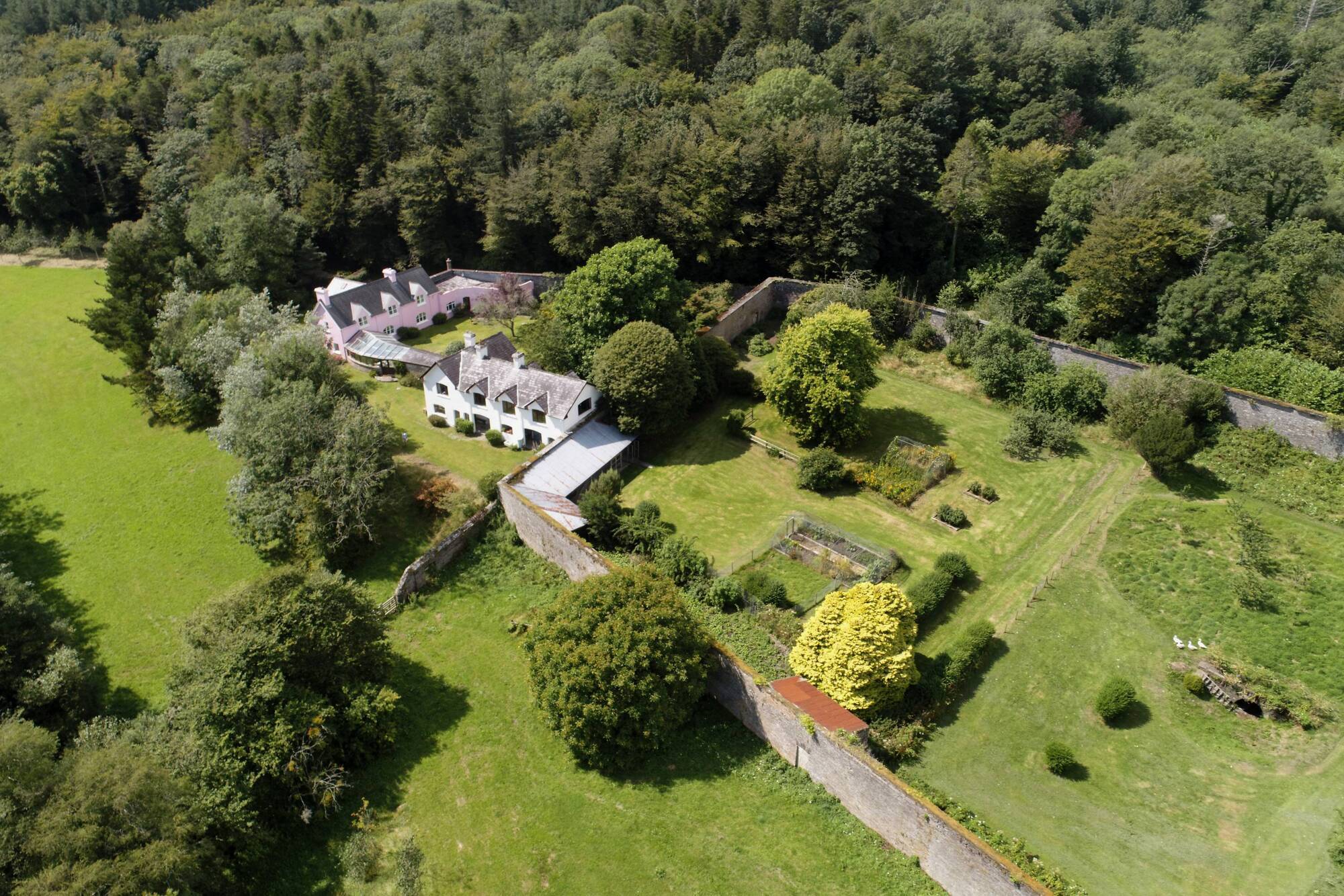
Once part of the Castle Freke Carbery demense, Castlefreke's The Garden has eight acres of walled garden, and two linked houses
Walled-in wonderland in West Cork woods for €800k

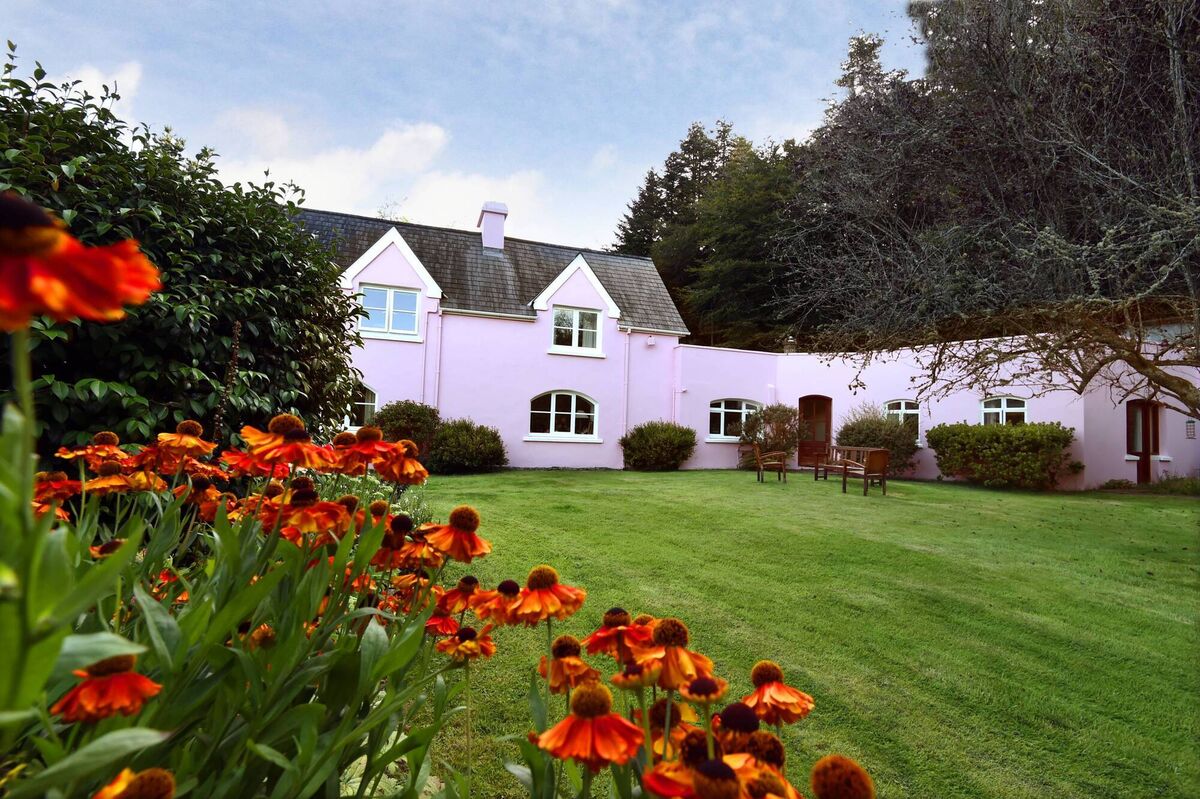
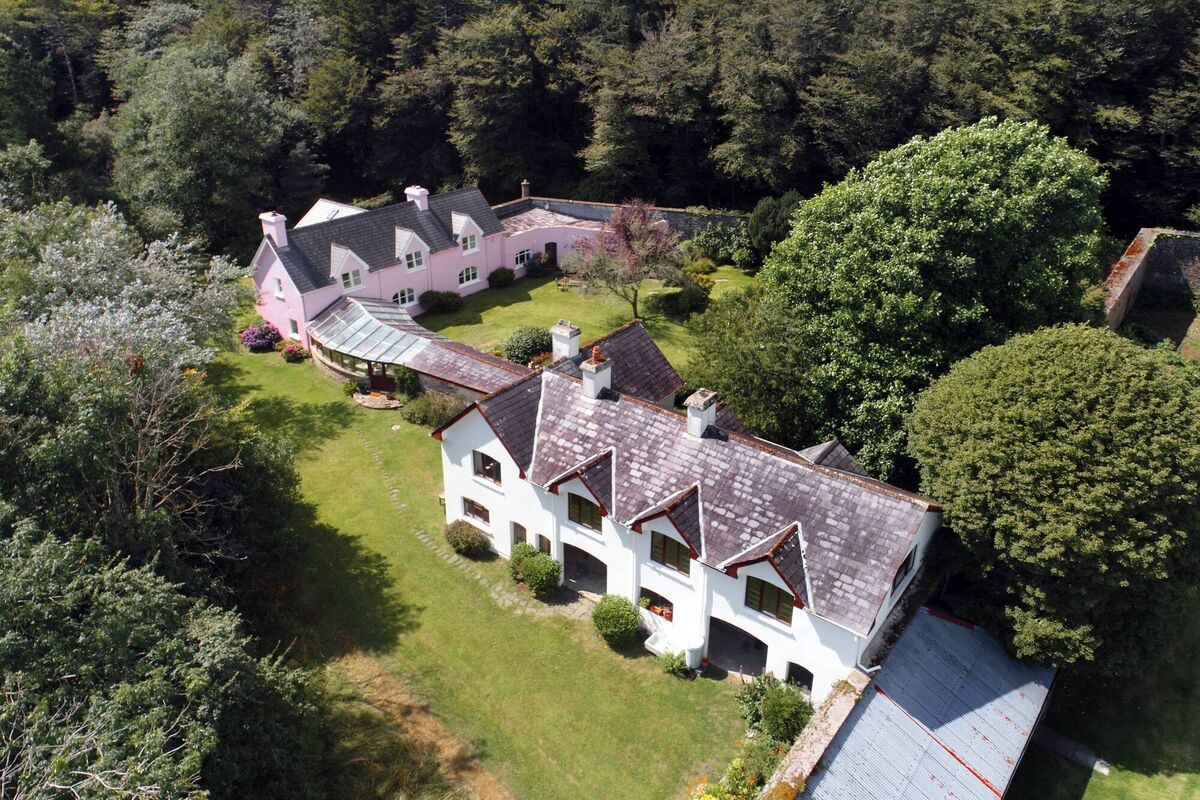
Freke of nature: The Garden, Castlefreke has a two-acre section (seen here) within an eight-acre walled garden, and two houses, all immaculate. Auctioneer Jackie Cohalan guides from €800,000


Castlefreke, West Cork

€800,000

Size

380 sq m (4,150 sq ft)

Bedrooms

3+2+1

Bathrooms

5

BER

G

A PRIVATE sanctuary away from the woes of the world beckons at the wonderful, woodland-surrounded West Cork hideaway called The Garden. If ever there was a retreat from troubles, this surely is one.

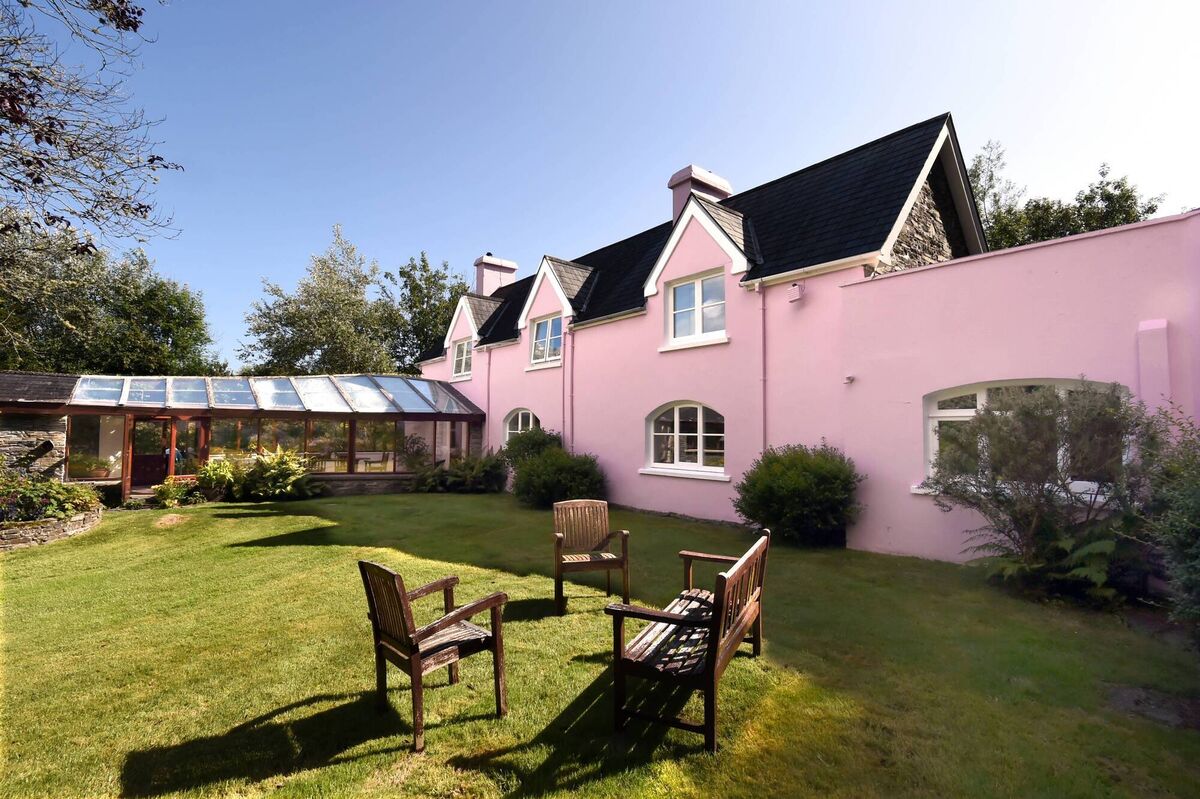
Garden glories at the pink house, one of two

Steeped in baronial history of the Barry/Carbery/Freke families – with their estates stretching back over 300 years, their surnames used as names for townlands and headlands – Castlefreke’s The Garden was a workmanlike corner of their once-sprawling lands.
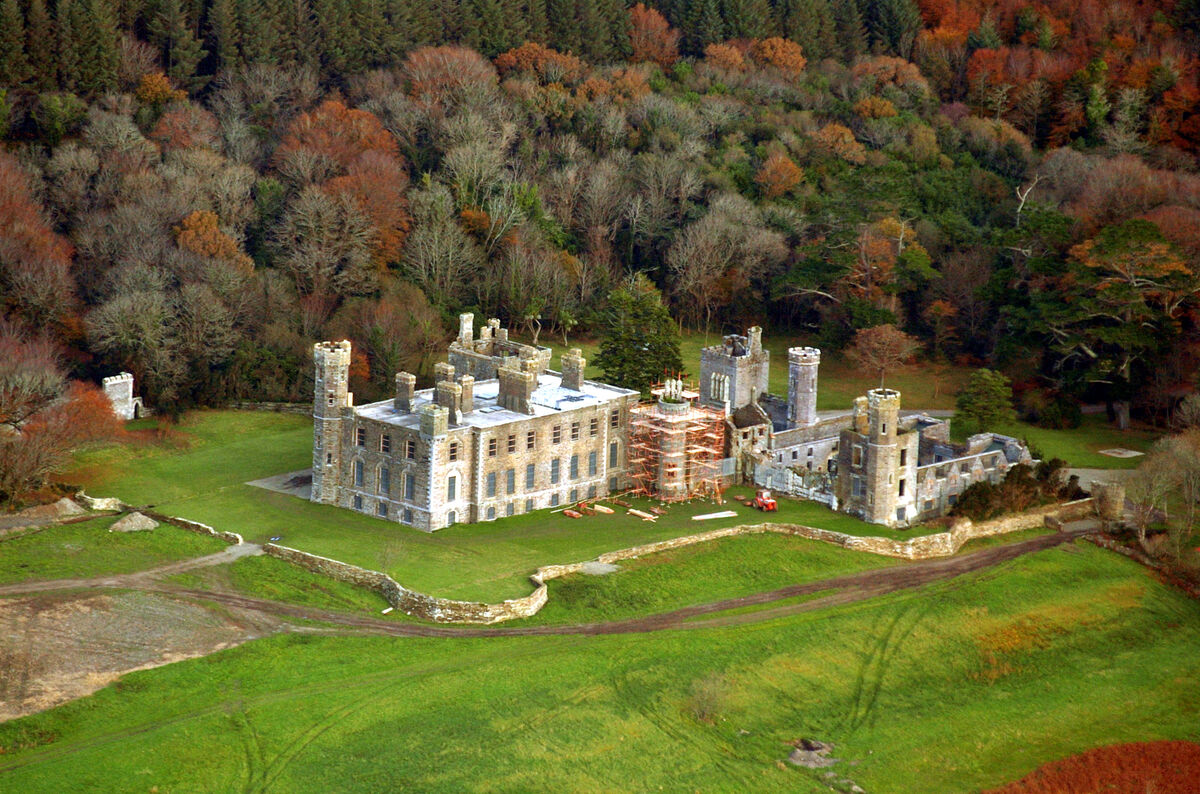
Castle Freke Castle, Co, Cork .Pic Denis Scannell

 It was created with a quite remarkable walled-in eight acres, for a productive and food-growing enclosure to feed the subsequently enlarged castle’s inhabitants and estate workers.
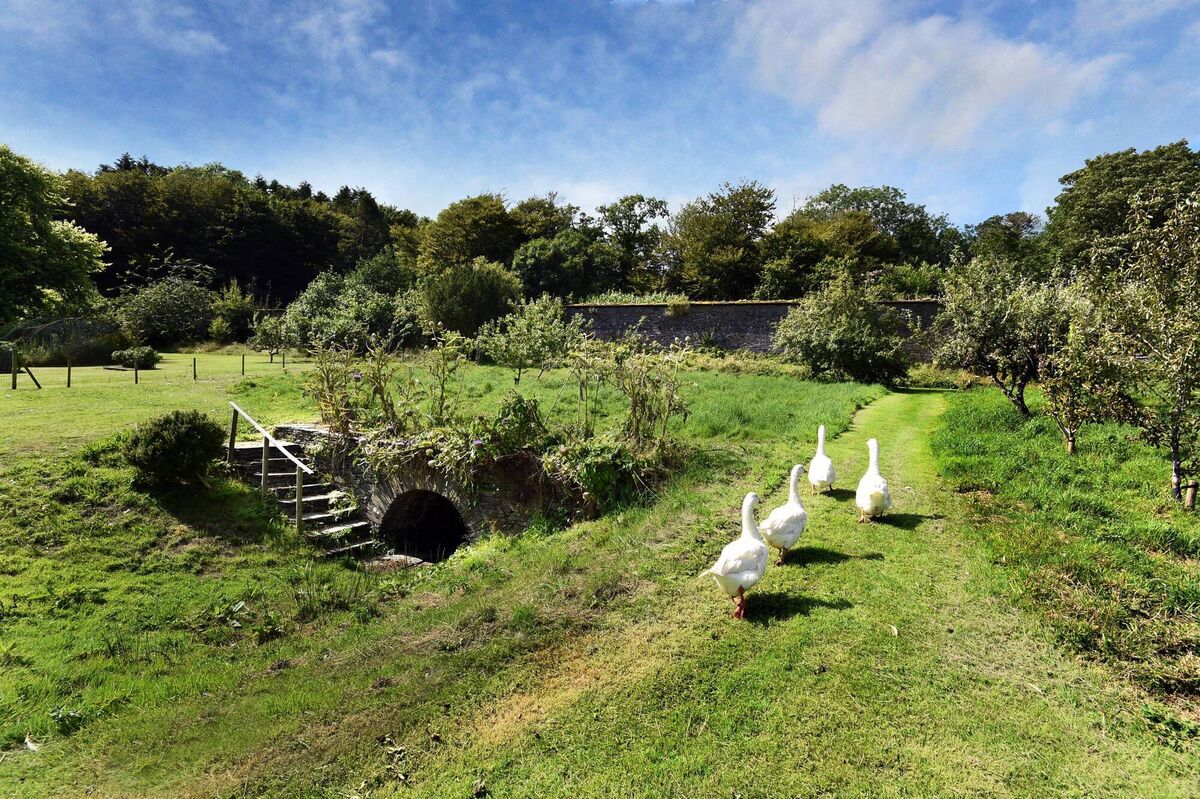
Well worth a gander. Geese pass by the spring-fed old stone well in the two-acre garden

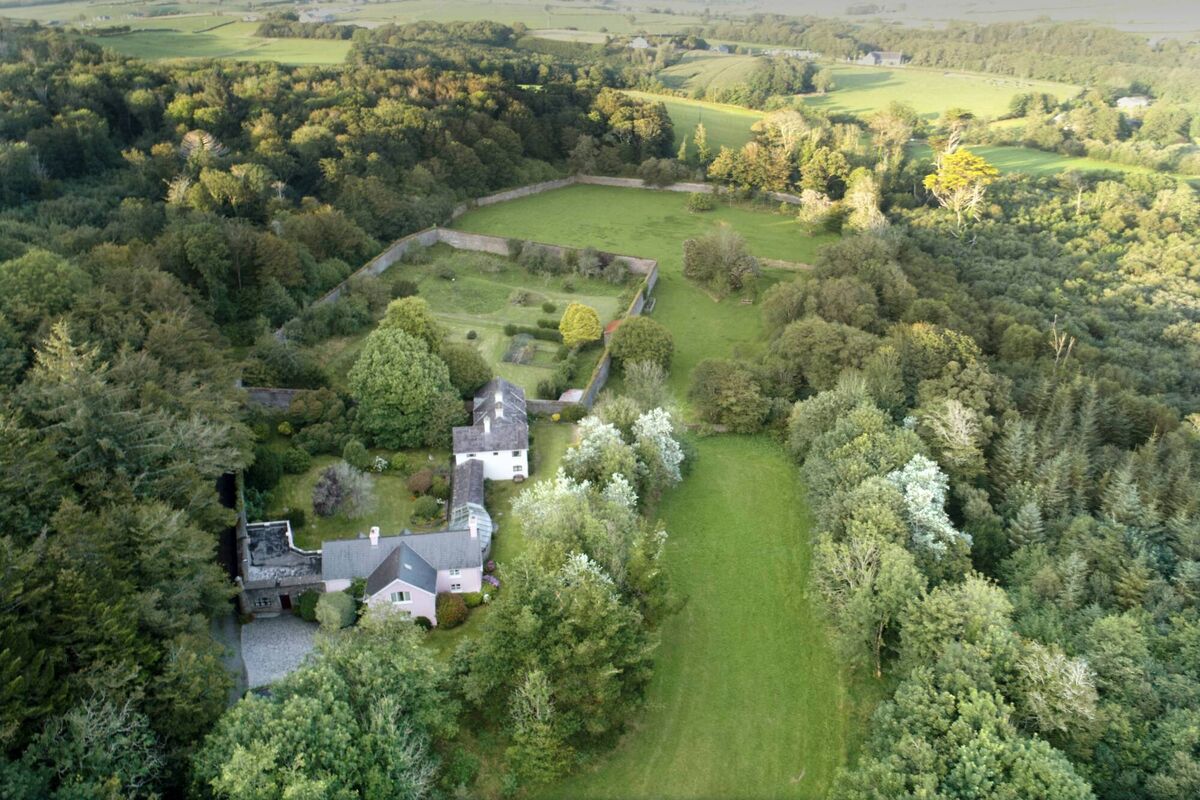
However, it’s not ‘just’ eight acres that are ringfenced by upstanding stout walls in local stone (some sections are as high as 15 foot and are still in remarkable condition). Within the eight acres is another two-acre section which is also entirely walled and has gated access.
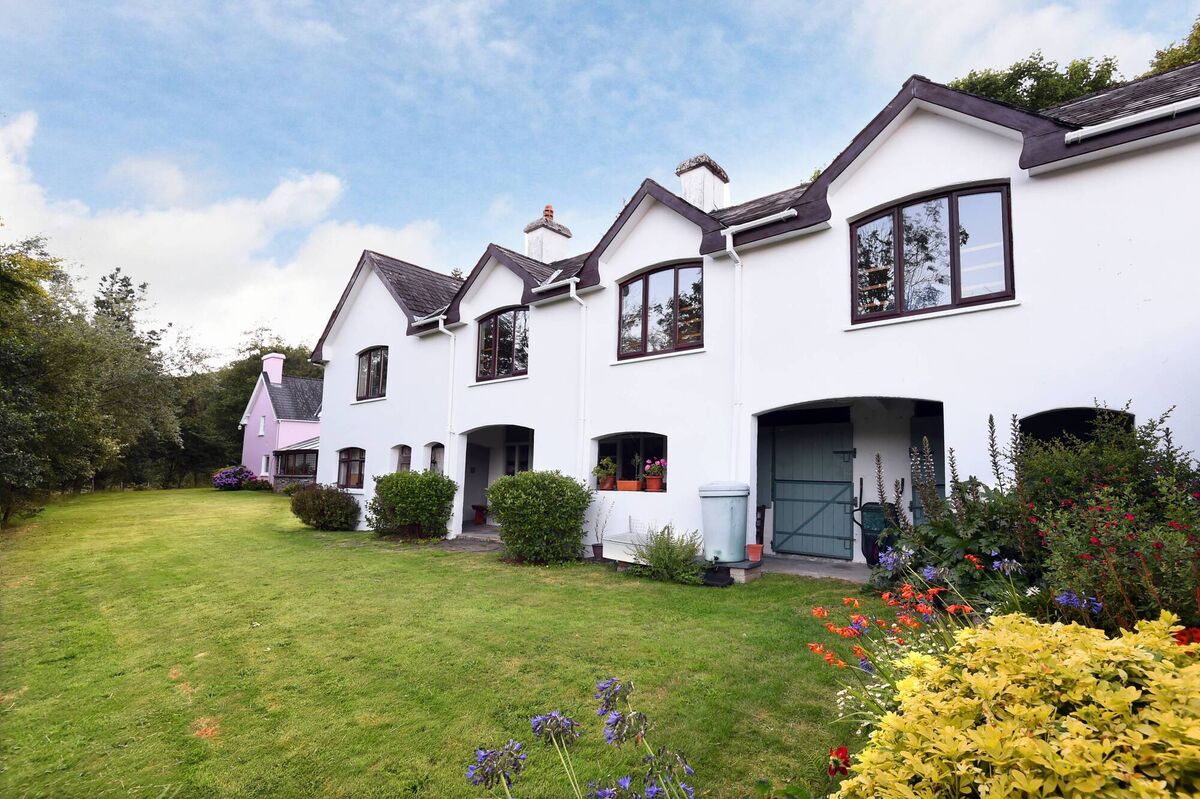
At its peak, the eight-acre gardens here employed 12 gardeners, and the property which today is called The Garden was the original head gardener’s own family home, when it was compact two-bedroom house which was initially located next to stables and outbuildings when constructed two centuries ago.

The Garden's 'White House'

Since, the house has been vastly extended and carefully tended over the past 50 years in committed ownership. It is remarkable and a tribute to its occupants for the last half a century. Truly lovely.
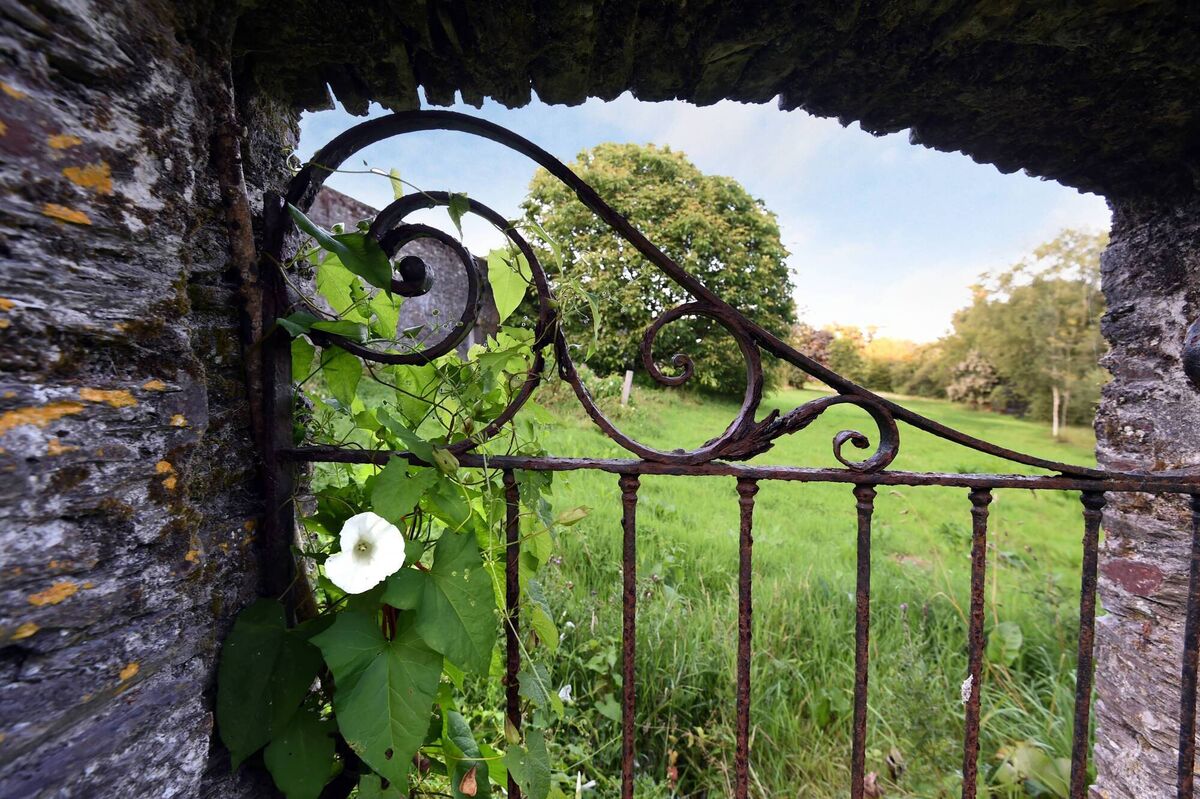
Magnificent masonry

But, oh! It’s the walls; the enclosure, the original quarrying, the masonry, the labours, the grand plan and the unlimited funds of the day that allowed them, and castles such Castlefreke itself ( just 750m away, to the west) be built!

If the walls could talk....

That is the wonder, the joy, the audacity of ambition of super-wealthy landowners, and their willingness to move mountains (or to have mountains moved by ‘the help’ on their account.)
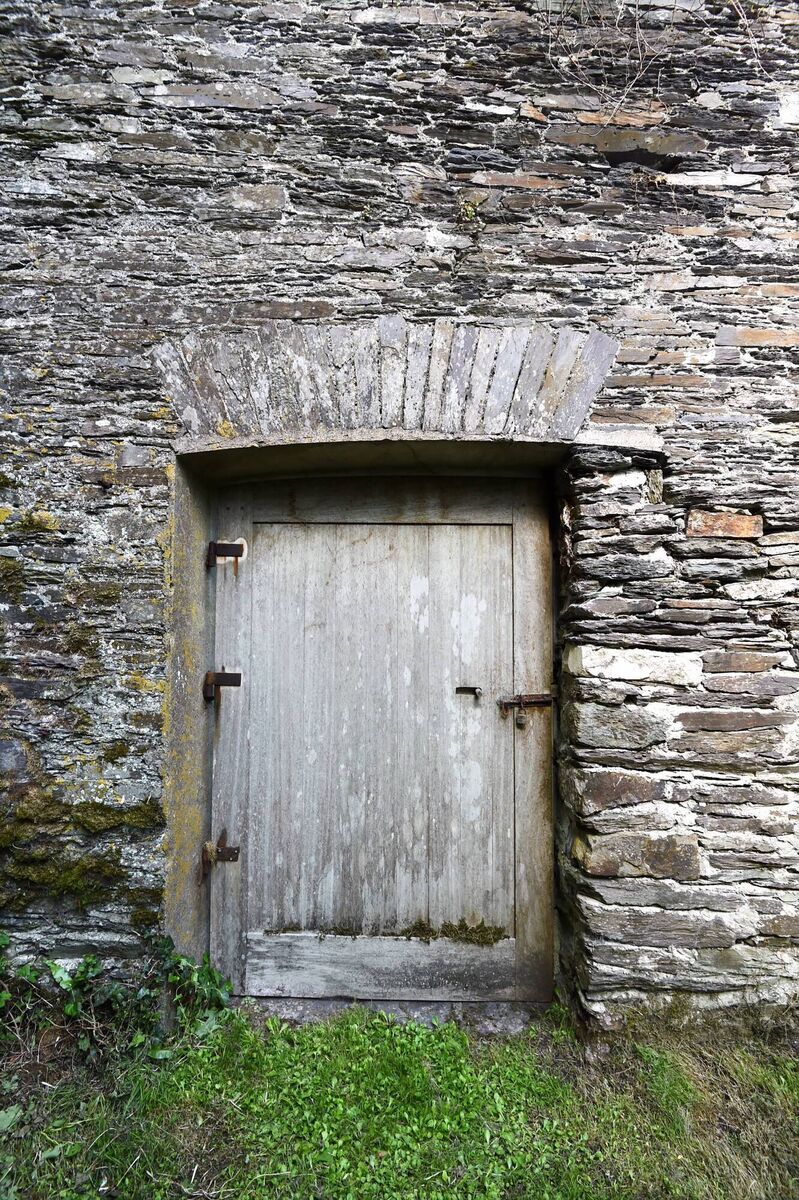
What mountains were moved – or rather and what quarries were excavated – to get enough stone to build walls of this scale; of such extent, length, breadth and height? Not to mention the internal walls.

How many men laboured on them? Over how long? At what cost?

This says security
This says security

Just what would it cost in today’s world to surround oneself with such seemingly impregnable boundaries, and to be certain the livestock, fowl, pets and family were secure, safe from roaming, and marauders kept out? Millions and millions of euros, surely, especially to this standard – the sort of budgets swallowed up perhaps in road bypasses.
Yet today you’ll get themwith the proposed 2022 sale of The Garden, which last changed hands back in 1970.

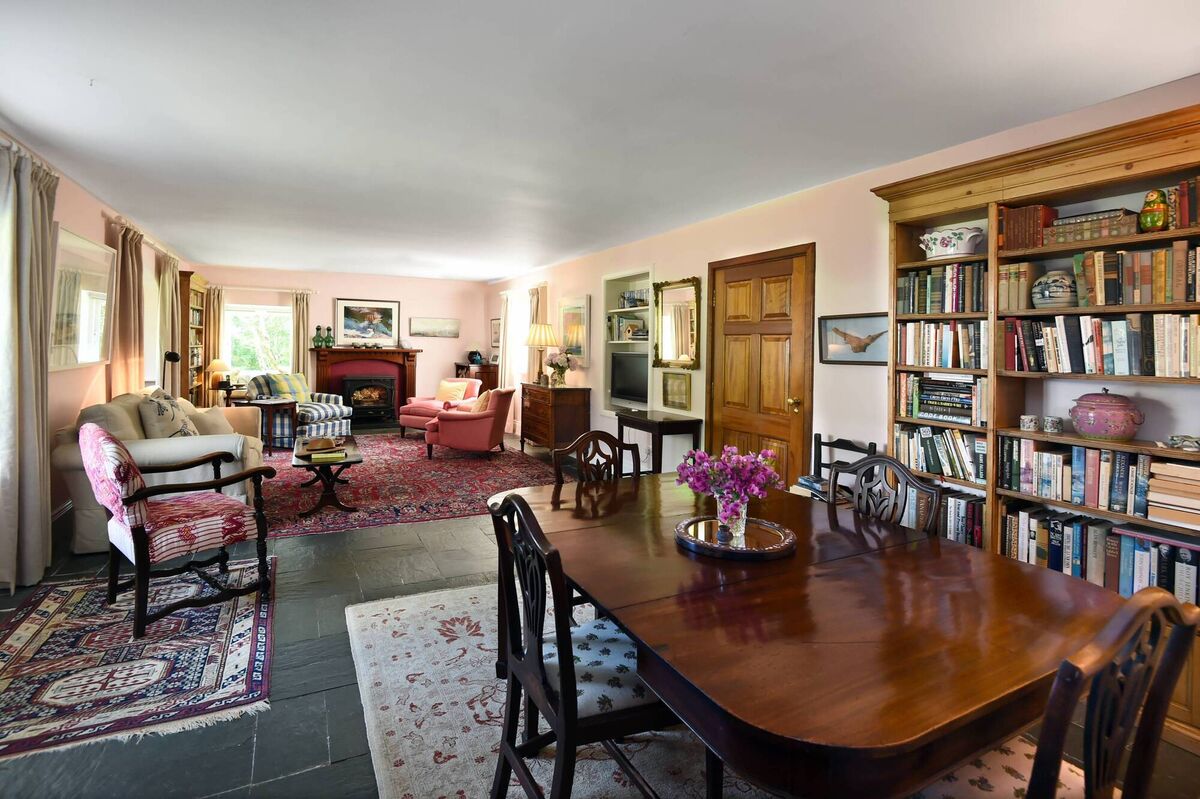
Interior grace at The Garden

It’s now a reluctant disposal as “it needs a family” the vendor tells us after a lengthy tour of the grounds. A tour which included being hissed at by the geese, and visiting the rare, fresh-water stone well and the straw-bedded hen-house, before coffee and scones by the stove in a triple-aspect living room, surrounded by, yes, garden, garden and more garden.
A rare property (as rare as some of the plants within its curtilage), it’s being handled by estate agent Jackie Cohalan of Cork City-based Cohalan Downing. She guides it at €800,000.

Natural houthouse, with underfloor heating

What’s been built, what’s been added, and how it has been maintained are all factors adding to its advised minimum value (AMV). But you’ve got to start somewhere, and it really does need someone very special to take it on. Gently, mind, as it needs appreciation, curating and ongoing cultivation.
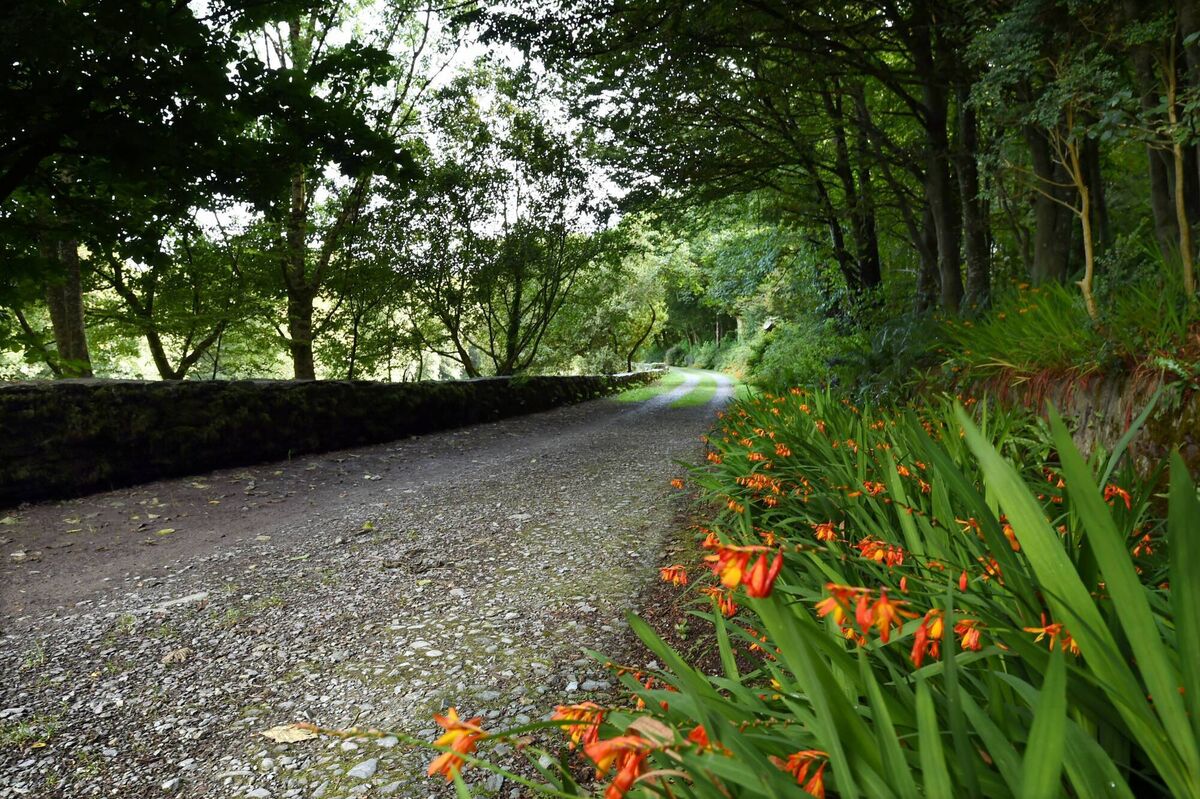
Approach avenue
Approach avenue

The Garden is set entirely within what is now Coillte forestry, entered past old immaculate gate lodges to the Castlefreke Estate, at both the charming Rathbarry end (previously a Tidy Towns National Award Winner for tidiest village), or by the far end, Owenahincha beach end.
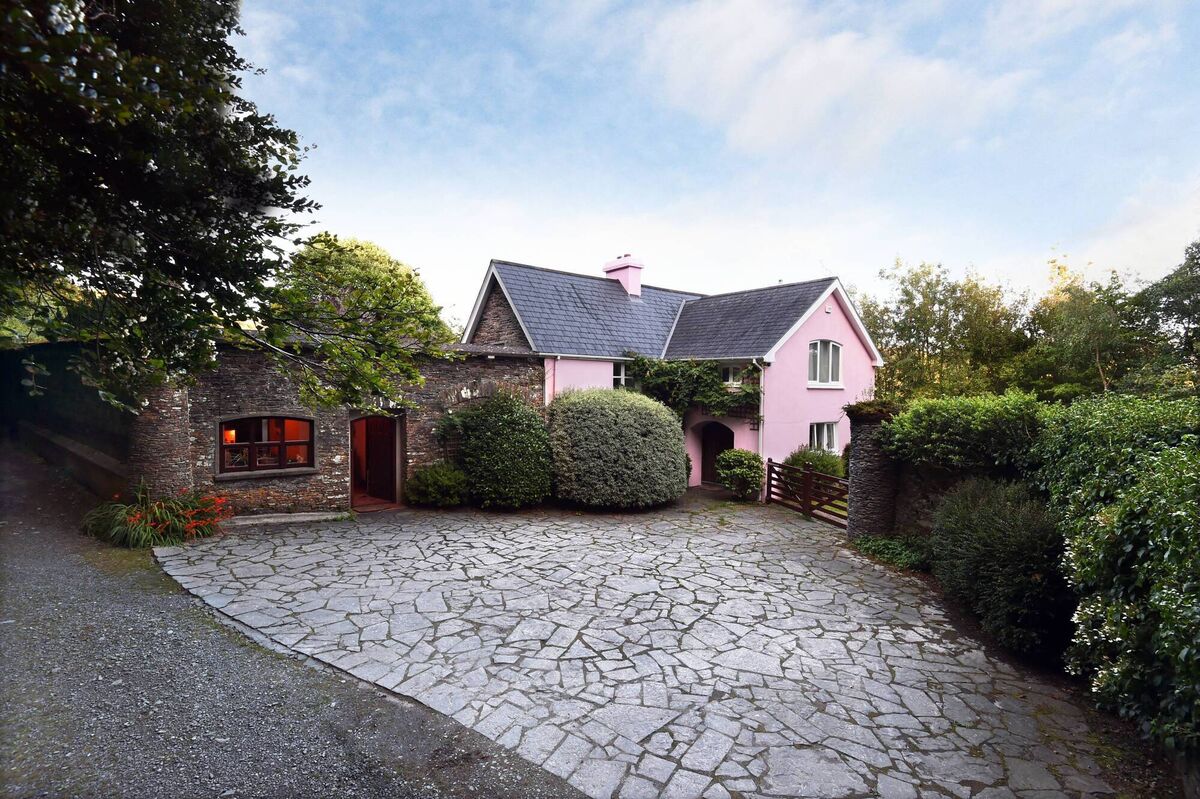
Only a glimspe to the public

The “surrounded by woods” element may discourage those who don’t like the sense of isolation –perhaps coming on all “Hansel and Gretel” – but that’s an attitude that can be easily adapted to, without the need for white flint and breadcrumbs to find one’s way back.
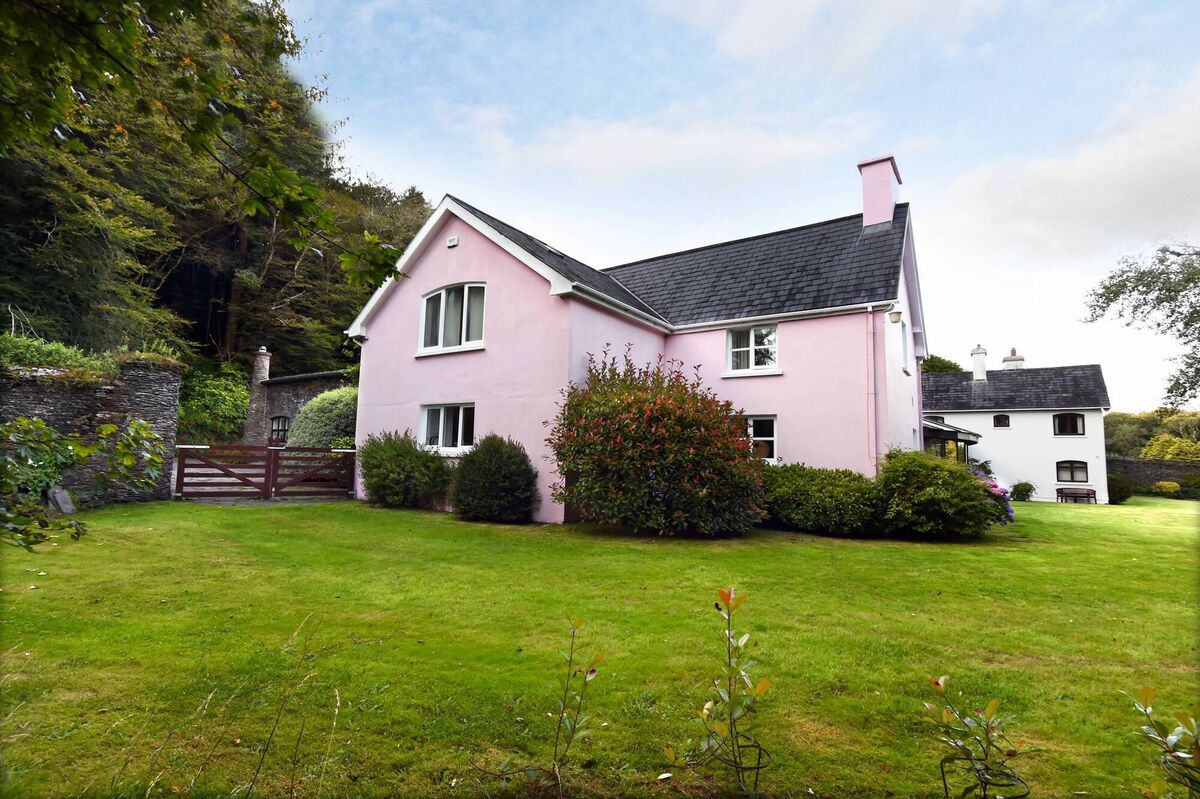
The Garden's two houses

There’ll be others with a more adventurous streak, who’ll absolutely relish this very apparent “remove from the world”. These may well include those who’ll clearly see commercial possibilities and guest use/rental/accommodation/residential scope here. The Garden is very much a place that can work for its living if needs be: after all, that’s how it started out in the 1820s.
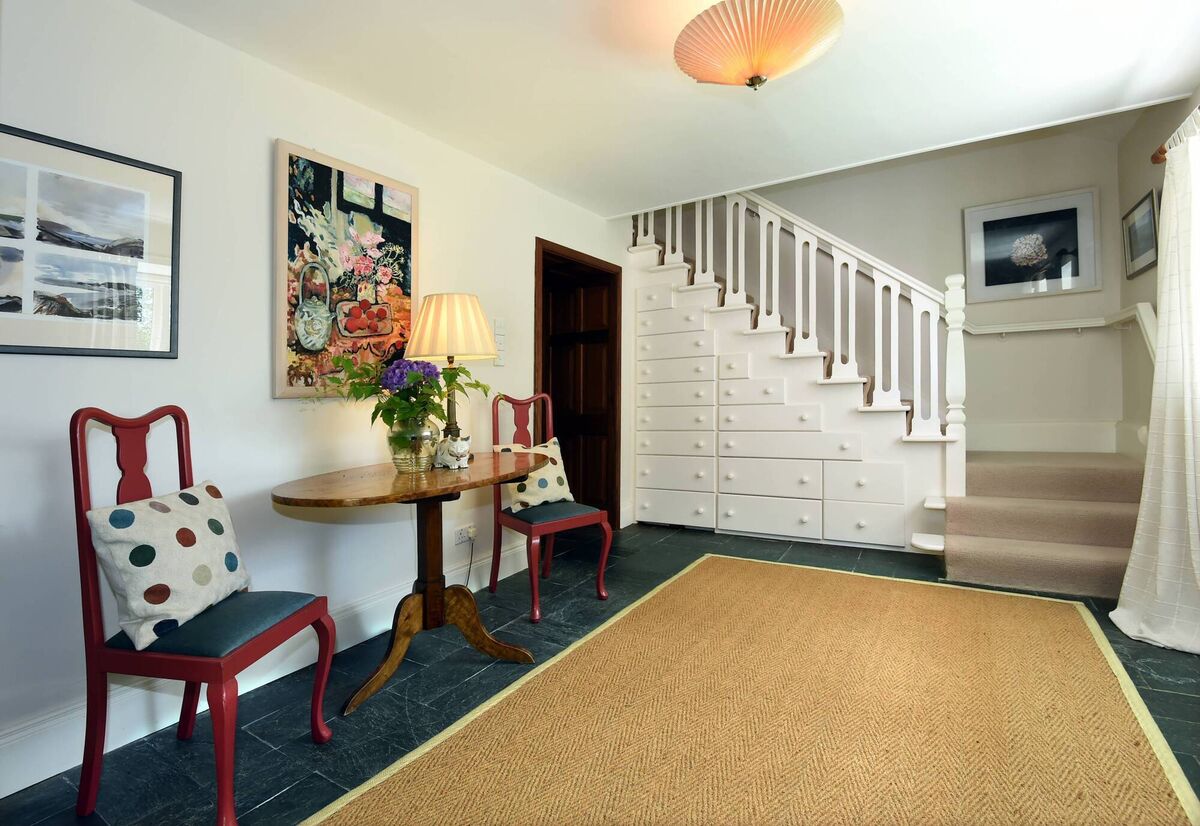
Entry hall
Entry hall

Location-wise, the magnificent melange is just a few miles off the N71, along the Wild Atlantic Way, near many beaches and historic features, wild coves and headlands. It is about 8km from Clonakilty, while Rosscarbery is about 4km in the other direction.
Stand-out landmark buildings in this area include the mid-Victorian era Galley Head lighthouse. The flash of this lighthouse can be seen from the Carbery clan castle at the eponymous Castlefreke (or Castle Freke) to which The Garden once belonged.

Castle Freke: a journey

Castle Freke itself, an embellished neoclassical mansion, began construction in the late 1700s when the sixth baron of Carbery, Sir John Freke, abandoned the even-older Rathbarry Castle for a site higher up, with sea views and bracing air.

Among the architects later involved were Sir Richard Morrison and brothers James and George Pain. Henry Hill worked for the seventh baron with Gothic add-ons, while the ninth baron was assisted with later tower-house style extensions by William H Hill.

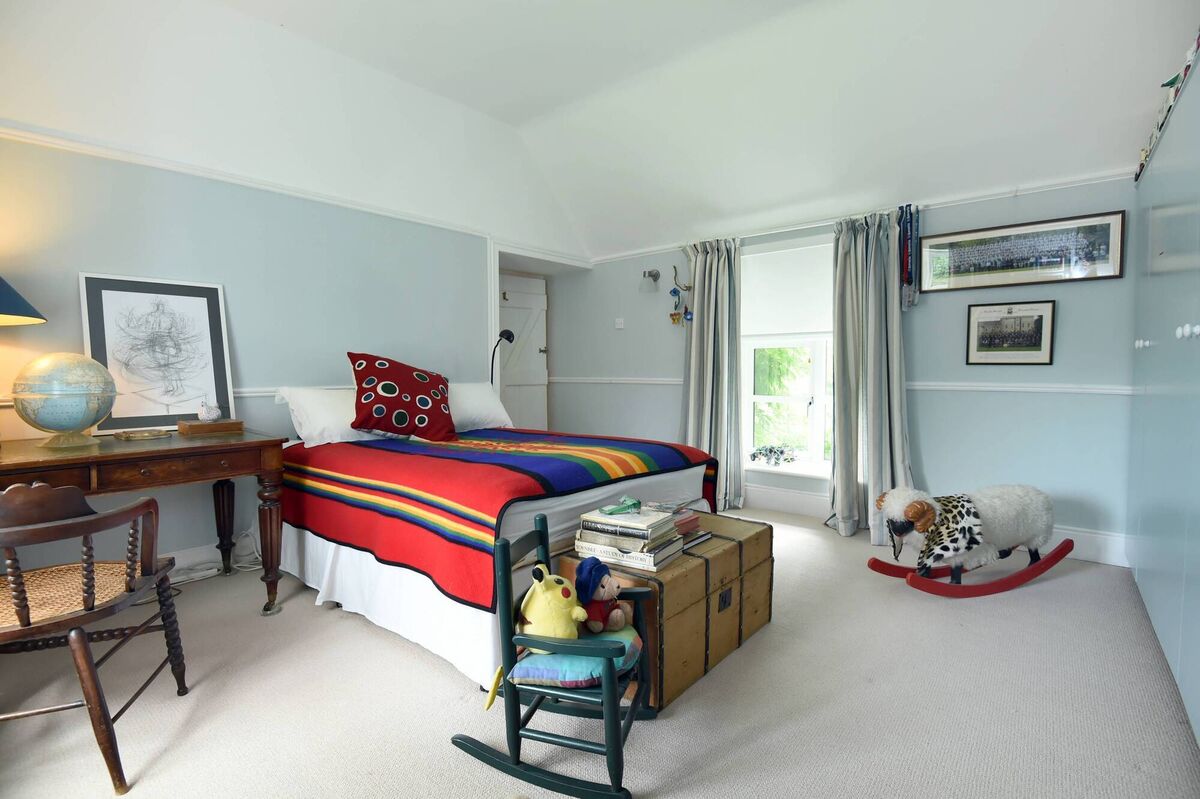
One of the six spread out  bedrooms

As its fortunes waxed and waned, following a fire in the early 20th century, Castle Freke was reworked by architects Kaye-Parry & Ross, with support by noted ecclesiastical architect James McMullen, with a ballroom added for the 10th Baron.
But, by the time of the founding of the Irish State, it was abandoned for Africa (and Kenya’s Happy Valley set), by aviator John Carbery who sold it before 1922. The castle’s contents were dispersed by auction, while partial dismantling started in the 1950s. The roof was removed to save on taxes.

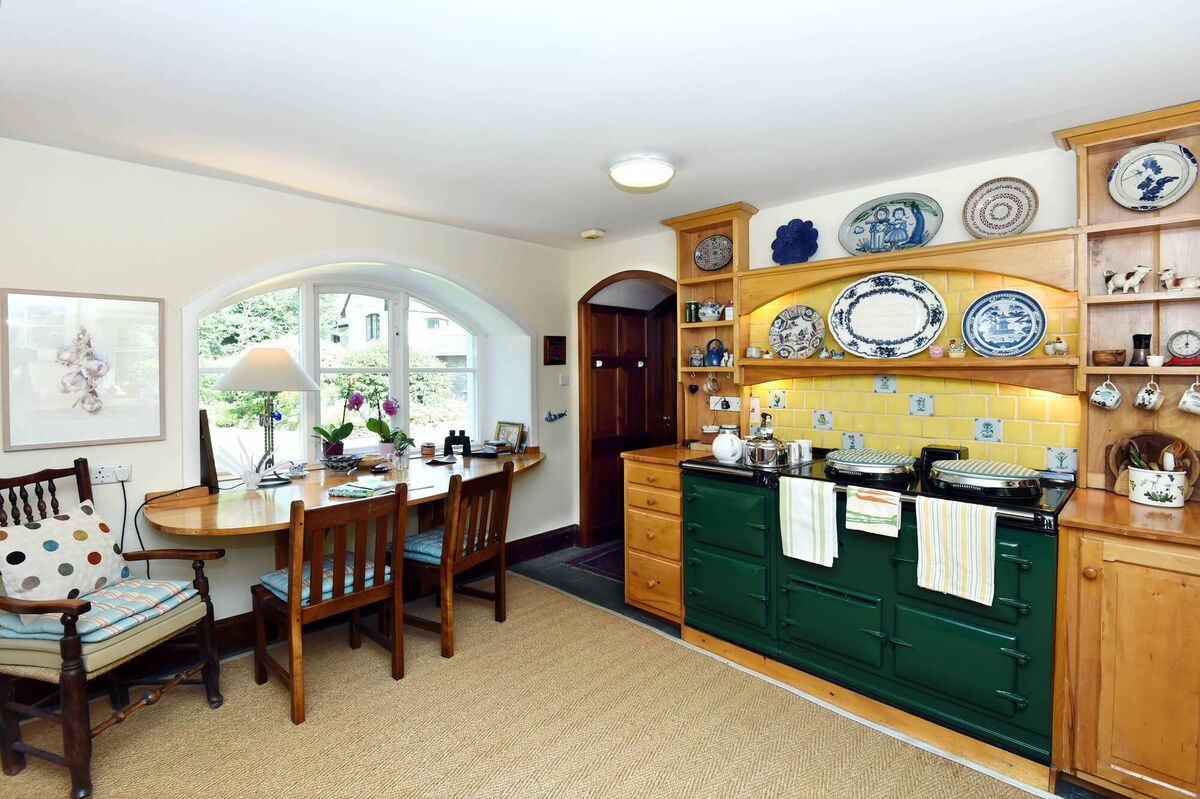
At home in the sunny kitchen by a warming green Aga

Castle Freke changed hands a few times since, and was bought back into the Freke family in the mid-2000s by international businessman Stephen Evans-Freke, a son of the 11th Baron. He commenced a long and sensitive restoration, slowing after nearly a decade, following an acrimonious
parting with its then-architect.

Cohalan Downing founder auctioneer Maurice Cohalan was among those with the castle’s sale previously, selling to Evans-Freke. Now, his daughter Jackie has The Garden to hand on and, let it be said, it’s a far easier proposition and mantle to assume than the mansion it once belonged to.

Sun traps abound
Sun traps abound

The good news for hopeful next owners is they may not, at least, be bidding against the castle’s owner, as apparently he was offered “first dibs” but declined to buy it privately.
Since buying back Castle Freke castle circa 2005, Evans-Freke also acquired the old farm buildings and courtyard, renovated about 25 years back, along with some adjoining farmland, and a bungalow by the Long Strand next to another original entrance gate to the former estate.

All of this, on the Wild Atlantic Way by Rathbarry and beaches

It was previously reported that there was an attempt to buy back some of the Coillte forest (it’s quite varied, not all of it is pine), which was met with local protest when it was feared public access through the mature woodland might be lost.
In very recent years, Coillte has upgraded some of the walks and paths and signage at Castlefreke, with mature planting mixed with very old woodland, bluebell swathes and wetlands. Part is a Special Area of Conservation (SAC) and there’s been input and investment also by the County Council.

Culinary adventures await

Ever before the first coronavirus lockdown and staycations, the Fish Basket on the dune-backed (but treacherous in part for bathers) Long Strand made its way to the hearts (and stomachs) of thousands of visitors. More recently Camus Farm Kitchen in nearby Ardfield has flown a flag for food lovers with an emphasis on organic, foraging, local produce, as does Pilgrims’ restaurant in Rosscarbery.

Woodland wonders
Woodland wonders

Could The Garden find a similar – but more niche – favour and flavour, off a beaten track? Might it become a destination or mecca for foodies; with crops grown and rare breeds reared on the very doorstep, as well as a very short “farm to fork” journey?
The lands here have housed horses (there are still fabulous 19th-century stables and a tack room on site) along with the more farmable pigs, sheep, cattle and fowl (which currently includes geese, guinea fowl, up to a dozen hens and a cock). There are a number of modern beehives too.

Should the old spring-fed well in the middle of the two-acre walled garden be expanded, to include a pond, duck could be added to the menu. Swans might even turn up, as they’ve already found their way to a lake by a folly bridge created in the grounds of Castle Freke, between the ancestral home and the sea by Owenahincha, in this steeped-in-lore location.
All that’s missing, for grandeur’s sake, are peacocks, and they are already to be found gracing the streamside gardens of the nearby, immaculate Rathbarry Post Office and shop, albeit to noisy acclaim.

Back at The Garden, the small flock of geese acts as sentries; keeping a watchful eye over the ground as their feathered forebears did millennia ago in ancient Rome, hissing and honking to warn of any intruders, loyal companion pieces to this particular property’s own, discrete 21st century security measures.

For those seeking self-sufficiency, it has it all too, acres of grounds, (have we mentioned they are all walled??!)

Green fingers

On the horticultural front, there are veg and herb beds but polytunnels are currently unskinned. If the next owners have the funds, the back walls – the tallest facing south – are prime-set for lean-to glasshouses (heated or otherwise) to produce exotics.

A short, initial list of plants and trees of interest drawn up by the sellers include a very mature tulip tree; English oak visible in the distance, at a diagonal from the house(s); purple flowering plum; an old orchard; a mixed native woodland area with ash, alder, oak, alder and poplar. The private drive - which is also used by trail walkers from the Coillte woodland car park by the private castle - has Himalayan birch, and rows of mixed flowering cherry of Amelanchier, Japanese flowering cherry and Tibetan cherry.
Elsewhere are Scots pine, Austrian pine and field maple, while various more pines and myrtle, Cypress and cedars grace the woods beyond the curtilage.

It’s all a shelter-belt par excellence, if not a micro-climate, an enclave on so many levels, stopping just short of having a possible appeal to an isolationist cult, or end of the world catastrophists.

Yes, it’s got that mix of romanticism, tinged with utter practicality and, the good news is: it just needs to be bought and minded. Any further significant works on the house(s) are entirely at the discretionary end of the scale.

The original head gardener’s own 19th-century home, originally a two-bed, was extended by the current owners and is now an extremely comfortable two-storey, three-bedroom home.

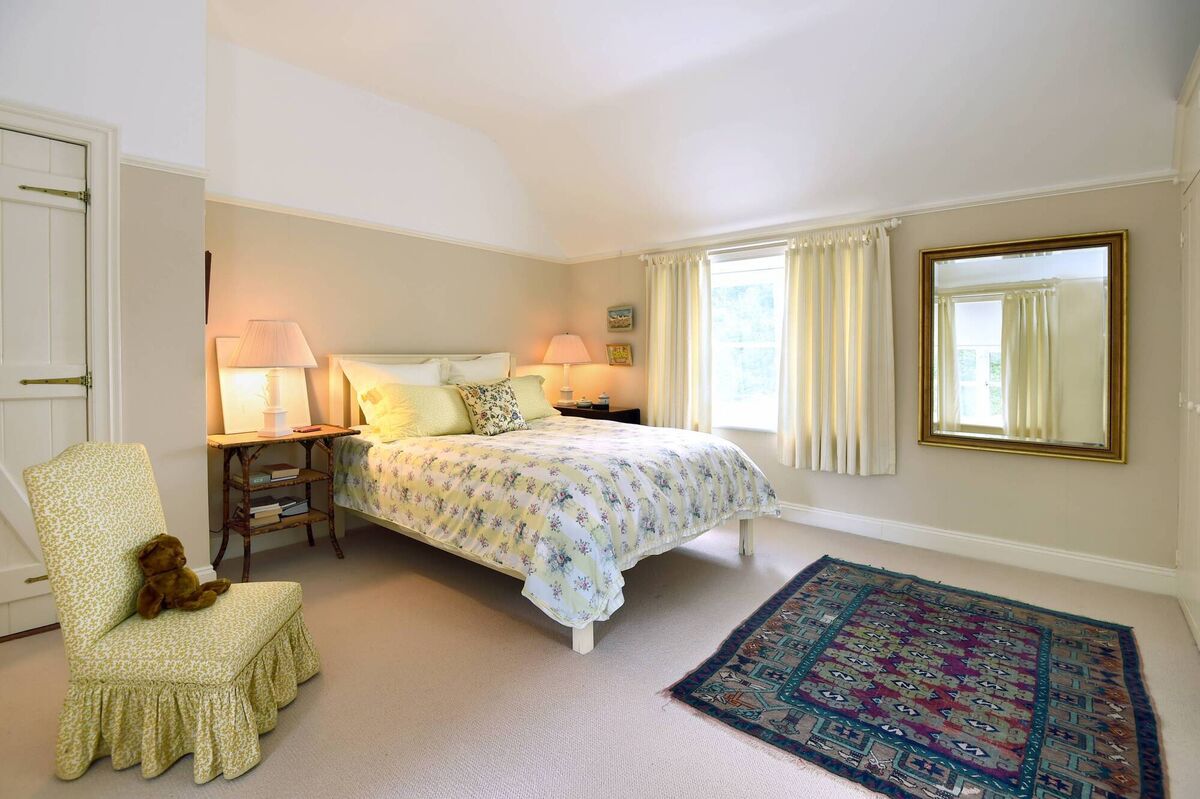
Suite dreams: A bedroom for garden contemplation

This pink house links internally to a self-contained one-bed wing, also in first-class order, and each have external access by the wide, Liscannor stone-flagged front approach opposite old estate walls.
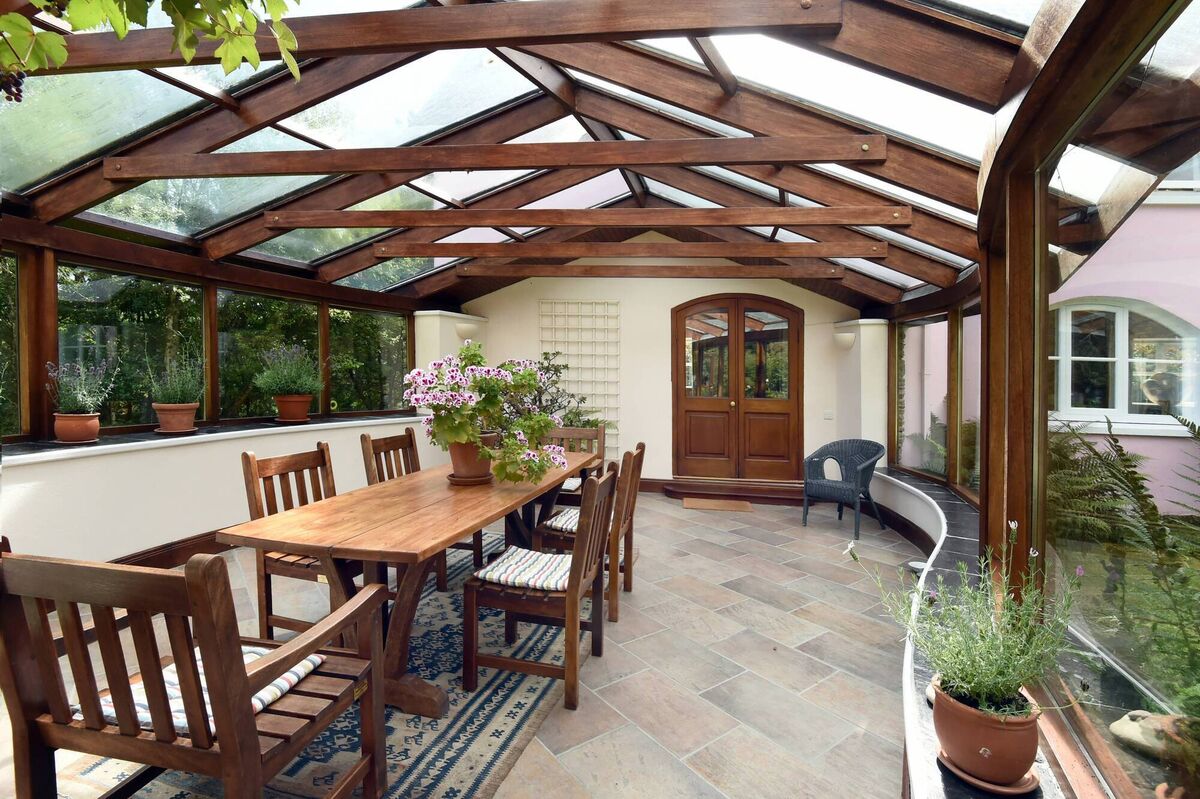
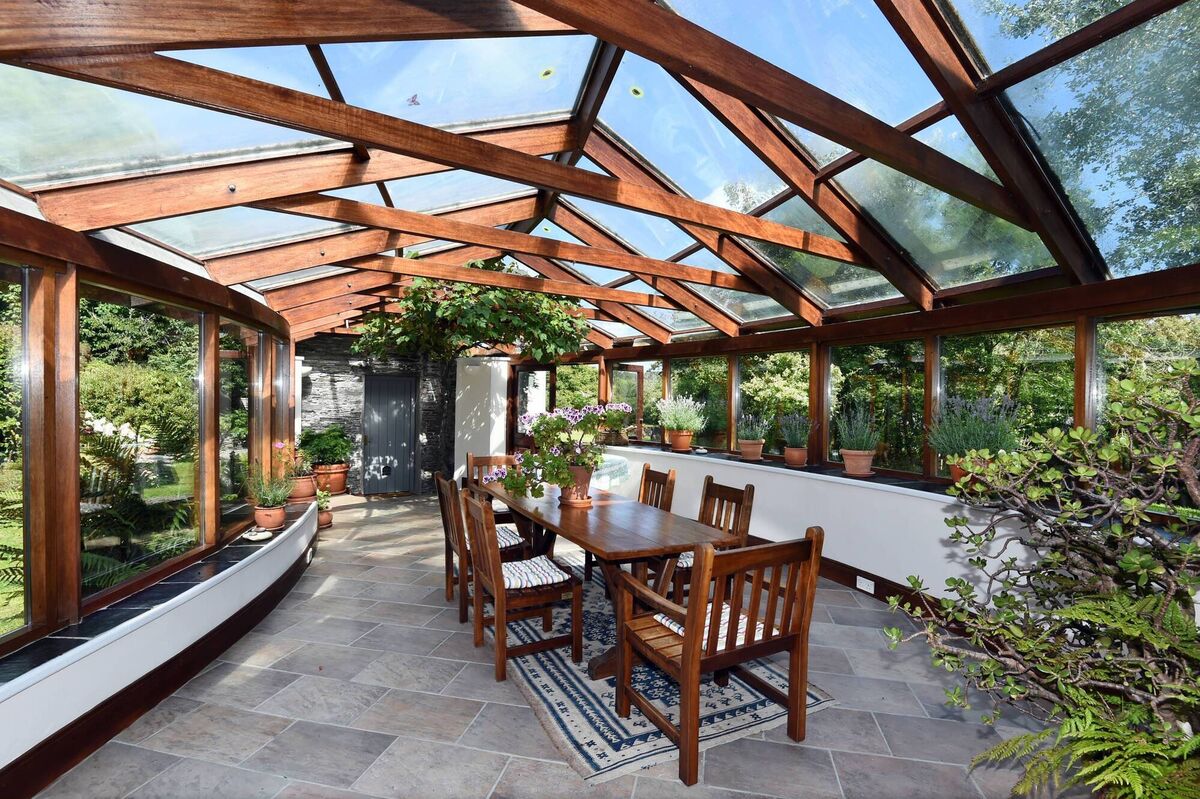
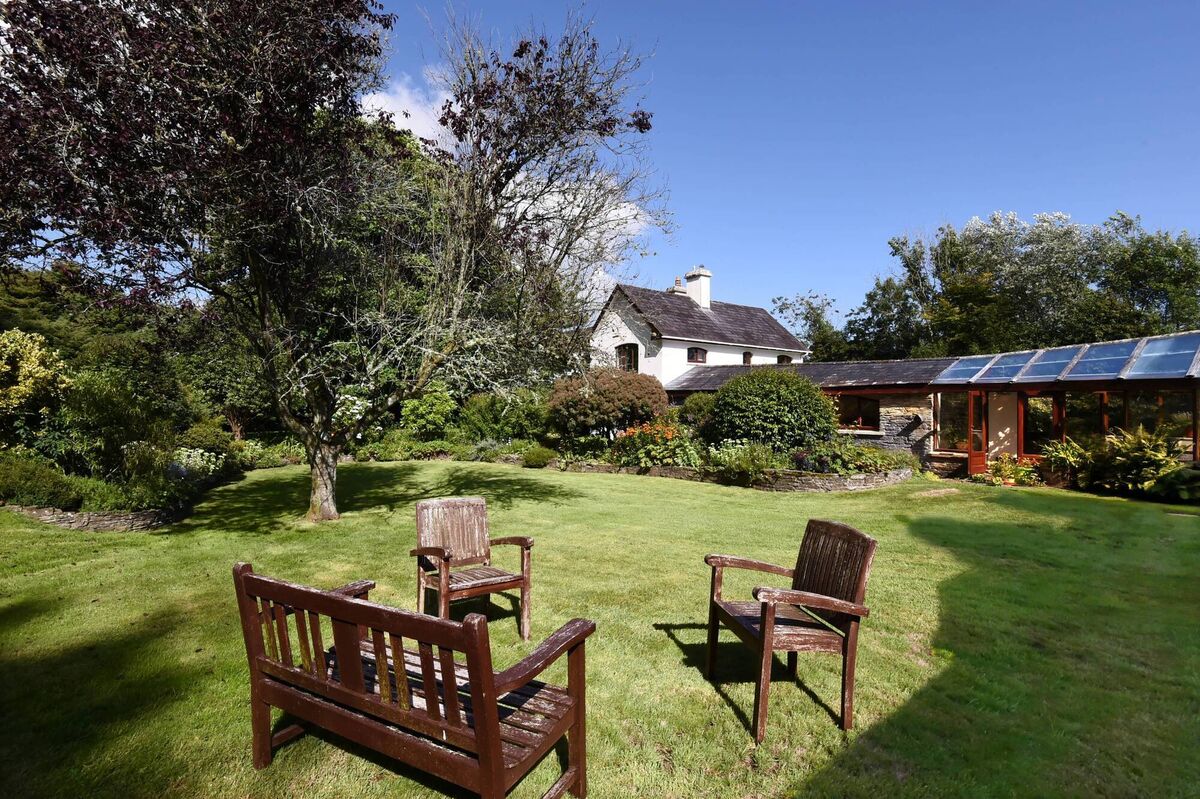
There’s a lovely main hall, past robust, double-entry doors, to a very spacious living room, which then opens, next to a curving, over 30-foot-long sunroom, with Concorde vine and flowering jasmine, with underfloor electric Devi-mat heating and views over two gardens, one of them every bit as enclosed as a cloister.

Hearth-felt
Hearth-felt

When visitors call, it’s the utmost safe place to leave children and pets, while parents picnic or party on down. 

(There was one instance alright when a six-year-old son climbed the Tulip tree to get up onto a 14’ high wall, but that was in earlier, pre-health and safety days….!)

Engineer’s stamp

The man of the house, who had an inventive and engineering skillset and mindset, designed the sunroom to link the gardener’s house to the stable block which had been added to and built above it sometime in the 1980s. That distant section now houses further accommodation in a second (white) house, including two more bedrooms and a very large (approximately 25ft × 20ft) first-floor multi-purpose room, triple aspect overlooking the glories of the grounds.
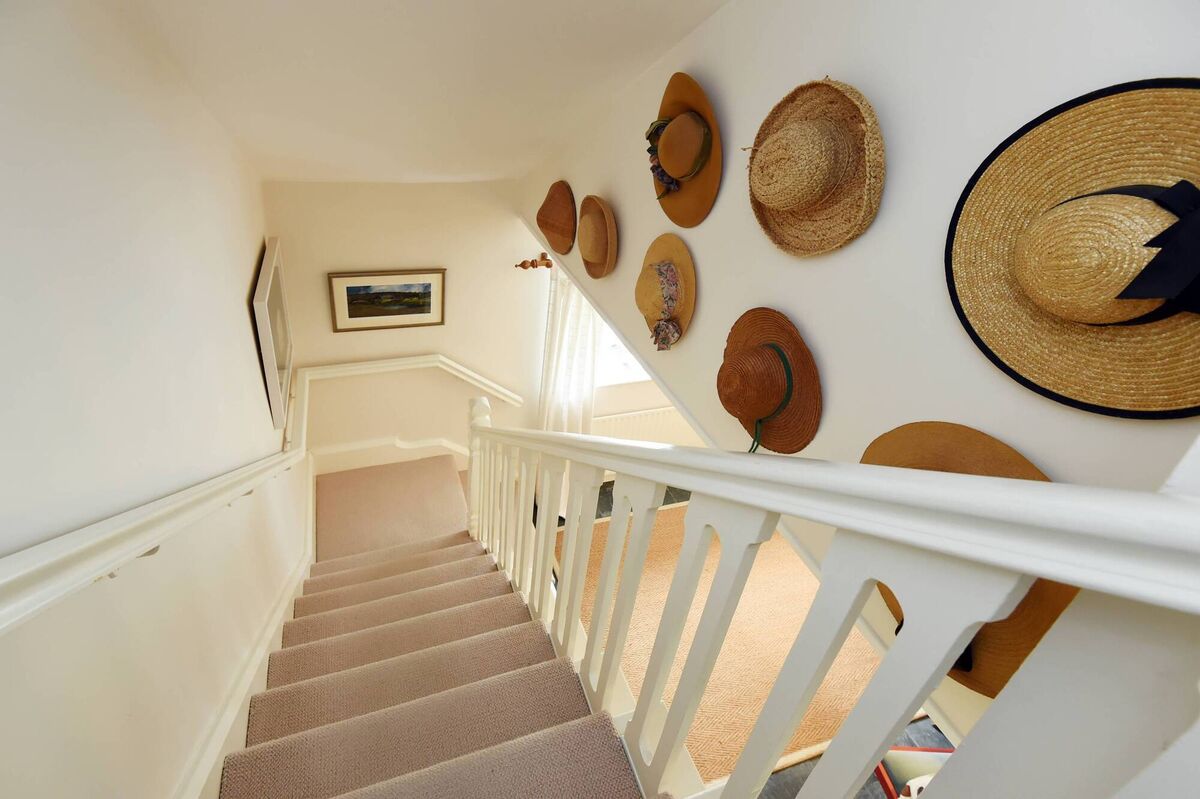
Mounted safely, and with some pride, on one wall is the propellor from a 1930s Tiger Moth biplane, owned at one time by the visionary individual who bought The Garden back in 1970, unwittingly rekindling an aviation link with the 10th baron, John Carbery in a sort of distant “keeping up with the neighbours” way.

The same man detailed and designed the curving one-off sunroom here, which must have been a nightmare to fashion and make weather-tight.

He wanted it to curve like a whale’s outline (this was ever before whale-watching became a West Cork business) and it’s skilfully done, with no two single panes of glass on its roof the same.

Hats off to the careful owners....

With over 4,000 sq ft of living space, spick and span (internal joinery and the many, many slightly arched window are in gleaming teak and other hardwoods; spending wasn’t skimped, ever) the entire property exudes a sense of remove and calm; even the sale progress isn’t being rushed.
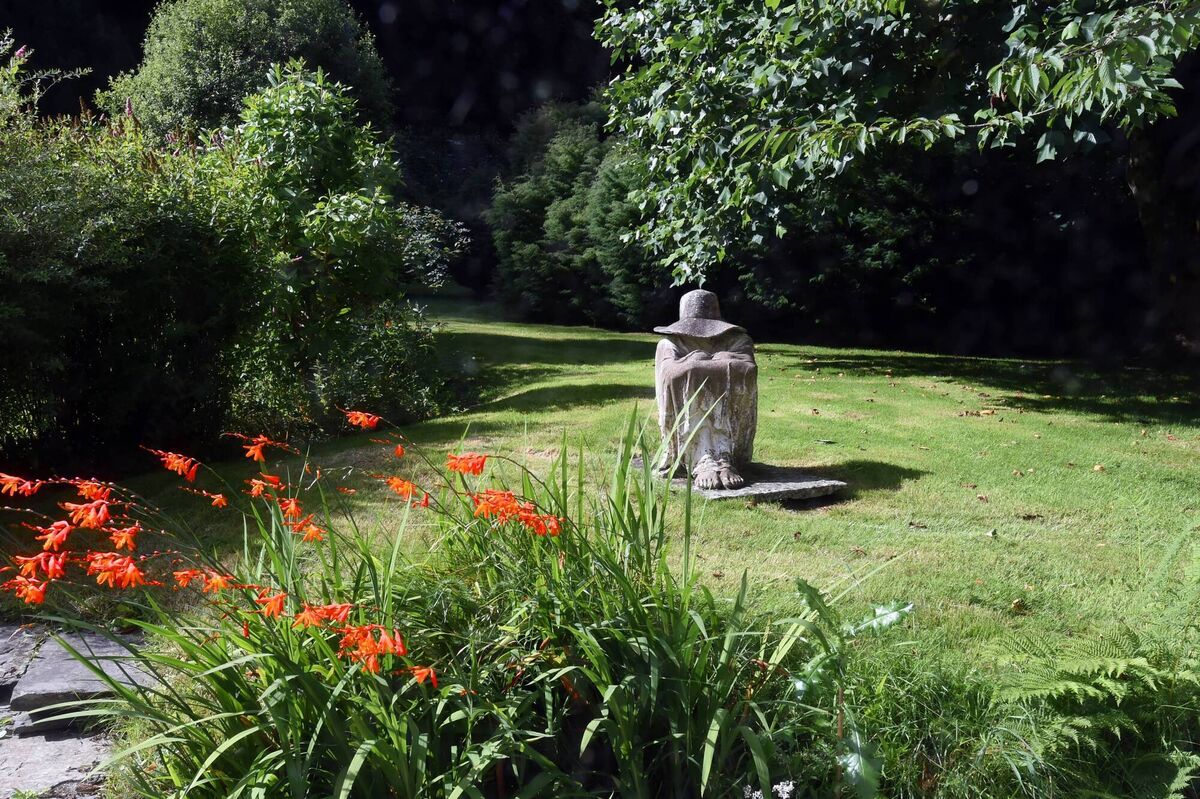
The photographs were done in advance, last summer, with former ace Irish Examiner photographer Denis Scannell “coming out of retirement” for this special visit, where he admits he was charmed, all day long that he’d happily have stayed all four seasons to savour and capture.

Sculpture by Ian Wright

Readying now for viewings by appointment, and with spring firmly in the air, this c 200-year-old property’s selling agent Jackie Cohalan of Cohalan Dowing probably won’t mind too much that it takes hours to show, to savour, to walk and to digest.
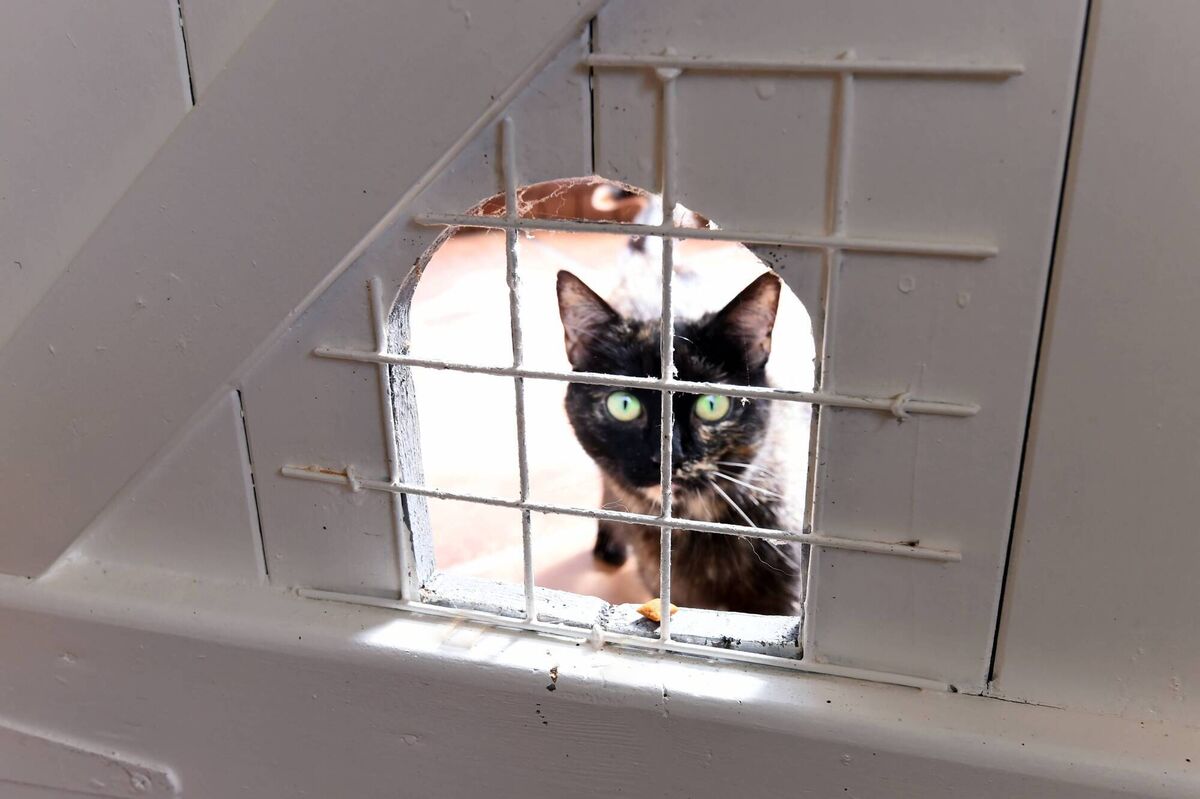
Does the fact she’s been promised eggs by the dozen on her last visit qualify as benefit in kind?

Did someone mention chickens?

VERDICT: The Garden is ready for its next chapter: green fingers and careful hands, only please need apply.

x

More in this section

Revoiced

Newsletter

Sign up to the best reads of the week from irishexaminer.com selected just for you.

Cookie Policy Privacy Policy Brand Safety FAQ Help Contact Us Terms and Conditions

© Examiner Echo Group Limited