'One of the most beautiful houses we'd ever seen,' says owner of €1.3m Victorian gem in Ardmore
Melrose Ardmore Brian Gleeson Property
|
Ardmore, West Waterford |
|
|---|---|
|
€1.3m |
|
|
Size |
283 sq m (4,133 sq ft) + 61 sq m 665 sq ft coachhouse |
|
Bedrooms |
6 + 1 |
|
Bathrooms |
4 + 1 |
|
BER |
Exempt |
IT was love at first sight for a young German couple who thought of buying an Irish property when, back 31 years ago, they stood at the gates of Ardmore’s lustrous period gem, Melrose.
They’d only arrived the day earlier on a January day in Rosslare, having holidayed together the previous summer touring Ireland: in between, the notion of living here had begun to take root.
“We’d half a mind to buy here,” recalls Herbert Mundler and on arrival all those decades ago they had overnighted in a B&B in Ardmore, and decided to take a walk around the postcard-pretty West Waterford village the next morning after the full Irish breakfast.
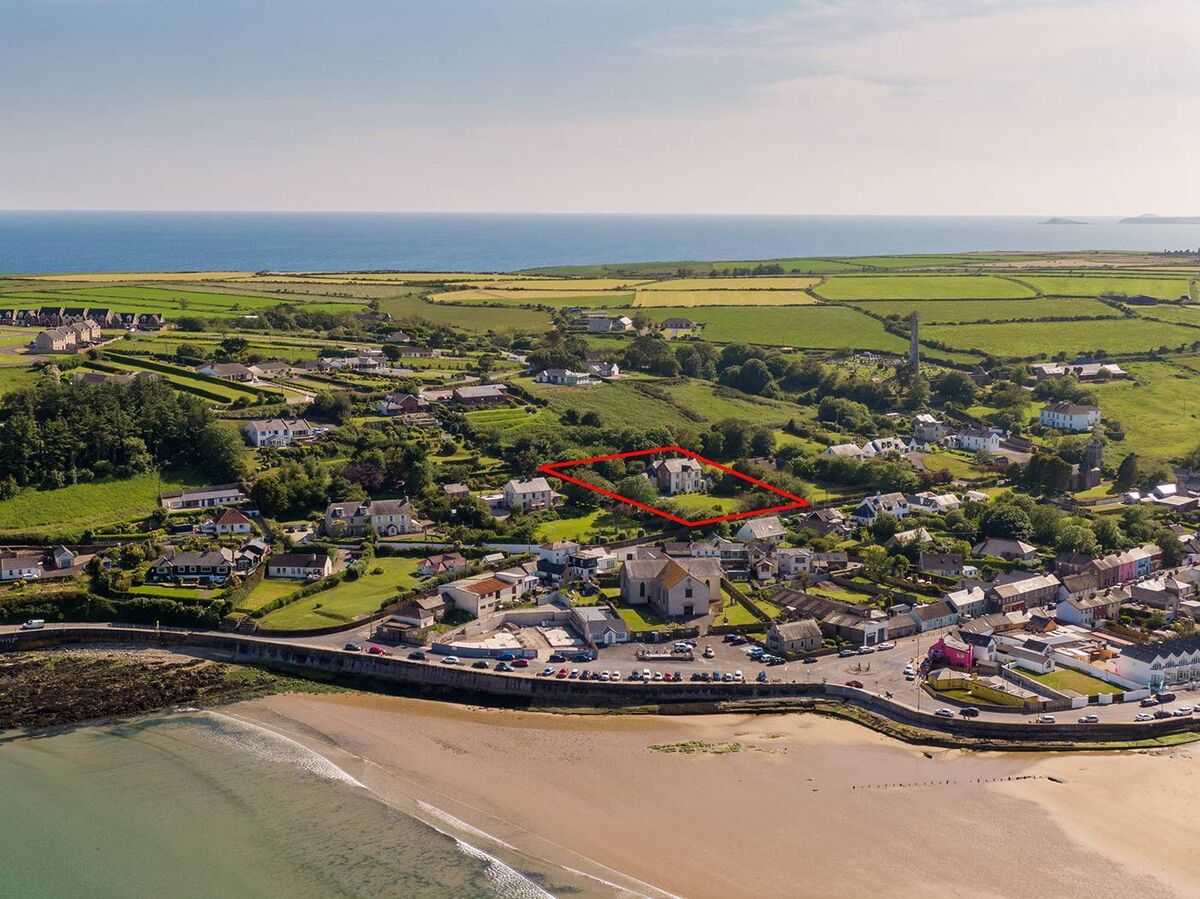
They strolled along the Rocky Road, and stopped in awe at the gates of Melrose: “it was one of the most beautiful houses we’d ever seen,” notes Herbert. He, and his then-girlfriend Anja took the plunge and bought the 1850s-built Melrose, steeped in local Ardmore lore.
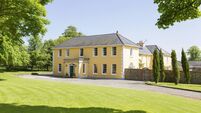
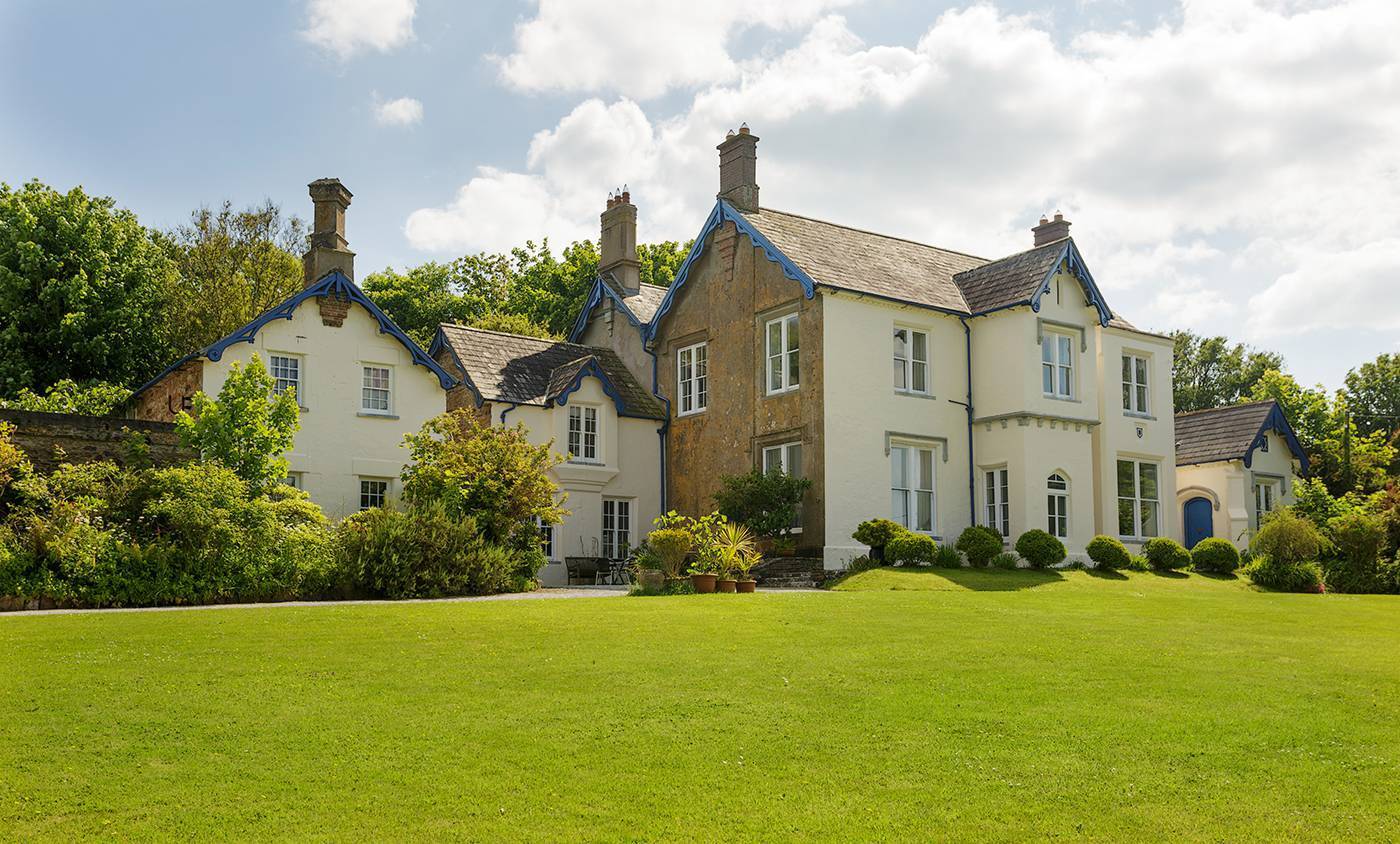
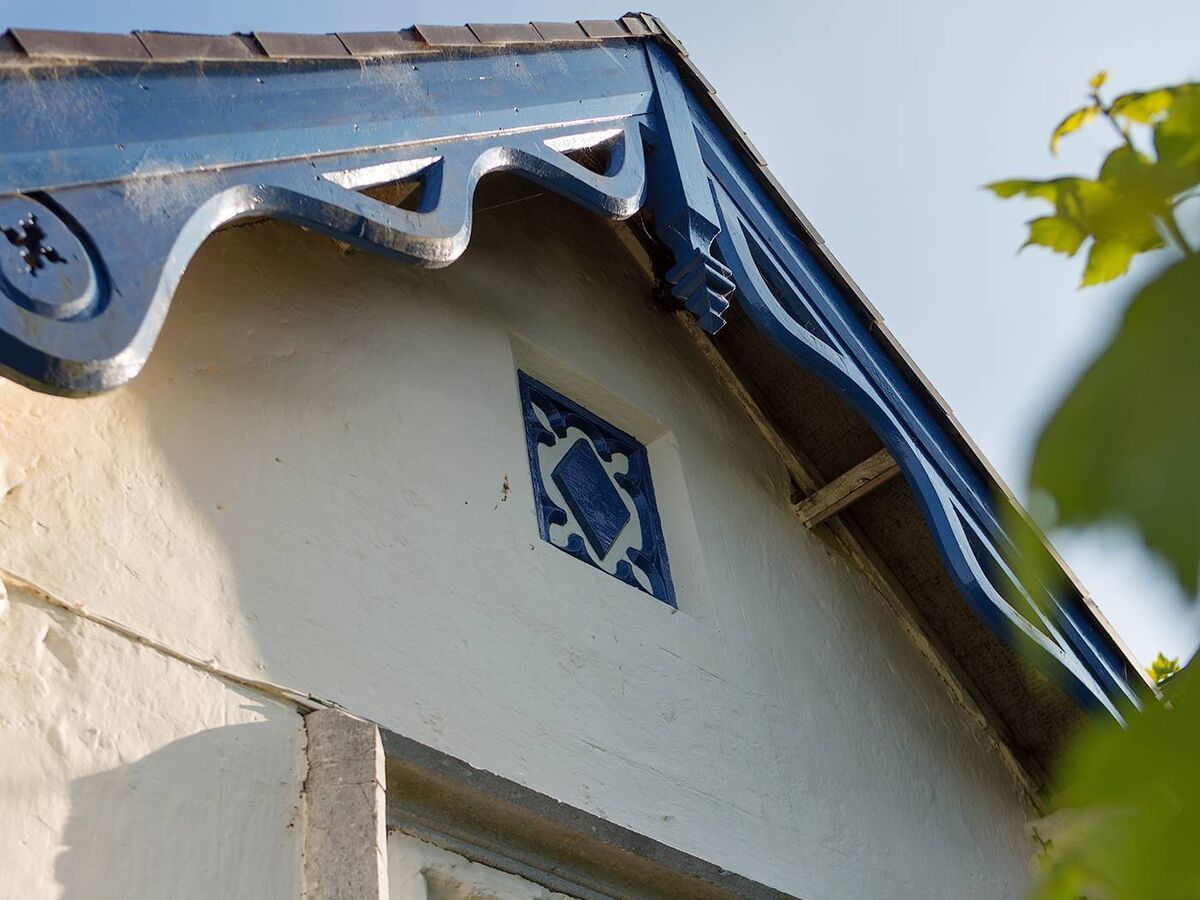
Victorian in origin, and Tudor Revival in style with many elaborate ornate touches and flourishes inside and out, and enhanced by Tudor–style brick chimneys under tall eaves and by carved bargeboards, the house on a walled acre had originally been owned by a wealthy West Waterford land-owning family, with extensive estate, and two centuries of links to Dungarvan and Ardmore.
The Odells built this home, one of three or four substantial large houses on the Rocky Road in the centre of Ardmore, with sea, Blue Flag beach and Round Tower views, and it was known for years as Odell Lodge, getting a change of name to Melrose in the early to mid-1900s.
In various ownerships after leaving Odell hands in the 1920s, it served its time as a guesthouse and small hotel for gentlefolk; had a drink licence at one time and seems to have served almost a private club in the mid-1900s.
Now selling to trade down, the current owner Herbert Mundler says he’d met a venerable member of the Jameson family of whiskey distilling fame while on a fishing holiday, and he told him he remembered sipping whiskey at Melrose.
While young themselves, Herbert and Anja threw themselves into rekindling Melrose’s tradition of hospitality, with Anja planting much of the gardens to the incredible state of naturalistic beauty they now are in, running it as a B&B for about ten years.
They wound up the B&B after Herbert got another job, utilizing some of his wide range of talents: he self-deprecatingly calls himself half a carpenter (he has remade several of the immense carved fascia and roof barges, some of them in place now on high for 25 years) and half electrician.
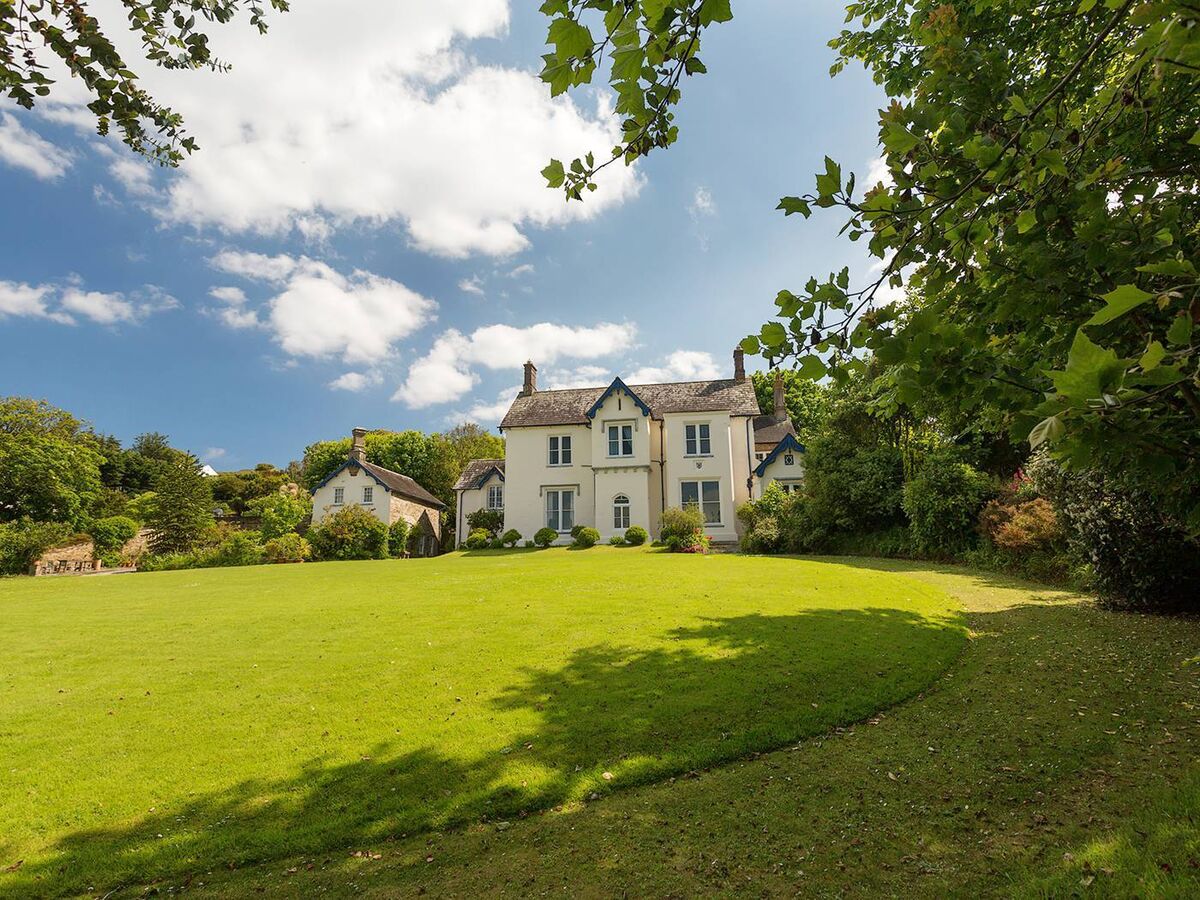
The fit and able couple kept up a round of maintenance and improvements, with the acre of gardens a vital part of the overall charm, glimpsed through the simple wrought iron gates that still beguile passers-by, much as they did back in 1990.
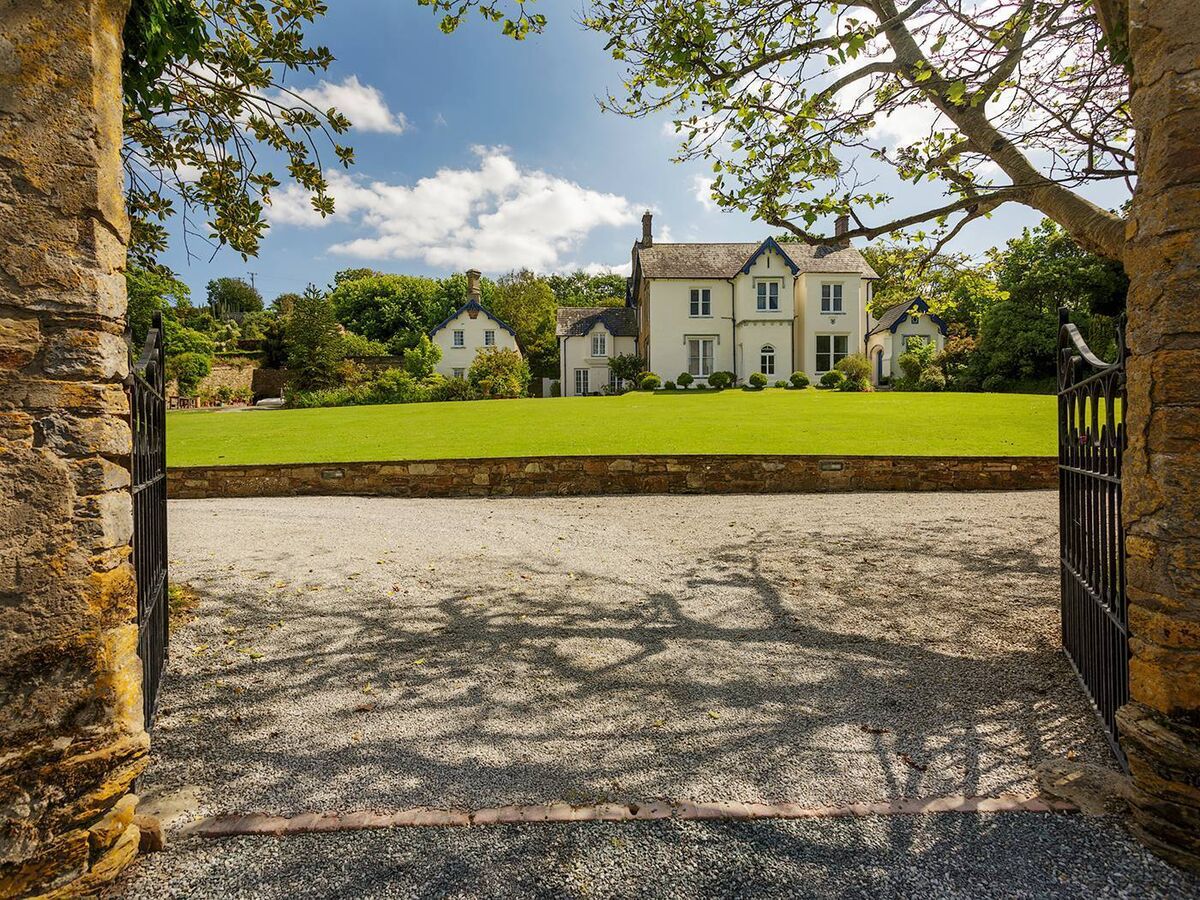
Herbert’s selling now to downsize, a few years after his partner Anja sadly passed away, and he says he’s hoping to trade down from Melrose to something a lot smaller, hopefully in the same hinterland as he’s into the sea, from fishing to surfing and kayaking.
Melrose has come to the open market in the past week with Ardmore-based agent Brian Gleeson, who guides the very rare quality property in the village core at €1.3 million, and he knows he has got quite the prize to hold out.
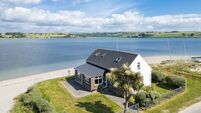
Mr Gleeson also very recently listed a beachfront more modern home at Curragh, Ardmore with swimming pool at €2.5m, now called Yankee Cottage. It sold for €2m back in 2016, when it was called Pebble Beach. However, its American owner for the past five years passed away from a COVID-19 related illness earlier this year, hence it’s resurfacing on the market.
Also in Ardmore’s upper price echelons, the Price Register also records the sale of Ardmore’s Old Rectory in 2018, at €1.7m.
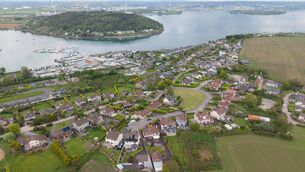
So, the village has a property pedigree for attracting well-heeled buyers and admirers, and it’s also regularly visited by some of Ireland’s wealthy and elite, who choose to stay at the five-star Cliff House Hotel and its Michelin-starred restaurant.
Might an aficionado of the Cliff House Hotel, Irish or overseas, emerge to pick up, or pick of Melrose? It’s very possible, and it’s only a short walk from that hotel, on a perambulating circuit that visitors and tourists love to do while in Ardmore.
It’s less than a five-minute walk to the bars, craft shops and restaurants, with places like the highly-regarded family-run restaurant White Horses currently doing a thriving summer 2021 trade in an outdoor courtyard setting.
Now that Melrose has come for sale for the first time in decades, might new owners decide to reinstate it as some sort of hospitality venue, as it has done on and off for almost a century?
Vendor Herbert Mundler quips that in previous spells it “was sort of a ‘tea-cosy’ comfortable fare and lodgings,” and he says the guests they had and who kept returning were aged from 20 to 80 years, and came from all over Ireland, the US, the UK and Europe.
Listing the 170-year old beauty Melrose, auctioneer Brian Gleeson says “it’s one of the special homes in the magic village of Ardmore in West Waterford, in the very heart of this historic seaside hamlet.
Melrose, he continues, “has charm and class in abundance. It’s one of those very rare opportunities for the discerning buyer to purchase a generational home in this stunning village.”
Its vendors have been magnificent custodians, he adds and holding out the prospect of its next chapter, he says it could as readily be bought as a private residence, or, buyers might opt “to share its beauty and history with others in making it a boutique home-stay/B&B.”
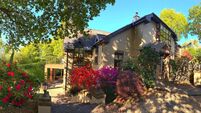
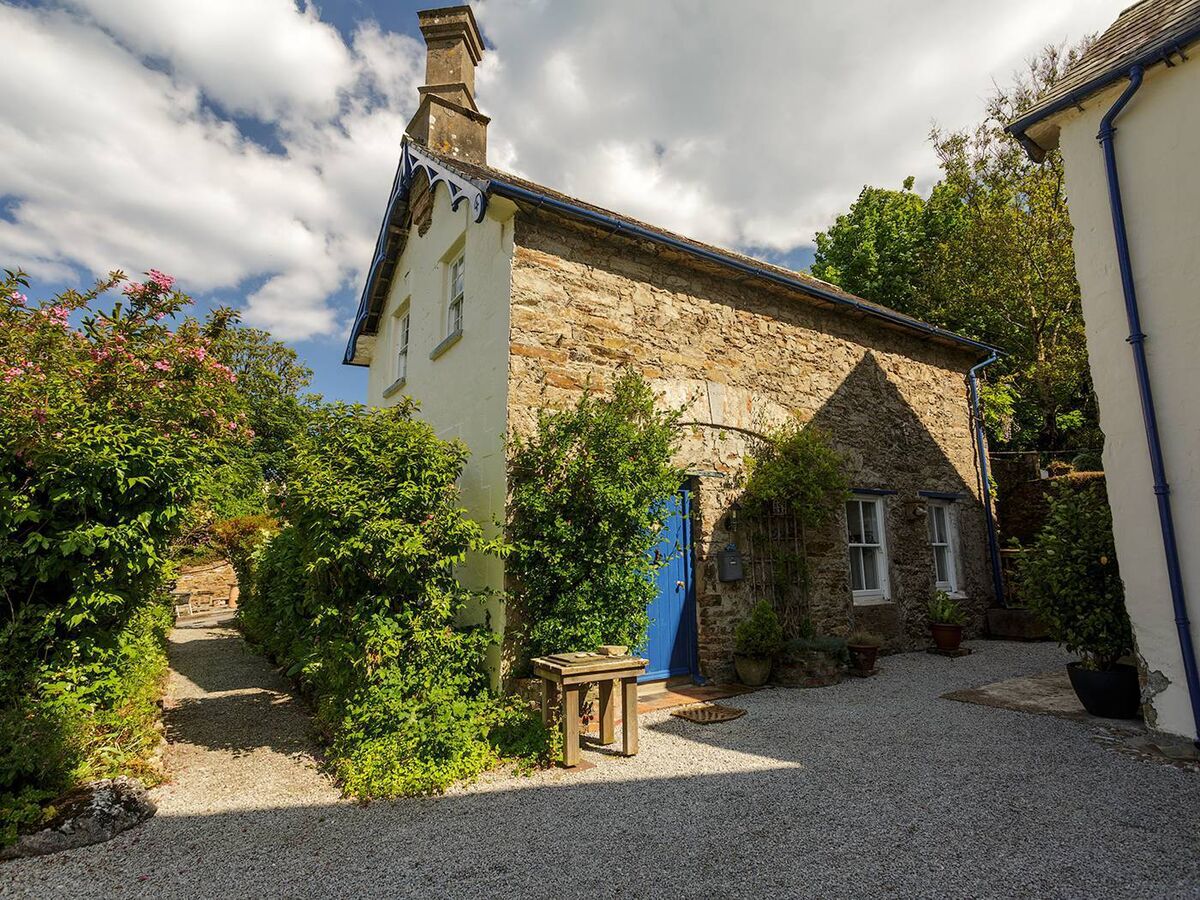
The impressive, tall two-storey, multi-gabled house with box and bay windows and its adjacent detached stone coachhouse, now a stand-alone lofted one-bed house, with feature stone arch with the date 1850 carved in its keystone, is towards the back of its walled-in site, with a neat circular drive around a central lawn.
Closer to the house are planted and landscaped patios, sit-out patios, walkways, rose-bed and cobbled paths, with several very mature fig trees. The fig trees give bounteous crops each summer and ripen fully, even in a dull Irish summer it’s said, and as well as the property's central approach gates, it has small and winsome pedestrian gates set at either boundary end, to the village’s Rocky Road.
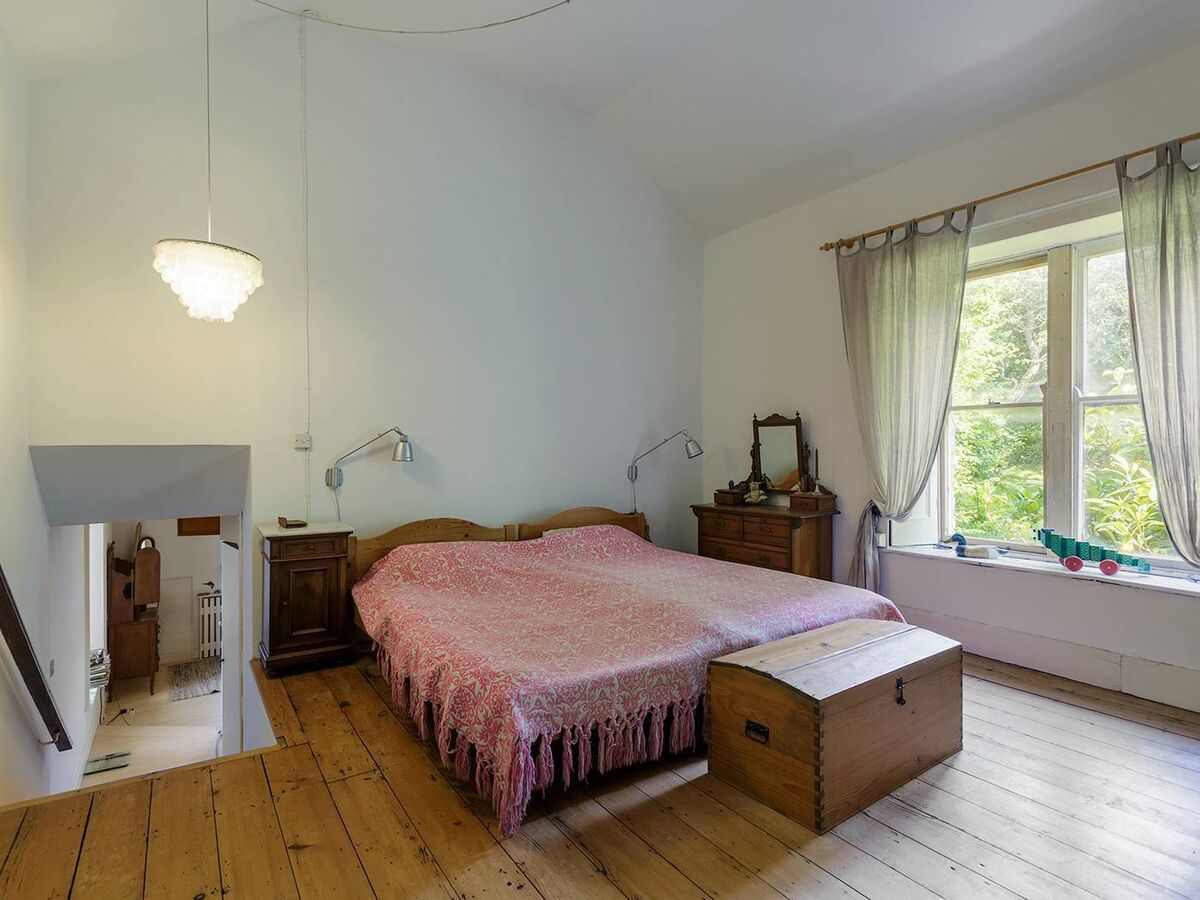
The main house has six first-floor bedrooms, one of them ensuite, plus a large main bathroom, office and study.
At ground, there’s an irregular floor plan, completely asymmetric, with front and back halls, kitchen, pantry, laundry, and store, as well as a one-bed self-contained annex attached to the house, and separate from the coach house unit.
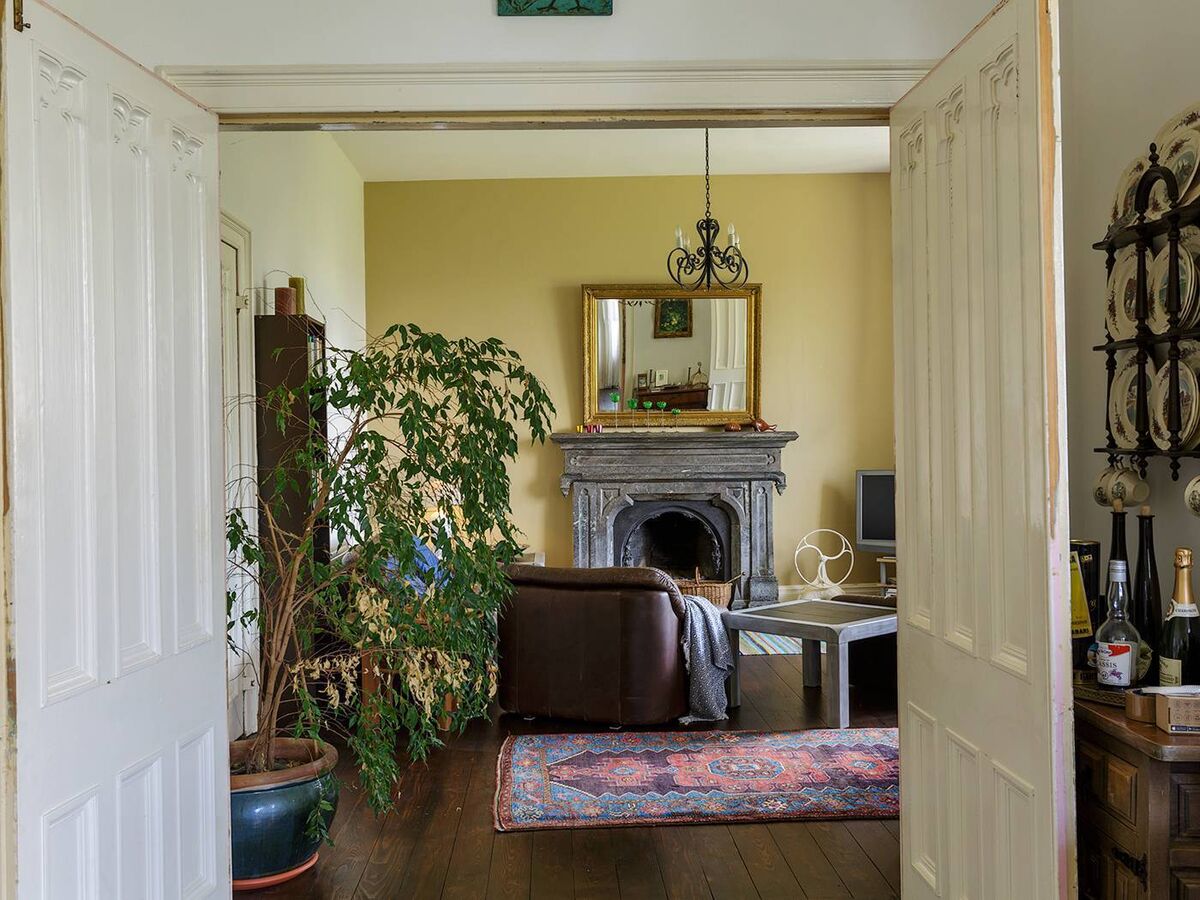
The two main reception rooms are linked together, each with views out to the front and each has magnificent limestone fireplaces, large and with carvings, but looking like they’d be as happily at home in a castle as a good-sized private home like Melrose.
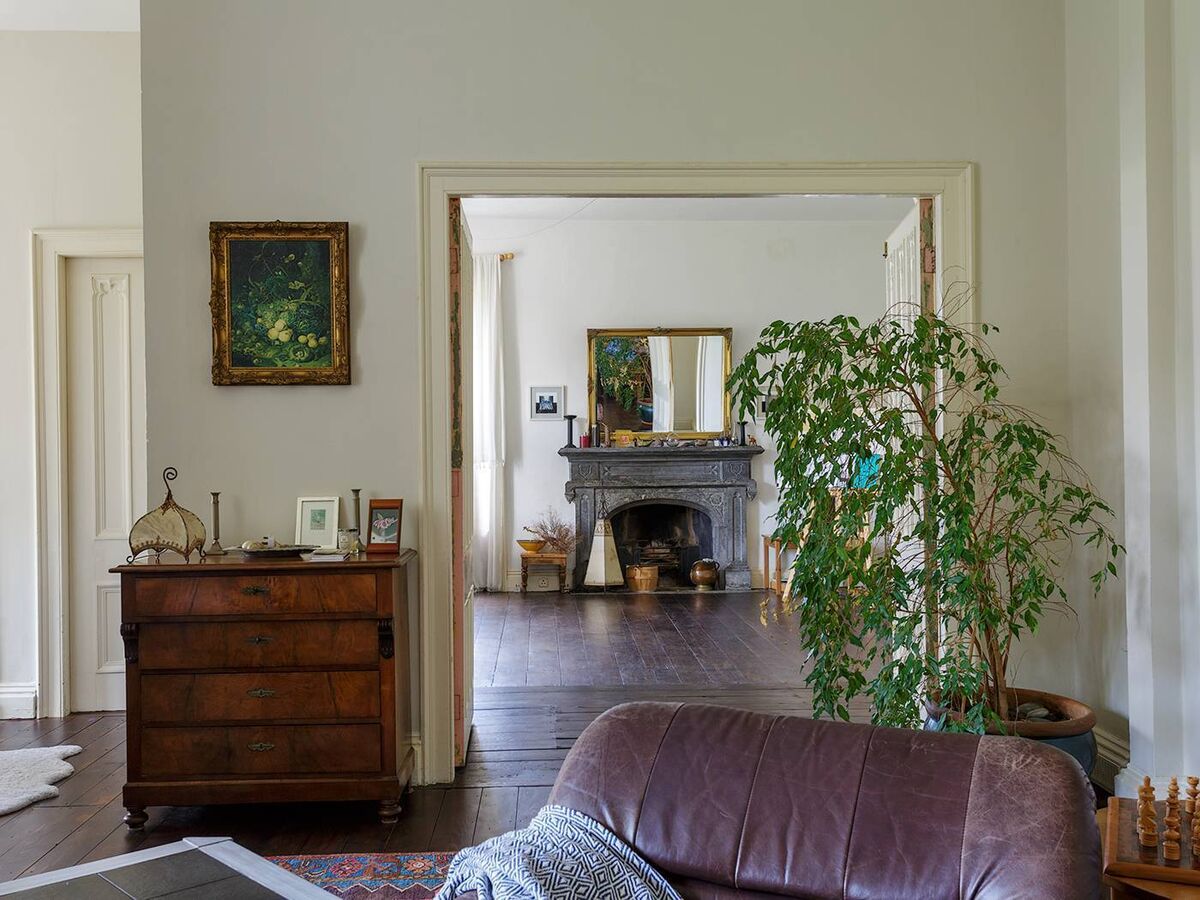
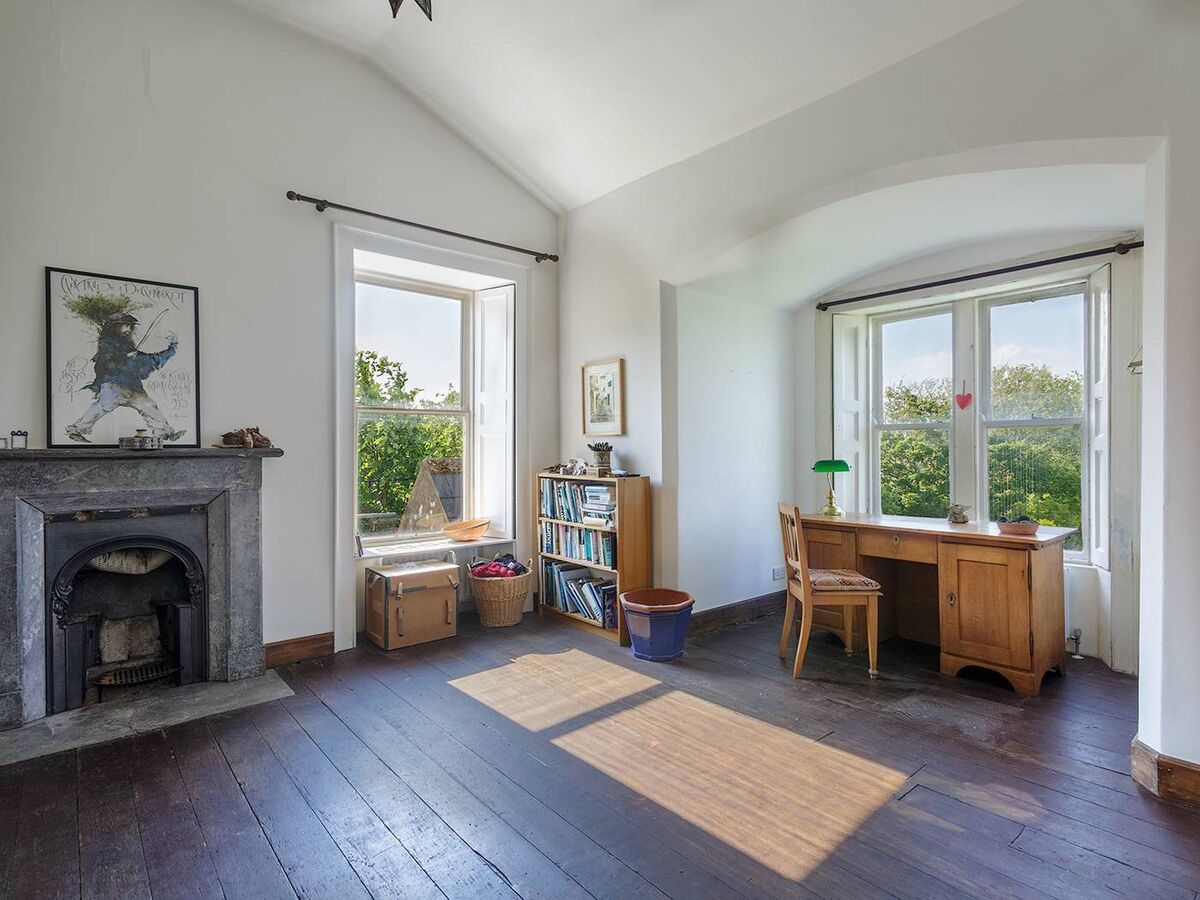
The owners have been told by OPW experts of castles with similar limestone, thought to have been Italian. Many times guests and visitors have queried if they were ever going to be sold, but rightly the owners held off, keeping the authenticity absolutely in situ. (Auctioneer Brian Gleeson’s description of the owners as custodians is apt.)
So it is with gothic arched sash windows, leaded glass, sturdy doors with carved quatrefoils, original floor boards and a whole lot more, pretty much all with the patina of age.
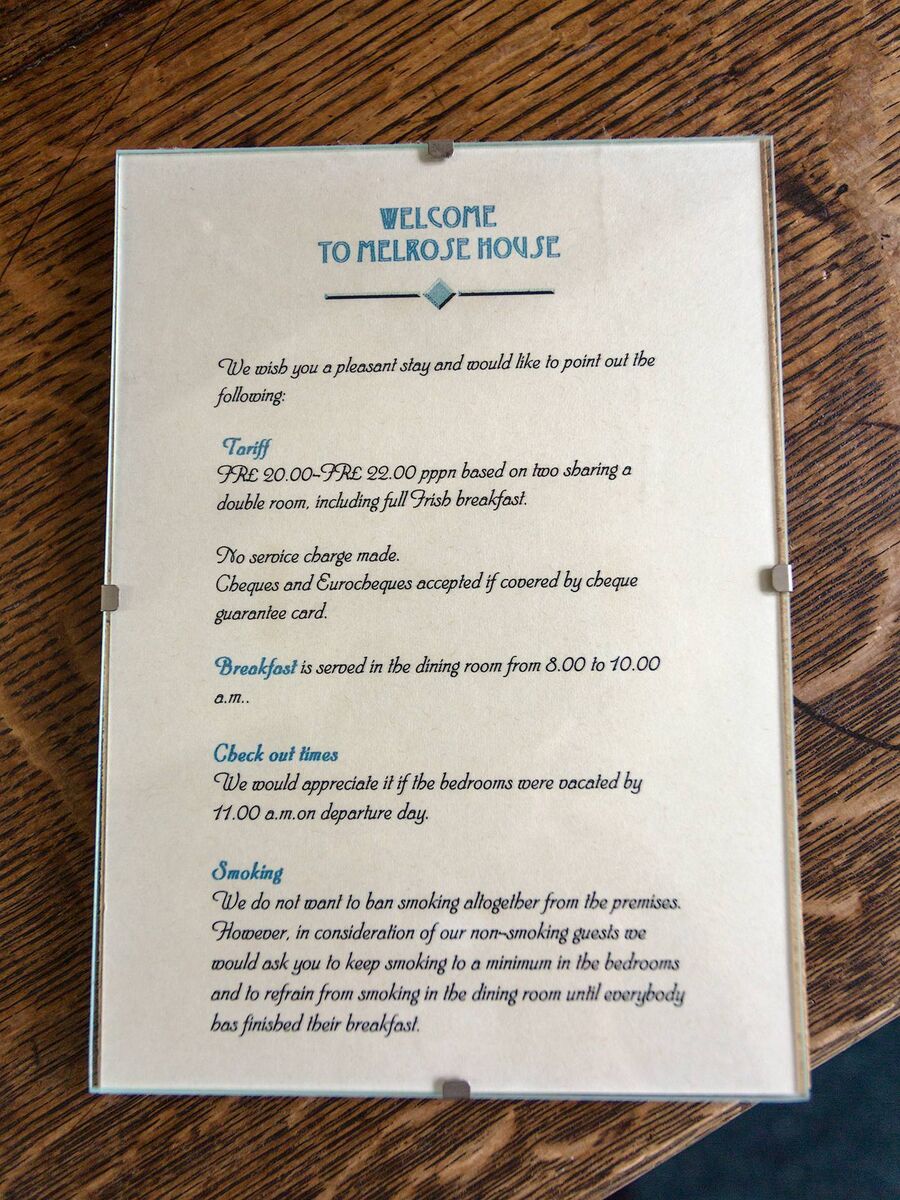
(A quirk of earlier times is the memento of printed advisory welcome notes on some of the six numbered bedrooms, advising guests to try to keep their cigarette smoking in bedrooms to a minimum and also asking them not to light up in the dining room until all other guests have finished their breakfasts!)
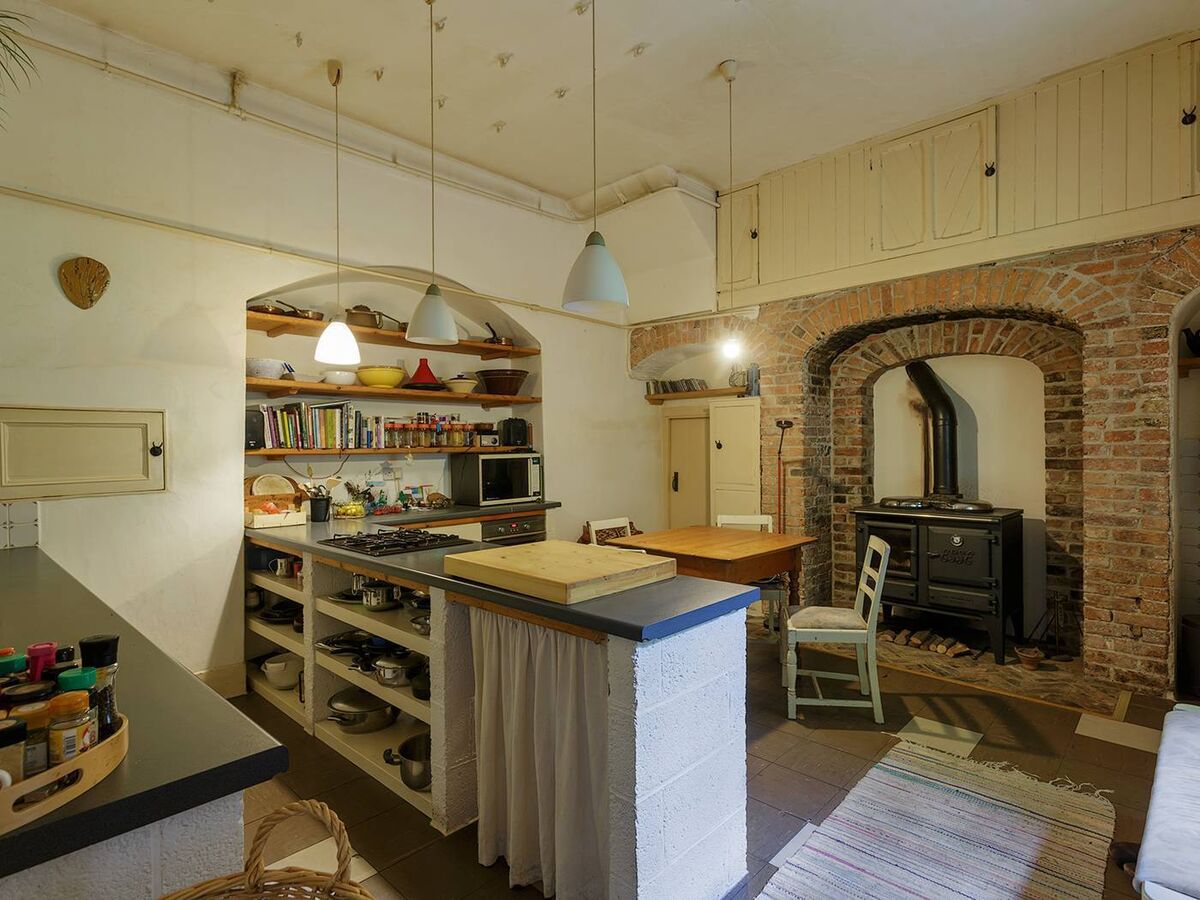
Apart from the main airy reception rooms, there’s a one-bed guest annex at ground level off the basic, very old world kitchen which still has the old meat curing hooks inset into its ceilings, with sturdy worktops set up on brick and block supports: it’s about as far from a fitted, sleek 21st Century German kitchen as you could conceive of.
The period house is as atmospheric as anyone could wish for as it is and, sure, a new owner could pour money into it, doing and redoing the whole or its many parts to top conservation standards.
But, as is often the case, the best conservation advice is to make interventions as minimal as possible (that said, the Buildings of Ireland Register reckons Melrose was itself built by Ardmore’s Odells on the footprint of a much earlier home and may have had a basement, now filled in.)
As attractive as the main c 4,100 sq ft is and the scope it now holds in next hands, is the charm of the 665 sq ft lofted coachhouse (with adjacent workshed), with open plan ground floor with fireplace, and first-floor bedroom with bathroom. It can be used for family, visitors, guests, or rental income/airbnb.
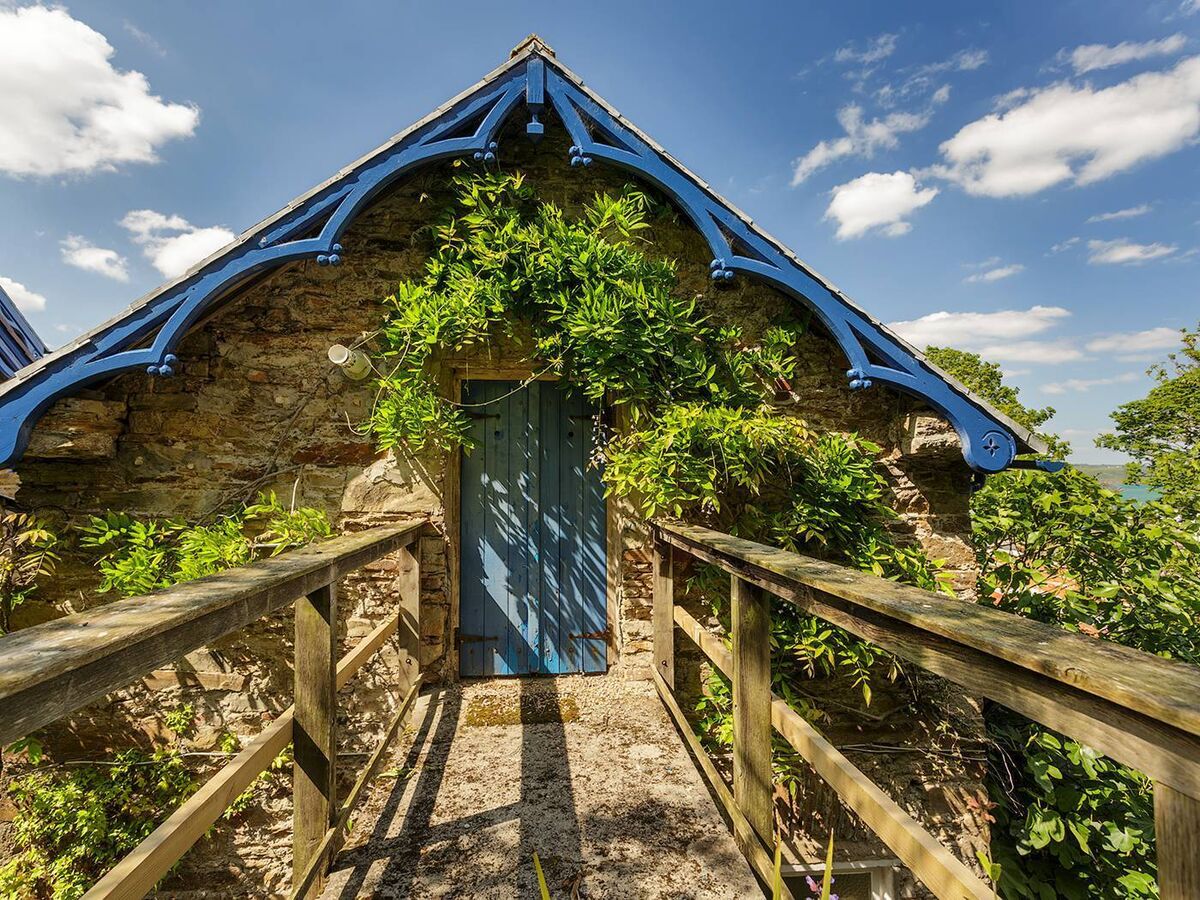
Quirkily, the coachhouse’s first floor has the option of a linking bridge access from a raised garden section to a gable door, over almost a moat-like rear passage showing the unrendered stone build of impressive Melrose itself.
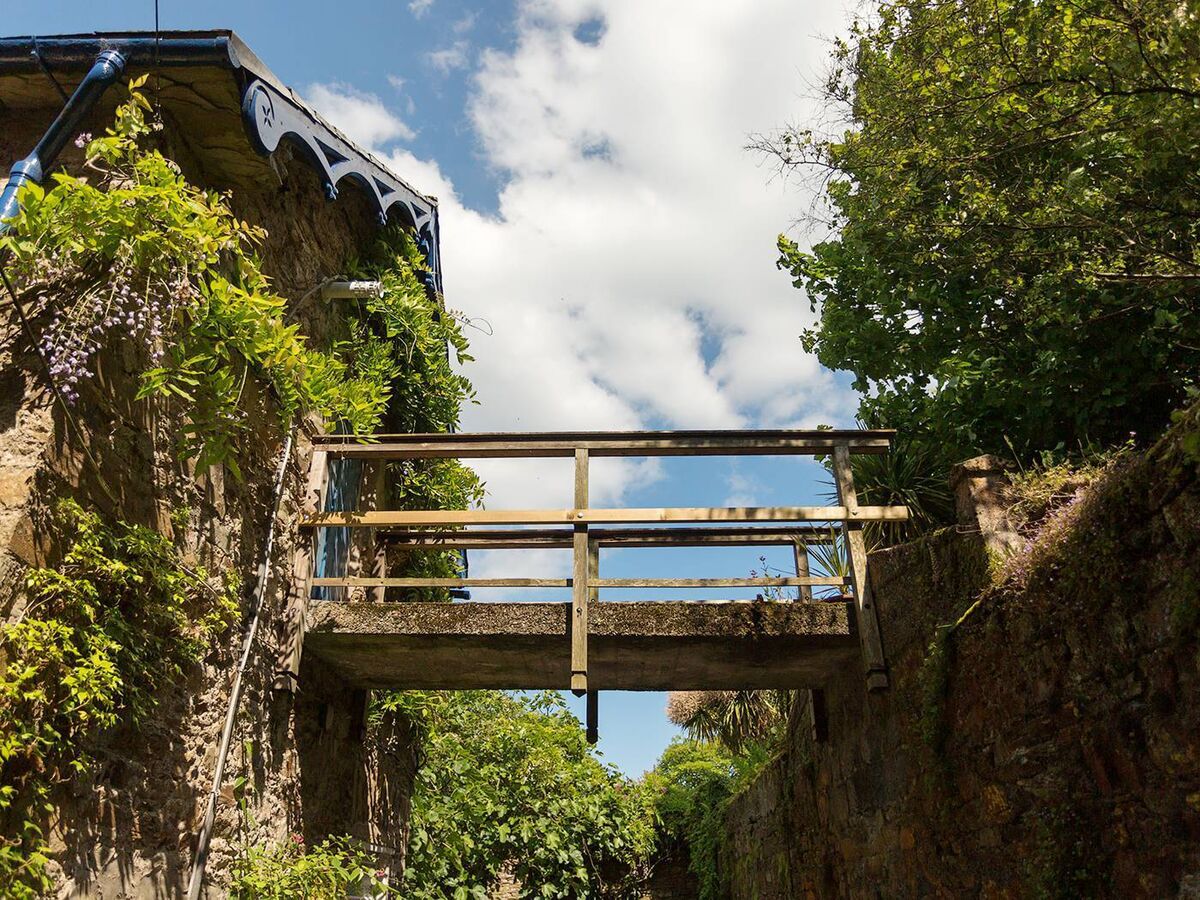
: Time has been kind to Melrose, a truly beguiling Munster seaside home, in chi-chi Ardmore.


CONNECT WITH US TODAY



Be the first to know the latest news and updates