Building advice: Can underfloor heating be installed as part of renovation of existing house?
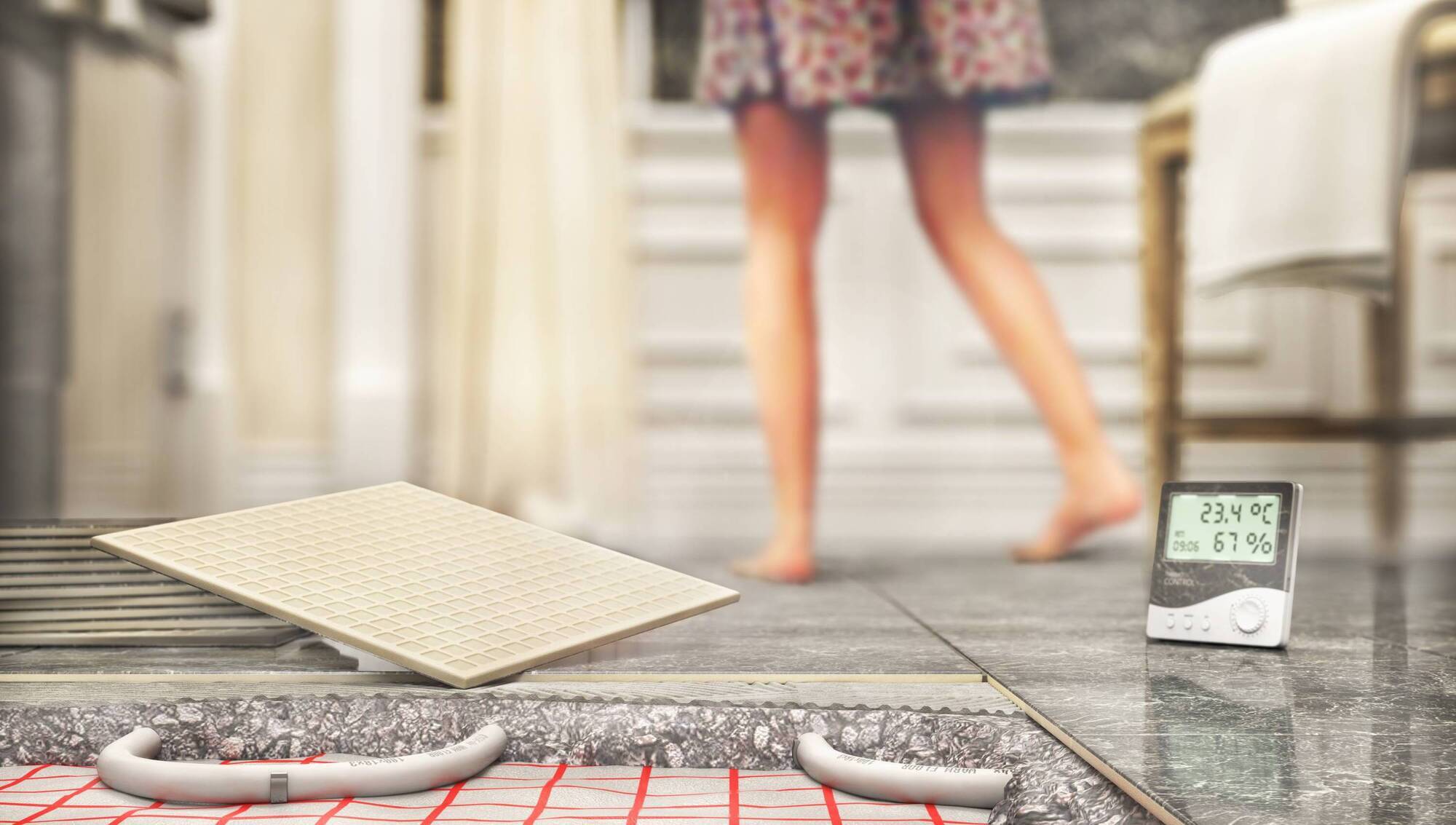
Underfloor heating is a very even heat source.
Â
Thanks Finbarr. So as we are still making our way through the tail end of winter we are likely still using our heating systems at full throttle. If, like me, you live in an old house, you likely have a gas or oil-fired system and radiators. You arrive home in the evening (from your 5km walk!) and the house may be freezing so you crank on the central heating at full tilt. In truth, if this is the case, you may indeed have a poorly designed central heating set-up. What is more efficient and creates a more consistent living environment is a thermostatically controlled underfloor heating system.


The benefits of underfloor heating are that you have a very even heat source (instead of localised heat from radiators) and, of course, you don't have to keep walls clear for radiators.Â
However, underfloor heating is a slow reaction time system so you need to have it controlled by thermostats so that you don't have a need to turn up the system in the evening when you come home from work (as you won't get a quick burst of heat!)Â
If you are renovating an old house and considering installing underfloor heating, I would advise you to go one step further and install an air to water heating system. Though you can still install a gas system in an old house, this will soon become a thing of the past due to our ambition to move beyond our reliance on fossil fuel heating.Â

In opting for air to water, you need to ensure you have a very well insulated and airtight house, but if you are considering a deep renovation to include underfloor heating, you may very well be at a blank canvas renovation stage in any case. It should also be noted that there are significant grants available for such a deep retrofit. It is often the case that if you have an old house with suspended timber floors on joists (instead of concrete floors), that you have the depth for installing underfloor heating beneath.
In a house renovation, I would normally opt for radiators on the first floor. It is a very complex and costly process to install underfloor heating to an existing house on the first floor. Several products for installing underfloor heating to timber joists have come and gone but none have as yet become commonplace that I am aware of. I also find that, as heat rises, your underfloor heating on the ground floor is the most important heating source and indeed many people prefer to sleep in a slightly cooler environment upstairs as we tend to cool down as we sleep.

If, however, you are looking at converting an attic or creating an external home office (a major growth industry at present!) I would certainly advocate investigating the newer electrical radiators now on the market. Like many building products, these would have been a cheap and nasty option to begin with but many of the sophisticated electrical radiators of today are well worth a look but make sure you choose wisely and opt for a system that can be electrically controlled and timed and, like most investments, you get what you pay for.
To sum up, if you are renovating your house to such an extent that you are considering installing underfloor heating, I would first seek advice on insulation and airtightness. Then I’d consider an environmentally friendly heating system such as air to water with an underfloor heating element on the ground floor. This will undoubtedly require a very considerable investment but, with the correct set-up, your initial down payment should afford you low running costs and a comfortable living environment for many happy years to come.
- Civil engineer Kieran McCarthy is founder and Design & Build Director with KMC Homes. He is a co-presenter of the popular RTÉ show .