Islands of Ireland: Gowlaun's fight against invasive species
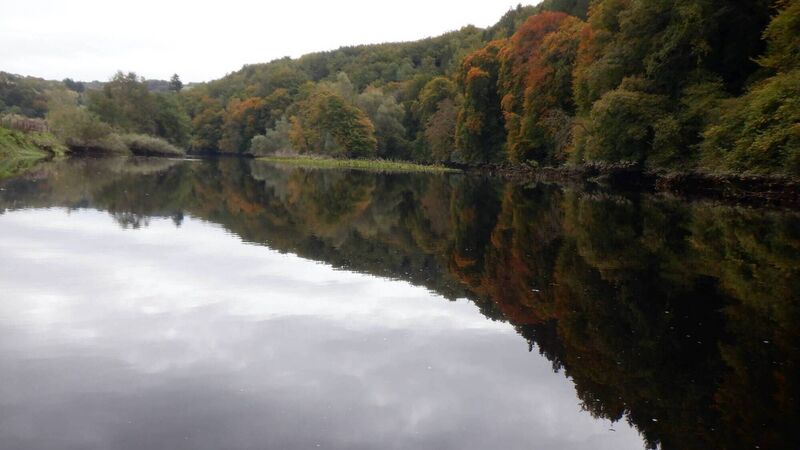
Gowlaun Island, centre, on the River Nore, Inistioge, Co Kilkenny. Picture: Dan MacCarthy
Kilkenny is not possessed of many islands but those it has are very pleasant.
The River Nore rises in the Slieve Bloom Mountains in Co Tipperary and flows south to enter the sea at Waterford having picked up the River Barrow near the harbour. It is tidal as far as the verdant village of Inistioge in Co Kilkenny which lies nestled in a breathtaking valley. A string of islands has been formed there as the less-dense river water from the uplands deposits its load on the saline water.
There are about five or six islands a few kilometres downstream of the village, most of them are unnamed, at least according to the Ordnance Survey maps. Gowlaun Island is the nearest to Inistioge while the others are clustered further south. In addition to the native deciduous trees, some of the islands have been planted with bamboo groves. One of the largest, and the only other with a name, is Harryboro Island.
This is a place of deep serenity and majesty. On a visit last week to land on these islands the entire scene with burnished leaves reflected in the blue, then the brown of the river looked like a painting by Belgian surrealist Rene Magritte. All that was missing was a giant bowler hat. High in the trees, an egret flew along with its legs hanging as if it had forgotten to tuck them in. Herons squawked and rose from the terrible sight of an approaching orange kayak.
Gowlaun Island is about 100m by 20m and the Nore, shallow in this part, flows gently past. It is dominated by deciduous trees and the pretty but invasive species Himalayan balsam. Community workers in Kilkenny have been doing their best to combat it. “Himalayan Balsam is one of Ireland’s most invasive plant species and is considered to be a threat to wildlife ecology along rivers especially their riparian areas,” it says on its website.
The group has had notable success on the Nore tributary, the Breagagh, where “nesting ducks and foraging swans returned to the restored leafy island and riverbank habitat, and also a return of a pair of squawking water hens to what had previously become an impenetrable forest of balsam”.
The river at this point forms the boundary of the magnificent Woodstock estate which was established in 1745 and whose mansion fell to the strife of 1922. Over the centuries fishing rights on the Nore have been the catalyst for several court disputes, usually between large landowners and local fishermen.
One celebrated case in 1896 which had dragged through the courts for a couple of years involved a case taken by Colonel Edward Kendrick Banbury Tighe of Woodstock House against a John Sinnott and others. The colonel claimed he was entitled to a several fishery, the right to fish in a particular place, from Dobbyn’s Water on the Nore to Gowlaun Island. Sinnott et al argued it was a public fishery.
The court was told the fishery was a several fishery belonging to the Monastery of St Columbe of Inistioge. The monastery lost the rights upon the suppression of monasteries by Henry VIII and possession of the monastery was granted to a Richard Butler of Ferns. The fishery then passed through many more owners including Viscount Butler of Tullespelean who was obliged to pay the king of England £28 12s 10d.
Colonel Tighe claimed in court that the defendants had fished for salmon with cots and nets beside Gowlaun Island at a place called the Gash. On the contrary, they claimed that there was enough to satisfy the court that even if the plaintiff had the right to the fishery that “it was subject to co-ordinate right of the commons and inhabitants in Inistioge”.
The defence had recourse to medieval jurisprudence before the case wound through British case law and concluded with victory for the plaintiff, the colonel.
Today, the Inistioge Angler’s Association controls around 2km of trout fishing on the Nore at the village.

CONNECT WITH US TODAY



Be the first to know the latest news and updates