Peter Dowdall: Love your garden centre
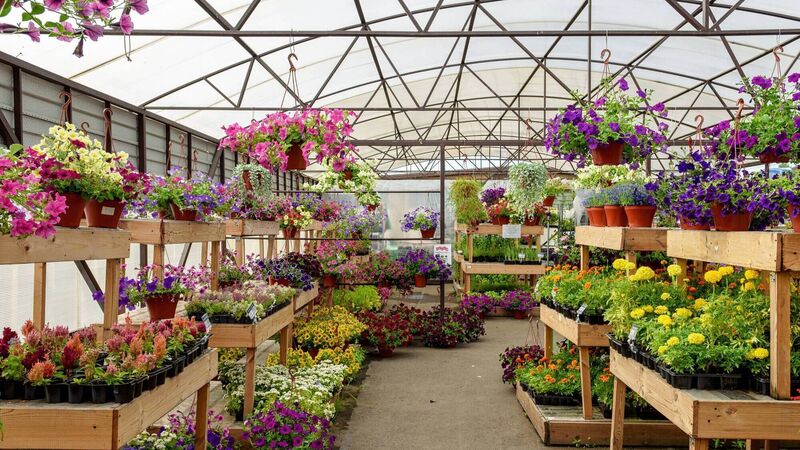
Independent garden centres are local businesses, run by people who know their stuff. File picture
We're into April now, and if you're anything like me, you've already been drawn into a garden centre at least once. The car parks are full, the trolleys are piled high with colour and trays of bedding plants glow like something from a dream, cerise, cobalt blue, butter yellow and somewhere between the patio roses and the clematis, you've already fallen a little bit in love with something that you have no business buying.
That's fine, that's what garden centres are for, but before you load the boot and head home full of hope and optimism, I want you to stop for a moment and think about the garden you actually have, not the one you'd like to have and not the one on the label.
While I’m on the subject of garden centres and I mean actual garden centres, not the wilting tray of pansies wedged between the cornflakes and the cooing oil in your local supermarket, can I take a moment to appreciate what we still have?
Independent garden centres are local businesses, run by people who know their stuff, who often grow their own or source locally grown stock, and who have spent years learning what actually thrives in local conditions.
The plants on their benches haven't spent a fortnight in a centrally heated warehouse before being dumped outside in an April frost. The person behind the counter can tell you whether that hydrangea will cope with your exposed site, or whether the soil in your area needs amending before you even think about planting. That kind of knowledge is worth a great deal, more than any gardening book or website.
Support them while you can, because if the independents go, we'll be left choosing between whatever survived the supermarket chiller and a click-and-hope delivery from a warehouse in the Netherlands.
Plant labels, though, are still, very often, works of fiction, regardless of where you buy them. They're written for somewhere, a hypothetical perfect garden in favourable conditions with decent drainage, reliable rainfall and reasonable shelter. They are not written for a west-facing slope in Skibereen, a wind-scoured coastal garden in Kerry, a shaded city centre terrace, or a boggy half-acre in Mallow.
My advice is ignore the labels to a large extent and instead, before you buy a single thing this spring is go and stand in your garden and ask yourself three questions: Where does the wind come from? Where does the water sit after rain? Where does the sun actually reach and for how long, and where does it never reach at all?
We talk about rain endlessly, it's our national pastime, but wind can often do far more damage. It desiccates plants, it rocks root systems before they establish, it snaps new growth, it turns a beautiful large-leafed specimen into a tattered wreck in days. If your garden is exposed, particularly on the west or south-west, where Atlantic weather is at its most harsh, then your plant choices need to reflect that. Forget the tall, structural plants you've been admiring. Think first about shelter, such as hedging and windbreak planting, even temporary screens while things establish. These may not sound glamorous, but they make everything else possible along with providing valuable biodiversity value.
Don't be seduced by the ornamental grasses swaying beautifully in the garden centre. Some will thrive in wind but others will be flattened and brown by next week, again, don’t be afraid to ask in the garden centre, us gardeners are a friendly bunch and only too happy to share the knowledge.
Wet soils, particularly heavy clay, holds water in a way that kills more plants than any frost. In the garden centre, our heart is taken by lavender, Mediterranean herbs, drought-tolerant plants with silver foliage that positively crave free-draining conditions and then we plant them into ground that sits wet from October to March and then cracks in the drought of summer. They don't die from cold, they die from wet soil, the roots literally drown.
If your garden drains slowly, embrace it. Astilbes, hostas, ligularia, moisture-loving primulas, irises, are plants that will thrive in wet soil.
We’re used to rain, wind and wet soils, but something that is becoming more common each year is long stretches of summer heat and drought. The summers of recent years have shown us at times, that water stress is a real problem in Irish gardens, so when you're assessing that sunny border, think beyond spring.
Some of the most popular summer perennials are surprisingly thirsty. Others, such as sedums and eryngiums, will shrug off weeks of dry weather and keep flowering regardless. As always, improving the soil will help here. Adding as much organic matter and a biochar based plant food to the soil will all improive soil structure and thus the soils ability to sustain healthier plants.
Like with every aspect of gardening, planting in shade is largely trial and error. There are many plants which will thrive in shade such as, ferns, hellebores, epimediums, foxgloves, astrantia, pulmonaria and geraniums but it really does depend on eah individual area as to which ones will survive.
So this April, do yourself a favour, before you reach for whatever's catching your eye, take ten minutes in your own garden, then head to your local garden centre, talk to someone who knows their stuff, and buy accordingly. You'll spend the same and grow far more and you'll be keeping something alive in your community, that no supermarket aisle could ever replace.
CONNECT WITH US TODAY



Be the first to know the latest news and updates