Clash and create: Decorating with antique furniture and timeless period pieces
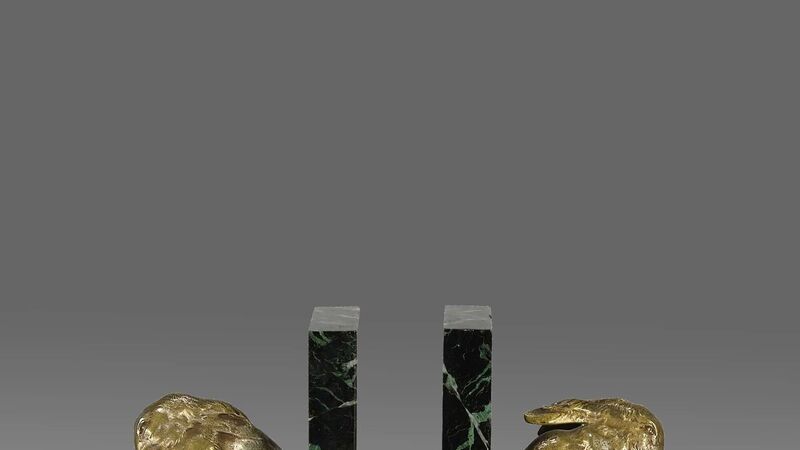
A gorgeous pair of gilded bronze bunny bookends from Art Deco and Art Nouveau London specialist hicknet.com (sold).
This year’s most interesting decorating is all about clashing eras and making idiosyncratic marriages. Let’s lose the fear and cause a stir - introducing one or two period pieces into those glittering acres of brand new everything.
I know we all love our mid-century sideboards, but there is other elder furniture that still earns its place, including a great chest-of-drawers. Both authentic antique chests and bold vintage reproductions from the early 20th century are widely available. My choice would be a curvy-swervy double-serpentine French or Gustavian (Swedish) bombe. These commode chests on elegant bandy legs with their rich veneers and marble tops really are the bomb in a hallway, corridor, or putting pretty Parisian manners on a bedroom. Taken from the era of Louis XV, look out for revival Rococo at auction in pretty inlays, stringing and ormolu gilded bronze mounts. If you prefer something less fussy, more angular Georgian/Victorian cabinets in toffee dark mahogany or rosewood veneers are well priced for a great piece of character storage furniture. Top tips: Ensure drawers in any cabinet run or budget for some gentle restoration (a rub of a candle to the base of the drawers may help). Don’t over-brighten old timbers and veneers with clumsy restoration as they look tacky when dolled up to a nail varnish shine. Let honest character poke through.

There’s something fascinating about seeing your reflection in a mirror that will have been used to preen and to brighten rooms in distant centuries. Lifting away the visual weight from walls, multiplying and refracting precious light from windows and candles - over-mantles, pier mirrors, girandoles, and various glasses became a vital element in the theory of total-design for architects from the time of Robert Adam (1728 1792). Mirror glass was so precious it was recycled from the 1700s, so the mirror you buy may be older than the frame it’s in. Tall over-mantles will need room to “breathe” so allow at least 15cm from any ceiling if you’re putting your flashy friend over the fireplace. A richly carved deep frame can be very heavy – generally top-heavy. Secure it firmly to the wall with the right anchors. Top tips: If possible don’t replace an original mirror plate with the spidery traces of a fine ink drawing. Foxed silver has a magical, merciful, gilded distortion that removes ten years - fifteen if you lean well back and use some north westerly natural light. Who needs all that rude, HD revelation? For large pieces kept on the floor (say behind a low backed sofa) – keep these mirrors in adult quarters.
Heart stopping classical and modernist bronze sculpture is a fertile ground for decorating (even pretending with something brand new in period style). Think about using one on a table-top, filling a lit or open architectural niche, or place something wow on stout shelves in a mixed collection of small pictures, books, plants, and little object d’art you’ve picked up over your lifetime. Bronze is an alloy of copper and tin, and together with its impressive weight, and ability to carry stunning detail through casting, it has an unrepeatable natural patina. Now, whether you want a muscular 1920s jaguar to stalk the front hall table, Buddha on the bedside, or a Victorian classical figure of antiquity loitering in the guest cloakroom – be warned, bronze is reproduced and faked extensively. It’s also easily confused with cheaper (weighted) spelter. There’s nothing wrong with buying a “bronzed” resin or base-metal if you’re know what you’re paying for. Top tips: Original patination is key to a real bronze’s value. There will be a difference in the colour depending on its age, the composition of the bronze and any applied chemical, painted finish or gilding. Buy pricey pieces from a reputable dealer and get a detailed written receipt. Dust your original bronzes – that’s all the cleaning they will ever need.
Colour is back with a shout in 2026, and a piece of heavy, tinted glass is a wonderful way to add a bit of daring to the pale rooms holding us aesthetic prisoner. Sommerso glass is a family of distinct hand-blown artisan glass created in Italy during the mid-century. At one time, charity shops had bowed shelves heaving with the stuff as it was a popular souvenir when travel to continental hot spots exploded in the 1970s. Once distinguish from new “in style” pieces, it’s a brilliant area for collecting and mixing up with new art glass. What makes Sommerso special is the layering of one glass colour on another, with repeated blowing and dipping during the creation of various vessels. The technique, developed by the house of Venini, can be simply one colour on a clear glass or 2-3 real colours (a kingfisher blue, mesmerizing green, rich berry pink, or earthy geode shades). Contemporary abstract forms of Sommerso (rather than the twee birds, hearts, and fish) make eye-catching centre-pieces and the bigger the better. Top tips. Some named makers like Flavio Poli, are hugely expensive, but there’s plenty of everyday, period Sommerso at good prices. If there’s a label on the vase or form - keep it attached. Look for nibbles, flea bites, or any cracks as this decimates value. For pure outlines, explore Scandinavian art glass including Vicke Linstrand for Kosta (I have a signed whopper of Lindstrand’s work, picked up for tenner at a boot sale). Showing them off? Back-light your pieces.
I’m always amazed by the number of ignored or cheaply sold old paintings, prints and mixed media lovelies at auctions. There’s something for everyone, and often the purchase would be worth it for the magnificent frame alone. When buying art, there are no rules. Don’t shackle your eye with pretentious expectations of what you should bring home. If the composition, the colour, the subject matter, or the holistic vibe of a picture calls to you? Buy it. If I had one tip, it’s to go for large works that can hold the centre of a gallery wall. Gradually pick up other pieces or even frame up the kids’ artwork to curate a growing collection you can shuffle through the seasons if you like. It’s always nice to have a signature, and with just a name we can often trace the history of the picture to its creator. Online art auctions are not just for rich investors and are some of the best spring fun to be had with your clothes on. Leave an auto-bid within your means (don’t forget the VAT and auction commission and cost of getting the thing home) and let it ride. Top tip: Hang paintings with the mid-line of the work at eye level. This could be higher or lower depending on whether you will be sitting or standing while falling into its everlasting mystery. Great frame, rotten picture? Corral something three-dimensional right onto the wall within the void of the empty frame, sans glass.


CONNECT WITH US TODAY



Be the first to know the latest news and updates