Peter Dowdall: When to cut back hydrangeas and how to prune ornamental grasses
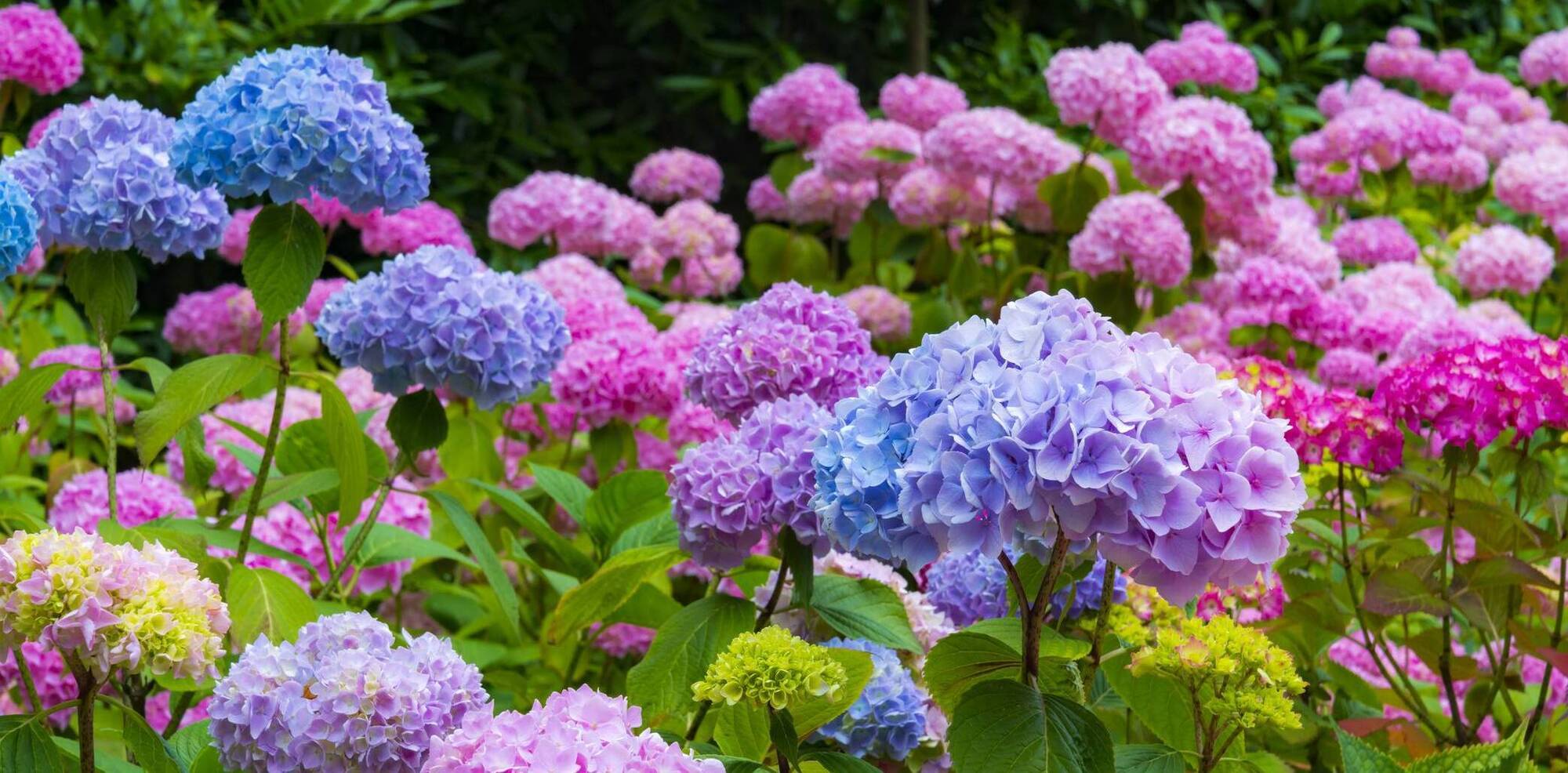
Purple, blue and pink Hydrangea flowers (Hydrangea macrophylla). File picturesÂ
Two of the questions I am most often asked at this time of year are when to cut back hydrangeas and how to prune ornamental grasses. Both are signs that the switch is going off within us, and we need to get outside to the garden once more.
February sits in that almost-spring space, light stretching longer each evening, buds beginning to swell, soil workable when it's dry, but still cold.

There is quite a lot you can safely do now, when the weather does let you get out there.
Most garden hydrangeas in Ireland are either mophead or lacecap types, forms of Hydrangea macrophylla. These flower on wood formed the previous season. That matters because if you cut them back too hard, you remove the flower buds. As a rule of thumb, if you cut below seven nodes, counting from the ground up, you are probably not going to have flowers this year.

Instead, what you can do now is to remove last year’s flower heads just above the first or second strong pair of buds beneath them. Take out any completely dead or weak stems at the base, and that’s enough.
If you have Hydrangea paniculata or Hydrangea arborescens, which flower on new growth, you can cut those harder, down to about 30cm–45cm high.
Ornamental grasses create similar confusion. People worry they will cut at the wrong time or damage the plant. The first distinction to make is between herbaceous deciduous grasses and evergreen grasses.
Herbaceous grasses such as calamagrostis and miscanthus provide straw-coloured stems which give beautiful winter structure, food for small birds and nesting spots for beneficial insects above ground, but they are not alive above the ground. Life has retreated beneath the soil surface.
Before fresh growth pushes up strongly from the base any day now, is the correct time to cut them back. Gather the old stems into a bundle and cut down to 10cm–15cm above ground level, trying not to cut into emerging shoots. A good clean-up now allows light and air to reach the crown and makes way for fresh growth.

Evergreen grasses are different. They do not want to be cut to the ground. Stipa ponytails, for instance, keep foliage through winter. It looks tatty by February, but that does not mean it needs hard pruning.Â
Instead, gently comb through the plant, pulling out dead blades; you are cleaning rather than cutting. If you shear an evergreen grass flat, it may recover, but equally, it may not, and you set it back and risk creating a bald centre.

Hardy fuchsias can be pruned now, too. These flower on new growth, so don’t be scared. Cut back to 15–30cm above ground level, just above a pair of healthy buds. You may find some top growth blackened by frost. That can go entirely. Fresh shoots will emerge from lower down once temperatures rise.Â
The same principle applies to buddleia. If you want strong, flower-laden stems in summer, prune hard now, down to about 30cm–45cm. A light trim will only produce weak, leggy growth and smaller flower spikes.
Another job for now is moving deciduous shrubs, but only before budburst becomes advanced. If the buds are just swelling and the soil is workable, you are still within a safe window. Once leaves begin to unfurl, the plant’s demand for water increases dramatically, and it is then too late to risk moving them
When lifting a shrub, take as much of the rootball as possible. Prepare the new planting hole first. Replant at the same depth it was growing before. Firm the soil well and water thoroughly, even if rain is forecast.
Beds and borders, too, can be given some attention. This is not the time for heavy feeding or enthusiastic digging. Soil temperatures are still low, and nutrients applied too early can leach away before roots are active enough to use them. Instead, incorporate as much organic material as you can around established perennials and shrubs. While you’re doing this, do try your best to avoid walking repeatedly on saturated beds, as this will lead to soil compaction and problems down the line.
You can also still divide many herbaceous perennials at this stage, provided they are not in full active growth. Lift, split with a sharp spade into healthy sections, and replant quickly. This is not just a way of getting lots of new plants for free, but it is good plant health practice as it refreshes older clumps, along with filling the gaps elsewhere in the garden.
The common thread through all of these jobs is timing rather than temperature. February gardening is less about sunshine and more about the growth stage. If buds are tight but swelling, if shoots are just emerging but not racing upward, you are in the safe window.
There is a temptation at this time of year to either do nothing or do too much. Neither is correct. This is a month for some work but not too much. Remove what is dead, prune back shrubs which flower on new growth and don’t touch those that produce flowers on old wood. Prepare the ground gently by adding more than digging.

-  Got a gardening question for Peter Dowdall? Email gardenquestions@examiner.ie Â