Jennifer Sheahan: How to install an outdoor shower in your garden

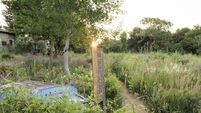
If you have an outdoor tap, sufficient pressure, and don’t mind cold water, then all you need to do is buy a shower head to attach to your outdoor water tap. File picture
I've been talking about getting an outdoor shower for literally years, because nothing compares to the liberating experience of showering under open sky. It doesn’t take much to install one, especially if you don’t mind cold showers, but there are some considerations to take into account before getting started. Here is how I’m planning to do it.
It’s always worth trying something out before going through the hassle of plumbing or building a shower area, and a great way to do this with outdoor showers is to buy a camping shower. This is what I currently have, and while it’s not as aesthetically pleasing as a built-in shower, it’s perfect as a temporary solution and collapses down for easy storage.
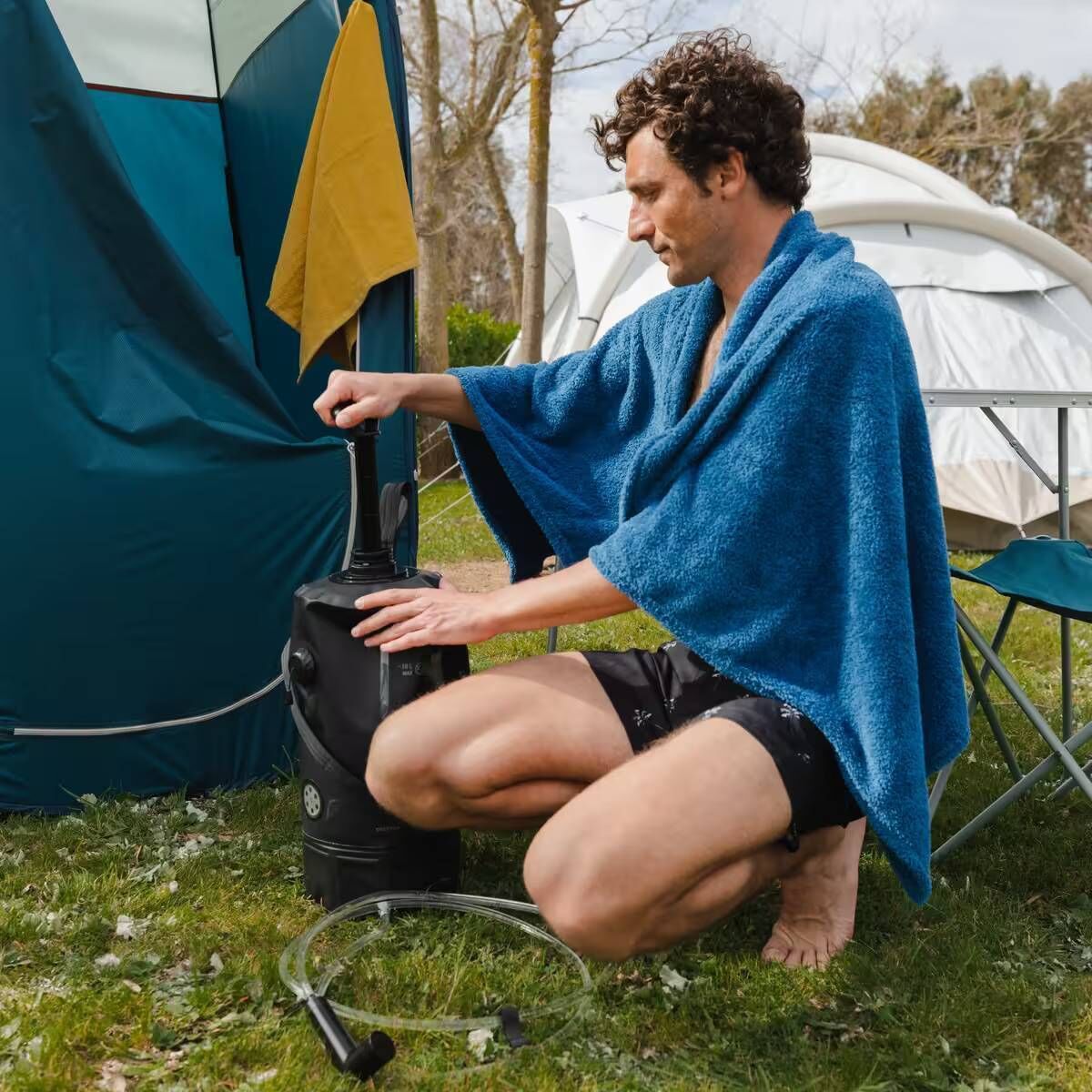
Camping showers are simply bags with an attached shower hose which you hang at a height, relying on gravity to provide enough water pressure for your shower.
The Easy Camp Solar Shower is €13.95 from Charles Camping and is made of black material that captures heat from the sun during the day, giving you a surprisingly warm shower after a few hours outdoors.
If you don’t have anywhere to hang the shower, the Quechua Pressure Solar Camping Shower is €62 from Decathlon and does not need to be placed at a height.
Privacy is an obvious and important piece to consider — my garden is not overlooked, but if your garden is, then you’ll want to create a screen to shield yourself from prying eyes while retaining the fresh air and openness. In my opinion, clever placement of foliage to keep the fresh air and natural feeling of an outdoor shower is ideal.
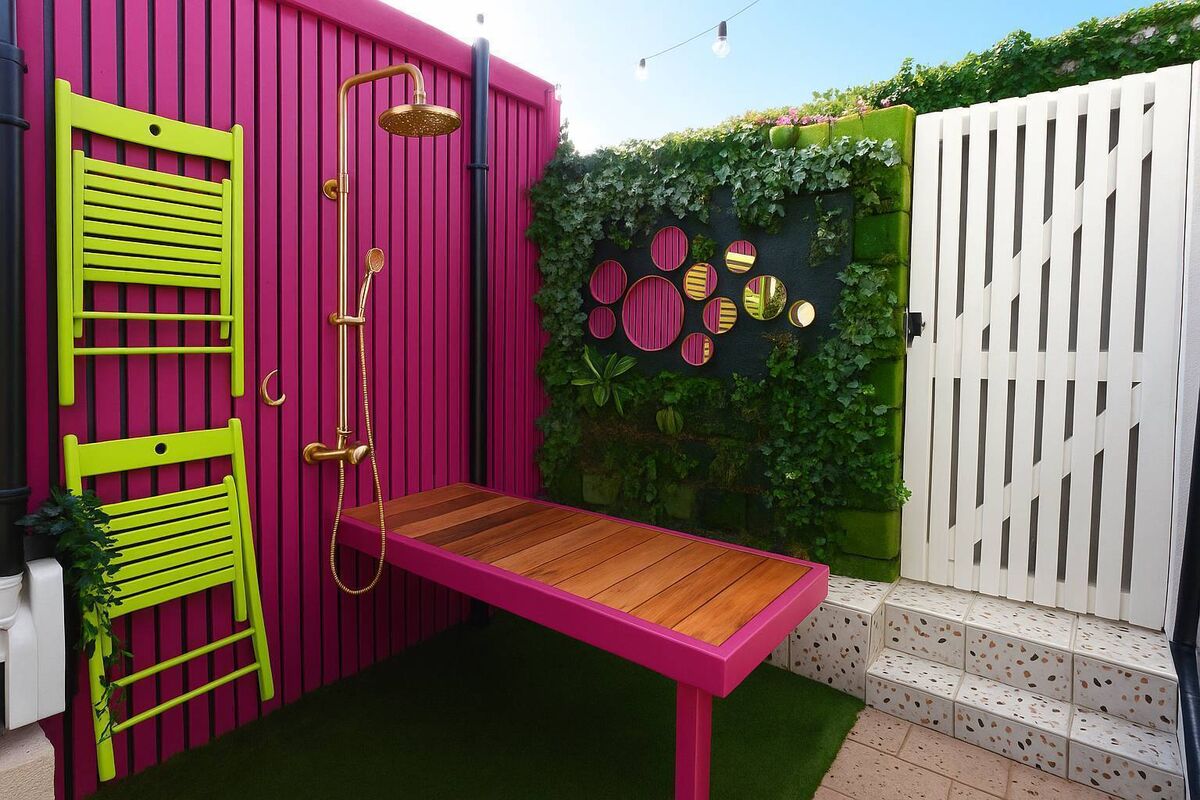
A roll of bamboo screen is also an easy and affordable way to create privacy, and can be put away if needed. If you would like a more permanent fixture, fencing is a great option, but my favourite is building a tiled wall surround — outdoor tiles are a perfect way to bring in a beautiful design element. Check out Fired Earth for some stunning outdoor tiles.
First, assess your existing infrastructure. The ideal location for your outdoor shower will comprise adequate drainage, reasonable privacy, and proximity to your existing outdoor tap, if you have one — although you don’t have to let its location dictate your entire design if a better spot exists elsewhere.
Trialling locations with a camping shower will help. Don’t skip on drainage — you don’t want water to pool or run towards your house and cause damage! If in doubt, enlist a professional plumber to be sure.
Consider your home's water pressure and flow rate. Showers typically require at least one bar of pressure to work, and this will be fine for a rinse if that’s all you want from your outdoor shower.
For a more powerful shower, you’ll want somewhere between 2.5 and 4 bars. You can check this by buying a water gauge in a hardware shop and attaching it to your outdoor tap if you have one. If your external tap does not deliver enough pressure, you may need to consider installing a shower with a pressure booster pump.
If you have an outdoor tap, sufficient pressure, and don’t mind cold water, then all you need to do is buy a shower head to attach to your outdoor water tap and away you go! This is what I am considering, as I don’t mind cold water, and I want to minimise installation costs and fuss. The shower I’m considering is the gorgeous Aquart shower from Seletti.
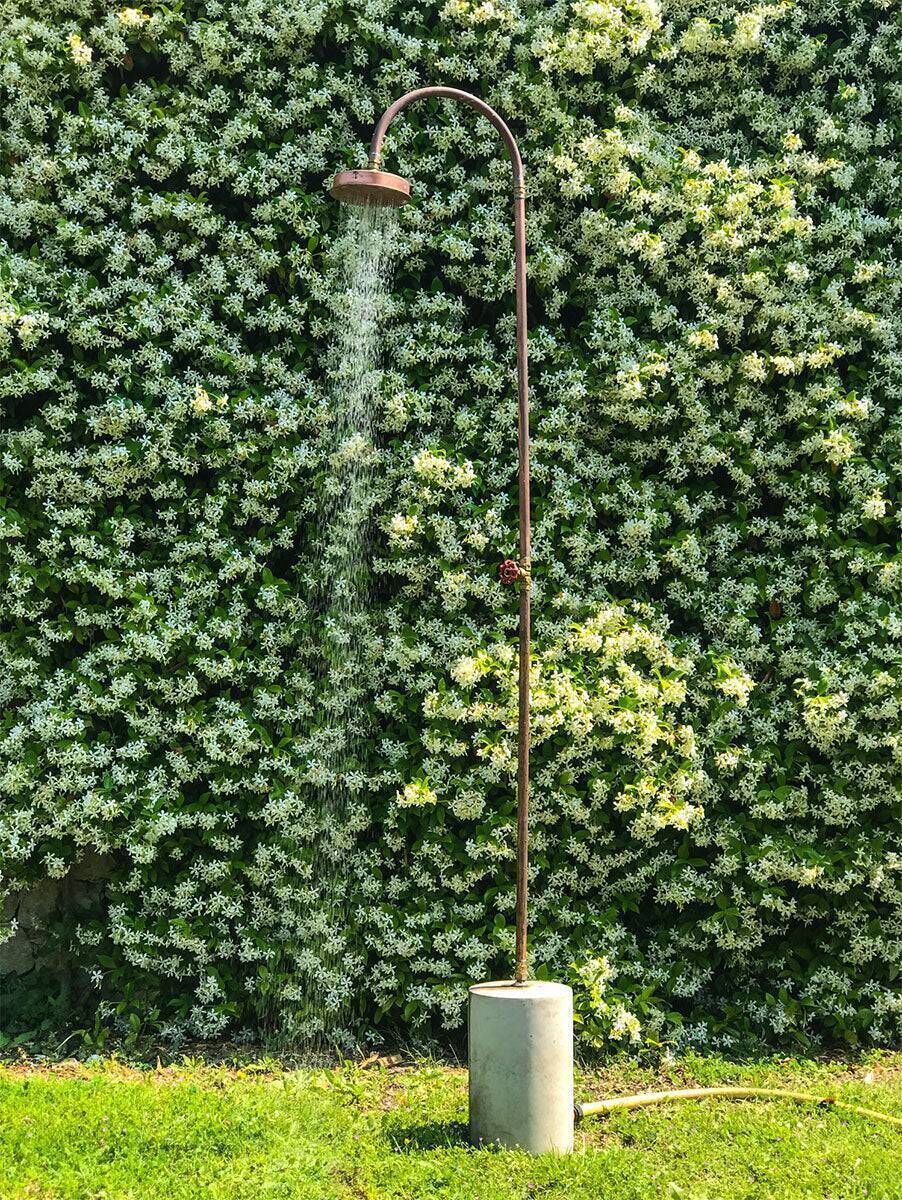
However, if you would like hot water outdoors, you have a number of options. You can enlist a plumber to connect the shower to your home heating system, taking care to use weatherproof materials.
You can work with a professional to install a dedicated water heater, such as a tankless outdoor electric or gas heater — for example, the Portable Outdoor Water Heater with Shower Set from Cork Gas Centre.
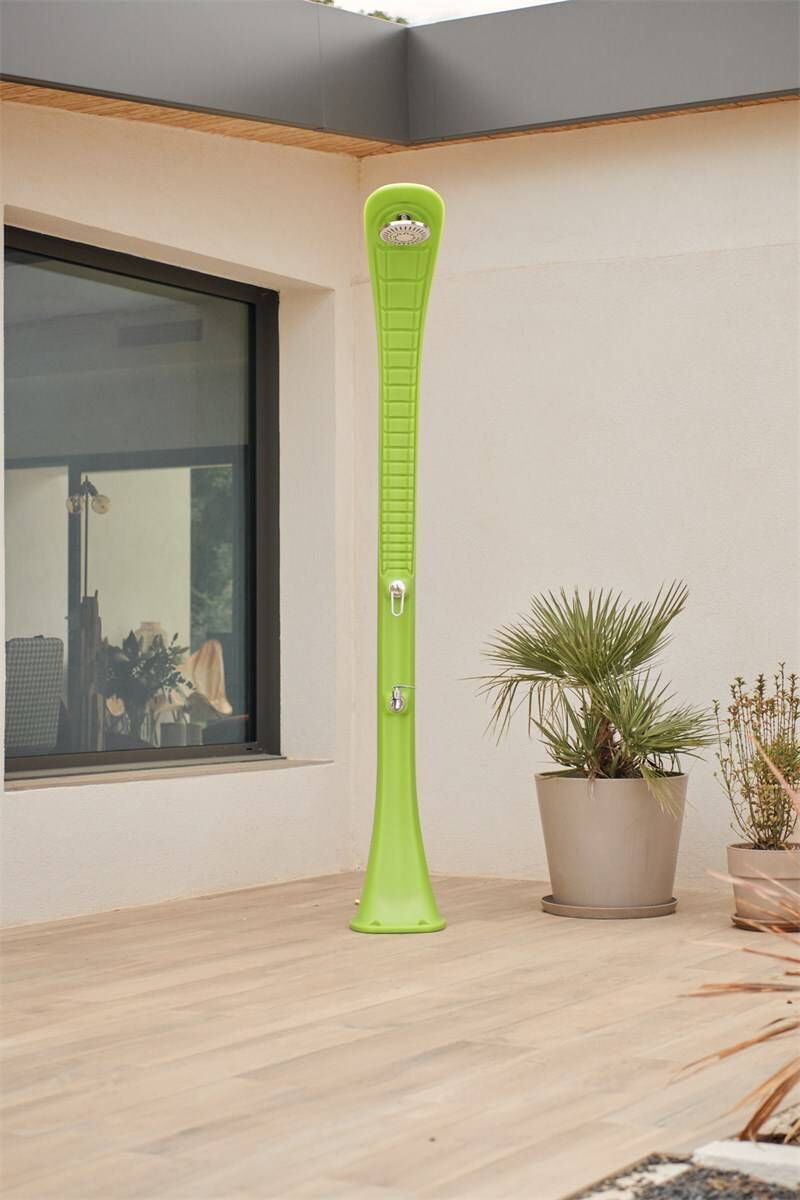
Or you can put too much faith in the Irish weather and buy a solar outdoor shower, such as the Cobra Solar Shower available from A Room Outside, which simply requires connection to a cold tap and uses heat energy from the sun to warm up throughout the day.
It’s best to choose a shower specifically designed to work outdoors. Brass, bronze, and stainless steel fixtures are best suited to resist corrosion. Avoid chrome-plated fixtures, which will deteriorate quickly in damp Irish weather.
It’s best to avoid rubber washers. If you’re installing flooring for your shower, ensure it’s outdoor-rated, such as decking or outdoor tiles, so that it will resist forming mould in our wet climate, and be careful to choose non-slip materials.
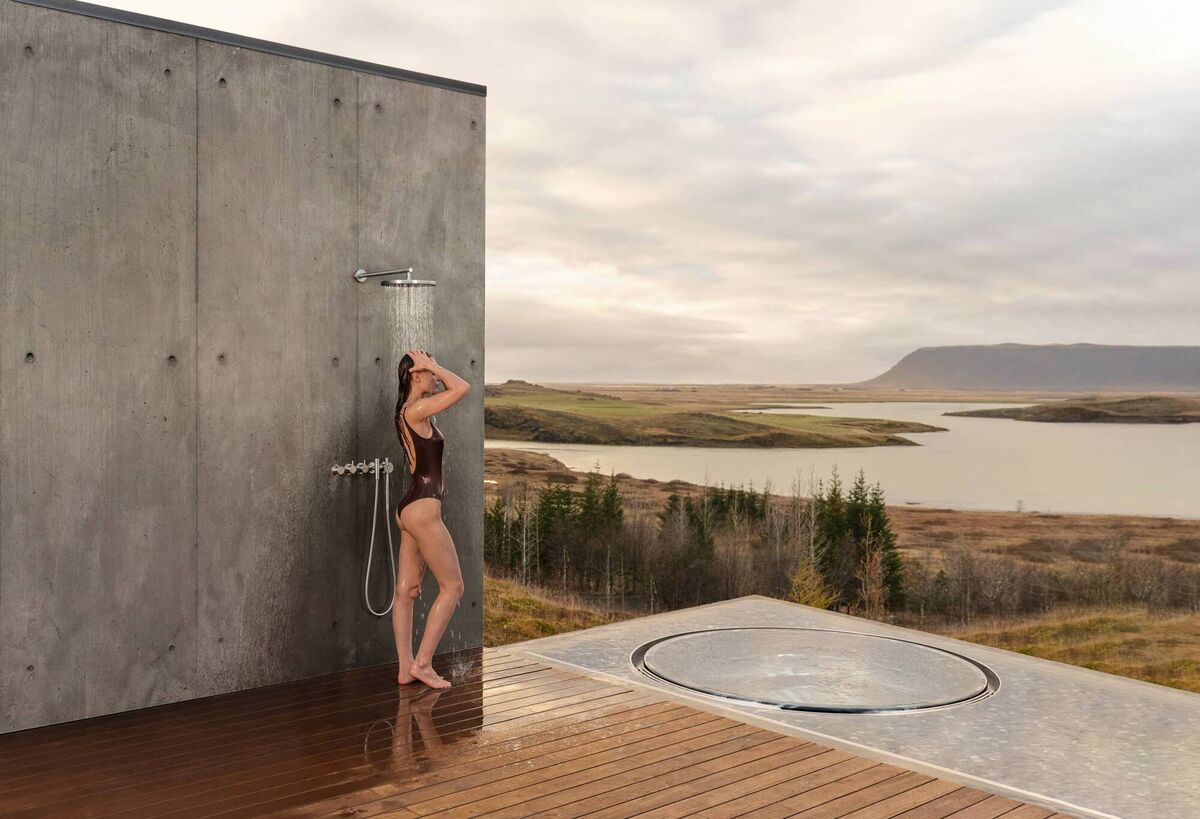
If you are installing a permanent shower that will remain outdoors during winter, work with a professional who should ensure shutoff valves and drain plugs are placed at the right points in the shower to prevent freezing pipes, which run the risk of bursting.
- Got a question for our Home team? Email home@examiner.ie

CONNECT WITH US TODAY



Be the first to know the latest news and updates