Jennifer Sheahan: Find the perfect sofas and armchairs for a tiny home
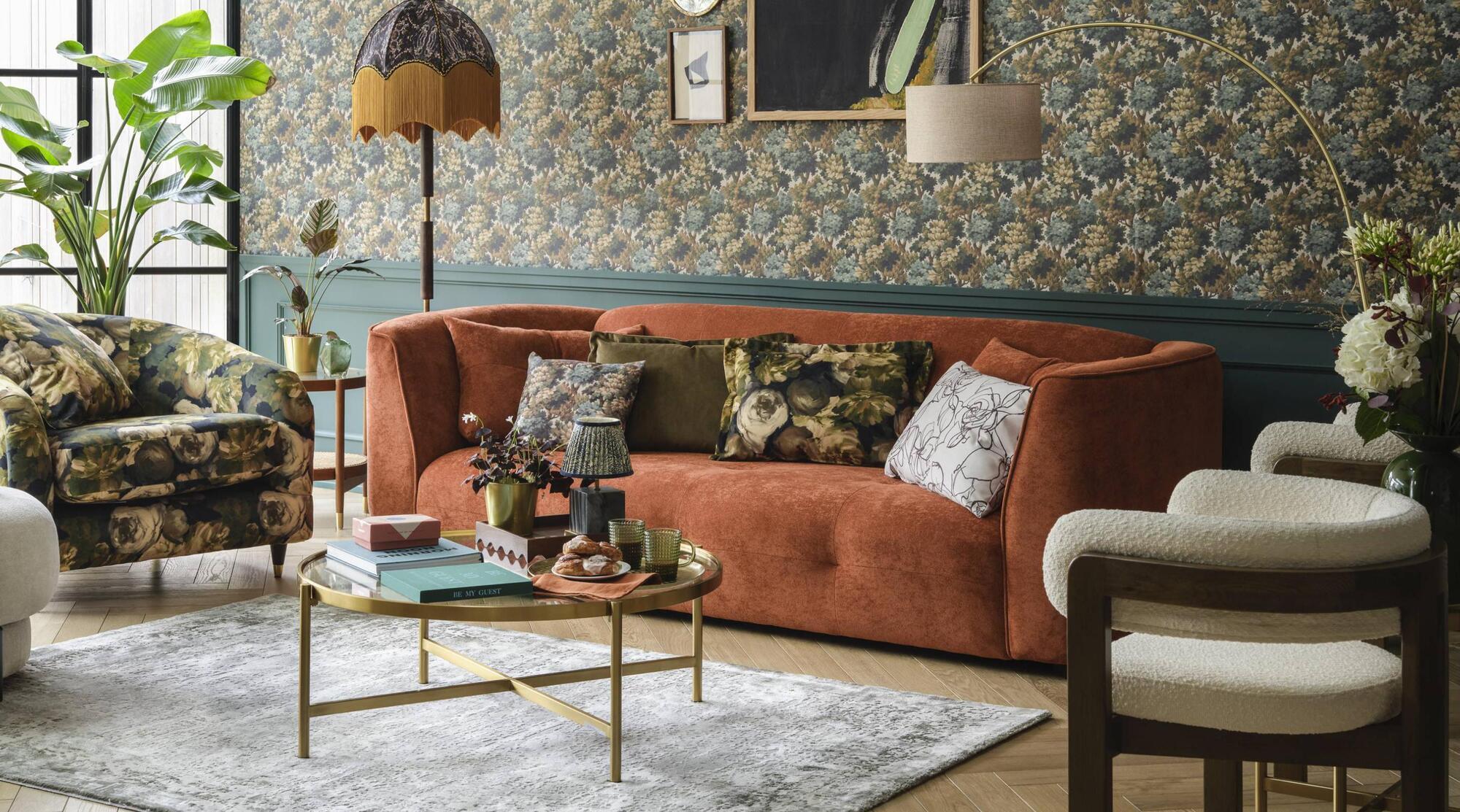
Enchanted Home Ted Baker four-seater Grove sofa, DFS: A smaller sofa with armchairs may suit your space better than one large sofa, if you entertain frequently.
Whenever I write about living room furniture, I always struggle with whether to call it a “couch” or a “sofa”. I’m not sure I’ve ever actually said the word sofa out loud. I would always say couch, but for some reason, it feels funny to write couch. So today I’m opting for sofa. Either way, what I call it is the least of our worries. Finding the right sofas (or couches) and armchairs for our living rooms could be a whole professional field in itself, such is the scale and complexity of the challenge.
I blame TV — too many movies and TV shows have convinced us we need something huge and squishy to sprawl out on or curl up into, and if you’re living in a small home like me, then that may not be realistic. In fact, it may turn your living room into an obstacle course. We don’t have to sacrifice comfort or style, we just need careful consideration of scale, proportion, versatility and visual weight. Here are some guidelines to help you do just that.
Every design journey starts with understanding how you use the space, and this may be especially true for sofas and armchairs. If you rarely entertain and like to put your feet up most evenings, a long, comfy sofa may be all you need. If you like to entertain, then a long comfy sofa means you and your guests sitting shoulder to shoulder, which is a horribly uncomfortable way to have a conversation. If you never lie down but entertain often, then you may not need a sofa at all — an array of armchairs arranged may be perfect for you. Or perhaps you’re a mix of both, and need a modular sofa that you can reconfigure to suit your day.
When buying furniture for a small room, people usually look for small furniture. This is a mistake. Counterintuitively, small furniture makes a small room feel even smaller. The key is balance. You don’t want to have your sofa bursting out of your windows, but you do want to fill the maximum space available to provide a sense of comfort and abundance. If you are putting a sofa against a wall, you only need to leave about 10cm-20cm on either end.
When space is at a premium, it's crucial to consider how people will move around the room. I've visited homes where the sofa and coffee table combination creates a bottleneck that forces everyone to awkwardly shuffle sideways to get from one side of the room to the other. There is no need for this. Measure your space before you shop — three times.
Create a floor plan, accounting for doors that need to open, radiators that need access, and people who need to walk through the room without performing gymnastics. Ensure there's at least 45-60cm of clearance for walkways around your seating. If space is particularly tight, consider a round or oval coffee table rather than a rectangular one — the absence of sharp corners will make it easier to navigate around, and your shins will thank you.
Additionally, don’t make the mistake of pushing all your furniture against the wall. Pull everything out slightly to create a shadow gap that will provide better visual flow, giving a greater sense of depth and space.
Instead of shrinking your sofa or armchair, be smart about how it takes up space. Even if a sofa technically fits your space dimensionally, it might still look wrong if the proportions are off. Bulky, overstuffed sofas with wide arms will overwhelm a small room, regardless of their actual footprint. Look for sofas with slim, tapered legs that create space underneath (allowing you to see more floor, which visually expands the room), narrow arms, and a lower back. These design features help maintain a sense of openness and flow in your space.
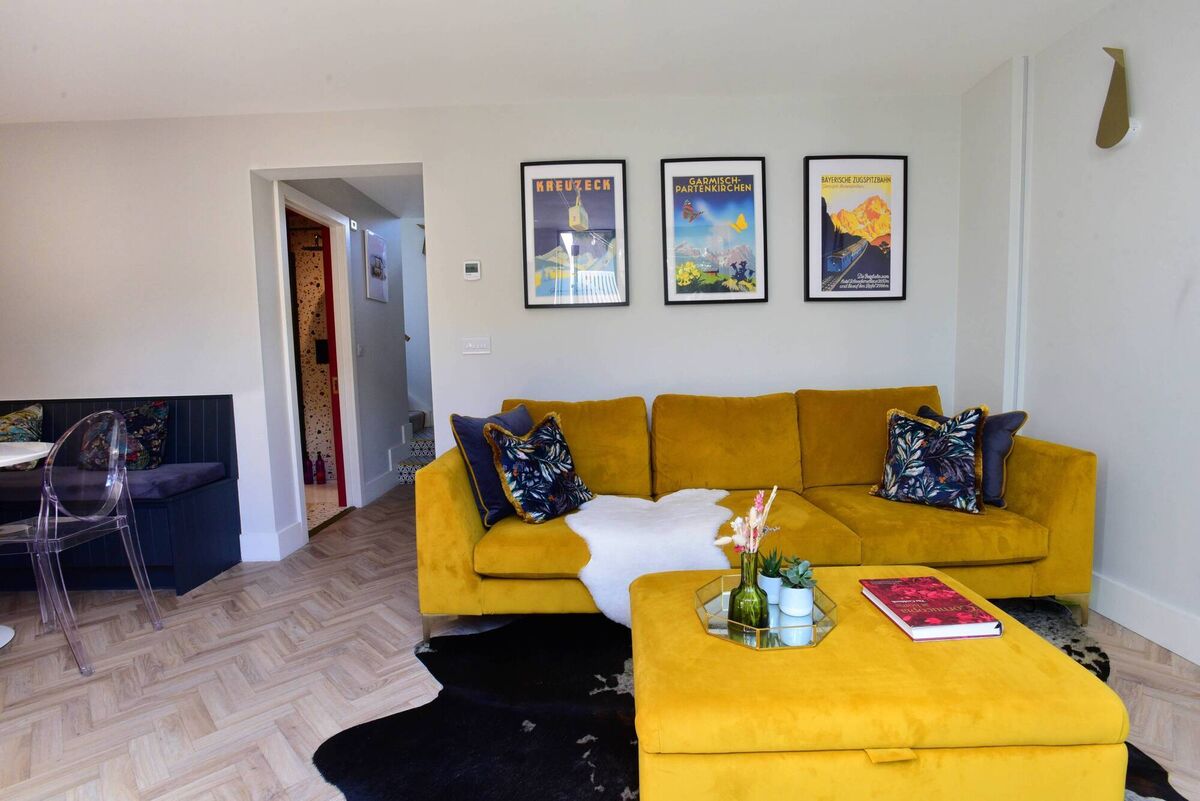
In my own cottage, I opted for a small double sofa-bed with no arms (the “Klaus” sofa-bed from Finline Furniture, customised to have no arms), which allows it to fit perfectly into a slightly awkward and tiny room. The lack of arms means it doesn't visually or physically block the space, and I gain the added bonus of having somewhere for guests to sleep.
Dark, heavy fabrics and bulky designs create visual weight that can make a room feel smaller and more cramped. In contrast, lighter colours and sleeker designs can help a space feel more open and airy. This doesn't mean you're condemned to a life of minimalist furniture in clinical white — rather, consider the overall visual impact of your choices. A sofa with exposed legs will feel lighter than one with a skirt that touches the floor. Similarly, an armchair in a neutral, light, or bright tone will create more visual space than one in a dark, imposing colour. You can use accent cushions to bring in fabrics in dark colours or patterns that would overwhelm your sofa or armchair.
In a small space, (almost) every piece of furniture should earn its keep by serving multiple functions. Single-purpose furniture is a luxury that those of us with limited square footage simply can't afford. I love lying out and reading books or watching movies, so I wanted a long sofa that I could comfortably do that on.
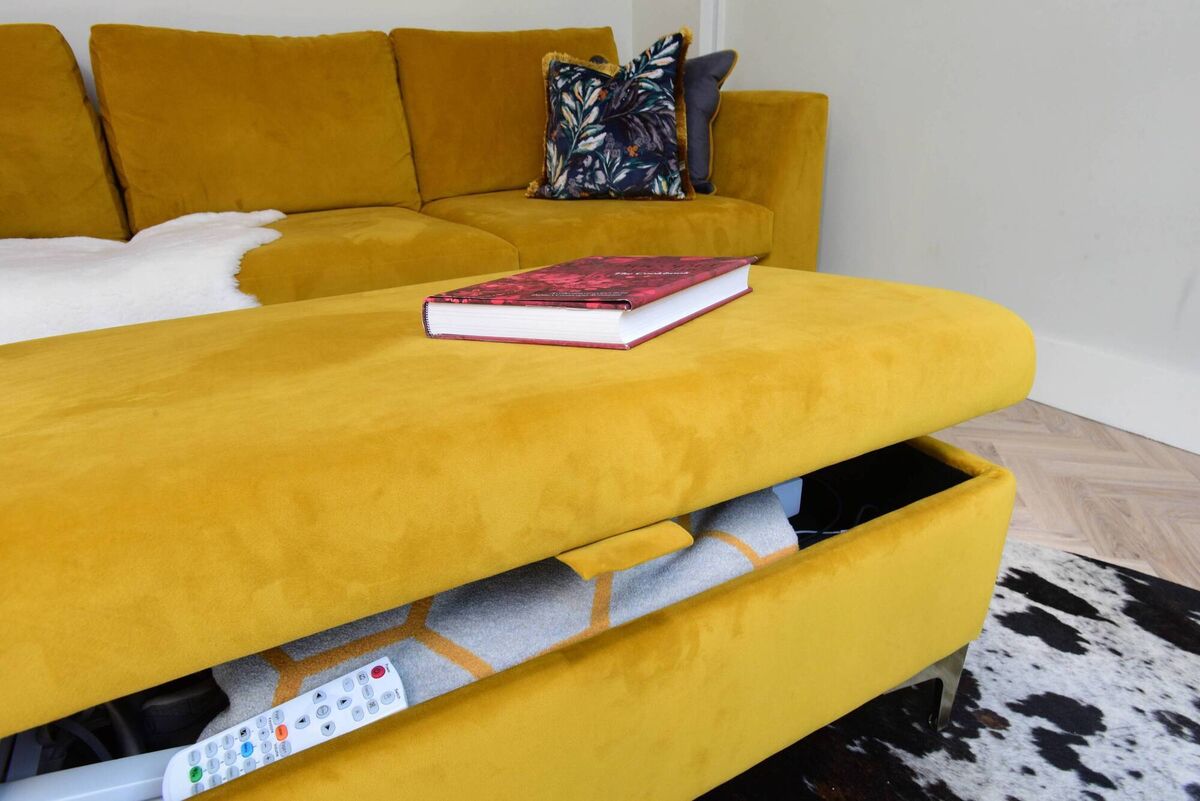
I also like having people around to watch the match, and I like sitting with my legs up and a good book. So I chose to get a separate ottoman rather than the L-shaped sofa I originally wanted. My ottoman is perhaps the hardest-working piece of furniture in my home — it serves as a footrest when I'm lounging, additional seating when friends visit, a coffee table when topped with a tray, and storage for blankets and cushions when not in use.
Thus began what I know will be a lifelong love affair with storage ottomans. There is literally no downside. They’re versatile, multifunctional, and look great. Get one immediately.
CONNECT WITH US TODAY



Be the first to know the latest news and updates