All you need to know about boundaries and why good fences make good neighbours
A site plan shows the limits of your site. File picture
In spring, many of us take a look at the fence line for the first time in months. We might be painting it, pruning it, or replacing it, but how often do we engage with the limits of our property front and back?
The regulations surrounding boundaries are contained in Class 5, Part 1 of Schedule 2 of the Planning and Development Regulations 2001. If you have a site plan, you’ll have a clear demarcation of the limits of your site, or you may have a highly specific title deed or title map showing your boundary. Down the country, you may have had a chartered surveyor work it out for you, as I did, using the latest digital versions of the land registry — walking a larger area or even a field to look into every hedgerow and ditch. Ideally, the registered boundaries held by the Land Registry in the file for that property should correspond to the physical boundaries on the ground.
Citizens Information advises: “The general rule is that any boundaries between your land and your neighbour’s land are jointly owned by both you and your neighbour. But you may be able to prove that you own a boundary structure outright. Even if you can show that you have outright ownership of a boundary structure, your neighbour may have certain rights over that structure.”
Some properties come with what is termed easements, way-leaves and rights-of-way that should have come to light during searches carried out by your solicitor prior to purchase. If you have an easement, it’s attached to your property deeds. Easements are rights of way supported by a long lease, generally long-standing, and part of access for your neighbour. They generally do not cause problems unless someone pushes the envelope, not respecting the easement, for instance, locking a gate against a pedestrian or car.
Way-leaves usually cover not people but service pipes and cables. This kind of access is again generally in the title deeds of the property these are affected, but sometimes it could just be something established over many years, seen to be accepted on both sides. Obviously, if property changes hands, and the new owner is not aware that there is a way-leave on their property operated by the neighbour, things can get hairy and litigious.Â
Always set out to clarify and resolve a boundary issue rather than heading straight to court. You want to live there in peace going forward. Property boundaries can alter over time, and the intention is not always just a land-grab
There may have been a handshake agreement on, say, a right of way in the past, which shifted the boundary or allowed someone to do something on your land. Party structures close to the boundary may not be able to be repaired without access to an adjoining property.
People have lost their minds over 10cm, convinced rightly or wrongly that they are suffering from what is termed “encroachment”. This means someone has basically started to use even a sliver of your property on the boundary as their own.Â
This generally comes to light in the event of a structure encroaching on a neighbour’s property or an access driveway becoming a little wider than it was. If you feel someone is encroaching on your land or garden by a little or a lot, the best thing to do first is to approach them directly, calmly, and put the matter up for discussion.Â
This is difficult if their extension has slipped into your front garden even fractionally. If you’re doing structural work or replacing a shared wall on the boundary, talk to your neighbour and check the boundary line first. A solicitor’s letter puts it straight into a legal direction, which is going to cost both sides money, often a lot of money, to resolve. To make a start, visit landregistryireland.com to view the freehold boundaries for the property or land you are interested in. You can also search using an Eircode or an address.
There are firms headed up by chartered surveyors that have a focus specifically on property boundaries and land registration. I had my boundary checked only because I was checking compliance with my planning in total, and it was an opportunity to compare the land registry map to what was there. This information will be compiled with the help of the Property Registration Authority.Â
If you start a conversation or legal proceedings, a chartered surveyor will attempt to determine the legal boundary for you
 The worst-case scenario is that someone has claimed what is termed “adverse possession”, stretching back 12 years or more, where they were not renting, their use of the property went unchallenged, and they were behaving as the sole occupier of a piece of property. In this case, you will almost certainly need a solicitor. If the person claiming adverse possession wins, they will pay their CAT and will legally own that property, whatever it is, say a piece of a neighbour’s garden.
Measurements
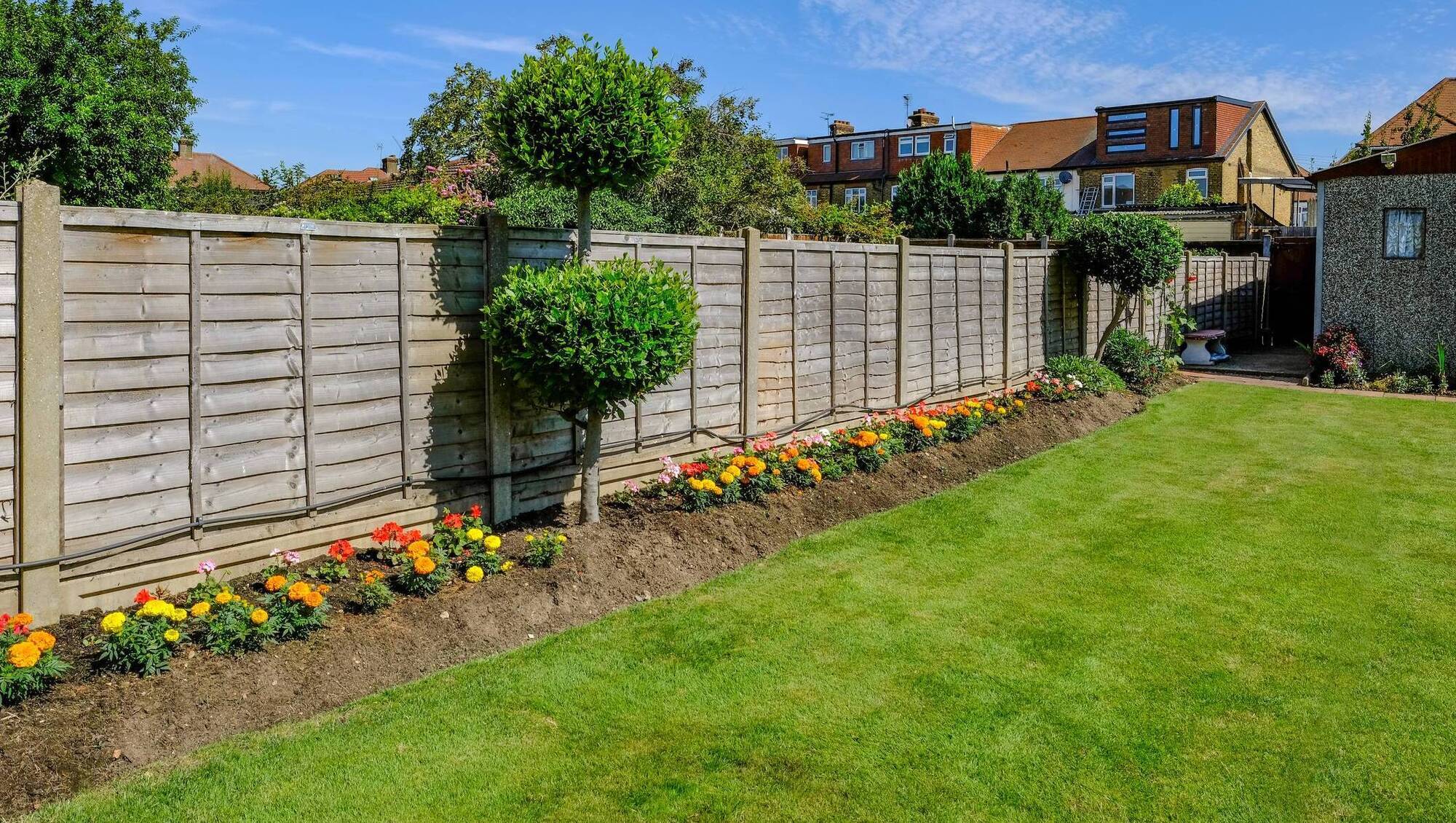
Any fence or wall must be constructed inside your property line. There are adjoining properties that share a wall or fence that skims right down the centre of the boundary. This can cause issues if it collapses or is in need of repair. If you are considering putting up massive fortifications to shield your family from the ghouls next door, it’s useful to know what is generally permitted. Without applying for planning permission, you can have and maintain a back garden fence or walling of no more than 2m in height, 1.2m for the front garden on the boundary line. Gates should be no more than 2m in height. Security-style metal palisade fencing is not permitted.
The height measurement is taken from outside the site. If your house is on a ridge overlooking the neighbour, be reasonable as adding full-height ramparts may seriously overshadow their property. If you have capped 2m walls or wooden fencing (by law, stone walls should be capped), adding a trellis adds height. There is currently no legislation regarding the height of hedges used as boundaries, but there is a nebulous “right to light” which could be fought out in court if a hedge is blocking necessary, established light to a neighbour’s window.
If there’s a lath-style fence on the neighbour’s land, or right on the boundary skirting yours, and you slop up paint or stain on your side, chances are it will bleed through, creating a drooling mess on the other side. Ask first and see if you can come up with a good compromise to maintain the fencing together. The law states “a landowner may cut off any tree branches which over-hangs his/her property (or invasive roots) without giving notice to the owner of the tree, but may not cut down the tree or enter on to the land of the tree owner without permission” (Tree Council of Ireland). Far better to have a chat before causing warfare over a delicate specimen’s unfortunate roam. If you genuinely think a tree on the boundary is dangerous and your neighbour is uncooperative, let the local authority handle it.
- This is general information. If you are concerned about anything related to where your boundary runs, rights-of-way, adverse possession, or problematic fencing, talk to your neighbour and, if needs be, engage a chartered surveyor to give you professional advice. This allows you to bring the matter to the attention of your neighbour and take the issue in a legal direction. The Society of Chartered Surveyors offers a list of local individuals and firms at scsi.ie
CONNECT WITH US TODAY
Be the first to know the latest news and updates