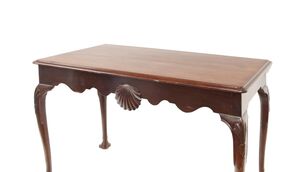
How to nab a vintage bargain for your home at an auction 

Kya deLongchamps shares her advice on raising our bid and encourages us to attend at least one in-person event this winter
How to nab a vintage bargain for your home at an auction 

You must view auction items, writes Kya deLongchamps. If you’re spending a significant amount of money, ensure you get to see the lot in person. File picture

Even with the floor weeded by the growing audience of remote bidders, there’s a real sense of period drama about a terrestrial antiques auction, and it’s not just the lots. The eclectic mixture of stuff with its accrued history, lifted from a hairy furni-print, waits patiently for new, more interested fingers to trace its old surfaces. The oily sideways glances and strangled whispers between collector couples juicing the air. Single viewers slide shoulder-fore through the narrow canyons of brown furniture. We make mannerly, melodic mumbles of apology as tables studded with valuable smalls, wobble uncertainly on collision.

I have my own furtive (and quite obvious) little polka. I make slow, furtive cyclical expeditions, ignoring my star-lot on the first circuit. I am inwardly trembling, a taut old heron stalking a silvery bream.

Words of wisdom

Here is some of my advice for viewing.

One or two online photos should not make your decision to buy something dear — obviously. When you reach the auction house on the designated days before the great event, you should have already made note of the lot numbers of things you’re attracted to. This doesn’t mean you won’t trip over other objects in person that will pique your interest, but you’ll have a vague plan in mind if not a very narrow focus. Get a catalogue, and if you’re moved to, register to bid.

Things to bring to a viewing include — your smartphone to access Google Lens on the spot. This allows you to take a quick shot to ID or roughly value things found by AI on the web. It’s a supernatural, fantastic little tool, just be aware that given prices can vary wildly. Bring a tape measure if buying furniture (please measure any empty spots at home and doorways before you go).

I like to include a small torch — great for looking into the back of shadowy cupboards (you may have one on your phone). Finally pocket some cultivated calm, and a faintly bored, disinterested look. Don’t charge up to a lot and screech, “It’s over here!” The other viewers will be alert as piranha, and even the auctioneer and staff can now claim, “There’s a lot of interest in that”.

The jargon

The catalogue contains dense, valuable information, and it’s worth understanding at least some of this secretive jargon. Reputable auction houses will attempt to be as transparent and correct in descriptions as possible. Style can refer to Georgian style, Victorian style, or Chippendale style; this generally means a reproduction inspired by an earlier genre, unless stated otherwise.

As is, you get what you see and that generally indicates some damage or imperfections — a leg may have walked off. Buyer’s Premium: the auction fees are added to the selling price. VAT is added to the hammer price and buyer’s premium. Estimate (or guide): This is a number based on a range of prices the house believes a piece could achieve printed beside the lot.

Don’t melt at the fluffier adjectives such as “fine” or “quality” unless you trust the auction house to assign special terms of excellence. Low estimates can be used intentionally to stir interest. Set your upper pain threshold because anything can happen on the day.

Reserves? This is a confidential minimum price agreed between the vendor and the auction house at or below the estimate. Not disclosed, if the lot fails to reach its reserve it remains unsold or “bought in” unless sold under the auctioneer’s discretion (within 10% of the reserve he or she may let it go if you approach them when the sale ends). If you have further questions about the piece, ask the staff. They may have some insight or a back story.

The bidding

Then comes the auction day and the bidding. The auctioneer is all-seeing high royalty enthroned on their dais, a callused finger on the pulse of the room, generating excitement to tickle the bidding upward for every lot. Even in a half-empty room, it really is a performance from a forgotten age. The disparate cast of characters heaped up on creaky seating breaks into action.

Less experienced bidders will dynamically slash the air with a folded catalogue. Dealers and regular attendees will vigorously massage an earlobe or telegraph interest with the whip-crack of an eyebrow. Steady, anonymous repetitive remote bids can kill the joy at this point. It can be a deflating if you’ve turned up in person for a single thing. To bid, simply look directly at the auctioneer and raise your hand or your catalogue. Subsequent bids can be transmitted by a nod. Call out a bid just above the last given if you are brave enough (say €25 up when the auctioneer is going in €50 increments).

These days, busy dealers are more than likely to have left an absentee bid at a country auction or have an algorithm set up online. Many houses (post-COVID) have eliminated in-person bids altogether, still dutifully climbing the steps to their eerie, calling out bids in an echoing theatre, each act transmitted online. Even bidding live online, with Irish auctions transmitted to tens of thousands across the World, the fate of many smaller lots is already sealed. In conversation with other auction hounds, the spectre of remote bidding from the UK or US puts many Irish bidders off throwing their hat in the ring.

The prices

Watching prices from completed auctions on the countrywide portal, Collect Ireland, this despair is not unfounded (try buying a nice but restored 19th-century Irish hedge chair today, for instance, forget it, the madness is real). How and ever, for much more middling old stuff, interesting vintage ware, relatively modern furniture, art, ceramics, affordable collectables and the occasional valuable sleeper — I, for one, have not given up. For instance, there’s a perceptible dip in the price of brown furniture from the 19th and early 20th century, and that would include some everyday Georgian tables and cupboards.

As Siegfried Farnon in James Herriot’s wonderful books about being a vet in Yorkshire, shrieked at his junior partner with a wagging finger, you must attend.

This game is all about patience, developing an eye and yes, an unexpected sprinkling of luck. Where you do have the chance to go to a good old-fashioned auction, trust me. It’s a heart-pounding spectacle, that’s still full of surprises, tradition and human interest.

Good lots are distributed throughout most auctions, so staying could be a few hours commitment. Still, add a good doorstep sandwich in the local bar and a scalding cup of even badly made tea. Now that’s a day out.

There’s nothing wrong with bidding online following a viewing, and often it’s impossible to view and attend (I prefer to go to auctions with a little viewing left that morning before it all kicks off). Just set a sane bidding limit including the premium and VAT (add one more if you’re really keen) and ask yourself — how do I get that hippo-sized yoke home? View any lot that is of consequential value — in person.

The satisfaction

Nothing crowns seeing something with our own eyes and touching it. If there’s a shipping service by the house, you can view, leave a bid, and avoid all that slouching around on exploded sofas for an afternoon. You can still leave a bid or participate online, but your hand is so much stronger when you know what you’re bidding on.

  • For a full list of upcoming auctions, boot sales and fairs see collectireland.com

More in this section

Revoiced

Newsletter

Sign up to the best reads of the week from irishexaminer.com selected just for you.

Cookie Policy Privacy Policy Brand Safety FAQ Help Contact Us Terms and Conditions

© Examiner Echo Group Limited