How to keep your home secure when you are on holiday

Together with proper physical protection offered by locks, smart tech can offer deterrents, delay and crucially the ability to record and respond instantly to incidents where someone gets onto or into your property. File picture
From the high of a spiritually refreshing break to the complete violation of your sense of personal safety. A burglary is not simply an issue of material loss or property damage.
Visually deterring and physically delaying a robbery are just part of a new era of home security savvy. Are you aware of the latest in today’s technological guardians?
Digital alarms will not simply scream for help, blinking on the side of the house. Monitored or self-managed, live-streaming can bleat out a vocal deterrent, capturing the action and possibly even the perpetrator’s ID.
Villains will pick up on clues and signage of a well defended home, but they know a dummy box when they see it.
They are opportunists, looking for easy marks. Let’s put your house on a reassuring lock-down while you are away with some useful buys and quick installations.
After windows and doors are properly secured, smart, self-managed security detection begins with an app-enabled video doorbell with motion sensing linked back to your mobile devices for instant notifications.
Like the best of smart tech, these defences are useful year-round, whether you’re home or lolling on a beach in Spain. In the past, flagging a property with a CCTV camera or alarm box was said to signal a honey-pot, but most people can afford a security door-bell, and what other devices might there be inside? Security screws ensure the camera cannot be swiftly ripped off the wall, and likely recording to the cloud, it’s an unwelcome sight for porch-pirates.
The latest family of video door-bells will include facial recognition and can link to a smart-lock which allow you to let in your chosen few while you’re gone.
We’re looking for a strong, stable Wi-Fi signal and a long battery life (vital if you are doing a self-monitoring, wireless install) IR cameras for B/W night-vision and a customisable “activity zone”. Think about how the doorbell will integrate with the platform of your existing smart home security network (cameras and locks on the other side of the house for example).
Using a hub, various views and information can be fed back to a smartphone, not a problem with compatible elements of popular favourites like Nest, Eufy and Ring. Ensure anyone with a need-to-know, has the verification codes for your smart security system and any alarm settings. Obviously, tell any key-holder not to confront any intruder — call the Gardaí if there’s clearly someone circling or a break-in in progress.
The Eufy with HomeBase 2 rings my bell for its 1090p resolution camera, a WDR feature that prevents back-lighting blurring out the identity of a caller, and military-grade AES-256 data encryption that ensures footage is kept private on transmission and storage (cameras can be hacked). AI and cloud storage is a growing element in all security and this door-bell analyses each event and accurately determines whether or not a human is present to cut down on false flags. Pre-record three spoken instant responses to suit your situation. Wireless and compatible with Google Voice Assistant or Amazon Alexa and easily linked to Eufy indoor and outdoor cameras and secondary doorbells with their HomeBase 2 (hub). €180, Harvey Norman. Expect to pay more for wireless over wired examples of most branding.
Moving up to the huge market in smart, wireless alarms (now largely integrated with sophisticated camera technology), it’s important to recognise the difference between monitored and self-monitored systems. If you vouch for Verisure, HomeSecure or Phone-watch, your system will be monitored for a monthly fee of €40 or more (more for additions such as private security patrols).
Within seconds of a security event that trips the alarm, including a panic alarm, a 24/7 call team will respond, verify and if necessary, call in the emergency services. You still are engaged with the system, controlling settings and everyday duties. For example, with the latest Phonewatch app you can turn your alarm on or off, set timers for your lights and devices, and see, hear and talk to your family. There’s a free demo of that app on Google Play or the app store.
Smart monitoring by an outside firm offers other advantages, year-round. For example, HomeSecure dial into the alarm every night to verify that all sensors are working correctly and check the battery levels to ensure a high, level of consistent protection. If you go it alone, that maintenance is on you. The figure for a monitored alarm hovers around €100 for an install and entry-level equipment. Installation of PhoneWatch wireless alarms is free and comes with a standard kit for €99. This includes four contact and shock detectors, a smoke alarm, an app, the key-pad and an outdoor box to warn off the ghouls. Go to phonewatch.ie to see the add-ons to expand your wireless capabilities including video-door-bells, indoor HD security cameras and more.
Keep in mind with cloud storage, even if a robber wings a camera of the wall, the record of the event is intact. Brilliant. Verisure currently offers same-day installation, three free months of home monitoring together with one-motion sensor camera and its signature smoke-screen technology (Zero Vision) with its packages, verisure.ie.
Increasingly affordable, you can build out and self-monitor a highly elaborate security system with no contract. It’s up to you to strategise about what you would do if some suspicious unfolded on your phone. You don’t generally have to have an alarm to be insured against burglary, but Axa Insurance advise, “Insurance companies will often ask whether you have a house alarm installed so they can assess the risk of your property. Depending on the value or types of content insurers may apply a warranty that an alarm is a condition of their policy.”
If your system is not monitored, and the worst happens, there will be a ghastly afternoon matinee in HD as you rocketing, heart pounding from a sun lounger. Detection must be logically connected to deterrents like sirens and/or spoken warnings, and fast on-the-spot reporting to make any system truly effective. With monitored systems, this is what you’re paying for. The Gardaí are not bound to attend without verified signs of a criminal activity. If you or your key-holder doesn’t call it in, the Gardaí may not have the resources in that moment to prioritise the matter. If your alarm goes off three times in a three-month period, the Gardaí attend the scene, and the alarms are clearly false (the Gardai arrive and the key-holder is not there, the activation is treated as a false alarm), they can withdraw response.
The Yale IA-320 Sync Smart Home Alarm Kit includes motion detectors and a door/window contacts that will trigger the alarm whenever movement is detected.
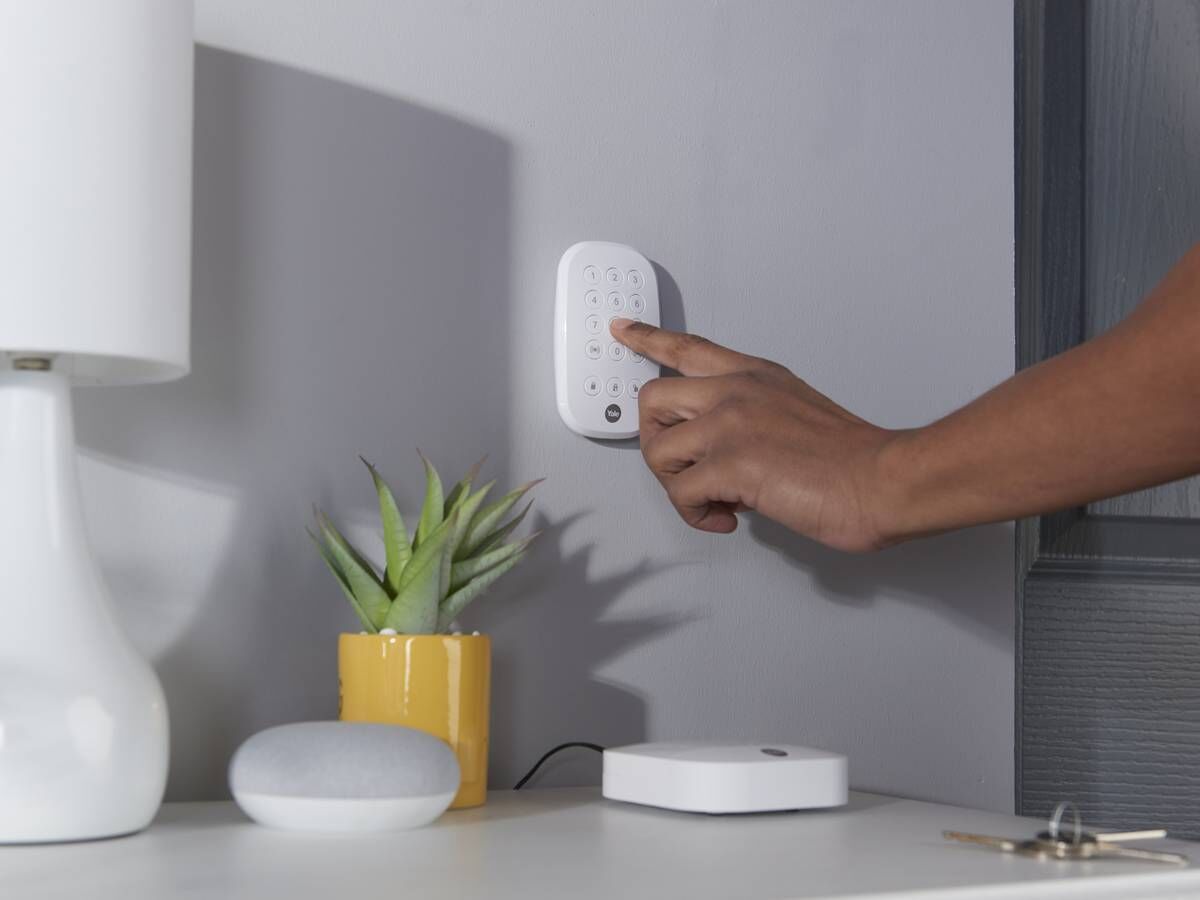
It has a range of 200m, so you can protect garages and sheds too. You can also choose to monitor only certain parts of your home, perfect for when you're upstairs.
Fully app-controlled and compatible with Philips Hue lighting and Amazon Echo, you can add up to 40 elements including smart-locks and cameras to the Synch Smart system; from €299, suppliers include Curry’s PC World.
Shifting signs of daily life, are unattractive to criminals, and smart technology offers multiple ways to signal you are home even when you’re not. Mimic your presence with a home network controlling indoor and outdoor lights, adjusting thermostats, radios and more via an app.
You can work up a random pattern of suggested credible, shifting patterns of activity or use an algorithm suggested by the product’s AI. Simple outdoor flood or security lighting operated by a motion detecting IR beam is off-putting — but not infallible.
Smart bulbs are more expensive that regular bulbs and fittings for inside or out, so focus on key areas of the house and grounds, which make sense as you move through the day — a light downstairs in the living area before say 11pm and bedroom lights appearing after that.
Tapo lighting can be set to come on and off to a schedule, and with away-mode you can conjure a bit of theatre with a single bulb with sunset and sunrise dimming coming in at under €12.
Manage plugged devices via the app including radios and lamps with smart plugs with voice commands and preset schedules wherever you are. They even monitor your real-time energy use, reporting directly to your phone; four-pack, €42.
CONNECT WITH US TODAY



Be the first to know the latest news and updates