Getting a build to passive house standard: All you need to know
Should we take a self-build or reno straight to a passive house standard? We consult the pros
Getting a build to passive house standard: All you need to know

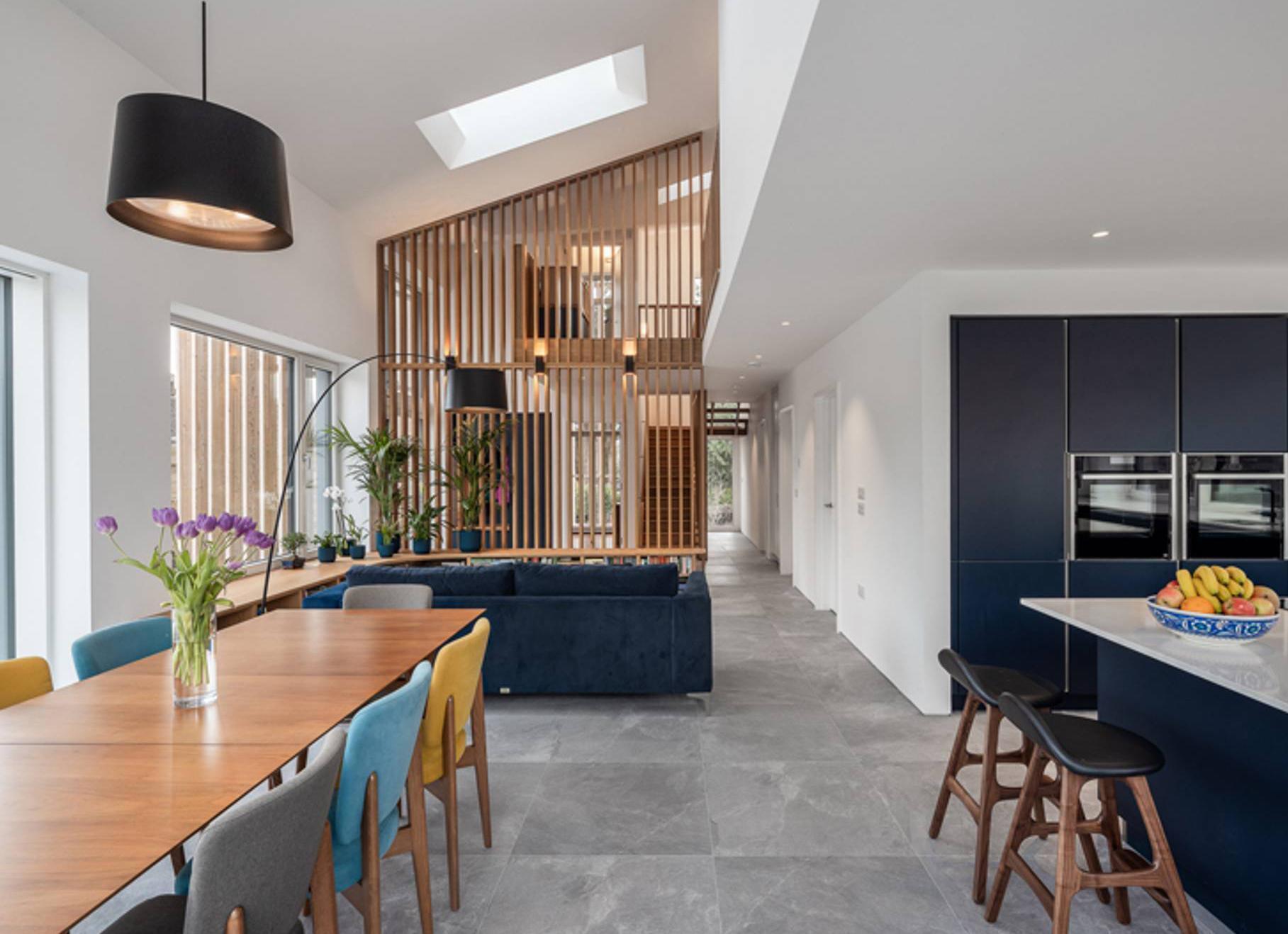
Architect Paul McNally explodes preconceptions about passive housing bumping into architectural aspirations in this passive house on College Road in Cork c.2022. Carpentry by SouthWood Joinery, lights by Bob Bushell Interiors.

Is the gold standard for energy efficiency a regulation-pleasing, Nearly-Zero-Energy-Build (NZEB)? Surely, the truly future-proofed home, one that won’t need its fabric re-fluffed as sustainable demands flex, is a passive build?

By 2050 our entire housing stock is expected to be carbon-zero (housing in Ireland currently accounts for 40% of our carbon emissions). What this will mean going forward is increasingly stricter energy standards for both new and existing buildings of all kinds. From 2030, in line with these sustainability goals, all new buildings must be zero-emission buildings (ZEB). This means they must not produce any carbon emissions on site. They will not include fossil fuel central heating (only 5% of new homes were fitted with boilers last year).

ZEB builds must also use only a very small amount of energy, preferably supplied by renewables or what is termed, district heating (communal systems using surplus heat from local factories for example). Ideally, the energy they consume is largely produced at the home (with renewable sources including heat pumps and solar-PV) or close to site.

The fascinating thing is with passive homes based on the original Passivhaus certification (developed in Germany and Sweden, now 35 years in residential use), conventional central heating, even renewables, is not the main priority. While we’re snaking UFH all over downstairs and obsessing over the co-efficient of heat pumps, many passive homes feature high-efficiency electric radiators or a large 2kWh wall-hung element buried behind the plasterboard for a very chill day.

The most progressive local authority in Ireland, Dún Laoghaire-Rathdown County Council, defied the Department of Housing as far back as 2016, insisting that all new builds in their area of control were not simply highly efficient NZEB homes with heat pumps bolted to their sides, but (where possible) passive standard buildings, top-tier sustainable design. 
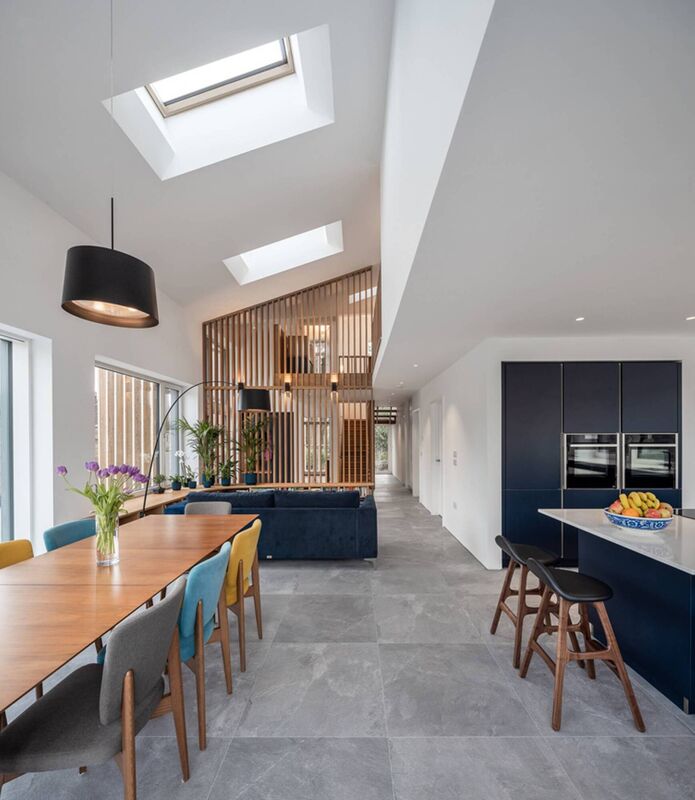
Architect Paul McNally explodes preconceptions about passive housing bumping into architectural aspirations in this passive house on College Road in Cork.

Dún Laoghaire-Rathdown in partnership with the Land Development Agency (LDA) is now working today to deliver the biggest passive house estate in Europe, the Shanganagh Passive House Development, near Shankill. This will provide over 597 social and affordable homes, the first ready by the end of this year. The SEAI don’t have a BER rating to suit these incredible, sustainable stories. An A1 NZEB is not an A1 passive house.

Passive standard homes (it’s a standard, not a type) are truly future-proof, as tightly designed and engineered they require little or no space heating in all but the most extreme weather conditions. Meticulously designed from the ground up to suit each site, they are highly insulated, tightly built and airtight. 

They can run on diminutive styles of electric space heating or renewables on hand for especially cold weather. 
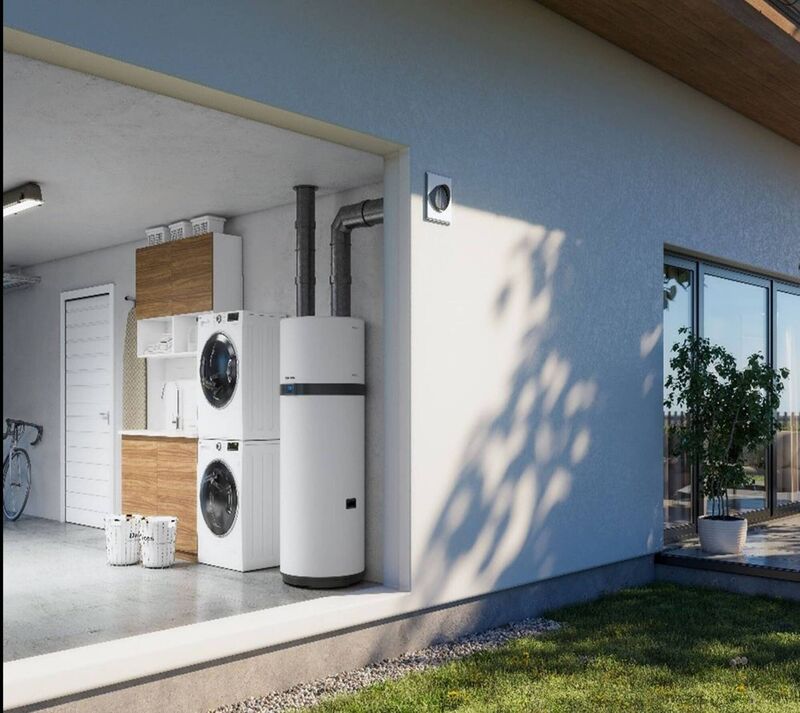
Passive houses are not heated by hairdryers, but low energy electric heating and renewable energy solutions like heat pumps which can be direct to air and water heating. The running costs due to the lower energy demand is reduced from a typical NZEB build. Picture: Daikin

We’re a nervy lot, and whole-house back-up heating is usually stipulated by the client and advised by the architect. Of course, we have to plan for domestic hot water needs (this can be handled using a dedicated hot-water heat pump). Otherwise, these super-builds stay comfortable via passive solar gain through south-facing windows, walls warmed by the sun acting as heat-stores, retained warmth from our bodies, and the heat emanating from everyday appliances and even lighting.

The “engine” of a passive house is the ventilation system moving the air mass in and out of the building and recovering any heat carried in the stale (exhaust) air. This specialized form of whole-house ventilation is termed mechanical ventilation with heat recovery (HRV) and it includes a heating element. Matched to exquisitely accurate thermostatic and humidity control, it acts to both warm and cool the building, holding it at an even comfortable temperature 24/7, with fresh, healthy, filtered air exchanges. HRV is often included in progressive NZEB homes.

This is all supported by a high level of insulation, a sealed thermal envelope, no thermal bridges (changes in materials where energy can “jump” across to the outside), triple glazing as standard, a south-facing orientation, and shading from trees, bushes or buildings to manage any overheating through larger windows at the height of summer. Solar-PV is only suggested as an addition to contribute to further reduce running costs. I see no reason to exclude it, and by returning kWh to the national grid, buildings can become energy-positive, creating more energy than they consume. The FAQs of the Passive House Association of Ireland put it bluntly, “Passive House is not about ‘toys on the roof’ such as solar panels or wind turbines, it’s about simple back-to-basic principles of insulation and draft-proofing.” According to the Passive House Association of Ireland, there are only 45 passive homes in Ireland certified by the Passivhaus Institut in Germany. 
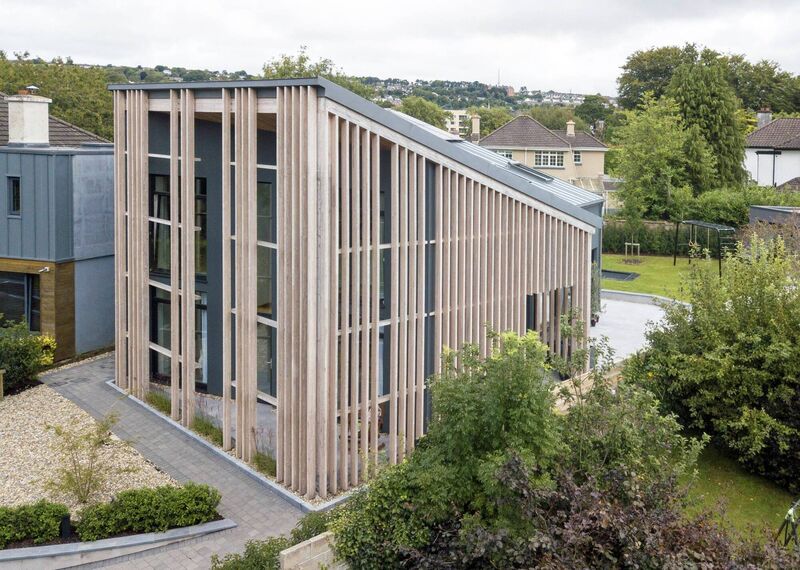
Paul McNally’s Cork Passivhaus features a striking timber screen to the front and side which shades the south-west/south/east facades.

Paul McNally, director of The PassivHaus Architecture Company is an award-winning architect based in Cork and a certified Passivhaus designer. He says, “The threshold figures for (Passivhaus) energy efficiency is the same all over the world. This means that reaching the standard is more or less difficult depending only on your climate, a building in Ireland requires less insulation to reach the standard than an identical dwelling in a colder location. 

Paul McNally, AECB Network member, certified Passivhaus designer.

So, the solutions vary but the outcome/performance is the same. All certification is ultimately by the PHI but is done by local authorised certifiers.” My experience of self-builders over 25 years, is that (with the right advice) people do go beyond the standards set by the building regulations where possible. “Many people build a passive house but do not proceed with certification for many reasons; says Paul. ‘There are costs associated with certification, it takes time, perhaps there is a construction or design issue that does not meet the standard, perhaps certification is not important to the homeowner. There is a lack of completeness on the Passivhaus databases, so the number is higher.” 

Exceeding the required NZEB standards for insulation of walls, floors and windows, passive design is very exacting to reach the heating/cooling goal of 15 kWh/sq m. Your architect will use dedicated software to model a comfortable heat cycle. McNally explains, “The energy calculations are site and micro-climate specific, taking into account site shading accurately, and so the predicted energy efficiency closely matches reality. This is not the case in non-passive buildings (called the ‘performance gap’)”.

Despite mutterings on social media, the cost of going passive is reported to be around 5%-10% in excess of an NZEB home. Many architects and QS argue that costs are actually on par, with a quick payback in the area of five years where there is an excess. Renovating to passive standards can be more complex. Still, we’re talking about a prized, forever home, meeting performance expectations without an elaborate central heating system. Architecture implications? A passive home design with topflight energy efficiency is a highly considered design, but it does equate to a cramped bunker.

Passive homes can be built in timber and steel frame, super-insulated panels (SIP), hollow-block and other sustainable build systems that allow for its design parameters. Upskilling in the construction industry prompted by the introduction of NZEB, means that architects, build professionals, suppliers, contractors and trades are familiar with the processes inherent in assembling homes with extremely high energy efficiencies. So, why wait? Your architect or engineer may well propel you towards past NZEB ratings, suggesting passive performance for your new build. Ask yourself. If not now, when?

  • For more information, see phai.ie

More in this section

Revoiced

Newsletter

Had a busy week? Sign up for some of the best reads from the week gone by. Selected just for you.

Cookie Policy Privacy Policy Brand Safety FAQ Help Contact Us Terms and Conditions

© Examiner Echo Group Limited