The enduring love of blue and white through the ages
Our fascination dates right back to the 17th century when Chinese porcelain and its pretenders became widely available.
The enduring love of blue and white through the ages

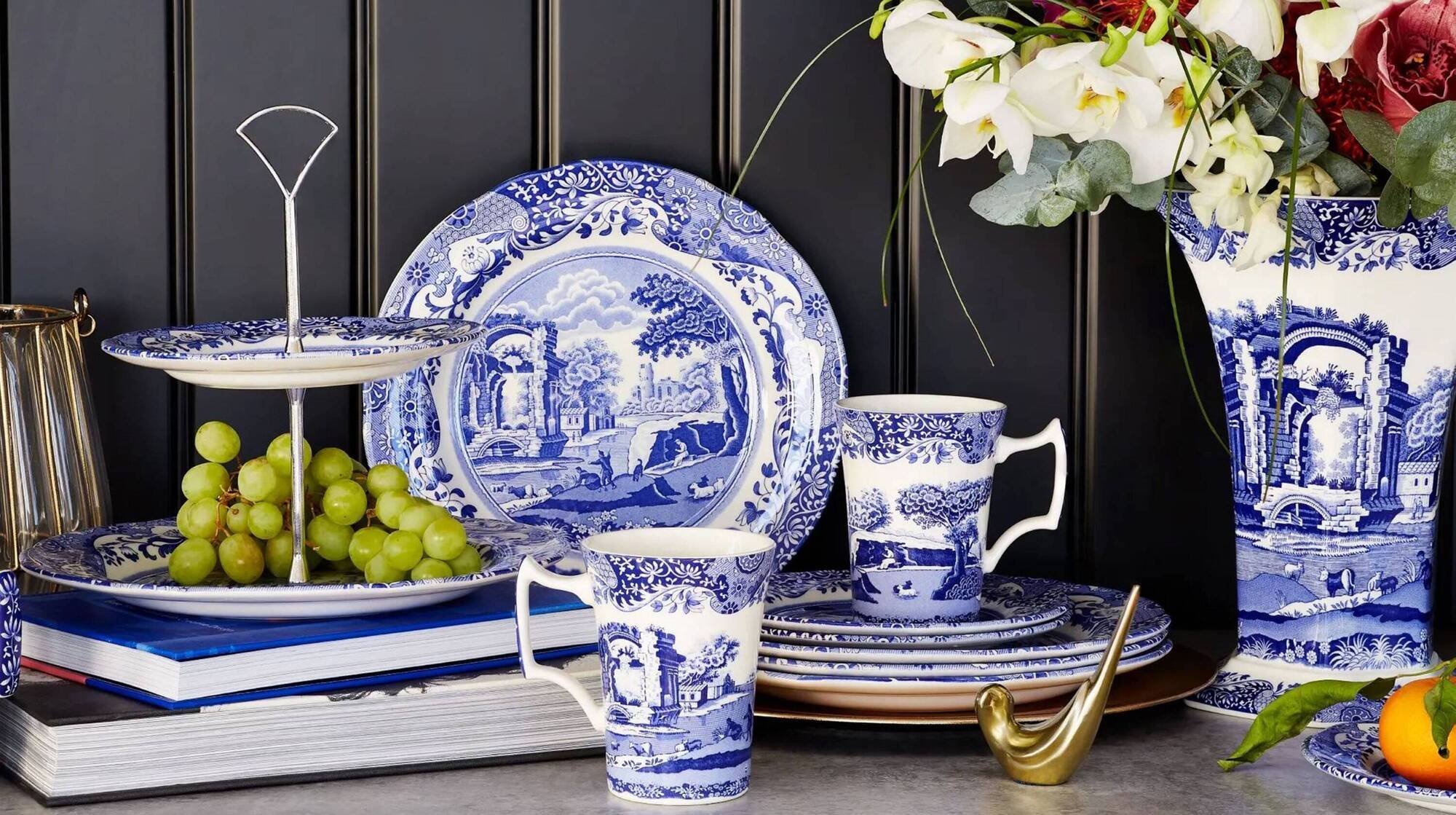
Twelve-piece English Spode dinner sets in Italian collection, €232, next.ie.
BLUE and white? It’s sky and freshly spun clouds, it’s water and wave, and above all things, it’s the iconic indigo seen in all sorts of ceramics from delft to fine porcelain. Food looks beautiful plated on blue and white set onto a butter-soft white linen tablecloth. It’s a natural companion to oiled or painted wood, and here in Ireland, it’s a familiar vernacular of three centuries that would have been proudly staged in Irish cottages and farmhouse kitchens as part of a dresser display.

Crossing ploughed fields or walking the beach, you will likely pocket a sherd or two of domestic blue and white pottery, its edges buffed to silk by seawater. If you’re interested in collecting or just want to add some blue and white to your summer table, here’s a little history.

Our fascination for blue and white dates right back to the 17th century when Chinese porcelain and its pretenders became widely available to the ascendant society across Europe.

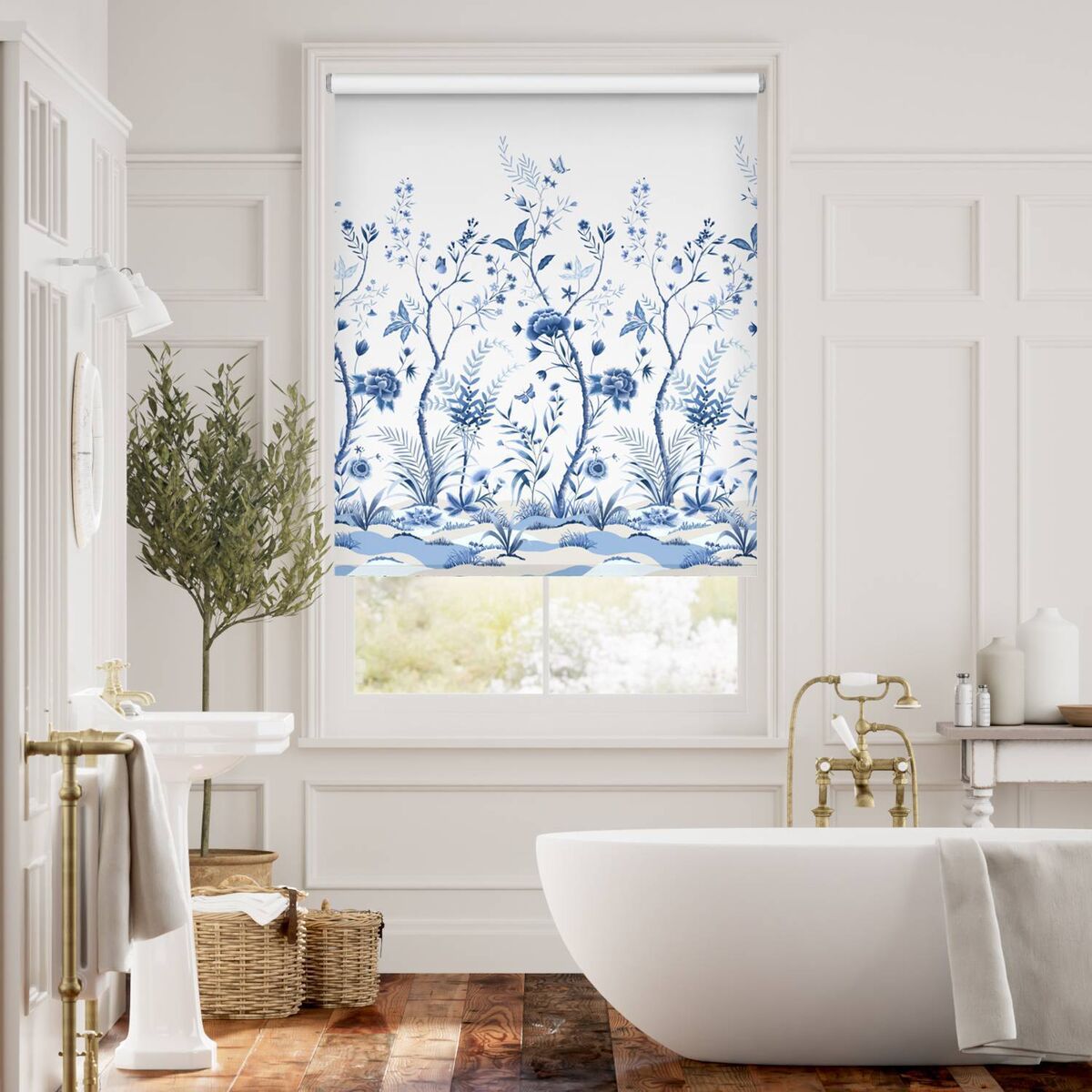
Chinoiserie China Blue (roller blinds from €29), priced according to sizings, blinds2-Go.ie.

The development of porcelain began in seventh-century China (Tang Dynasty), where potters in the town of Jingdezhen in Jiangxi province managed to refine their ceramics with fine kaolin clay. Influenced by Islamic pottery, this was imaginatively decorated before final firing with a cobalt pigment produced in Yunnan province or imported from Persia (Iran). Depending on what was available, darker blues were taken from cobalt with more iron oxide and paler hues were delivered with pigments featuring more magnesium.

By the 15th century star pieces or porcelain were being made for African and Middle Eastern buyers and featured symbols and motifs appealing to a variety of cultures. Chargers, ginger jars and vases with their ink style painting on what was termed ā€œKraakā€ porcelain in various shades of blue and white/buff Chinese porcelain and was now also reaching the West.

It became a highly anticipated staple of the Dutch East India Company voyages, collected along trade routes developed for tea, spices, silks and other goods. The waterproof cargo was crammed in terraces of plates and vases, into the bilge of ships as ballast. Ancient porcelain, perfectly intact has been recovered in recent times from known wrecks.
By the Georgian era, every great house had its curated collection of silver, and blue-and-white Chinese porcelain, its stylised landscapes and scenes indicating wealth and culture to the occupants’ peers. As the Chinese style was adapted to reflect Western tastes in shapes and themes, blue and white became a popular sensation.

Local potters responded by creating their techniques and wares. Chinese porcelain and Delft styles were delivered in tin-glazed earthenware, stoneware and transfer prints. Everyone could have a taste. Hard-paste German and English porcelain was decorated before firing.

Cheaper blue and white stonewares in heavier clays were stencilled or transfer-decorated with cartoonish Chinese scenes and happily over-painted. The Victorians brought a new interest to blue-and-white collecting, and in the middle of the 19th century Irish and British society was in the thralls of these styles.

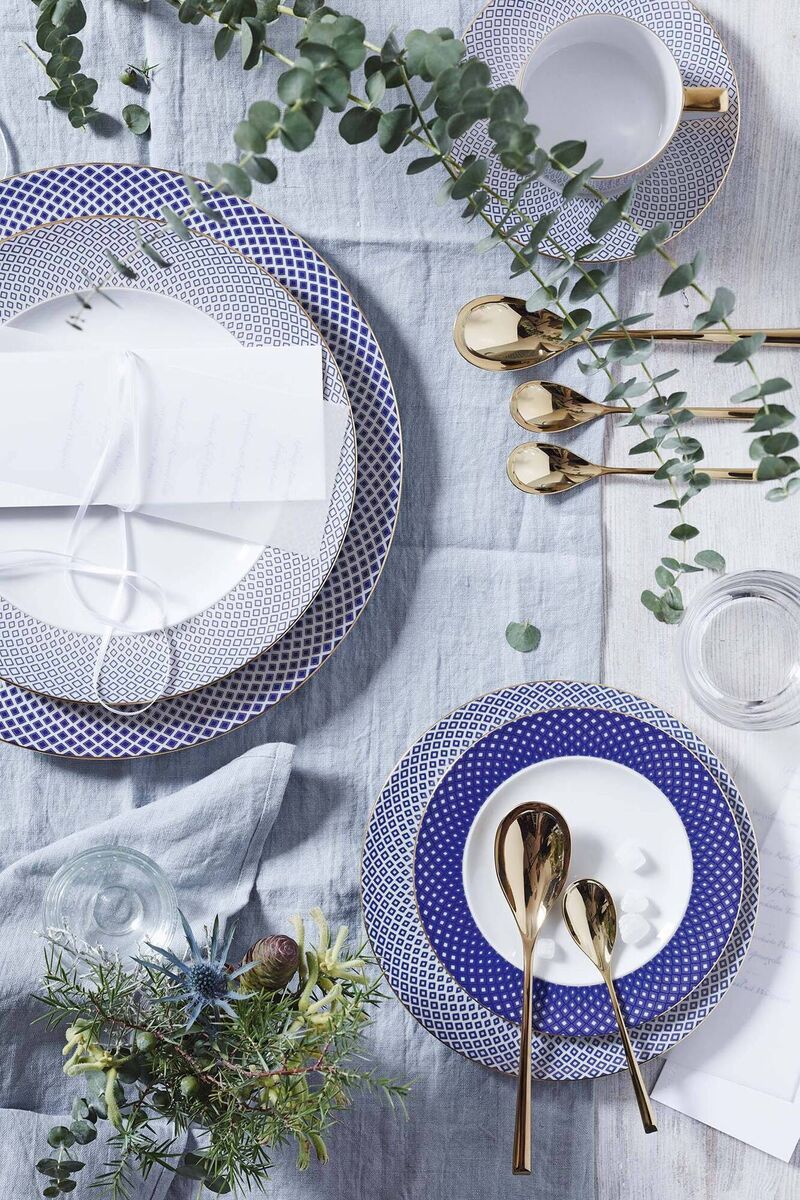
German porcelain puts a smart show in blue and white. Francis Carreau for the iconic German brand Rosenthal, from €35- €105 per plate, rosenthal.de and Irish suppliers.

Everywhere you go — auctions, charity shops and dealer’s floors, blue and white will pop out in various forms. Chinese styles are widely faked, and the best of Chinese and Asian ceramics have been widely reproduced in their finer forms for over 150 years. Take advice before parting with serious money.

If you’re interested in imported pieces, read more about Korean pottery in blue and white, Chinese porcelain, Islamic ceramics, and the English and Continental ceramics that followed their lead.

Millers publish a wide variety of guides (check your local library), and there are oodles of information online. A visit to any national museum over your summer travels will feature some magnificent pieces with their back story.

Over in Amsterdam, you can still pick up early Delft tiles with folksy motifs that trace their origins right back to the glory age of Tulip trading and sea voyaging for just a few Euro.

I would start any antique buying with one great Victorian meat plate or charger. You can find these (sometimes with crude repairs in massive iron staples to the reverse) in any mixed sale in blue and white or other poly-chrome colours.

Willow pattern chinoiserie patterns are still a popular favourite, and you can find its tiny bridges, pavilions and blushing maidens on modern tableware to this day. Willow was created in the 1780s in Stoke-on-Trest in England, cooked up from an unlikely Japanese fairy tale. It offers a fantasy landscape of oriental drama and romantic intrigue to read off under the Sunday lunch.

For a vintage collector, Cornish blue and white with its signature bands of blue and white is ideal. Look out for teapots, pudding bowls and ā€œnappiesā€ (a now old-fashioned word for a cooking dish) designed by Thomas Goodwin Green in the 1860s.

Brand-new pieces of T&G to the original design are still available at cornishware.co.uk.

Any large retail outlet of dining ware will feature blue and white — so keep your eyes peeled for lovely things to mix up on the table to create the look. Blue and white colours and shading from different families of dishes, old and new, tend to sit very happily together. Spode in the UK has been around for 250 years. It has come up with some gorgeous new takes on its 18th-century Gothic melodramas of transfer-ware Italian scenes on earthenware with its Imari border. Cottage core heaven for a Sunday lunch. Around €33 a dinner plate. Log onto spode.co.uk for suppliers.

My final pick is vintage and new Royal Copenhagen blue and white, as it was a favourite of my mother, filling her dresser shelves in the 1980s when the look saw something of an upswing. We grabbed a huge box of it at auction for about a tenner. First produced in 1774 under the patronage of the Danish royal family, every piece of Royal Copenhagen is still stamped with the three hand-painted waves that symbolise Denmark’s waterways, the Oresund or Sound, the Great Belt and the Little Belt; dipping bowls from €46.90.

The hand-painted Royal Creatures collection could deliver a very special wedding present, from €119, royalcopenhagen.com. Only buy chipped, cracked and damaged examples of this or any ware if you’re happy to float it up onto a shelf to act as an ornament and dust it regularly. In antiques or vintage, damage will always decimate value unless it’s a museum-quality rarity. We’re not likely picking that up from the local boot sale. Happy hunting!

x

More in this section

Revoiced

Newsletter

Sign up to the best reads of the week from irishexaminer.com selected just for you.

Cookie Policy Privacy Policy Brand Safety FAQ Help Contact Us Terms and Conditions

Ā© Examiner Echo Group Limited