Jennifer Sheahan: Traditional Irish building methods still practised today
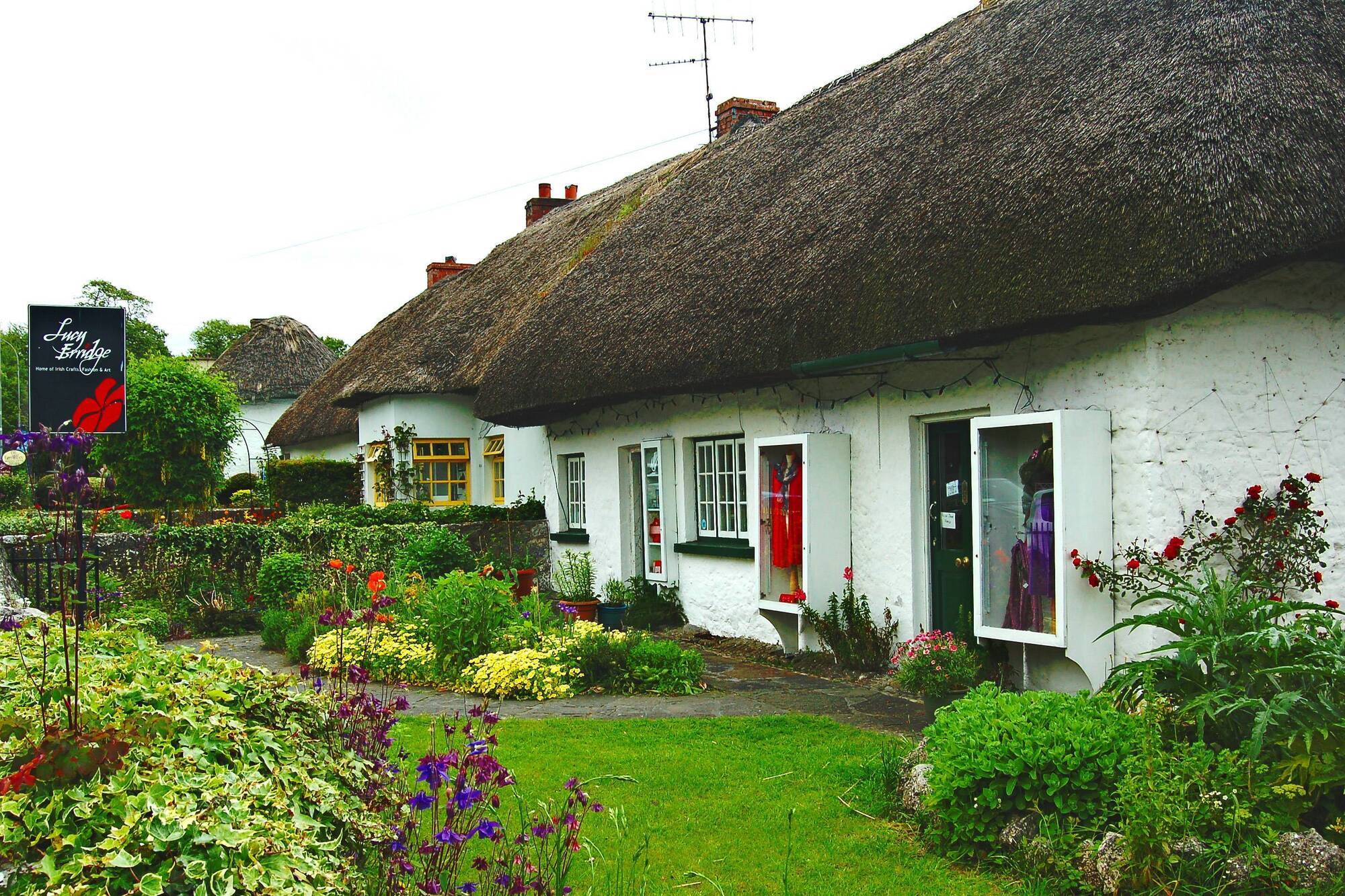
The Gallery Cottage in Adare, Co Limerick. Picture: Joseph Mischyshyn
During a recent trip to the United States, I was asked whether my Irish cottage had a thatched roof. On reflection, it wasn’t as ridiculous a question as it originally seemed, given that my cottage was built in the 1800s.
It did make me start thinking about what architectural features are perceived as “traditionally Irish”, where those traditional building methods have disappeared, and whether they are still in practice anywhere today.
Also a short time ago, a friend came back from a holiday in Cork raving about a stone wall-building course that she had done and I spiralled deep into the rabbit hole of vernacular construction methods that have lasted for centuries and form the architectural fabric of our country.
Here are the most common ones you will almost certainly have spotted in your travels around the island — and some places where you can still learn how to use these methods yourself.
Thatch is possibly the prettiest vernacular architectural feature I can think of, and it was the most common roofing method in Ireland for a long time.
Thatch is made from woven straw, reeds, or rushes — all readily available resources here, making thatch a very environmentally friendly method. When woven tightly, thatch is a fantastic insulator (and soundproofer!), and it is great at keeping homes not only warm in the winter but cool in the summer, while also allowing for moisture ventilation.
It does require maintenance, but when this is done regularly, thatch can last for decades.
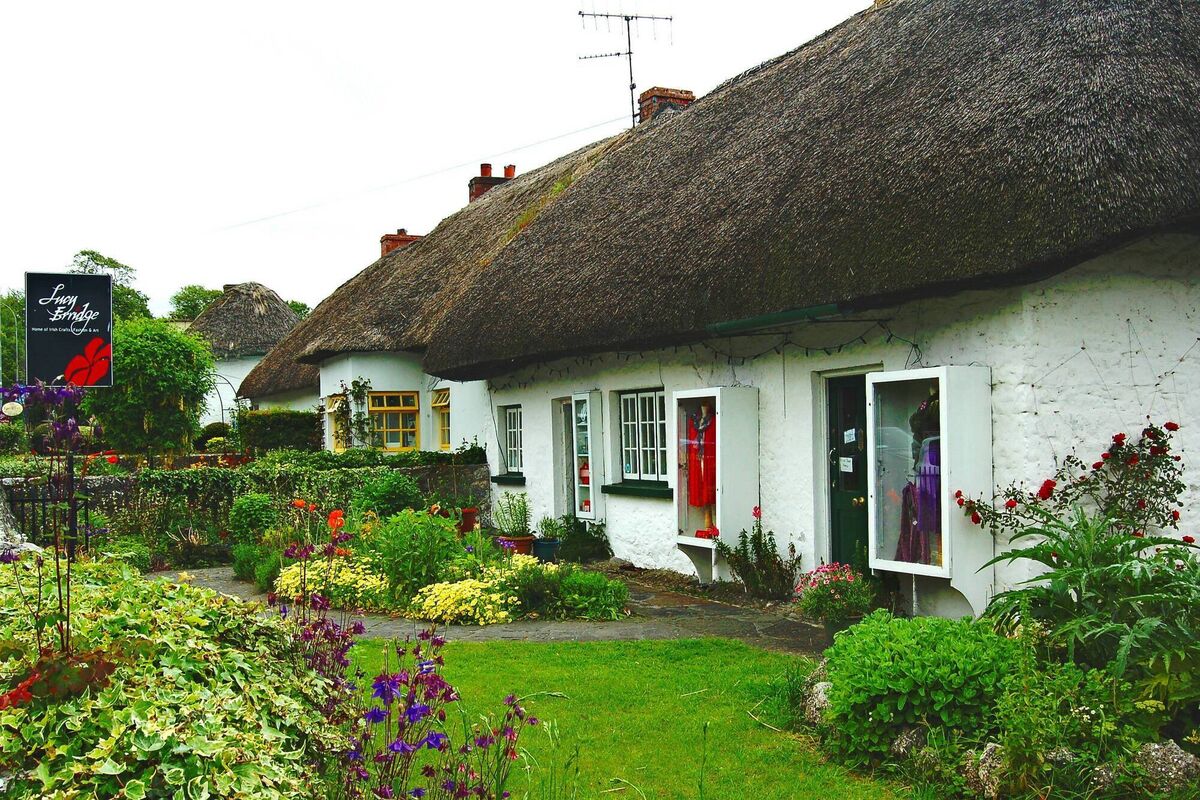
Thatch requires serious skill and a lot of patience. The “thatcher” starts by bundling some straw (or reeds or rushes) and securing this to a wooden framework, starting at the eaves and working upwards, which creates a watertight structure. There is a cap made to seal the ridge along the top, usually also from thicker bundles of straw.
Fire is a risk — modern thatch roofs require fire-proofing. If you’re interested in learning how to thatch check out irishschoolofthatching.ie.
Drystone walling is an art form as much as it is a construction method, requiring considerable skill. The method dates back over 5,000 years!
Drystone walls are built entirely without mortar, relying on the weight, shape, and clever placement of stones for stability. The stones used were local and so this method was very affordable, and there was no negative impact to the environment — plus they look beautiful.
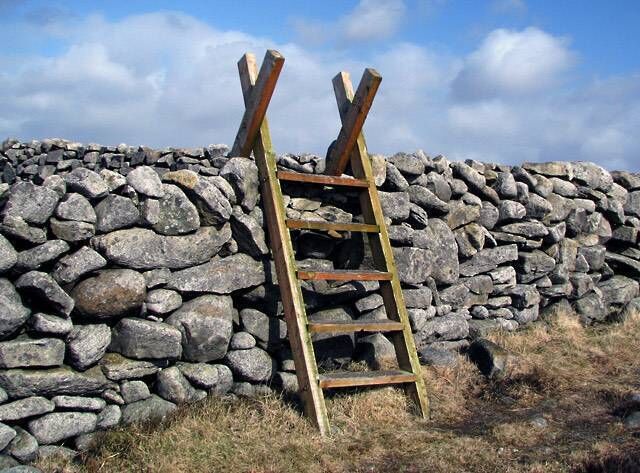
A skilled stonemason would create a structure of interlocking stones that are remarkably strong and durable, standing for centuries — some stonemasons even stretched their skills to create intricate and aesthetically pleasing patterns. These walls are primarily used for outdoor structures such as dividing fields or other properties and building livestock enclosures.
Drystone walling is still in practice today — you too can do the building course my friend raves about. Check out dswai.ie for the course in Cork, and ourcommonknowledge.org for one in Clare.
Whitewashed stone walls and a thatched roof is the uniform of many historical Irish pubs and buildings around the country. Whitewashing is a mixture of lime and water, which combine to make an effective weatherproof layer — necessary in our wet and windy climate.
A relatively small amount of lime was needed, so the resulting mixture was not too expensive, and the watery texture made it easy to apply and meant a little went a long way. Whitewashing was often also applied on interior walls as it prevented damp from seeping in.
Beyond the functional, whitewash is bright and clean looking, reflecting the sunlight around otherwise dark rooms with small windows and creating cheerful little structures beaming out from the green and grey landscape of this island.
You can make your own whitewash by mixing hydrated lime with water and salt, or by simply diluting one part white paint with one part water, applying the watery mixture to your chosen material, and rubbing any excess off with a rag.
I could hardly talk about traditional building methods without mentioning wattle and daub — a term which, for some reason, has stuck in the head of every person who went through the Irish primary school system.
Wattle and daub is a construction technique that involves creating a framework of wattle, a woven lattice of wooden strips or branches, and then covering this lattice with daub, a mixture of materials such as clay, earth, sand, straw, and — wait for it — dung (maybe that’s why wattle and daub stuck in our childish brains?).
The dung — sorry, I mean daub — mixture was applied wet to the wattle and dried to form a hard, protective surface.
This combined with the flexibility of the wattle lattice meant the structure was durable against strong winds and the clay, straw, and dried dung of the daub created a pretty good insulating material. Wattle and daub was quick to make and easy to repair — although I’m sure not too many people relished the idea of collecting all the raw materials.
Surprisingly or not, I haven’t found an in-person wattle and daub course in Ireland (though if you know of one please let me know!). I did find an online course called Mud Brick Construction on learningcloud.ie should you feel compelled to try it yourself.

CONNECT WITH US TODAY



Be the first to know the latest news and updates