Jennifer Sheahan: How colour blocking transforms our homes
Colour blocking is effective in so many different ways when we're creating an interior design look for any room
Jennifer Sheahan: How colour blocking transforms our homes

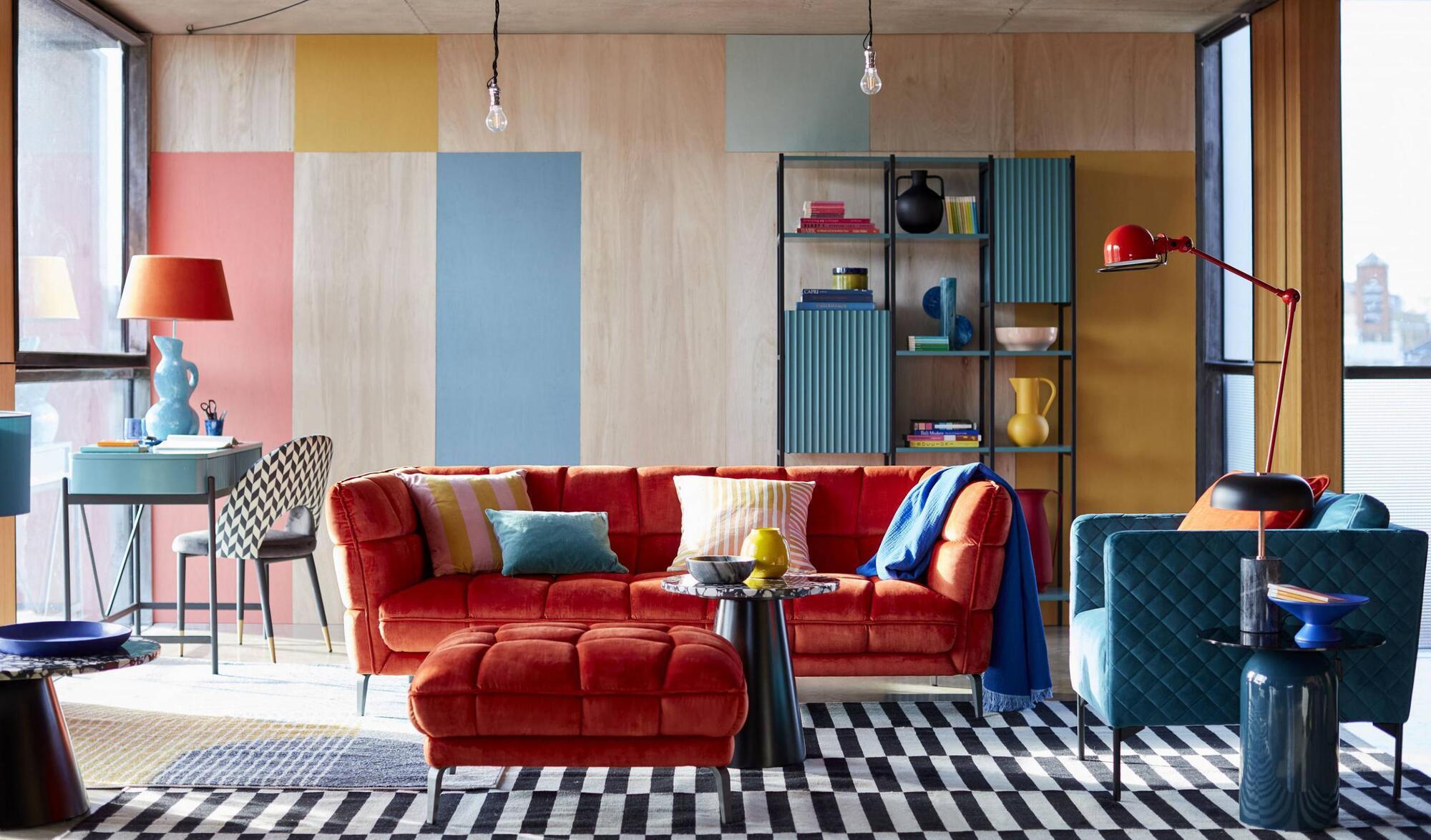
Colour blocking is used to divide a single space into zones, effectively turning one room into many with the DFS Bellissima sofa.

Probably the most familiar use of colour blocking in the home is the infamous accent wall. I use the word infamous because while some people do like accent walls, many others (including myself) do not. The reason I don’t often like them is they’re often incongruous and unbalanced — they stand out like a sore thumb and don’t contribute to the overall design of the room. 

Usually, I hear people saying they want accent walls because they really like a particular bold colour but don’t want to paint the entire room with it. This is a perfectly valid reason, but there are better ways to do this rather than just painting one wall and calling it done.

Enter colour blocking. Colour blocking is what you are aiming for when you want to bring in a pop of colour in a slightly unusual way. Learning how to use colour blocking effectively allows you to bring in bold, contrasting colours in a way that is strategic and harmonious with the overall design of the space. 

The beauty of colour blocking is that it can be achieved in numerous ways — with paint, furniture, curtains, or even flooring. Here’s how to get it right.

CHOOSING A FOCAL POINT 

Deciding what surface you will use to bring in your blocks of colour is the first step. When it comes to painting a wall, I much prefer when it’s a recessed area such as an alcove or an archway, rather than an area that sticks out into the room such as a chimney breast. 

These shadowy areas lend themselves perfectly to taking a different colour. I also love using an area of different texture as an excuse to switch up the colour — for instance, wooden panelling on part of a wall.

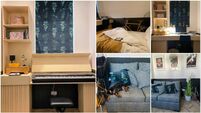
Colour blocking used in an archway in a bedroom in Jennifer Sheahan's home. Picture: Moya Nolan

Furniture can also be used to bring in a block of colour — a couch or an armchair is an obvious choice, but you could also use a dramatic lampshade or a rug as your focal point.

For an even more modern look, consider painting parts of a wall using blocks of colours in interesting shapes. I adore a scalloped edge behind a piece of furniture or a rectangle that partially cuts across a door or part of the ceiling. Zoning is a perfect opportunity to use this technique — for instance, painting your stairs, or the area where a desk sits in the corner of a living room in a different colour to the rest of the room.

THE RIGHT COLOURS 

If you’re bringing in a strong block of colour, usually it’s because you just really like a colour and want it to be incorporated into your scheme somewhere. In that case, go with the colour you like but ensure to adjust the tone and choose the right undertones to be in harmony with your overall colour palette. In other cases the reverse may be true — you may want to bring in a block of colour to add interest or uniqueness to your design, but you are not sure which colour to go for. 

In that case, consult your existing palette and choose colours that are complementary or contrasting — the colour wheel is your friend here (check out www.canva.com/colors/color-wheel/). It’s most common to use a darker tone or a more vibrant hue for colour blocks so that they stand out from the rest of your palette.

ABOUT BALANCE 

One of the reasons accent walls don’t usually appeal to me is because there is just one splash of the bold colour, without anything else to balance it. This is so simple to correct — there is an unofficial but effective rule for bringing in an accent colour which is the “rule of three”. 

If you are bringing in a pop of colour, bring it in in three places (or more). In the home, this could be a painted wall plus cushions plus a piece of pottery in that colour. In personal style, this could be bright lipstick plus shoes plus a hair clip in that colour. The key is that the bold colour is picked up via other smaller accents around the room.

Colour blocking with the DFS Bellissima sofa in Pumpkin Heirloom velvet.

If you are very brave, this doesn’t even have to be done in the same colour. You can balance one block of colour using complementary colours of the same tone. 

For instance, a strong blue dining table surrounded by yellow chairs on a green rug. This approach has a dramatic effect and is only for the real colour lovers among you — I encourage you to play around with this concept before committing!

PROPORTION, POSITION 

The way to elevate your colour blocking from good to great is to perfect the proportions. The size of your colour block can be either overwhelming or ineffectively small. 

They can be in the right area to be dramatic, or just out of eyeline such that you lose the impact. Experimenting with the size and location of your colour blocks will reveal different effects. 

Rachel Hobbs uses colour blocking to highlight a gallery wall and create a zone (@rachelhobbsinteriors).

If you’re digitally savvy, you can play with positioning and proportions on a program such as Miro or Canva. If you prefer real-life experimentation, try using large sheets of painted paper and coloured blankets or cushions to experiment with where your colour blocks will work best in your space, before committing to painting the wall or buying an expensive piece of furniture.

Q&A 

I live in an apartment with white ceilings, white walls, apple-green window blinds, and grey carpet (which is fairly new). I want to repaint the walls and also change the window blinds. Could you advise me what colours would match the carpets?

ANSWER

It’s very hard to know what will work in your home without knowing the specific shade of grey and what your lighting is like. That said, there are some combinations that always work well with grey. If you like cool tones, accents of strong blues (such as teals or royal blues) in the blinds and other soft furnishings would work well with a neutral wall colour. If you like warmth, pink and grey are a classic combination — a subtle pink undertone in your paint combined with green accents in your blinds could be lovely. Finally, if you like earthy tones then mustard yellows, rusty reds, and deep oranges are great with darker greys.

x

More in this section

Revoiced

Newsletter

Sign up to the best reads of the week from irishexaminer.com selected just for you.

Cookie Policy Privacy Policy Brand Safety FAQ Help Contact Us Terms and Conditions

© Examiner Echo Group Limited