Jennifer Sheahan: Easter decorations you can eat
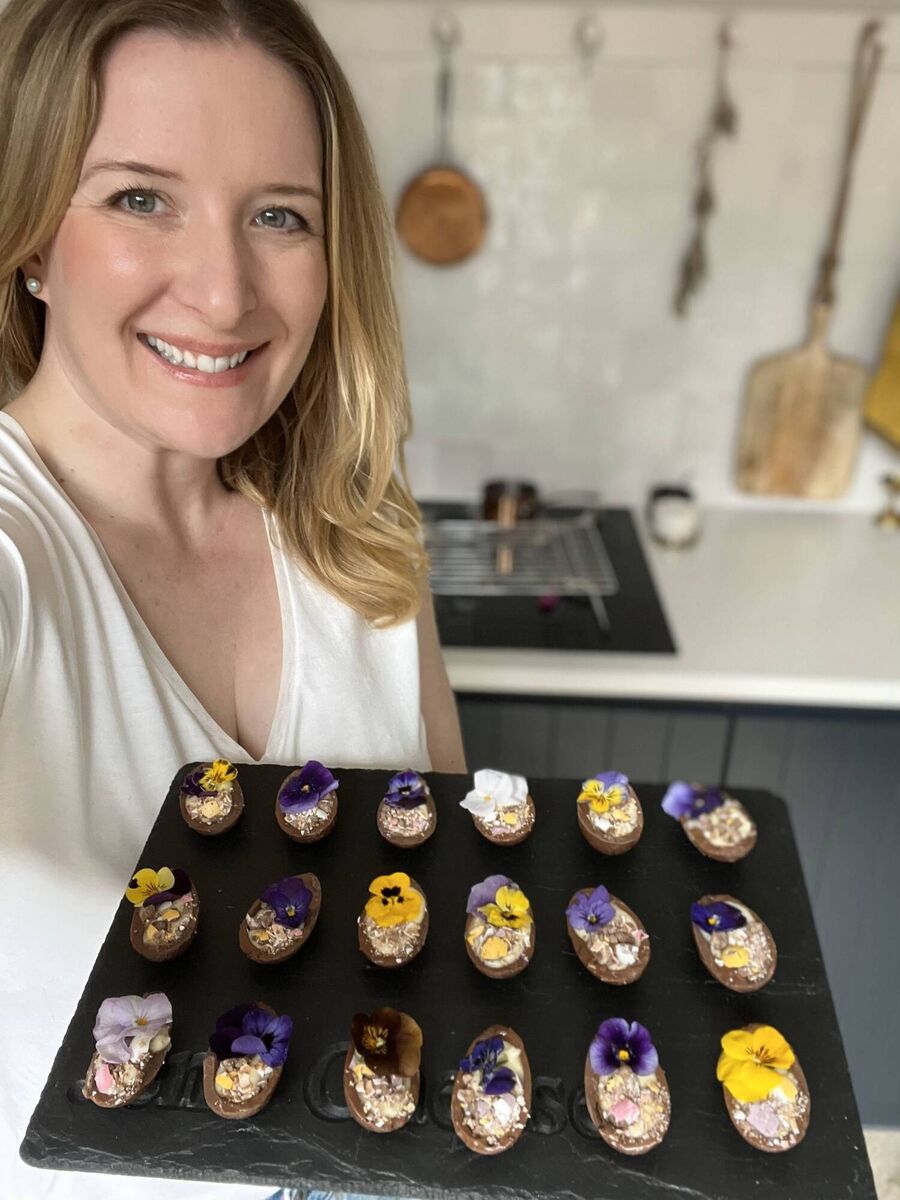
Easter is my favourite holiday. I still love Christmas, but hear me out; all the chocolate you can eat, no battling crowds to panic-buy presents, a huge Sunday roast with delicious lamb, and no expectations that you have to traipse around visiting people. It’s the perfect weekend. There’s also no pressure to decorate, although you can if you want, and I usually do.
My approach to Easter decor is similar to my approach to Christmas; I prefer consumable decorations that I don’t have to store, which in reality means I buy some pastel-coloured flowers, dot little chocolate bunnies and eggs around my house, and call it done. Here are some of my favourite ways to decorate, and some simple recipes for making your own Easter goodies.
The tradition of Easter eggs is a long one, although chocolate eggs came on the scene more recently. Pre-Christianity, Easter was celebrated around the spring equinox;
a time of new life and fertility. In celebration of the Norse goddess Ostara, people used to decorate regular old hen’s eggs and give them away. Children used to leave out bonnets and capes, believing they’d get colourful eggs if they were good.
Then Fabergé jumped on the trend, creating the first of their exquisitely decorated gold eggs with enamel and platinum as a gift for Empress Marie of Russia from her husband, Tsar Alexander, in 1883. Other craftspeople followed, making artificial eggs of silver and gold, ivory or porcelain, often inlaid with jewels. In the 18th century, people would make or buy pasteboard or paper-maché eggs, in which they hid small gifts. By the 19th century, these cardboard eggs covered with silk, lace or velvet and fastened with ribbon were fashionable.
The first chocolate Easter eggs were made in Europe in the early 19th Century in France and Germany; it was solid, not hollow like the ones we have now. Then Fry & Sons made one in 1873, and Cadbury followed in 1875: all made possible by the invention of the process that allowed separation of cocoa butter from the cocoa bean, which stabilises chocolate enough for it to be moulded into a shape.
You can simply buy prettily wrapped eggs in various sizes and dot them around the house for decoration. I also love getting a bare or lightly leafed spring branch and hanging eggs and other ornaments from it, like a little Easter tree. You can decorate or even make your own egg quite easily and wrap them in clear cellophane to display; here are a few ways you can do it, from easiest to more challenging:
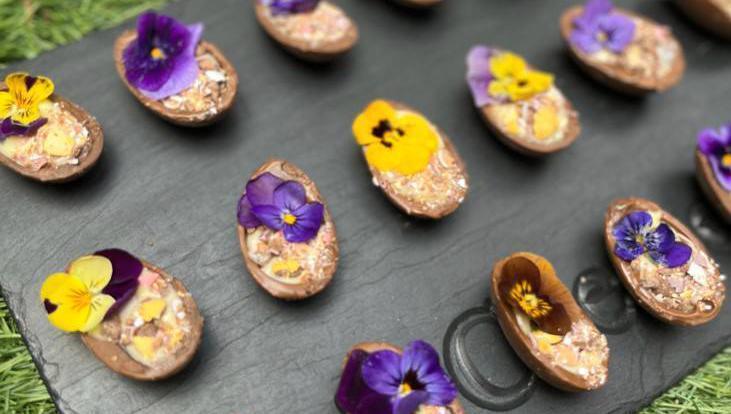
Buy a pre-made plain egg, and drizzle it with slightly cooled melted white chocolate. You can add food dye to the white chocolate for more colourful decorations and add other edible decorations such as marshmallows or sprinkles. I love to add edible marigold flowers for a colourful springtime look.
Buy a pre-made plain egg and use a warmed knife to crack it open evenly along the seam. Fill the inside with decorations such as those above. You can add little sugared eggs or extra flavour such as salted caramel.
Make your own egg. This is easier than it sounds, I promise. You will need to buy a mould (I got mine from stuff4cakes.ie) in either an egg shape or even a bunny. Then you will need a thermometer to temper the chocolate. Tempering chocolate makes it shiny and raises the melting point, so it doesn’t melt immediately all over your hands when you eat it.
To do this you place a bowl over a pot of simmering water and put about two-thirds of the chocolate in the bowl, broken into small pieces. For milk chocolate, you raise the temperature of the melted chocolate to 45-50 degrees Celsius. Then remove the bowl from the heat, and add the remainder of the chocolate. Stir slowly to cool it to 27-28 degrees Celsius. Then add it back onto the heat briefly to raise it to 29 degrees Celsius. Voilà, you have tempered your chocolate and can now pour it into the mould. Leave it to cool in the mould then remove. You will need to make two moulds, and lightly melt around the edges to join them together to make your chocolate egg.
While I struggle to grasp this concept, some people truly do not like chocolate (I’ll take it off your hands, thanks). You can still have delicious eggs; I like to bake egg-shaped cookies or make egg-shaped Rice Krispies squares. To make the squares, melt about half a 10oz of marshmallows in a bowl with about a tablespoon of butter, then stir in three cups of Rice Krispies. Spread the mixture out onto a sheet pan lined with parchment paper, and then cut out your egg shapes once it has cooled slightly. Don’t wait too long because it gets hard to cut once fully cooled.
You can decorate with coloured royal icing and add sprinkles and other decorations of your choice. I love Italian-style Easter cookies, and the bonus is that you don’t need a special cookie cutter.
Here is my recipe for 10 cookies, you can scale up for more. Preheat the oven to 180 degrees Celsius.
Mix one cup of all-purpose flour, two-thirds of a teaspoon of baking powder, and a quarter cup of sugar together. In a separate bowl, beat together 40g of softened butter (salted), one egg, a third of a teaspoon of vanilla extract and two-thirds of a teaspoon of almond extract.
Add the dry ingredients to the wet ingredients and mix them together. Line a baking sheet with parchment paper. Scoop out a heaped tablespoon of batter and roll into a ball with your hands. Bake for 12 minutes. To make the glaze, mix one tablespoon of cream (milk will do) with one-third of a cup of powdered sugar. Add one-third of a teaspoon of flavouring, either vanilla extract, almond extract, or lemon, either will be delicious.
Separate into bowls and various food colourings of your choice; I love pink, light blue, yellow, and green for Easter. Once the cookies are cooled, dip them into the glaze and top them with sprinkles or beautiful edible marigolds.
Got a question for Jennifer Sheahan? Email home@examiner.ie

CONNECT WITH US TODAY



Be the first to know the latest news and updates