Make space for spring: Advice on storing your winter clothes

Home of the Year winner Jennifer Sheahan shares her storage secrets, from cleaning and drying to vacuum packing 
Make space for spring: Advice on storing your winter clothes

Storage in Jennifer's bedroom. Picture: Moya Nolan

The daffodils are out so I am officially declaring spring despite the recent snow. While that’s great and all, the reality is that I actually love the cold. I live for skiing, I’m very happy to hike up snowy peaks, and all I ever really want is a glass of mulled wine on a cold winter’s night. My proclivity for cold weather activities leaves me with a lot of bulky items - snowshoes, ski suits, scarves, gloves and mittens, spiked hiking boots, and lots of warm underlayers. In winter, I add extra coat hooks to the backs of doors to give me additional storage for a few months, but now that ski season is nearly over it’s soon going to be time to clear my cold weather clutter out of my wardrobe and bring my spring and summer clothes out of storage. Here’s how I rotate my clothes throughout the year to keep space in my wardrobe.
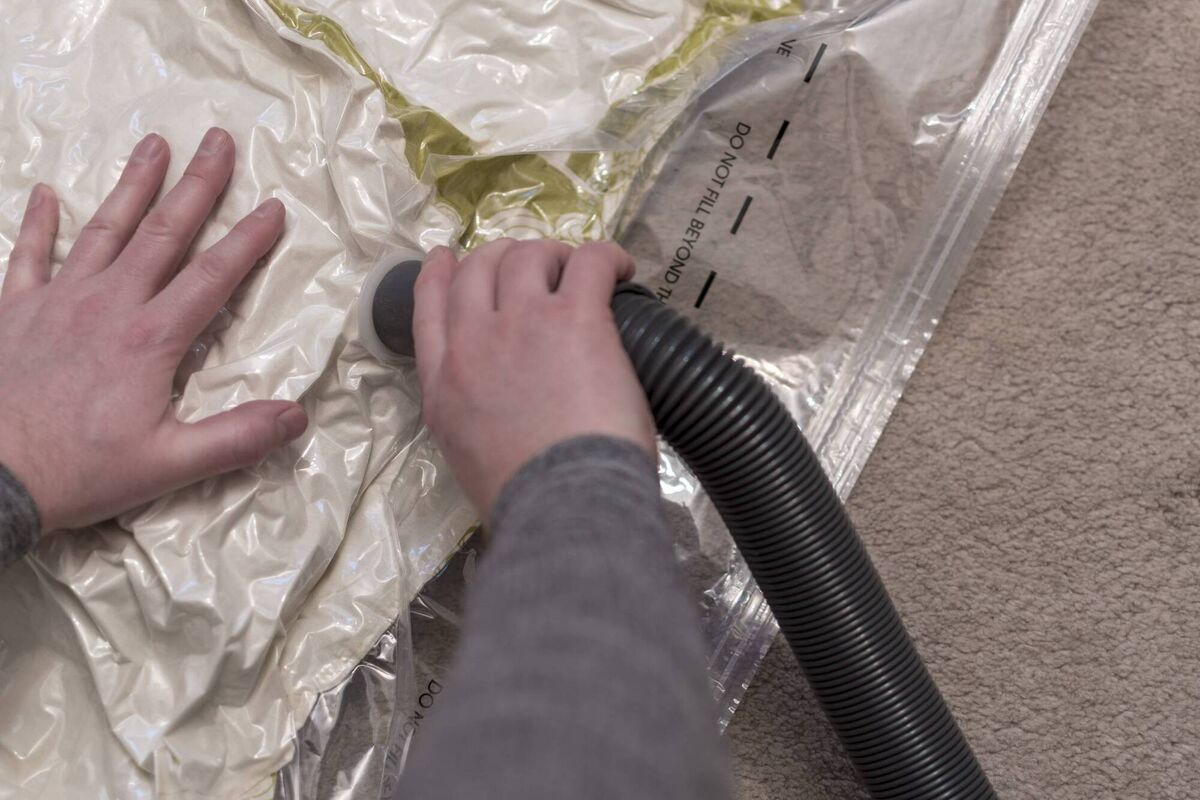

I make sure to fold all items before vacuuming and sealing the pack. Come next season there will inevitably be some wrinkles but they should fall out quite easily.

WASH AND DRY EVERYTHING

Tragically, putting things away doesn’t magically clean them. In fact, it’s the opposite - stains set in, perspiration can cause yellowing, and mildew can grow anywhere there’s moisture. Therefore the first step to storage is to wash and thoroughly dry each item - even scarves, hats, gloves, etc. I know that care instructions aren’t always straightforward for winter items, but generally, a combination of a wool wash plus a gentle detergent such as Woolite will take care of most winter accessories and underlayers. For waterproof items such as ski jackets, salopettes, ski gloves, waterproof trousers, etc, I use a specialist detergent called Nikwax (there are many others, this is my favourite) on a 30-degree wash. Most items are fine to put in a tumble dryer but be sure to check the label. Be sure also to clean your shoes - I either put them inside a pillowcase and wash them on a no-spin cycle or hose them down outside. Then I leave them to dry fully in the hot press.

VACUUM PACKING 

When everything is clean and thoroughly dry, I like to vacuum-pack bulkier items. I find this creates so much extra space - winter clothes tend to contain a lot of air, so they really can be reduced to quite a small size for storage. The downside of vacuum packing is that clothes can become wrinkled and misshapen. The items I like to vacuum pack can handle this - namely ski gear, most scarves, gloves, underlayers, and some jumpers. I usually only store synthetic materials in this way, as wool and other natural materials need to breathe to stay fresh. I make sure to fold all items before vacuuming and sealing the pack. Come next season there will inevitably be some wrinkles but they should fall out quite easily.

STORAGE CARE 

For more delicate items, such as coats with structured shoulders or silk scarves, I wrap these in acid-free paper and just deal with the fact that they need a little more storage space in exchange for longevity. Acid-free paper is simply the paper that clothing often comes wrapped in when you buy it, which I save from various purchases throughout the year. I also put a mothball (a piece of cedar) in between items to prevent them being devoured during the summer months, and finally I throw in a scented dryer sheet to make sure they smell fresh when they come out of hibernation. I store these items in plastic storage bags that fit under my bed - plastic is better than wood or cardboard as it does not react with any clothing fibres and it keeps out pests and moisture. Try not to overfill storage bags - too much stuff crammed in tightly will just result in wrinkles. For shoes, I insert a teaspoon of bicarbonate of soda wrapped in muslin (you can also cut up old nylon tights for this) into the toes. This absorbs any lingering bad smells and ensures your shoes remain fresh until the next winter season. I also stuff them with thick socks to save additional space and to prevent them from becoming misshapen.

WHERE TO STORE 

It’s very important to store your clothes away from damp areas. Many people choose their attic for storage, and that’s fine, but if you are doing this make sure your attic is dry, insulated, and gets some ventilation.

Areas that get too hot or too cold and where moisture can build up spell disaster for your clothes. Choose cool dry places to make sure your clothes come out fresh and ready to go next winter. For me, this place is underneath my bed. My bedroom is typically at an even temperature and is consistently damp-free. I have an ottoman bed which I cannot recommend highly enough - there is so much storage underneath, even my skis and boots fit under there with plenty of space left over. If you don’t have an ottoman bed but do have space underneath, you can pack your clothes away in boxes that fit under your bed.

Got a question for Jennifer Sheahan? Email home@examiner.ie

More in this section

Revoiced

Newsletter

Sign up to the best reads of the week from irishexaminer.com selected just for you.

Cookie Policy Privacy Policy Brand Safety FAQ Help Contact Us Terms and Conditions

© Examiner Echo Group Limited