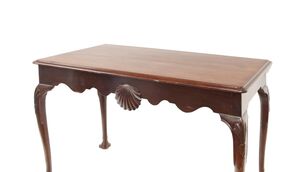
Home of the Year winner shares secrets to revamping your rooms with pre-loved gems

Jennifer Sheahan: 'As people clear out their homes after Christmas, among the unwanted items they donate or sell might be the perfect new piece for your home.' Picture: Joe McCallion
THE next few weeks are my favourite time of year to go rummaging for second-hand interiors pieces. As people clear out their homes after Christmas, among the unwanted items they donate or sell might be the perfect new piece for your home.
Buying second-hand is the sustainable way to upgrade your interior decor. Not only can you find unique pieces that may not be available in the shops, it can also be a fantastic way to land a bargain with a little work and knowledge.

It’s a win-win for everyone, including the environment. Now is also a good time for you to say “out with the old” and donate or sell items you no longer need in your home: See my feature (December 31) on decluttering for my guidelines on the great January clear-out.
As always, before you start your search, it's important to have a good idea of what you're looking for. This will help you narrow down your options, avoid overspending, and prevent you from adding unwanted clutter to your home.
Consider the size, style, and function of the piece you want.

Measure the space where the furniture will go — I always recommend marking the space out with masking tape on your floor to make sure the piece will fit, and bring a measuring tape with you.
Think about the overall look and feel of your home and try to find pieces that will complement your existing decor. I recommend bringing any fabric samples you have, or a folder of photos of your home.
Caveat emptor rules in the second-hand market, so it's important to carefully inspect items before making a purchase. Look for signs of wear and tear, such as scratches, dents, or stains. For wooden items, look out for telltale signs of woodworm — a series of small holes or tunnels, or little piles of very fine dust. Make sure all parts are present and functioning properly.
If you are new to second-hand purchasing, there are two beginner's strategies which will help you avoid being taken advantage of. The first is to look out for brands you know and trust and learn how to spot their individual hallmarks.

For instance, some high-end furniture makers will have an authenticity guide on their own websites, or you can find one on a trusted blog site. This will enable you to find an original price so you know whether or not you’re getting a bargain, and to have faith in the quality you are buying. The second is to buy from a trusted second-hand dealer.
Ireland has many wonderful antique and second-hand dealers. If you are in Dublin, Francis Street in Dublin 8 is a treasure trove of incredible antique dealers. Negotiation is usually possible, so it is still important to be armed with knowledge to ensure you’re getting the best deal.
If you have local antique shops, talk to the owners to build trust. Read reviews and ask friends for their experiences. Once you’ve found someone you trust, let them know what you’re looking for and what your budget is.
There are also many Irish shops with a great online presence with items available nationwide. Gaff Interiors (@gaffinteriorsrofficial) is a comprehensive and high-quality marketplace; Refunk (@refunkupcycling) give old items a new refreshed look; and Beyond Retro (beyondretro.ie) does wonderful mid-century items. Just browsing these sites will help you to familiarise yourself with authenticity hallmarks and pricing to make you a more savvy shopper.

If you’re confident in your ability to spot a quality bargain, head to Done Deal, Adverts, Gumtree, and Facebook Marketplace. Patience is required to sift through the chaff, but you can refine your search terms and set alerts.
If you prefer to browse in person, Ireland has plenty of fantastic salvage yards and flea markets — check out Blackwater Antiques in Cork, Mac’s Warehouse in Dublin 8, and Kilkenny Architectural Salvage. Salvage yards are especially great for large items such as doors or gates, outdoor furniture — even kitchens!
Saving the best for last - the charity shops. NCBI and Oxfam have home stores for larger furniture items, while many others will have smaller gems such as tableware or artwork.
I quoted one of my favourite interior design journalists, Kate Watson-Smyth, here a few months ago and her advice still stands — when designing a room, choose something new, something old, something black, and something gold.
Black can mean any dark colour and gold can mean any metallic accent, but the main message for our purposes is to not be afraid to mix old and new items.

Even if you are a hardcore minimalist, you can still find second-hand items with sleek lines to compliment your home. For those of us that lean more maximalist, the contrast of modern furniture with antique accent pieces is a winning combination.
If you’ve found a bargain that you really love, but that’s not quite perfect, consider whether you could tweak it to fit your home. Perhaps you could stain the legs of a couch, or repaint a side table, or reupholster a faded armchair. Patience and imagination are the key ingredients to successful second-hand bargain hunting!
- Got a question for Jennifer Sheahan? Email home@examiner.ie

CONNECT WITH US TODAY



Be the first to know the latest news and updates