How to choose the right rug for the right room
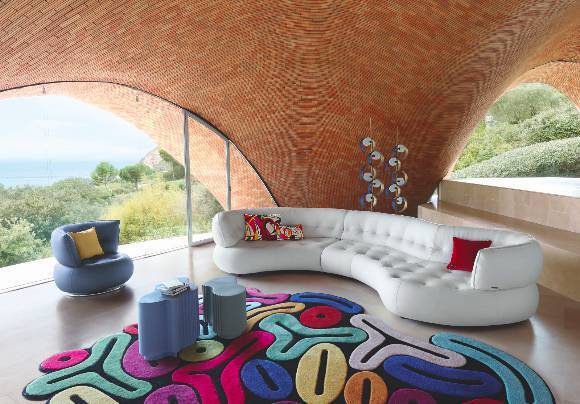
A striking rug by La Roche Bobois.
We spend a lot of time (and money!) on choosing the right flooring to create the perfect backdrop for our homes, but we often undermine this beautifully created effect by covering it up with close-but-not-quite-right rug choices.
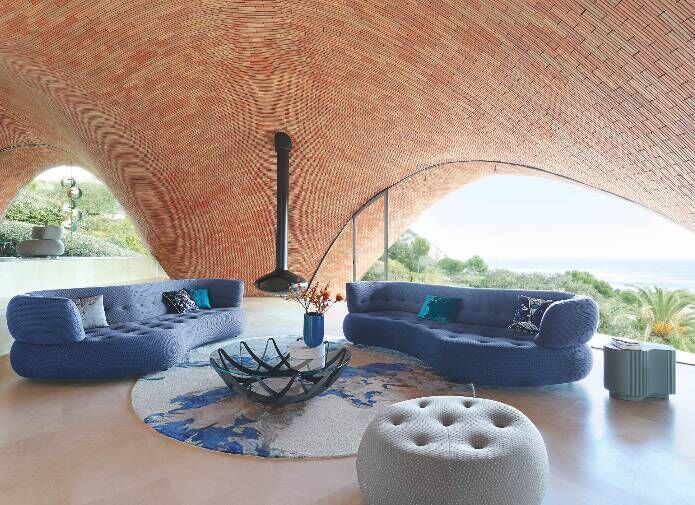
Rugs can frequently be an afterthought, one made when we’re already fatigued from other, more pressing interior decisions. Furthermore, rug choices are seemingly endless. Size and colour are just the beginning; we must also consider shape, texture, fabric, and of course my favourite — ease of cleaning.

I will always advocate for “easy to clean” as my primary criterion in choosing most household items. The right rug can be an integral piece in pulling an entire room together, but they’re not an urgent purchase, so take your time and find one that is just right. Let me make it easier for you with these tips.
SIZE
Regular readers will be familiar with the counterintuitive advice that a small space should not mean a small rug. It feels natural to want to scale down our furniture and accessories when considering a small room, but the opposite is true — larger pieces will in fact make the space feel bigger and more luxurious.
If your room is enclosed, or you want to zone off a section of an open-plan room, one single large rug is the way to go.
Your rug should extend underneath each major item of furniture in the room or zone — for instance, in a living room it should extend under the couch, the coffee table, and at least most of the armchairs in the room. Likewise in a dining room, the rug should extend underneath the dining table and all dining chairs.
Ideally, the entirety of these items (all four legs of the couch) should sit on the rug; however, cost may be a limiting factor here and so extending it just under the front two legs will suffice if necessary.
What you want to avoid is a rug that stops short of the furniture in the room. The exception here is in narrow areas such as hallways or galley kitchens, where long runners that stop short of built-in units are a good choice.
LAYERING
If you are in a larger room, consider layering multiple rugs to achieve the desired effect. This is also a great way to be able to afford the expensive rug you might want without breaking your budget on a large size — you can layer a smaller version of it over a more affordable rug.

It is generally best to choose complementary rather than contrasting colours and textures here — for instance, a large inexpensive rattan or sisal rug would go well underneath an antique rug containing neutral tones.
Layering rugs is also an excellent way to address an unusually shaped room — rugs can be layered at angles and together can create the right shape.
SHAPE
Let the items in your room and the shape of your room dictate your rug shape — if you follow the above tips, you can measure what size and shape you will need for the rug to extend under the furniture in the room.
In addition, ensure that you are not leaving any corners or edges exposed in walkways — there’s nothing worse than having to step over the corner of a rug when walking through a room, or walking with one foot on solid flooring and the other at a different height on a plush rug.
While most rugs are rectangular, perhaps an oval or round rug would mitigate this problem in your space — this can often be true for round dining tables.
In my own home, a rectangular rug in my living room would have resulted in a corner that I would have tripped over every time I went through into the kitchen or the garden. The solution in my case is a cowhide rug (mine is from Irish Hide Designs) which has a curved edge and is flat, and so leaves no corners for me to trip over.
COLOUR AND PATTERN
Bold or subtle is an entirely personal choice — just be sure to balance it with your existing items.
For a bright, maximalist look you can choose clashing patterns and contrasting colours. For a minimalist effect, choose a neutral colour without a pattern.
Combining a pattern with a neutral colour — such as a striped or herringbone sisal rug — is a great way to bring in some texture and interest while keeping everything refined and elegant.
Conversely, a boldly coloured rug in an otherwise neutral room would create a dramatic effect that you can easily swap out if you ever get tired of it.
In general, because I like to make life as easy as possible for myself, I prefer patterned rugs with some colour as these tend to show the least amount of dirt.
FABRIC
With fabric, the first thing to consider is whether you want high or low piling. High-pile rugs are thick and luxurious, but are usually harder to maintain — these are a better choice for low-traffic areas such as a bedroom. Low-pile rugs are more durable, and may be a better choice for hallways and living rooms.
The next consideration is natural vs synthetic fibres — wool is very popular as it is durable and easy to clean, but please learn from my mistake here and use a good moth repellent.
Silk looks and feels beautiful, but can be expensive and fragile, and cotton is affordable but not as long-lasting. Sisal, rattan, jute, and bamboo are all generally affordable and durable natural materials, but tend to come in fewer colour options.
Synthetics such as polyester, nylon, and microfiber are hugely popular for their affordability and durability, but it is as always a personal choice.
- Got a question for Jennifer? Email home@examiner.ie
CONNECT WITH US TODAY
Be the first to know the latest news and updates