Peter Dowdall: These plants add the best autumn colour to gardens
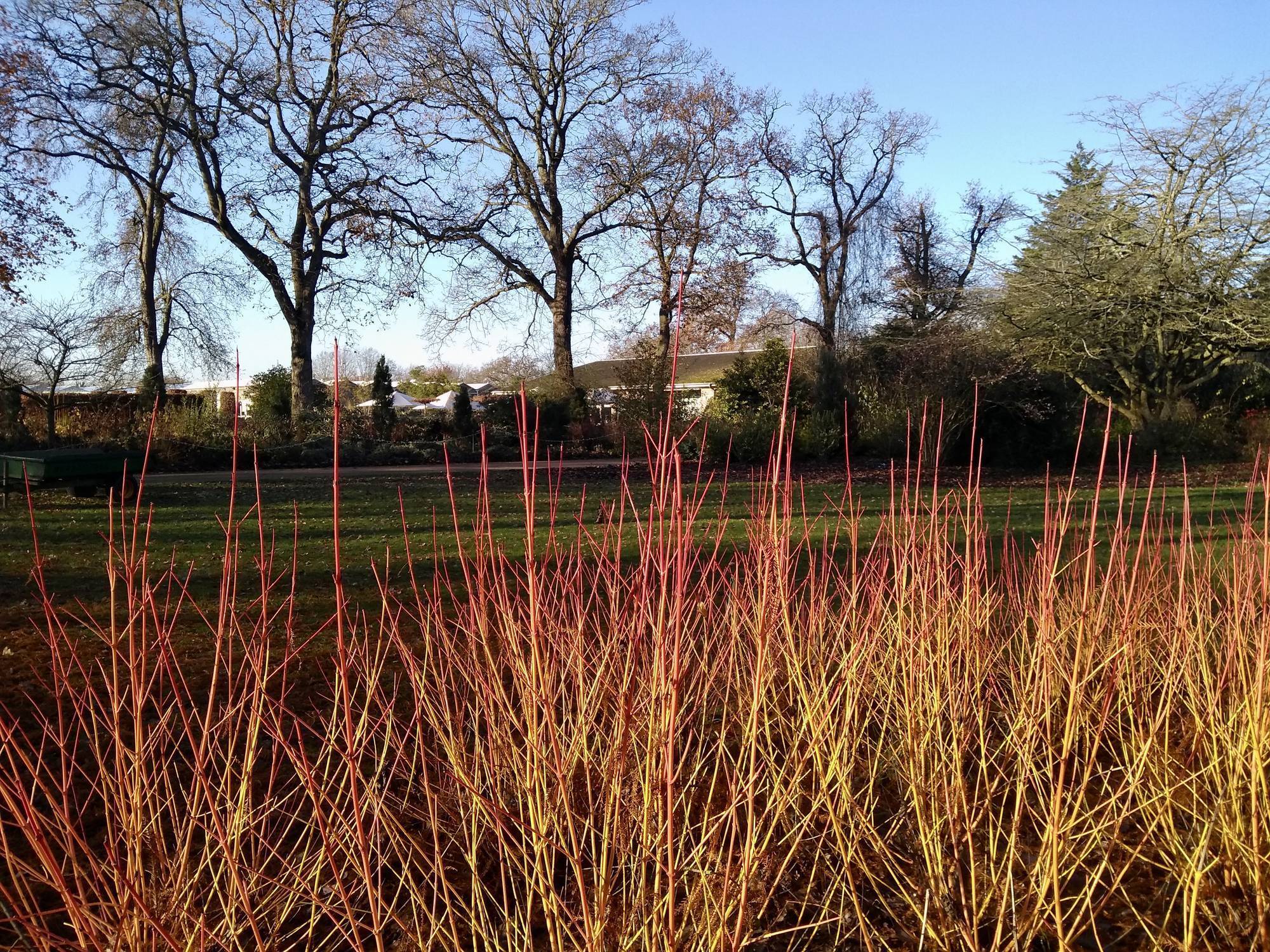
Cornus sanguinea Midwinter Fire. The autumn colour in the landscape is possibly the showiest and most dramatic of all the annual, seasonal highlights. Picture: iStock
The high levels of sunshine during July, August and even September mean that we should be in for an autumn colour bonanza this year as sunshine increases the levels of the pigment anthocyanin in leaves.
Anthocyanin is responsible for leaves taking on their russet-red hue at this time of year. From springtime, deciduous tree and shrub leaves are filled with chlorophyll which allows the plants to photosynthesise and turn carbon dioxide, water and light into sugars which feed the tree.
The magical tapestry means that as daylight hours shorten and temperatures drop, the innate computer within deciduous trees goes into shutdown mode. They take the changing conditions as a signal that autumn is coming, and they slow down on the production of chlorophyll and in the end, stop producing it completely.
It is this chlorophyll pigment which gives leaves their green appearance but as the trees stop producing it, the green colour fades. Other pigments such as xantophyll, beta carotene and anthocyanins remain visible in the leaves for longer than chlorophyll and these are responsible for the other shades such as yellows, oranges and reds.
Thus, once the chlorophyll and green colour is gone the other hues become visible. It is these pigments that create such an amazing seasonal display right now.
The autumn colour in the landscape is possibly the showiest and most dramatic of all the annual, seasonal highlights in the garden, taking over, as it does, not just our gardens but the entire landscape as if nature dipped her paintbrush in a palette of red, orange and yellow and swiped it generously across the country, woodlands, fields, gardens, roadsides, everywhere is part of the autumn foliage bonanza.

You don’t need a large garden to enjoy some “leaf peeping” — in fact, you don’t even need a tree to enjoy the beauty of autumn colour. You can get a fantastic display in the garden during autumn by using several categories of plants, late-flowering herbaceous plants, deciduous plants that show good autumn colour, evergreen plants with good leaf colour and grasses which offer great colour, movement and texture in the garden.
For many, the most visual and aesthetically important plants in the garden for the slow time of the year, from the end of summer to the beginning of the next spring are the dogwoods or cornus species.
As for the larger dogwoods, the tree types, such as Cornus florida, Cornus nuttallii, Cornus kousa and alternifolia, will all grow into medium to large trees and very often when you are looking at the quintessential images of autumn colour in New England, it is these trees you are admiring among maples and others.

However, there are a large group of cornus species which we grow as multi-stemmed shrubs in this part of the world. They are often overlooked as a plant of much garden merit, and they shouldn’t be. Cornus alba, the red-stemmed dogwood and Cornus Flaviramea with its bright and vibrant golden-coloured stems can light up the darkest of gardens right now.
I still refer to the M8 between Cork and Dublin as the “new road” — though much of it has been in operation now for over 30 years and it is on sections of this “new road” in Kildare and Dublin, up and around Newbridge, Nass, Kildare and the outskirts of Dublin, that you will see these plants used to great effect.
They have been planted in their hundreds, if not thousands, alongside stretches of the motorway. Often, if travelling on that road on a bright, winter’s day with that crisp, clean sunlight that you only get in winter as the sun is lower in the sky, you can see these plantings, positively glisten in the rays, a really beautiful modern addition to our natural landscape.
In a domestic situation, it’s easy to create a sample of that in our own gardens. One or ideally, if space allows, a grouping of three or more dogwoods will provide masses of stems to give this winter colour.
It’s important to prune them back hard each spring to ensure fresh and vibrant new growth. Cut them back to ground level anytime from the end of February to mid-April in a process called “coppicing”, as the new growth is emerging. If you don’t prune them back in this way, you will be left with an unruly larger shrub with little or no winter stem colour down low.
Of all the varieties, my favourite has to be Cornus sanguinea Midwinter Fire. If ever there was a more aptly named shrub, I have yet to meet it. During the autumn, its leaves are the most beautiful yellow-ochre, orange in colour.
These will drop to become compost as autumn turns to winter and the stems during the winter seem to be changing daily in different shades of orange in the hues of a fire in the winter landscape, a truly remarkable plant for this time of the year.

Got a gardening question for Peter Dowdall? Email gardenquestions@examiner.ie
CONNECT WITH US TODAY
Be the first to know the latest news and updates