Peter Dowdall: Why autumn anemone must be kept in check
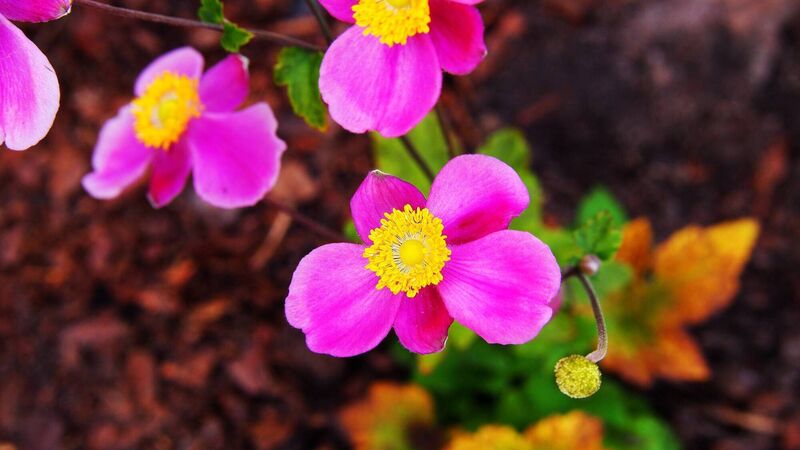
Don't be fooled by its very pretty flowers, the autumn anemone can quickly become an unwanted addition to your planting. Picture: iStock
It's easy to put words next to each other to extol the virtues of any particular plant but it's also important, to be honest.
I could tell you all about this autumn flowering perennial, which is in full bloom at the moment and is loved by bees. I could tell you all about the beautiful, simple, single flowers which are produced in floristic abundance during August and September. Everything about these plants, their dark green leaves, their slightly furry stems, their perfectly formed round buds which are so delightful as they open into vibrant blossoms, every part of this autumn flowering beauty is attractive.
All that and they make a great cut flower, allowing you to fill your home with fresh bouquets of a cottage garden favourite.
I may have hooked you by now, you may want to find out, which plant exactly, I am talking about and if I said no more, you may even go in search of this autumn-flowering beauty and introduce it into your garden.
However, I feel, if I did leave it there and told you no more about Anemone japonica, then I would be doing you a disservice.
You see, everything that I have written about this plant is true but what is also true is that it is a thug.
That something so beautiful could be such a bully in the garden may seem incongruous but that is the truth.
Plant it in a flower bed with good compost, treat it with TLC and welcome it to your garden with open arms — it will repay you by outgrowing all around it and pushing them out, so that before too long all you will have is a bed of this autumn flowering anemone.
Autumn anemones are also referred to as Japanese anemones as they are native to Japan and other parts of Asia. They are extremely resilient, surviving floods and waterlogged soils, drought and parched soils, and also quite happy in coastal exposed conditions.
Where plant choice is limited due to growing conditions such as in a coastal garden, then perhaps this will make a good choice as it will thrive where little else may grow and its simple flowers which appear on top of stems up to one metre in height are really, very pretty. Depending on the variety, flower colours can be different shades of pink or white.
So, what to do if you want some of that cottage garden feel that comes with these anemones?
Well, the answer is quite simple. If you simply must have them in your garden, then grow them in pots and containers or perhaps, purpose-built raised beds where the root room is restricted and walls can call a halt to their gallop.
By growing them in large pots, you can have the best of both worlds, you get to enjoy the flowers and all the colour that they bring to the garden, pots can be moved in and out of flower beds as and when desired but as they are contained within a pot, they cannot take over an entire planted bed.
As many will know, I moved garden within the last year and in one area of this garden, there was a bank which had been nearly entirely colonised by Anemone japonica. Shrubs and trees, of course, had survived in amongst it but no other perennial had stood a chance. I had other ideas for this area, namely a bed of white Hydrangea Annabelle missed with some green and white flowering perennials. I knew that to plant anything like this in amongst the anemones would be foolish in the extreme and would inevitably be a waste of time, effort and money.
The challenge was, therefore, how to eradicate the unwanted anemone without using chemicals as I won't use weedkillers or garden chemicals. I knew that digging it out would weaken it and lessen its presence but would ultimately be futile, for wherever root fragments remained would emerge new plants.
During the late winter, I covered the entire area with a biodegradable weed block membrane. I don’t like to use any of the plastic weed blocks as they just lead to compacted and unhealthy soil. On top of this compressed hemp and flax weed block, I dropped wheelbarrow after wheelbarrow of composted garden waste and wood chippings so that there was a depth of about 25cm-30cm of organic matter on top and I have simply planted into this.
Of course, where I had to cut the fabric and leave space around established trees and shrubs, presented opportunities to the roots and shoots beneath and they have found their way to such openings.
The only way that I can counteract this is by pulling the shoots wherever I see them in the hope that it will eventually weaken the plants below sufficiently. I keep adding more compost and woodchip wherever I have seen shoots emerge and hopefully, in time I will be free of it. Such a pity to have to do this as it is really a beautiful plant if only it wasn’t so enthusiastic.

- Got a gardening question for Peter Dowdall? Email gardenquestions@examiner.ie
CONNECT WITH US TODAY



Be the first to know the latest news and updates