Vintage View: Learn a craft that saves you money and boosts mindfulness
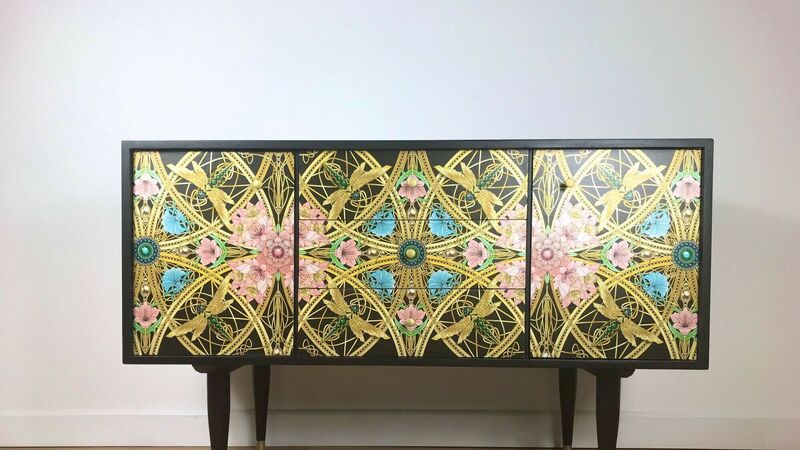
Decoupage is a cottage-core craft that’s a cut above the rest when it comes to money-saving, mindfulness, and quick results 
Vintage View: Learn a craft that saves you money and boosts mindfulness

Decoupage is an easy, mindful crafting process, with instant, lovely results.

With the cost of living crisis bruising our emotions, inexpensive, creative hobbies can get our mental hamster out of that stress-wheel churning in our head. 

Decoupage is an easy, mindful crafting process, with instant, lovely results that you can direct to tiny projects, furniture up-cycles, and for occasions and general gift making.

“Decoupage” comes from the French word to cut out. Dating as far back as the 12th in China, it became popular in the western world from the 18th century for conjuring everything from tea trays to complete print rooms with paper ephemera. 

It’s not difficult, but it has a few key areas to get right. Just remember, we want the final look to be inset not applied. 

A print room style with indicated decoupage as it was used in the 18th century from dedicated books of prints. Dancing Graces wallpaper, €195 per roll, mindthegap.com.

CLIMATE & SUSTAINABILITY HUB

It’s the kind of creatively expansive pastime that can release talents and tastes you really didn’t know were there, and it’s a perfect inter-generational distraction around the kitchen table. Decoupage doesn’t have to stand alone, and can be combined with stenciling, and wider paint techniques.

Decoupage has a twee reputation of chintzy flowers and cherry-cheeked maidens slopped onto jam-jars and scrapbooks (also known as junk journaling). 

While the nostalgic Pears soap-style motifs entombed under PVA remain widely loved, decoupage can be combined with ground shades on walls and surfaces to embrace lush, sensuous themes in colour drenching and other stylistic, period play. 

Using themes cut from comics, wallpaper, unusual decoupage papers, applied dried flowers and wilder pop and Gothic imaginings — it can be surprisingly romantic, sophisticated, or even downright edgy.

Begin developing your method with a very small project. You will be cutting out paper pieces, assembling them, overlapping where it suits your eye, glueing them down, and finally sealing that position under a layer of varnish. 

The decoupage pieces should not sit up. The repeated varnishing of the piece, will build up a smooth, lacquer-like surface. The deeper the surface, the hardier the object will be to actually use on say a dining table as a candlestick, or as a working lamp.

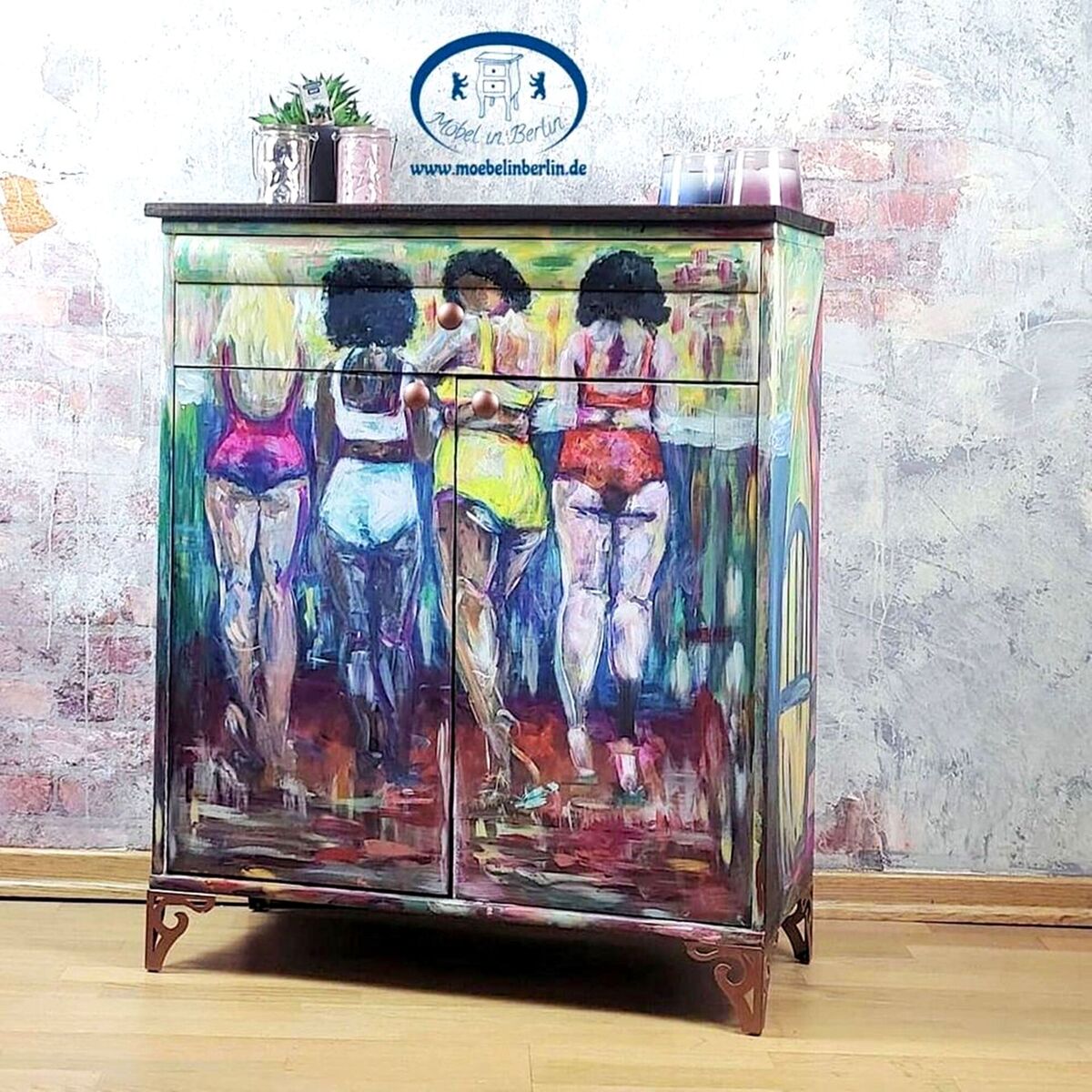
The work of decoupage masters featured on Instagram and Etsy is inspirational but exceptional. Resist attacking a mid-century sideboard with an over-loaded glue brush and an expensive set of boutique rice papers if you have never tried the technique before. 

Think about working on a bottle, a large glass jar, a picture frame, an old ceramic lampshade or a plastic tissue dispenser to hone your experience. Scale things right down.

The process

The cutting-out phase comes first, and it can be something you do regularly while listening to a podcast or as a bonding exercise with family or friends. Hunt the house. Collect up wallpaper samples, gift wrap, greeting cards, sewing patterns, maps, light fabrics, glossy magazines — anything with stand-alone interesting imagery that can be trimmed out into easy-to-handle pieces. 

Sourcebooks of dedicated decoupage pieces are often listed around in the €2-€3 bin at book shops and charity outlets — keep your eyes peeled. There are millions of copyright-free imagery to print from the internet or use a scanner to multiply or copy something you’re drawn to. 

Avoid ink-jet printers, as the ink is water-soluble and will run and soften when varnished. Crepe paper can also bleed out. Use a laser printer for heat-set prints instead.

Keep the cutouts flat in a set of clear A4 or A3 folders, organise your decoupage treasure however you prefer. Incidentally, paper napkins are fantastic for cheap decoupage (they can disintegrate with rough handling), so keep your eye open in your travels for bargain bundles in botanic, ornithological and vintage themes. 

Cutting out - younger children can use paper scissors and you can snip in a little more detail with a sharper adult tool. Some crafters prefer to delicately tear their papers rather than cut them. A ripped edge will swallow up the glue a little better - blending edges nicely.

Sitting at a table, consider the character and shape of the object. Play around with the pieces you think will marry up in colour, style and theme. Shuffle them to find the best position and direction. Mix up scales (back to the laser printer). Use a speck of Blu-tac to set the pieces up on the surface for a look.

To cover white edges and create a little more definition, use permanent markers. Don’t be afraid to introduce something punk to something sugar-sweet-pretty — a little idiosyncrasy can really lift a project out of the expected. Keep what we call the “ground” colour in mind. 

How much of this anchor colour will be on view? Do you want to layer your decoupage to obliterate the backdrop completely?

Annie Sloane Winged Wildlife with the RHS. Find the cutting book from independent booksellers; from €15.

If you look at the decoupage of the Annie Sloane Studio, you’ll notice that her commercially available pieces are applied as stencils are with far more room to breathe, creating airy walls and furniture panels built up with colours, washes and waxes to embed the decoupage as it had been there for decades not days. 

See what appeals to you for the target object you are considering embellishing. Priming and painting is just one other step, and can often be carried out with a little leftover emulsion or chalk paint. Working on walls or screens, some crafters “knock-back” their decoupage, blurring it with translucent over-painting and waxes. This is not for beginners.
Tools

Dedicated decoupage glues or specialist finishes like crackles are pricier than standard PVA or spray glue. They are intended to attach the cutout pieces and then serve as a protective sealant slicked back over the surface. Whatever you use to put the pieces onto the surface, decoupage uses paper and paper will have to be sealed in these multiple coats to survive. 

The sealing process ingests glue or vanish into the fibres of fabrics and paper, which also slows down fading to impermanent inks and dyes. Using varnish, you can choose from a matt, satin or a gloss — find the level of sheen you like.

Rice paper is favoured by serious decoupage artists as it is fade-free and structurally strong. 'Bottoms Up' rice paper from €44 per 22-inch square, try Etsy.

A blunt-ended tweezers, a small sponge, and some small, precision, angled artist brushes (look in your make-up museum) are ideal for positioning your decoupage pieces, applying the adhesive, driving out air behind the pieces, and cleaning up any excess glue. 

A decoupage tool with a sponge end for applying glue in soft sweeps to the target surface — a small useful investment. Most beginners ruin their first attempts with too much glue.

First, put a thin layer of adhesive on the target area with your sponge applicator. Having picked up brushed a little adhesive to the back of the decoupage piece or applied it directly to the surface put it in the exact position with blunt-ended tweezers and gently move it to the right spot with your fingertips. 

Use a stiffer brush or small piece of card to push air and excess glue away from the centre of the image. 

Continue until all the motifs in that area are complete, dab off any excess glue with a cotton bud, and ensuring there is no dust, add your top coat of varnish. Clean up. Allow to dry.

Multiple coats will disguise minor wrinkling, edge lifting and bubbling — the scourge of decoupage using thin papers and material, and fine sandpaper will leave a nice shiny, even surface. Be gentle and work in one direction — sanding, dusting, varnishing and drying.

More in this section

Revoiced

Newsletter

Had a busy week? Sign up for some of the best reads from the week gone by. Selected just for you.

Cookie Policy Privacy Policy Brand Safety FAQ Help Contact Us Terms and Conditions

© Examiner Echo Group Limited