Which flowers last the longest in summer gardens?
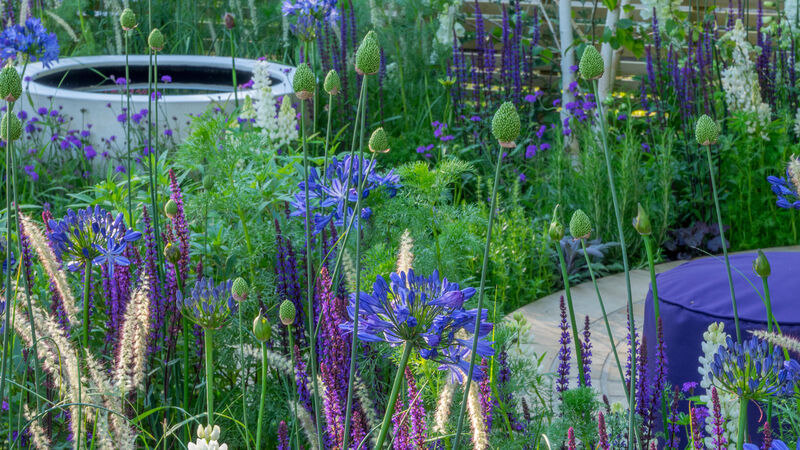
It seems like summer’s only just arrived – but already lupins have gone over, many roses are past their best, and peonies have shed their flowers. You need to choose carefully if you want longer-lasting blooms.
With this in mind, award-winning garden designer and BBC Gardeners’ World presenter Nick Bailey, author of 365 Days Of Colour In Your Garden, offers his top picks for plants which will flower through summer and beyond…
Anisodontea ‘El Rayo’

This South African plant from the Lavatera family is incredibly fast-growing and floriferous, he enthuses. “It will go from 1ft to 6ft in a year in a south-facing position, as the cup-shaped mid-pink flowers with a burgundy blotch at the base. The extraordinary thing about it is that it never stops flowering for 365 days of the year,” Bailey adds.
It can grow to 2m so is ideally placed at the back of a border, or you could plant a number of them in a row to create a divide, used as a design tool to buffer boundaries. “It’s one of those live-fast die-young plants. It will grow from 0 to 2m for about four years and then it just drops dead. It basically flowers itself to death. It’s not invasive but is likely to self-seed, so new plants should replace the old ones,” Bailey explains.
“It likes hot, dry, sunny situations and I love to pair annual climbers with it, like ipomoea (morning glory) which will just twine its way up through the anisodontea. A cultivar like ‘Grandpa Ott’ which is a deep purple, combines well. At ground level, I would pair it with something else that is long-flowering such as Campanula lactiflora, which flowers for three months in the garden and has a pale watery-blue flower.”
Rosa ‘Bengal Crimson’
“This is extraordinary in that it flowers 365 days a year, which makes it unique. It’s very close to the wild rose species, which means less pest and disease problems. I’ve never known it to have pest and disease problems,” says Bailey. “The flower tone changes in winter, when it becomes a red-pink rather than crimson.
“It wants a rich soil, a sunny spot, and you don’t need to prune it and it’s nearly thorn-less. It will grow to around 3m if unpruned, but you can train it flatter on a wall. You can also grow it in a pot, but it will need richer feed specifically for roses in a container.”
Rosa ‘Bengal Crimson’ works well as a stand-alone, or you could easily run a viticella clematis through it like C. ‘Prince William’.
Nemesia ‘Confetti’
“If you put these in a warm spot in winter, under cover or next to the walls of your house, they won’t stop flowering long after summer has gone,” says Bailey.
“This South African plant has a slightly musky scent and little bits of dead material occasionally need to be removed from it, but otherwise it’s a great plant to have in a container or series of containers to give a foamy form, and it will spill over the edge of a container and flower endlessly.”
Geranium wallichianum ‘Lilac Ice’
“Everybody knows Geranium ‘Rozanne’, the almost forever-flowering purple geranium. It comes from a species called wallichianum and at the same time, a number of other plants were developed which aren’t as well-known but do exactly the same as ‘Rozanne’. These include ‘Lilac Ice’, an off-white with lilac and pink. It is just as vigorous as Rozanne and you’ll get about eight months’ flowering from it.”
Hydrangea paniculata ‘Wim’s Red’
“This shrub goes through lime notes, pinks and ultimately a fairly rich red. It flowers for around six months, from late June to November, but changes through the season, adding that extra dynamic.
“Being a paniculata, it has spike-formed rather than pom-pom-formed flowers, so I would complement that with something relatively upright, which replicates its form such as Veronicastrum ‘Fascination’ which has spiked lavender blue flowers.”
Will deadheading help?
“In a typical growing season in this country, annuals will go through to the first frost and will keep going regardless of deadheading,” says Bailey. “Anthemis tinctoria, that little Mediterranean daisy plant, has a lovely yellow cultivar called ‘E C Buxton’ which, left to its own devices, only flowers once in June, but if you chop it down to the ground it will happily reflower for you in late summer and into autumn.
“Chopping back also works for a lot of the geraniums. The earlier flowering perennial geraniums like psilostemon – a dark, cerise pink – does almost as well with its second flush if you chop it back to six inches after its first flush. Salvia nemorosa is another great example. It gives you three or four months of flower from May into summer. From experience, it can hold its dead floral structure with bracts, or you can cut it right back and it may bloom again for you in September. ‘Caradonna’ is incredibly long-flowering.”

365 Days Of Colour In Your Garden by Nick Bailey is published by Octopus. Available now.


CONNECT WITH US TODAY



Be the first to know the latest news and updates