How to build a miniature wildlife pond to suit any garden
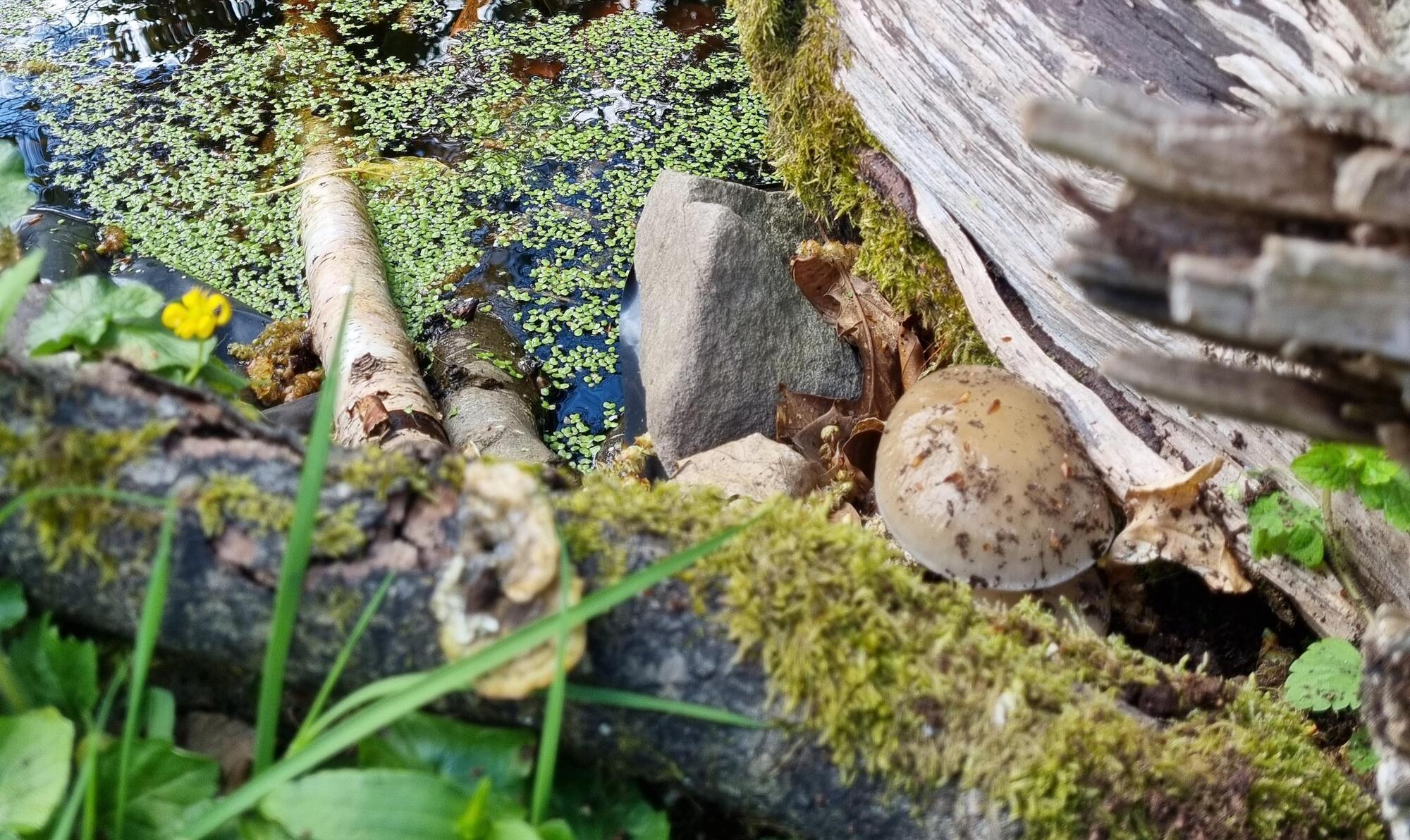
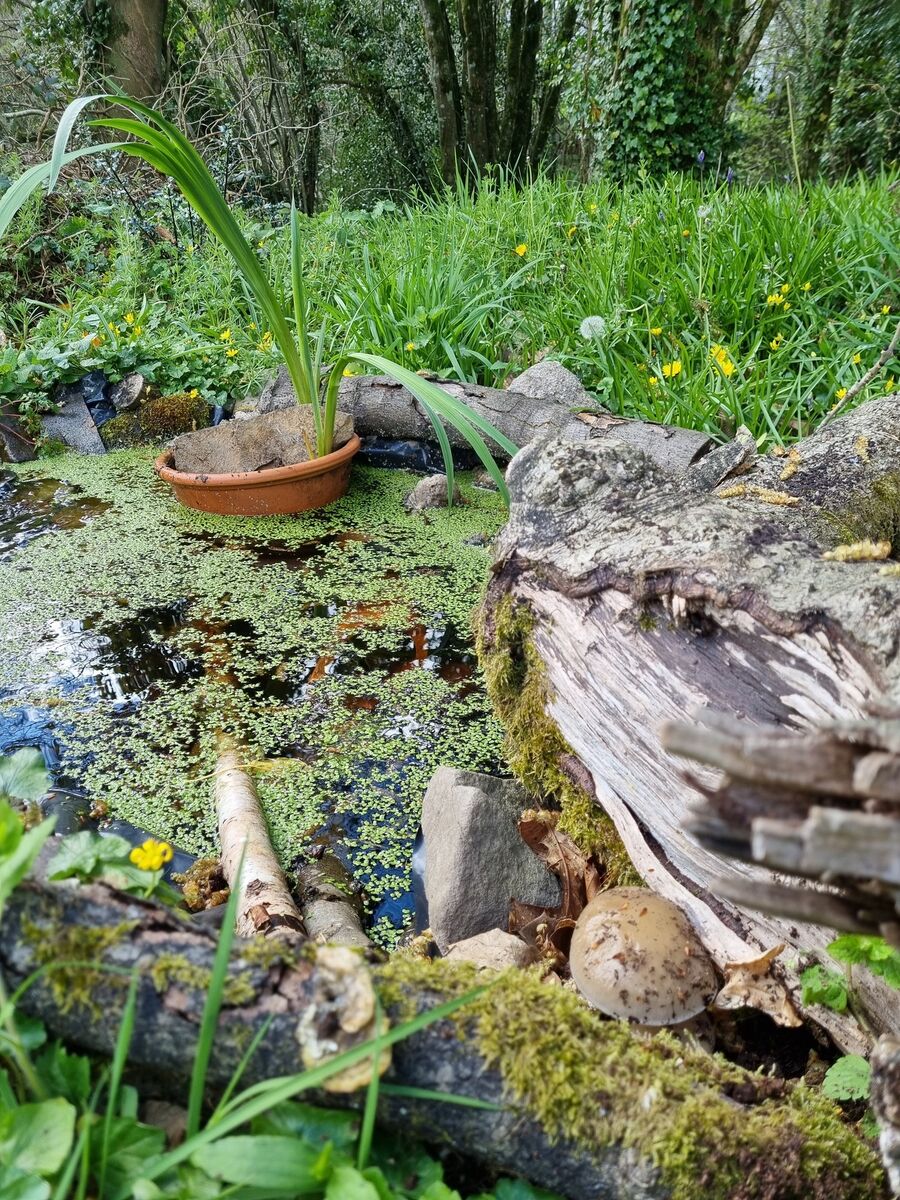
Kya deLongchamps's pond after a bit of refreshing. Birds and hedgehogs can forage in the dry and moist areas around a pond like this, as well as using it for rehydration and bathing. Picture: Kya deLongchamps
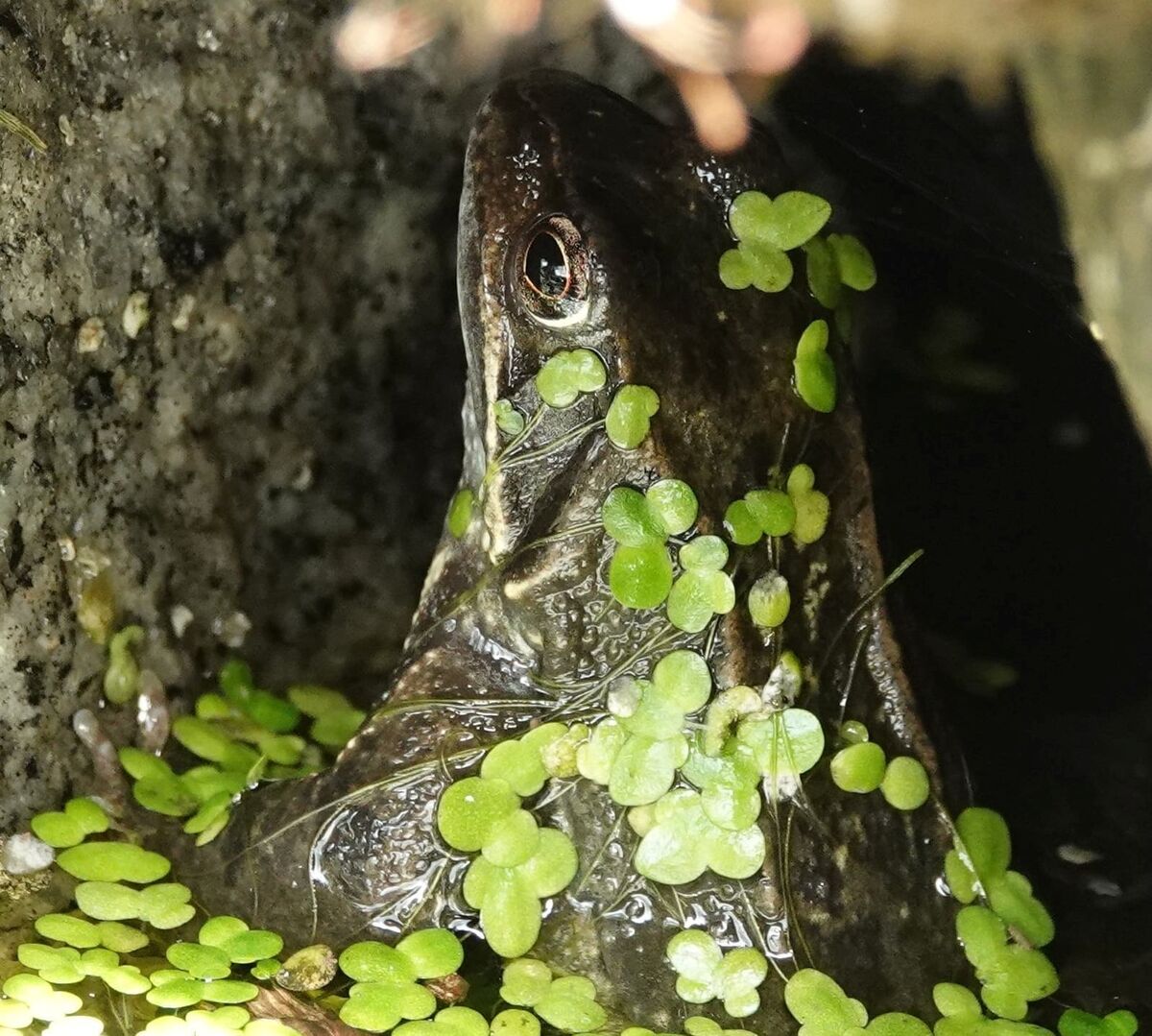
Frances Gallagher of Rinn Bearna Aquatics is a wise wild-water keeper. She had told me in May of 2020, that it would take probably two years to establish a small water body attractive to frogs. But no. I trudged down to my tiny wildlife pond in March, and took a flat equestrian dung fork to sieve out the debris from what my nose read as rancid, stinking water.
CLIMATE & SUSTAINABILITY HUB
Frances encouraged me to approach a planned pond extension very cautiously. “Plastic liners generally don’t have that long a life expectancy, and yours may well be past it,” she explained. “However, I wonder about keeping the small stinky pond going beside any new shiny metres — at least for now. It will remain a habitat, and the froglings will probably adopt the new side fairly quickly when they start hopping.
There’s no telling about the adults. They may prefer the swamp with long-lived insect larvae and other dentin’s in those murky depths.”
A metre square of ground, a bucket on the patio or a half barrel of 60cm depth sunk in the ground — there’s nothing really too tiny to accommodate the diversity of a wildlife water-feature. Gobnait Ni Neill guides the Drimnagh Community Environmental Group in Dublin, and is passionate about gardening that benefits biodiversity. “I love ponds,” she says.
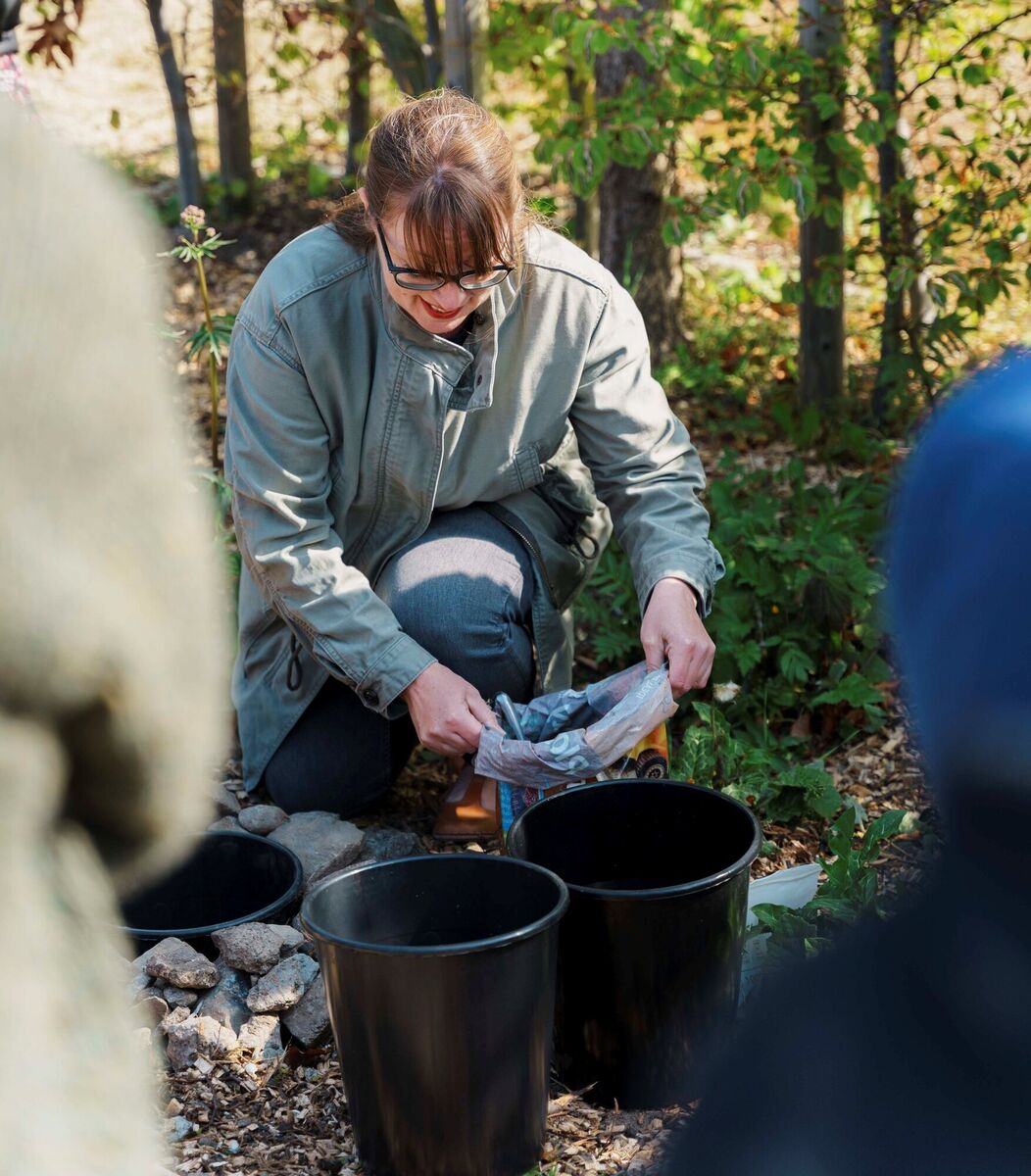
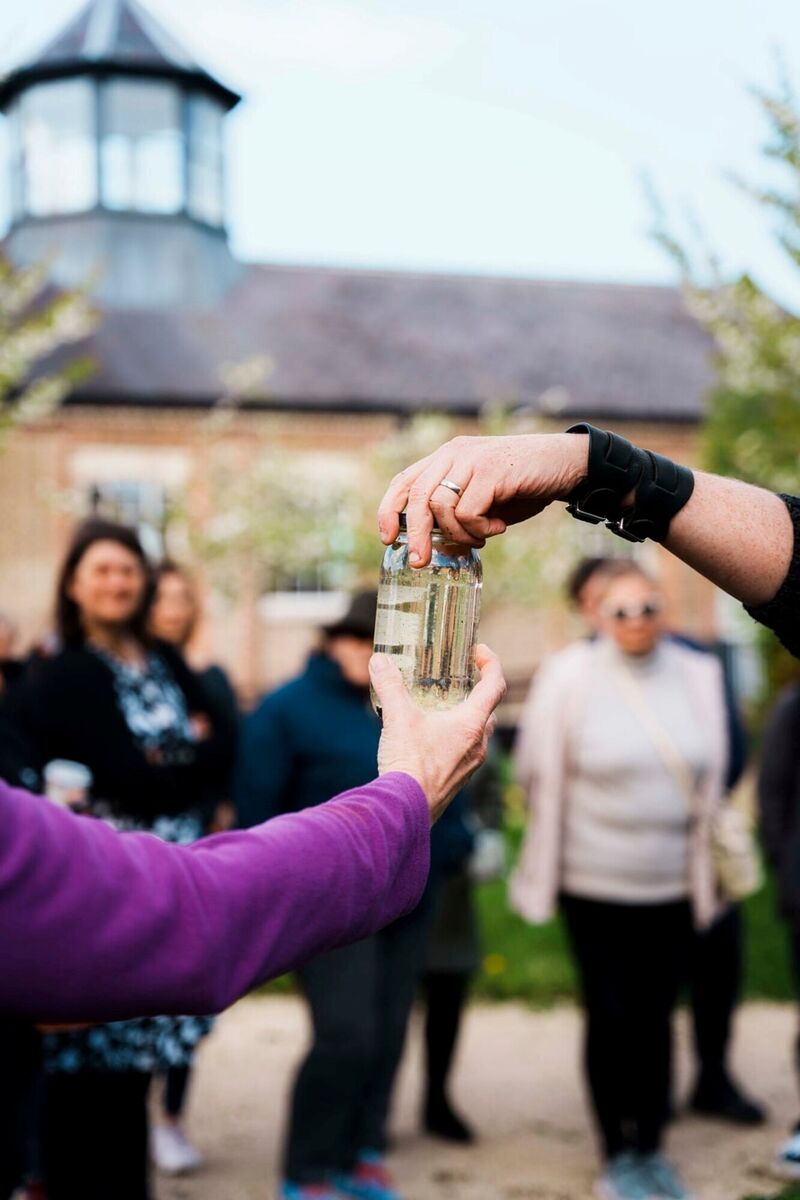
The ideal pond container is anything that’s watertight, and relatively sturdy, with no sharp edges. We recently discovered an almost endless free supply of these in the form of supermarket flower buckets (a handy size and shape, thrown away on a daily basis). We’ve just run a few events with Collie Ennis where we demonstrated how to build a mini pond and gave everyone a flower bucket and pond plant to bring home. If you’re renting your home, ponds are still very effective. Instead of sinking them down — build a surround for them using anything from potted plants, stones, bricks, twigs or logs.
Frances adds, “The main problem re water quality is stuff falling in (mainly, leaves). Avoid overhanging poisonous foliage (laburnum, yew, rhododendron etc.), and plants with very big leaves such as
sycamore.”
Wildlife ponds don’t require the attention of mechanical skimmers, UV clarifiers, anti-bacterial supplements, and vacuums. Watch out for overgrowth and the level of the water in general. Frances adds that even when you forget about the pond for a period, it can be saved.
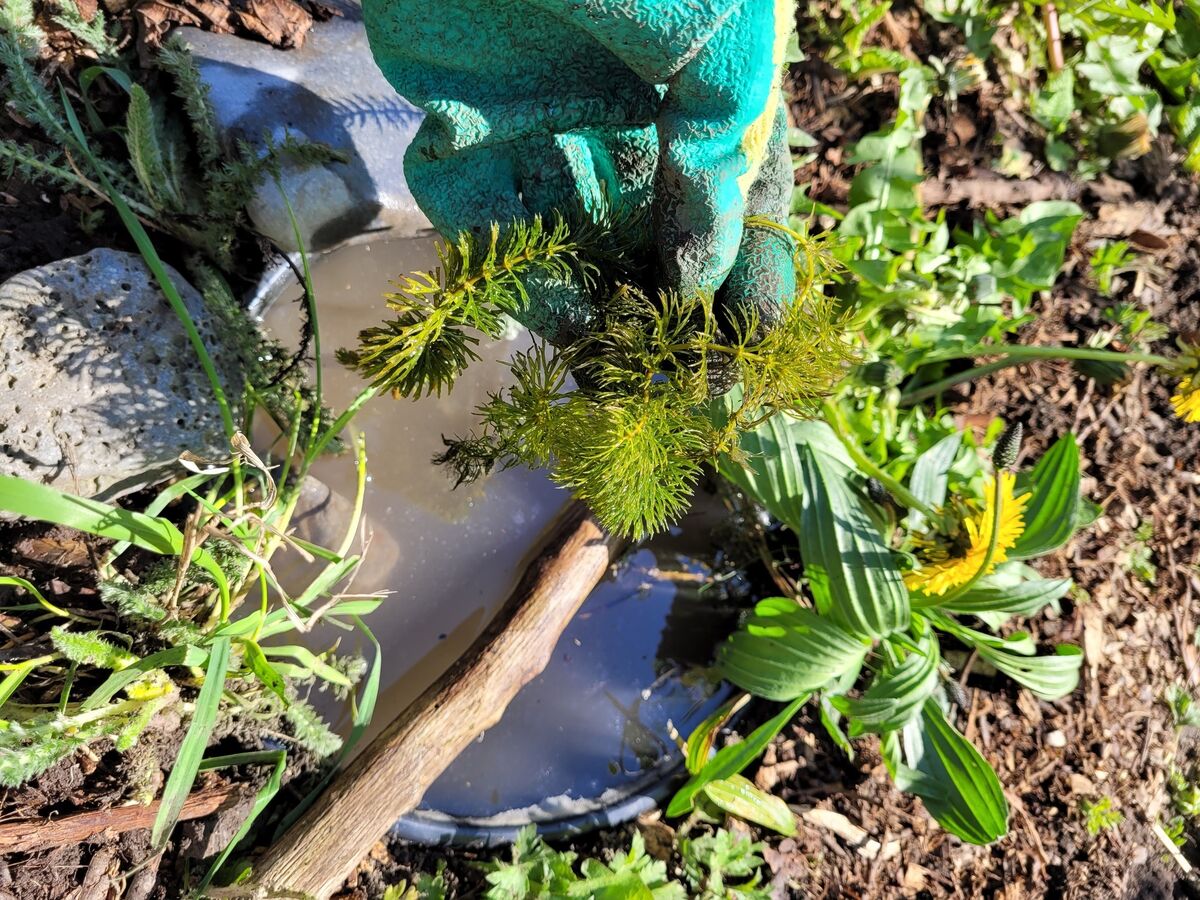
Marsh marigolds, duckweed and blanket-weed can run amok if unchecked, excluding light from the water and gobbling all its natural resources. Spring and summer are a great time to consider new plants you would like to introduce (see our panel) and to cut back those getting out of hand. Frances argues that plants are preferable to mechanical oxygenation. “A little fountain doesn’t always improve things. Some plants and creatures don’t like water movement - water lilies, newts, and easily startled birds. It also increases evaporation quite a bit.”
Learn from my bungling. Leave your small pond alone once it’s filled, and happily oxygenating, and enjoy the sight of butterflies and dragonflies benefiting from a little spade-work. Finally, don’t forget that young children can drown in as little as 15cm of water. Log on to Water Safety Ireland, to see if that pond is for you, watersafety.ie. Thinking ahead? Develop the little landscape.


CONNECT WITH US TODAY



Be the first to know the latest news and updates