Peter Dowdall: How to care for camellias so they will enhance your garden for years
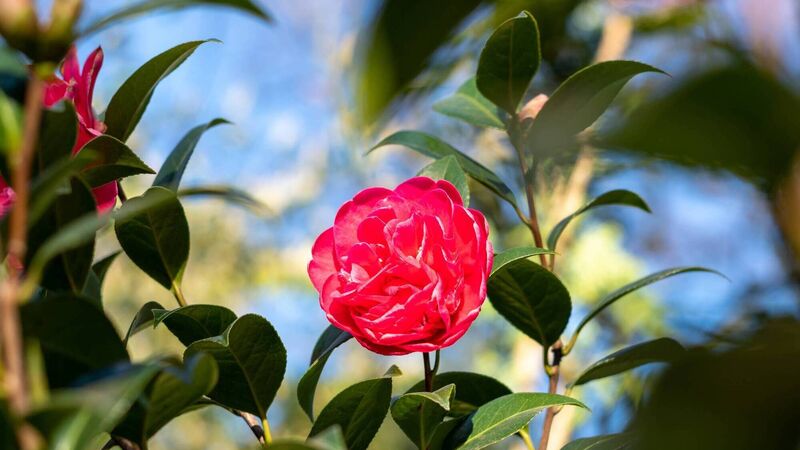
Give them what they want and camellias will delight for years to come. Pictures: iStock

That switch is going off, isn’t it? Can’t you just feel that internal flick — not just encouraging you to go out into the garden once more but positively propelling you outdoors?
I do think that we are so intrinsically connected to the natural world that something deeply innate within us all changes with the seasons.
As the days begin to lengthen and the first signs of spring emerge, so too do we awaken from our winter slumber.
Then as spring becomes summer and the garden is seemingly running at full tilt — take your eyes off it for a minute and weeds have taken over — we as humans also seem to be so much busier and more productive.
As everything begins to slow down during the autumn, we do too; even our colour preferences seem to change during that season, we hanker for the autumnal hues of coppers, russets and burnt orange to the yellows and bright colours of spring, which seem nearly garish during the fall of the year.
And as winter takes hold once more at the end of the circle, speaking for myself, I am more than happy to slow down and take for the indoors once more.
But for now, we are at the beginning of the cycle and the garden beckons once more. Perhaps it’s time to make a change in your garden or maybe you are taking on your first garden. There are few, if any, nicer garden projects than planting a new area but be careful to get it right.
It can be all too easy to fill a garden with plants that will look good for only a few short weeks or months of the year as garden centres will be filled, right now with spring-flowering beauties. However, think more long-term to maintain interest and colour throughout the 52 weeks.
Our minds crave balance and to create this balance and structure in a garden you can repeat certain plants throughout. To fill an area with a hundred different plants will only create chaos, a mass of colour perhaps but no balance, and will, thus, not work. Instead, I like to use plants to create different areas of interest in a planting.
To do this, use a few focal-point plants. Be aware that if the plant you are using for a focal point is deciduous, then what you plant around it should be evergreen so as not to leave a big blank area for several months and equally, if your feature plant is evergreen, then you can complement it with some herbaceous and deciduous planting so that you have a year-round presence mixed with the seasonality of those that come and go.
Camellias, many of which are already in full bloom, are great to use in this way with their deep green, glossy foliage allied to their dense and stately form.
Not only will they act like omnipresent punctuation marks, they will also delight with beautiful blooms during spring.
In fact, depending on the species and variety, camellias can provide colour from late October through to June.
Camellias are a bit fussy in terms of what they do and don’t like but, give them what they desire and they will reward you for years to come.
They like a soil that is neutral to acidic with good humus content and decaying leaf matter.
When the soil pH is wrong this will normally manifest itself in a yellowing of the leaves, this is caused by iron being unavailable to the plant. The simple way to counteract this is to apply iron in a form that is available such as chelated or sequestered iron.
If you can collect pine needles from somewhere then do so and either add them to the compost bin to create a good, crumby compost with a low pH or simply add them to the soil at the base of a camellia to reduce the pH.
Camellias will produce their flower buds during the autumn for opening into bloom the following spring. If yours isn’t flowering that well, then during the autumn is the time to apply either sulphate of potash or tomato food or a similar high-pottasium product.
Really, the last thing that you need to remember when planting is the aspect. They like semi-shade and ideally a position facing west or north-west.
If you won’t remember that, then just remember that they don’t like to see the sun too early in the morning. If they are facing east or south, not only will the full sun scorch the leaves during the summer months but it will also burn the flower petals during the cold winter months when they are still within the buds.

• Got a gardening question for Peter Dowdall? Email gardenquestions@examiner.ie

Cancel anytime
CONNECT WITH US TODAY
Be the first to know the latest news and updates