Vintage View: We are swayed by iconic rocking chairs
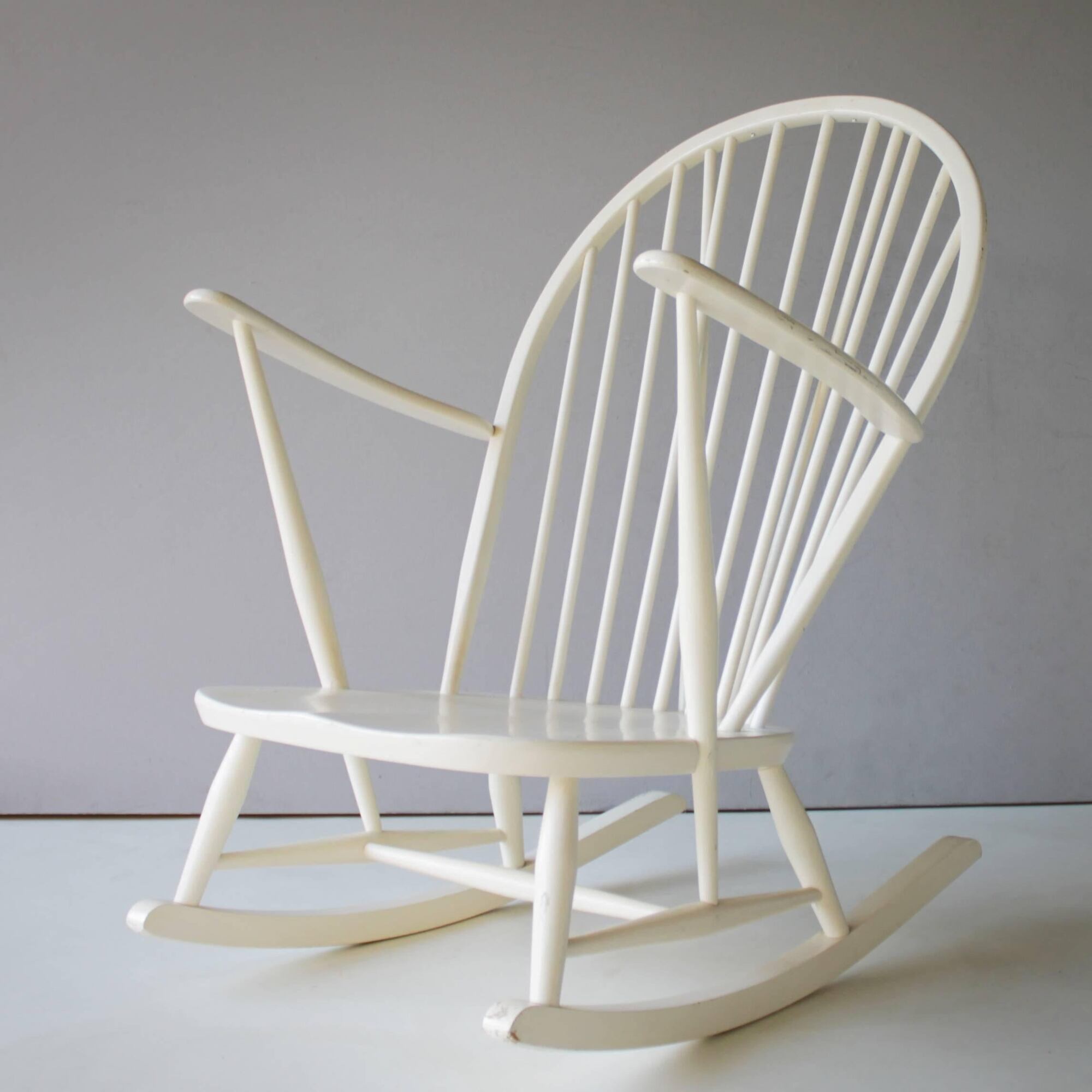
Ercol rockers can be found on the charity shop circuit from as little as €100, but to find one right now, expect to pay a vintage outlet in the area of €400. Picture: 1stDibs
Rocking chairs are an odd piece of nostalgia furniture. Rarely spotted today outside of the nursery, when a visitor enters a space and has the choice, they will often plunge into an available old swoop ’n’ sway.
They always make me feel slightly elevated in status — like small, adoring children should gather to my knee and listen to my profound, geriatric wisdom. As I narrowly miss puppy paws and glance off infant fingers, I pump up some fairground velocity and start slicing my way villainously across the room.
Dipping and flipping on a rocker — well, it’s fun. There is a touch of lower-leg exercise in it, and some doctors believe it releases tension in the lower back (JFK had an Appalachian oak rocker prescribed by his physician, Janet Travell).
Having a baby, the rocker is a defensive weapon against whinging and colic. It was my go-to perch for breast-feeding and nodding off with the baby — hundreds of years of traditional calming in motion. The design rhythm of these chairs keeps on rocking and even without a front porch surrounded by cottonwoods, you can enjoy a variety of styles, including glider versions to prevent mashing furry feet into howls and screeches.
The Ercol rocking chairs take their lead from Shaker/Quaker pared-back forms. With a tall exaggeration to the back they have a unique, elegant presence that would suit a period or contemporary room.

The ones to look for from this renowned and still active British maker founded in 1920, are the elm, beech and oak examples from the 1960s by Lucian Ercolani. With nuances of the Windsor chair, they mirror the airy, crafted Ercol dining sets, love-seats and studio couches we all adore.
There’s a Swan, Barrel or a high, MacIntosh-style rocker that rises to a slender top rail, the Goldsmith (my favourite with its open embracing arms). They are all exquisitely comfortable.
You could add a cushion and just tie it onto the back spindles if you’re lucky enough to have a bony backside. Don’t worry about vintage pads — they are generally easily run up by a genius with a sewing machine. The oyster-shaped seat has a nice, bottom-friendly depression to keep you in place.
Ercol rockers come in a variety of lacquer finishes and paint colours and can be easily upcycled to suit your scheme. Fabulous in a bruised black egg-shell. I have seen marked Ercol rockers on the charity shop circuit from as little as €100, but to find one right now, expect to pay a vintage outlet in the area of €400.
For the lines of an Ercol pushed into utter modernity with a nod to mid-century Scandinavian, take a look at Kartell’s Comeback rocking chair by Patricia Urquiola, from €657 from a variety of suppliers.
Bentwood rockers are back this year in a variety of curly confections and you can probably find a steam-bent super rocker of this type brand new without much difficulty. Michael Thonet’s (1796-1871) bentwood rockers, created from steamed wood, dating from the 1830s forward were wildly popular with both his dealers and his customers.

In a tough, malleable ash or elm, they could be broken down into component parts and shipped by the thousands in packing crates. The more elaborate and large the rocker the better.
The Thonet shows the start of a range of rockers where the base floats the seat out more fully in a two-part suite.
Thonet’s romantic vehicles made in Boppard am Rhein, Germany, featured everywhere from the Moulin Rouge in Paris to the Studio of Picasso, who sketched his rocker into a anthropomorphic study of his own face. They and their rival brands, were hugely popular in America too, where they recalled the spirit of the hand-made Adirondack plank chairs fashioned from found wood and parked on every up-state New York porch.
The whip-lash curves perfectly suited the art nouveau era, where a bentwood rocker would sit amid palm leaves draped in a lovely silk paisley print shawl in the home of every arty, bright young English thing. Today bentwood rockers with cane, leather or even upholstered seats, sit proudly in conservatories, libraries and as a perfect place to dream over a beautiful view.

Prices from a dedicated vintage dealer for an authentic Thonet from the mid-1800s to the 1950s start at €800 and rise depending on the intricacy and beauty of the rocker. Try pamono.eu for a good selection and search eBay, plus upcoming Irish antique auctions under “bentwood” and “Thonet” at collectireland.com.
Keep your eye out for unusual style collisions like button-backed chesterfields riding on bentwood supports. Skint – try the local landfill for an abandoned Poang by Ikea — bought and abused by the million. €115–€239 (most sustainable materials),
ikea.com/ie. Argos does a very similar chair in its home collection for just €110 that’s quite stirring, argos.ie
Hans Wegner, Charles and Ray Eames, and Ib Koford Larsen all had a swing at a rocker. The Eames Rocking Arm Rod Base (RAR) originally came in a fibreglass shell set on a rather skeletal rocker base. With a soft, waterfall edge to perform that meditative pulse, it’s now delivered in recyclable plastic, and every employee at Hermann Miller, which makes this chair in the States, is given a RAR rocker for their new baby.

A deep, enveloping pocket, the seat can be left as is, or upholstered, and as you would expect, it’s a heavily copied design. My choice would be a Pale Rose shell on chrome rods and a maple rocker but you can compose your RAR in a hundred ways. Prices from €580, suppliers include finnishdesignshop.com.
For a steal in the style of the RAR try the Kave Kevya, €159, kave.ie. CA Design in Dublin does a good RAR knock-off for €295, but I would take a second look at its Concept Rocking Chair, which has a superb Danish touch with timber A-shaped rocker arms, and a superbly comfy upholstered seat, €695, cadesign.ie.
This chair would be an ideal answer if you can’t stretch to the iconic J16 by Ib Koford Larsen from 1962. The J16 rocking chair by Hans Wegner c1944 is expensive if lovely at €1,400 plus second hand (€2,700 new) for a Windsor look and paper cord seat but is, I feel, easily surpassed by any hand turned, antique Irish traditional in a nut dark fruit-wood.
Check the stability of any vintage chair at the joints by pushing it across from one corner of the top rail across the seat. Note any rocking and rolling — not desirable.
CONNECT WITH US TODAY
Be the first to know the latest news and updates