Interiors: Here is how to create your very own curiosity cabinet
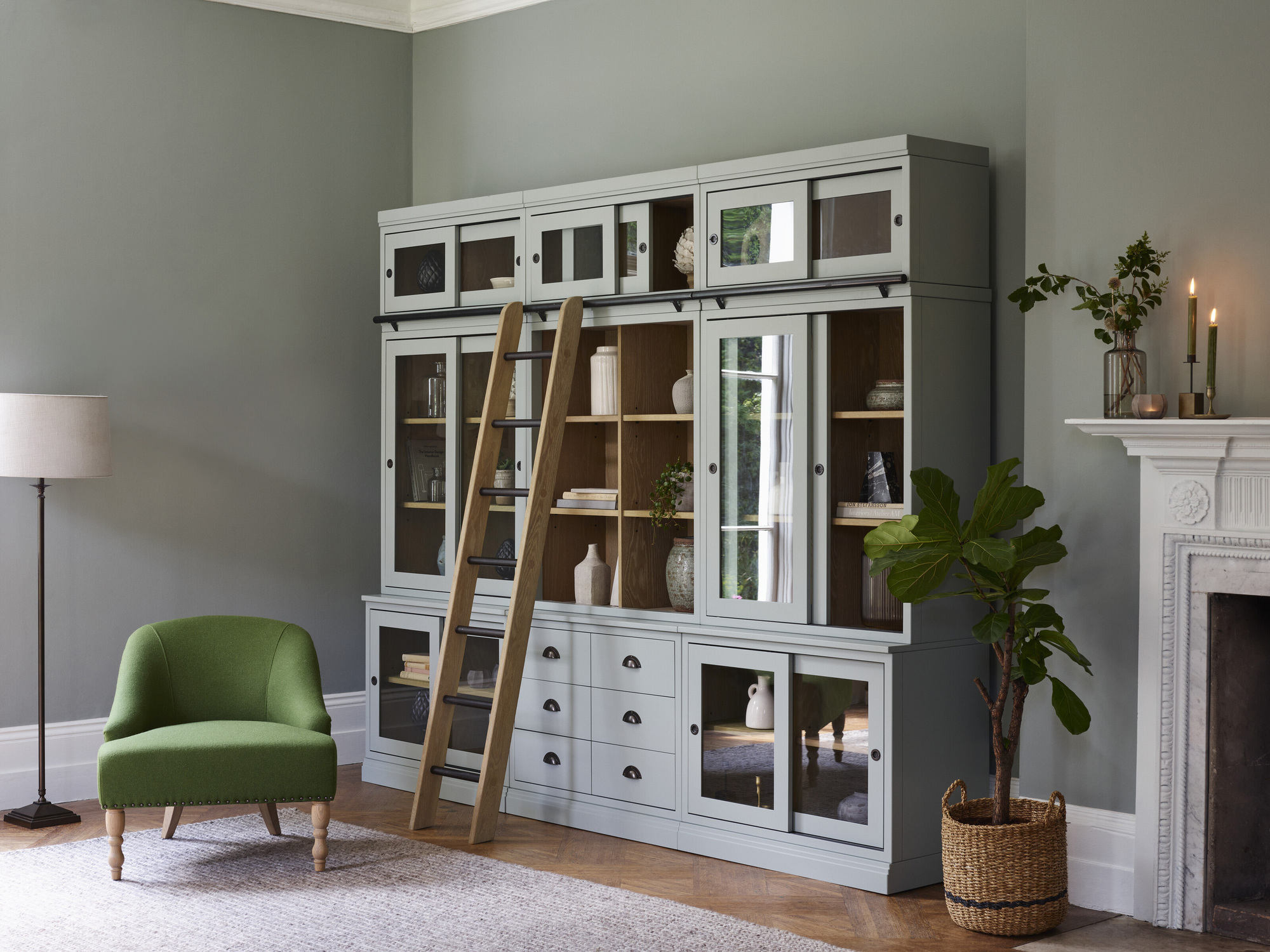
Penny Byrne, a design specialist with Neptune advises, 'Open the door occasionally to spend time with your collection. Rearrange it regularly.' Neptune Chawton, €6220, neptune.com for stockists
Where did the whole business of the curiosity cabinet start? Waggling a Beswick china terrier, docked of its tail to the front of my animal amputee ward, I became genuinely curious. I took a swan-dive into the respectable articles of the Sotheby’s Institute online and was whisked back to the 16th century.
Art historian, author and curator Giovanni Aloi describes the beginnings of the practice as “the aristocrat’s answer for those who sought to enliven the opulent but dimly lit parties thrown during the Italian Renaissance. They ranged in size, from as small as a dedicated piece of furniture with multiple drawers or could stretch to the size of an entire room. Every object offered an opportunity to tell a story about an epic adventure or, more often, to fabricate one.
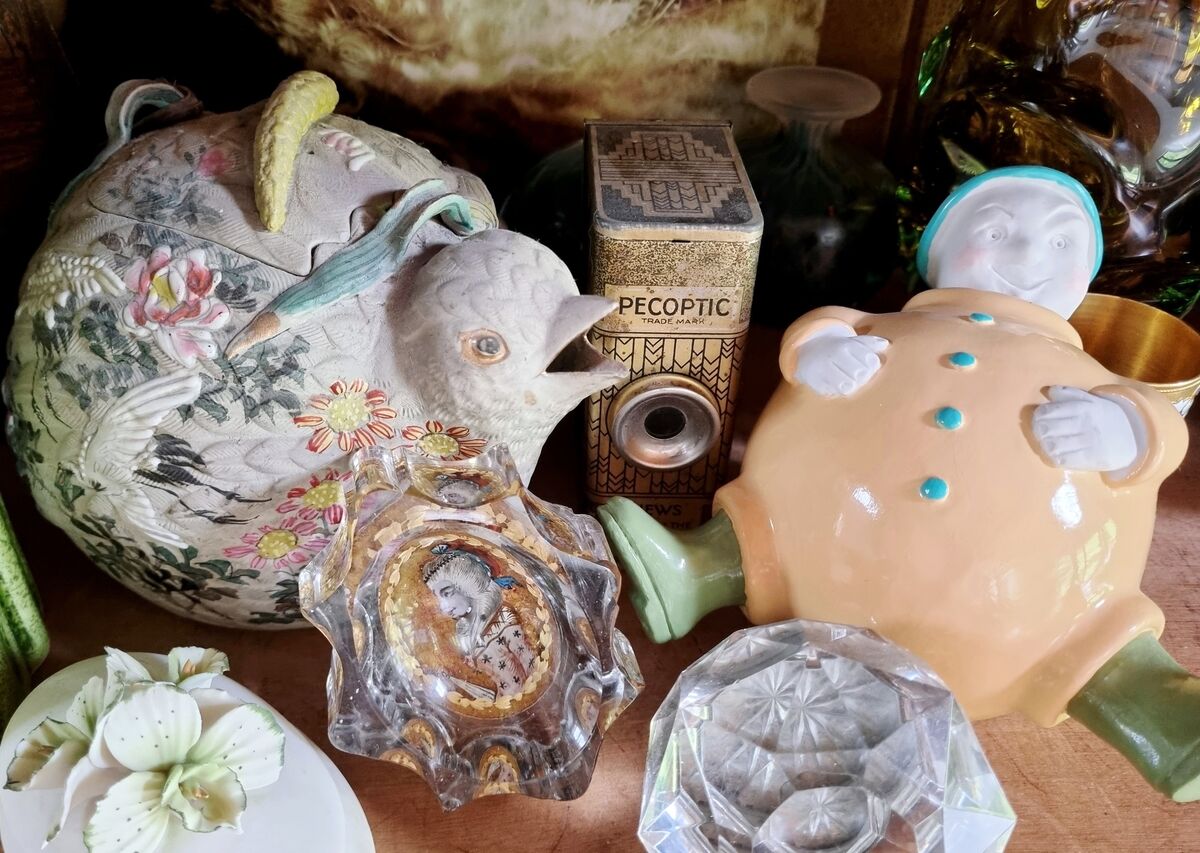
“Like everyone else,” Giovanni continues, “the wealthy liked to define their personalities through the possession of glamorous objects as tangible tokens of their intelligence, erudition, wealth, and taste. Some, like the famous mermaids made by stitching together the torso of a monkey to the tail of a fish were wholly fantastical. In spirit, the cabinets were not meant to be scientific — they were a place of the imagination” (The Sotheby’s Institute).
Our gentrified ancestors challenging, wide-eyed guests with groaning enlightenment surrounding religion, the meaning of life, the inevitability of death, indicated by the dusty, creepy bits n’ bobs of the host’s collections? The “irrationality of the natural world” with the Borgias over boiled artichokes and a fossil? Call me my carriage, Giovanni!
The Victorians were drawn to the marvellous, the downright ghoulish, and the tradition of the “Wunderkammer”. Be it a shrunken head or a diorama of stuffed mice at the Queen’s court, glazed showcases were an inclusion in travelling fairs and dedicated museums of oddities. Reaching beyond the known, the expected, out towards the frightening world outside their whale-bone-staid orbit was thrilling to the upper and lower classes.
That Gothic edge to the curiosity cabinet is worth remembering when you’re putting your pieces together. Bold eccentricity and honouring the cheap and kitsch is a real bonus here.
Today’s moneyed elite, are still consumed with showing off perceived power and self-realised character on shelves and walls. The more socially insecure they are the more outlandish the display tends to be. They signal financial and social status through shifty accessorising.
The pretentious individual (or more likely their decorator), sets out supposedly random archaeological artefacts, art and rare natural finds to impress all comers. President Donald J. Trump can prop a tiny, exquisite Rubens in his gilded apartment and wait patiently for it to be recognised and drink in the applause. It’s a little more subtle than the 16th century, but the message is the same: “I can acquire the best — you cannot”. Trump’s Rubens was recently flagged as a reproduction.
Today for the rest of us, an accrued cabinet of stuff is the tailoring of a secret world of deep, mysterious desire. We don’t and should never feel the need to completely explain our peculiar museum. We should be enthralled and comforted by the unusual, highly personal objects that resonate softly with our deeper, authentic self. Why did you reach out for that dinged Dinky Toy at the boot fair in Rathcormac? Only you know.
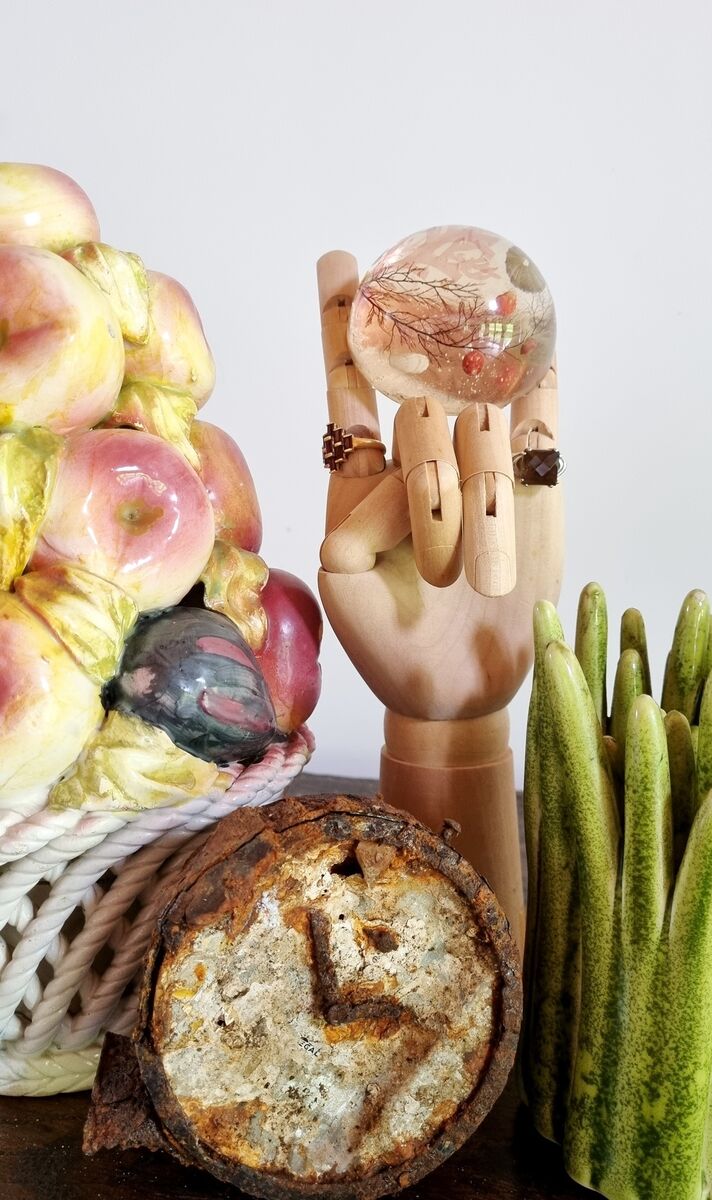
My curiosity hoard has broken out from behind glass and frolics over shelves otherwise stuffed with books. The pieces were found, free, gifted or no more than a tenner, never educational and very often worth nothing. The challenge is on. The last inclusion was an articulated wooden hand bought from Enable Ireland in Clonmel for €4. I’ve smothered the arthritic fingers in costume rings. There are skip finds, Sommerso glass, a slide viewer my granny bought at the Chicago World Fair in 1933, and a seized, decaying Smyths alarm clock we found in a ditch. There’s no “why” to it otherwise, which is really liberating.
Your own mind-palace of stuff might include anything from chipped blue and white stoneware sherds found across ploughed fields, torn concert tickets, a group of Clarice Cliff mustard pots or a tiny pair of Daum glass sparrows. There’s nothing wrong with including valuable things or just one kind of thing, say a flotilla of lovely teapots from the turn of the 1900s. The only rules are, no rules and no reaching for social cachet.
Penny Byrne, a design specialist with Neptune, advises: “Open the door occasionally to spend time with your collection. Rearrange it regularly. Take pieces out now and then to place them on a bedside or desk or in your pocket where you can appreciate them singularly. Even use some of them — don’t let the curiosity cabinet fall back into its stuffy old ways.”
Antique and vintage china cabinets are easy to find in second-hand outlets, and at any general auction. They range from art deco cloud forms to upright Victorian oak Arts & Crafts to leggy 18th-century reproduction Edwardians with astragal glazing.
Think about lining jaded, inexpensive cabinets with blue-prints, old maps, wallpaper or lick them up in a deep, dramatic colour of chalk paint. This creates a really crackling, dynamic backdrop. Treat old glass carefully as it may only be held in place with old glue and tiny, weeny tacks. Most veneer and solid wood will respond to a light dressing of beeswax polish.
What you include in the space are precious little postcards from your childhood or the marking of a moment at a flea market or a blustery day on the beach.
Mixed collections remind me of the layers, texture and shadings of a natural hedgerow.
Everything, no matter how it’s placed, seems to have a rightness to it. Arranging and re-arranging your things or taking objects out of storage to circulate what’s on show, is one of the joys of a curiosity cabinet and a lazy Sunday afternoon. Putting things behind glass protects them from dust (ugh) and gives them a certain archival stature.
The things you gather and curate don’t have to carry any market or intrinsic value whatsoever — but they should draw you in, emotionally. A bird skull offers the engineering of the finest jewellery. If there’s a tension there to show-off, to receive effusive validation from strangers for your collections – I would question doing it at all (unless you’re dealing and/or flipping for profit). If you want to buy top-shelf lovely things you can afford and feel in the pit of your soul you have to have – why resist? You are deserving of wading around in that lovely pleasure. Mixing expensive objects up with the everyday often yields the most fascinating and attractive collections.
Investing and seeing things accrue in value is nice, it’s sensible and grown-up. Still, the only currency that should matter in an authentic curiosity collection is that it has value to you.


CONNECT WITH US TODAY



Be the first to know the latest news and updates