Richard Collins: Why do cats torment their victims in such a sadistic fashion
Domestic cats seldom eat their wild victims
Richard Collins: Why do cats torment their victims in such a sadistic fashion

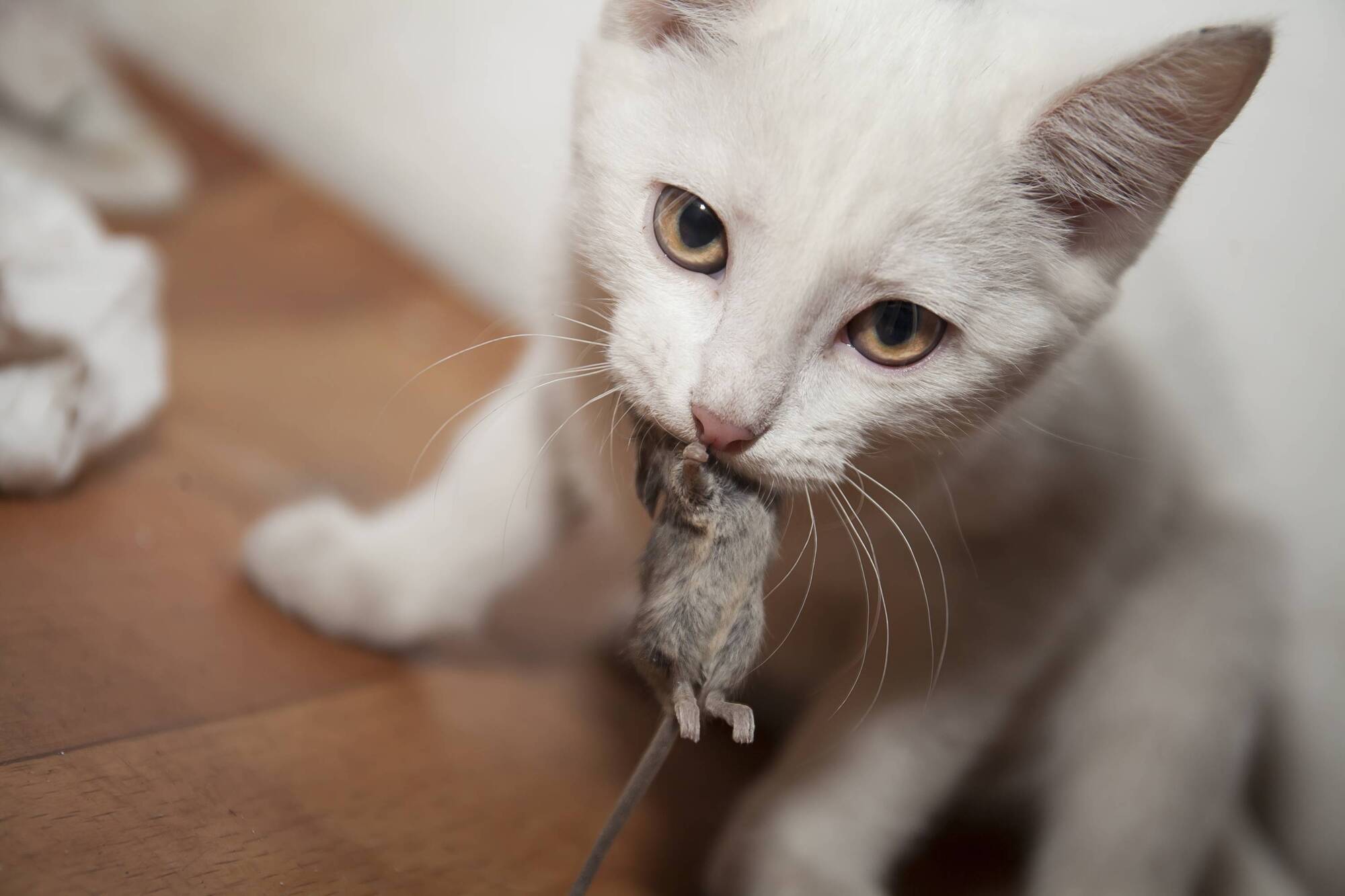
Domestic cats seldom eat their wild victims but tend to torment them instead; the behaviour, it is thought, helps them hone their hunting skills.

‘Briseann on dúchas trí shúile an cait’!

An act of mindless cruelty was perpetrated in my home last week. Puddy, our six-year-old cat, caught a mouse. Instead of dispatching it immediately, she taunted and tormented the poor creature, releasing and letting it run towards cover before pouncing on it again. I have no great aversion to wild rodents, even when they invade the house, but the thought of mice peeing in my muesli is disturbing.

I managed to capture the little victim and release it in the back garden, where it scampered off into the undergrowth apparently unaffected by the ordeal. Puddy was none too pleased at having her catch confiscated but, being pampered ‘fed and found’, she really has no need to hunt.

Richard Collins: 'There may be as many as two million domestic cats in Ireland. Their effect on wildlife is bound to be considerable.'

Why do cats torment their victims in such a sadistic fashion? The behaviour, it is thought, helps them hone their hunting skills; ‘practice makes perfect’. There may also be an educational benefit; kittens, watching the show, learn the tricks of the predator trade. Their mothers encourage them to participate in the cruelty. Does Puddy regard my wife and I as her kittens?

Domestic cats, Puddy included, seldom eat their wild victims. Such ‘surplus killing’ is practiced by predators generally. A fox, or a stoat, will kill every chicken on gaining access to a henhouse. Shrikes, known as ‘butcher birds’, store the bodies of their victims. They are laying aside provisions against future lean times.

There may be as many as two million domestic cats in Ireland. Their effect on wildlife is bound to be considerable. Songbird numbers, according to experts, have declined by 50% since the 1970s. While cats can’t be blamed for all of the carnage, they are surely responsible for much of it.

Martina Cecchetti, who has been studying the cat diets at the University of Exeter, sought out the owners of cats which regularly bring home wild prey. What an animal eats can be discovered by subjecting a sample of its body-tissue to ‘stable isotope analysis’. Cecchetti’s team clipped a whisker from each of the offending cats in her study and analysed it. A second whisker sample was taken later for comparison.

Her findings showed that less than 4% of the cats’ diets, on average, came from wild prey. Domestic pussies, this proves, depend overwhelmingly on processed food. The killing of birds and rodents by them, therefore, is not driven by hunger, but by an innate instinct to hunt. This is hardly surprising. Pet cats were selected by our ancestors for their hair-trigger readiness to pounce on mice and rats.

The team also assessed the merits of bells and high-visibility collars as warning devices. Cats wearing them, the results showed, killed fewer wild creatures.

Leopards don’t change their spots and cats will be cats. The bird-kill mayhem might be reduced, however, if owners fed their pets what Cecchetti calls a ‘premium meaty diet’. Fat-cats, both animal and human, are notoriously lazy. Bells and visibility collars should be deployed and owners are encouraged to play with their pets to help reduce their need to hunt.

  • Martina Cecchetti et al; Contributions of wild and provisioned foods to the diets of domestic cats that wild animals; Ecosphere 2021.

x

More in this section

Revoiced

Newsletter

Had a busy week? Sign up for some of the best reads from the week gone by. Selected just for you.

Cookie Policy Privacy Policy Brand Safety FAQ Help Contact Us Terms and Conditions

© Examiner Echo Group Limited