Interiors: Occasional tables that deserve a place in the spotlight

We get under the surface of occasional tables that should always be centre stage
Interiors: Occasional tables that deserve a place in the spotlight

The Don't Leave Me or DLM, designed by Thomas Bentzen for the Danish firm of Hay. Choose the XL version for standing a lamp or ornament. 

What is an occasional table the rest of the time? It’s an old joke, but with a crumb of logic. Choose the right iconic little supporting act, and in service or just standing about in plain view, that side table or console can prove a real star. With side tables that might be whisked around the room, look for stability and a relatively light build that’s easy to pick up or slide.
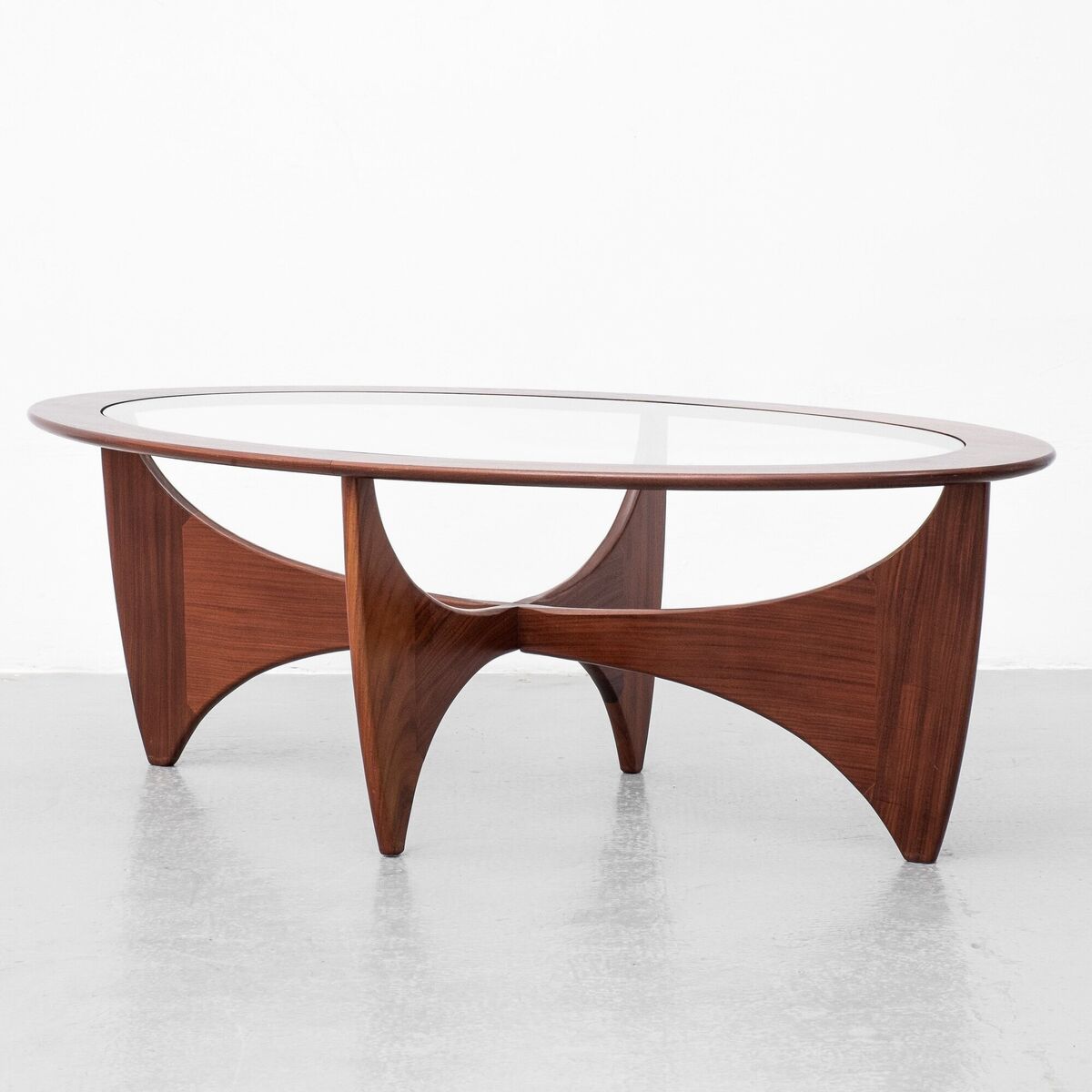
An oval Astro coffee table for The British firm of G-plan. Designed by VB Wilkins, prices for these formerly ignored, popular favourites of the late 1960s and early 1970s are rising.

A tray on legs, the “Don’t Leave Me” or DLM designed by Thomas Bentzen for the Danish firm of Hay, is a Bauhaus inclined favourite never likely to date. Delivered in just two pieces, the pole support turns a right angle over the circular top, providing a handle for carrying the table from one spot to another.

The XL version is best suited to a lamp, and the tripod support is stable enough for coffee plus a heap of books, the dished edge preventing any spills from reaching your flooring; €169 from a range of European suppliers online including finnishdesignshop. com.

Thomas Bentzen is a member of the Copenhagen Remove design group. For another take on a traditional coffee table, look up his Around series for Muuto in moulded plywood and blonde solid wood, in a range of low key matt colours, together with a huge selection of mid-century informed diners; prices from €379-€615, thomasbentzen.com.

Having hauled a mint Astro coffee table by G-plan to Ballymaloe for a vintage fair four or five years ago, I was bemused to see them pricing into the area of €500-€860 on Etsy this year. My own c.1970, didn’t create a stir of interest at €150. Even the dealers, down from Dublin for the day didn’t fancy it.

The Astro in its multiple forms was produced by the British maker for a period during the late 1960s to a design by Victor (VB) Wilkins and would have been a daring ingredient in a middle-class front room. Its oddly intersecting teak axe base and lunar-like top support an oval or circular piece of plate glass.

The tables reflect the new concepts in designs being assimilated from the Scandinavian postmodernists into British cabinet-making in the late 60s. With a hint of luxuriant 70s confidence, it’s seriously weighty. Keep an eye out for the Astro and other E. Gomme period originals second hand, which will be well marked with the G-plan applied stamp or stickers underneath.

Putting my money (virtually at least) on an up-and-coming classic, the Turn side-table by Simon Legald for the brand Normann Copenhagen is a gorgeous, unique table anchored firmly to the ground. It recalls a cowbell when lowered and a wine glass flipped up on a coaster once turned up in height. It would look equally at home providing symmetry on either side of an Italian low-slung sofa as it would be nestled at the head of a modern bedframe. 65cm high and 55cm wide, it’s sizable and stable at 20kg but with a pod device, architectural and airy at the same time. Available in black, grey or light grey, from €690 depending on the supplier.
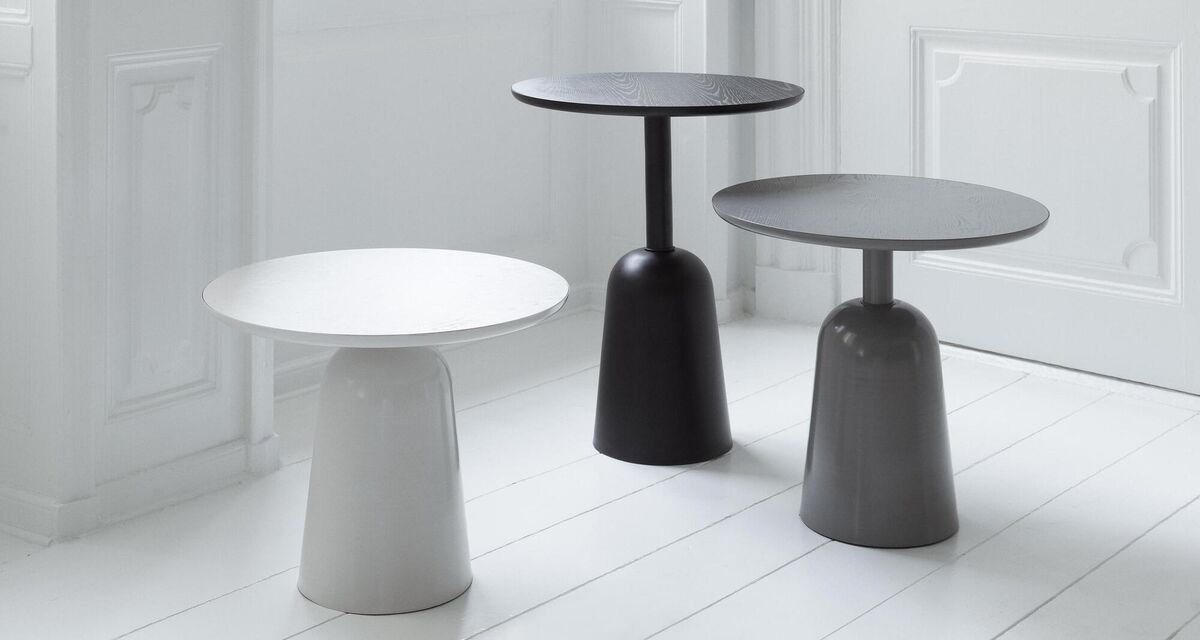
The Turn side table designed by Simon Legald for the brand Normann Copenhagen. 

Legald, who is only 35 with a lot of creative years ahead, is also responsible for the Normann Copenhagen Amp suspension lamp (from €115) and the equally unfussed Form chair series (from €259). Sitting perfectly together in white, black, Falu red and blonde woods, you could over time collect his pieces to create a pure, utilitarian yet elegant finish to a modern room.

The Amsterdam house of Pols Potten has a creative bravery finely minced with respect for the past. Two of their recent projects show different takes on a handy side table.

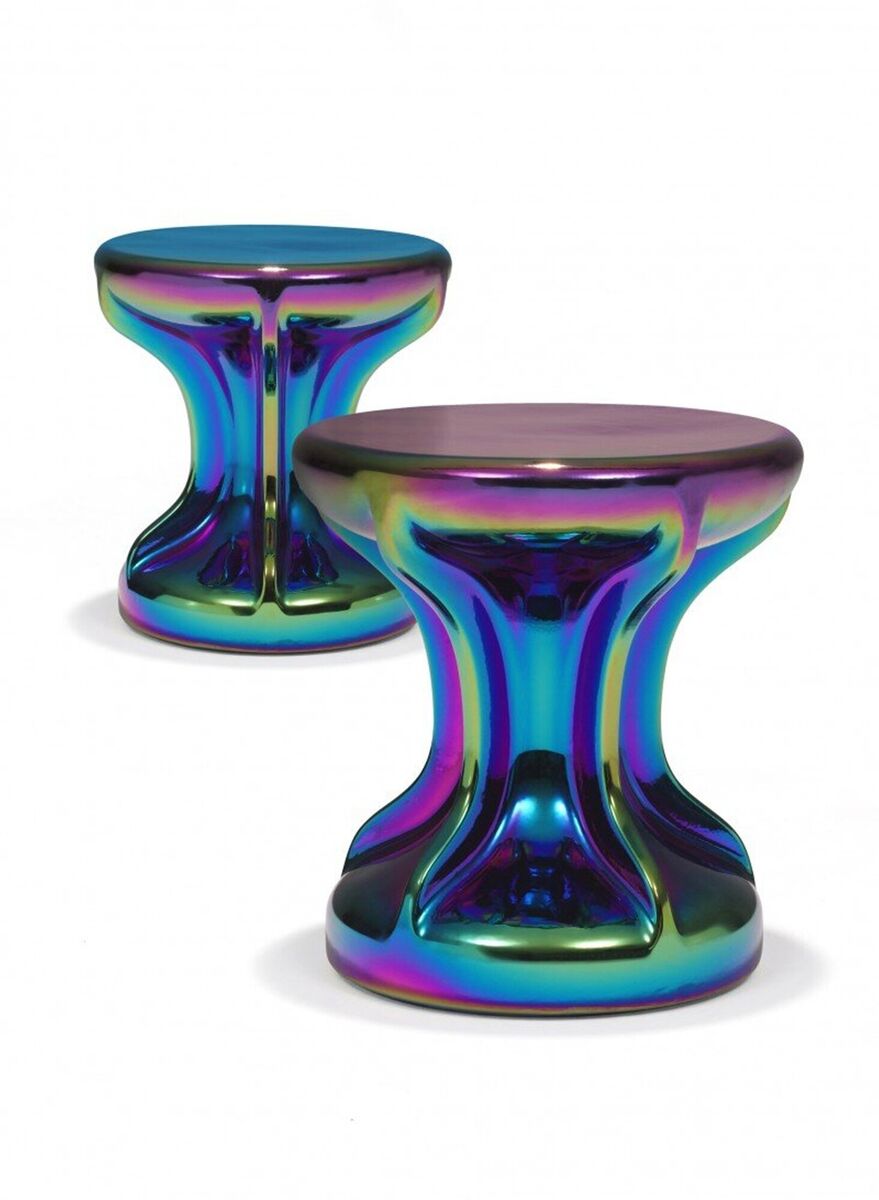
The Classic Side Table that was part of their collections of the late 1990s has reappeared in a mint green. It has the lines of a Georgian flip-top table that might have been pinched off the wall to serve tea in the 1740s. In aluminium under a powder paint coat with a dainty stem, €235. The Busk is rudely different; a squashed spool-shaped earthenware form with a thick, psychedelic, oil-on-water glaze. Each piece is slightly different with a choice of dominant iridescent colours and top surface shades, €295. Take in the rest of the Oily collection including matching vases from €72.50.

The Zig-Zag stools in a rainbow of groovy colours are right on trend for late 20th-century Euro-trash character, and could equally well hold up a house plant or Martini glass. polspotten.nl; free delivery for goods over €50.

Oily Busk from the Amsterdam brand Pols Potten. Designed by Roderick + Vos, and shown at Paris Fashion Week 2019, it has a touch of the velvet underground.

Check out HomeSense on Patrick Street for Chinese ceramic stools, excellent everyday tables and plant supports. From €100.
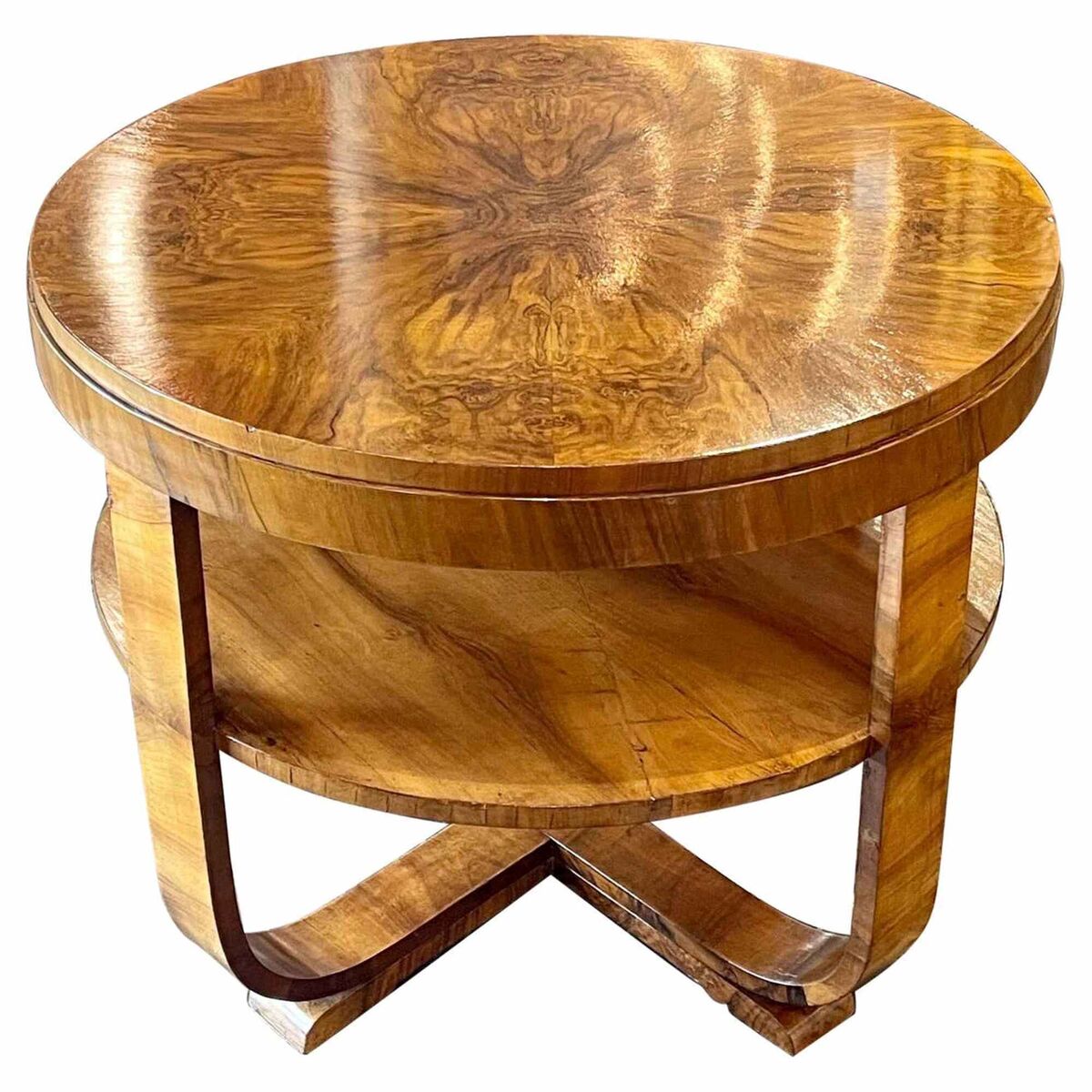
Art deco black burr-walnut coffee table with four supports and a magazine shelf, 1stdibs.com.

With “brown” antique furniture still in free-fall at sale, art deco has the presence to hold its own and is attracting a new audience of young buyers interested in period character with enough modernity to sit up with new buys. Together with cloud back sofas, sculpture, glass and ceramics, Deco coffee tables, consoles, stools and benches in black walnut veneer regularly appear at auction.

These popular Edwardians were made right up into the late 1940s and with book-matched geometric veneers offer deep toffee colours and lovely wood figuring.

Together with expensive Macassar ebony, more affordable black walnut was extremely popular for everyday domestic furniture in the early decades of the 20th century.

Woodworm was equally enthusiastic as it was generally set over a delicious soft pine. Examine any pieces you’re considering for tell-tale pinholes and the dust of live larvae which can get overlooked in the busy, cumulus swirls of the veneer.

This is not a deal-breaker, but the piece will have to get a DIY treatment or a trip to the conservator before you bring it indoors.

Adding a new piece of bevelled glass to a lovely period example can really set it off after it’s waxed up. French examples with elegant three and four stem supports start in the area of €350 from a French flea market, or country auction, rising up into four figures at a Dublin antique gallery.

x

More in this section

Revoiced

Newsletter

Sign up to the best reads of the week from irishexaminer.com selected just for you.

Cookie Policy Privacy Policy Brand Safety FAQ Help Contact Us Terms and Conditions

© Examiner Echo Group Limited