Richard Collins: Why Black bears are thriving in US cities
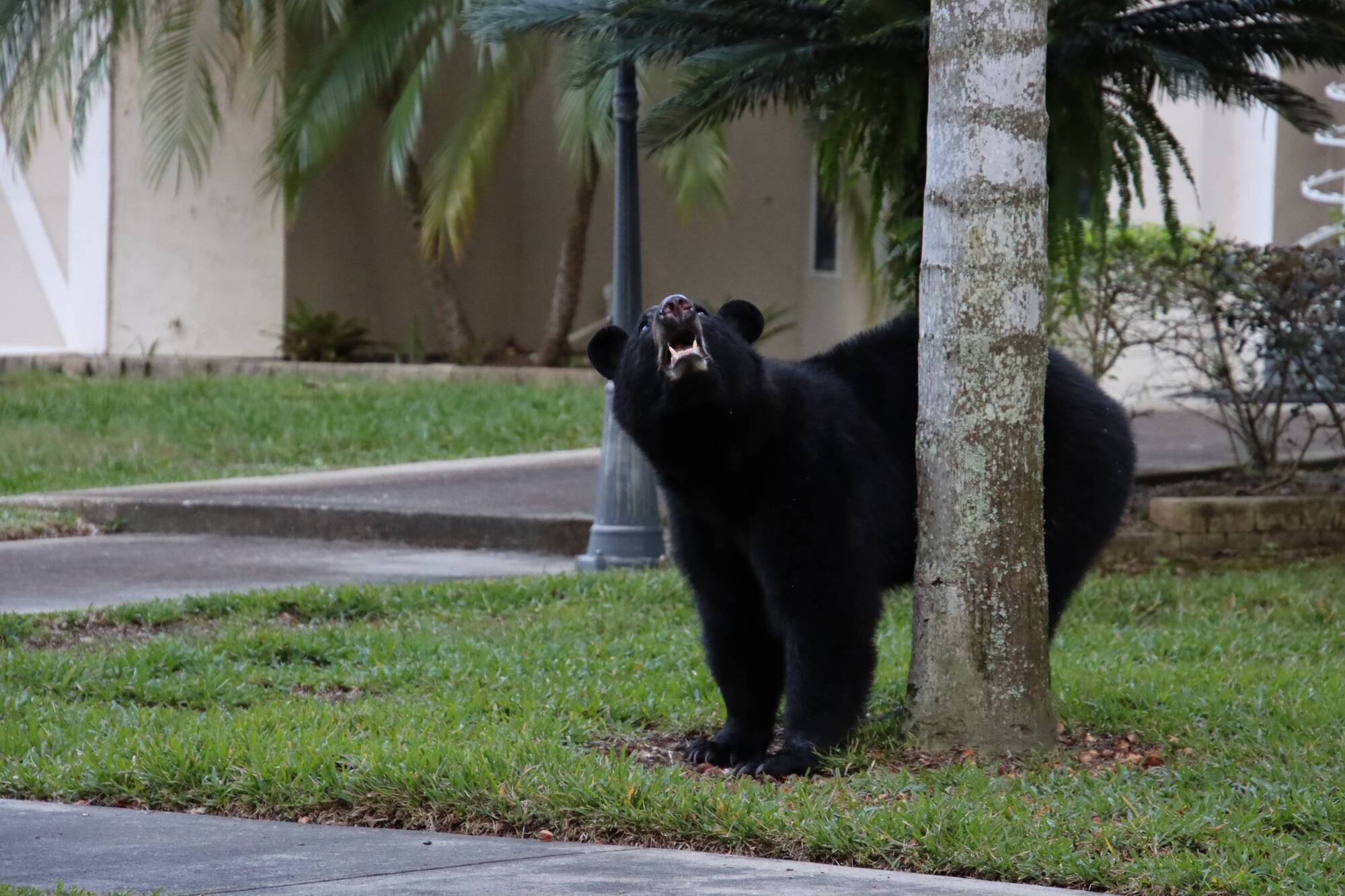
A Black bear wandering in suburban Florida. Bears thrive in urban environments.
With fires devastating American forests, the Smokey Bear campaign to protect them has never been more relevant. Smokey was a little bear cub caught in the notorious 1950 Capitan Gap fire in New Mexico. When the wind shifted suddenly, the flames jumped a fire-break, trapping the firemen who, by taking shelter beneath landslide debris, managed to survive. Smokey did the opposite. He climbed a tall tree to escape the flames. Rescued, he became the emblem of the US Fire Service.
Smokey was a black bear, as was Winnipeg, the inspiration for AA Milne’s Winnie-the-Pooh character. Milne’s son, Christopher Robin, used to visit Winnipeg in London Zoo.
The Goldilocks story notwithstanding, we love bears and some of them seem to love us. At any rate, black bears are venturing into American cities. Omnivores, they eat mainly nuts berries and the shoots of young grasses. They will take animals as big as deer, and salmon moving up rivers to spawn run the gauntlet of them. Nor are honey bee colonies safe. Bears seldom miss a trick; town dumps and the refuse bins of city fast-food outlets have become the bear gourmets’ latest attractions. There are, of course, downsides to life in cities; being struck by vehicles is a particular hazard.
It used to be thought that bears wouldn’t prosper in urban environments, but the opposite seems to be the case. A 2003 study in the Lake Tahoe area, revealed that black bears not only survive in our concrete jungles, they grow bigger and stronger than their wilder counterparts. Nicolas Gould and colleagues from North Carolina State University have been trying to find out why. Their results to date appear in a paper just published.
Gould’s team trapped 36 one-year-old female bears in the city of Asheville, where 92,000 people live. The animals were sedated, weighed, measured and fitted with GPS radio-tracking collars. These enabled each bear’s movements to the tracked and its den located. The collars could be released automatically, or would fall off the animals in due course. Each bear was released where it had been captured. Similar measurements had been taken on 96 bears living in the forests of North Carolina and Nevada.
The Asheville bears weighed 45kg on average. This is almost twice that of female bears of similar age living wild in forests.
Twelve city bears were tracked to their dens. Seven gave birth when only two years one, producing 11 cubs between them. This is an extraordinary discovery. Black bears don’t usually begin breeding until they are four years old. None of the rural-dwelling two-year-olds produced a cub. Mortality, however, seems to be higher among urban bears.
Are the higher weights and early breeding age down to the Michelin star delicacies available to city bears? Could the food items they find, when rummaging in dumps and bins, be more nourishing than the seeds
and mast which are their staple diet in forests? Are city bears permanent residents or temporary visitors?
Finally, despite the earlier breeding age of urban mothers, do bear deaths exceed births in cities? If they do, the urban black bear is heading for oblivion.
- Nicolas Gould et al. Growth and reproduction by young urban and rural black bears. Journal of Mammalology. 2021

Subscribe to access all of the Irish Examiner.
Try unlimited access from only €1.50 a week
Already a subscriber? Sign in
CONNECT WITH US TODAY
Be the first to know the latest news and updates