We need to rethink what is beautiful in the garden if we are to protect our wildlife
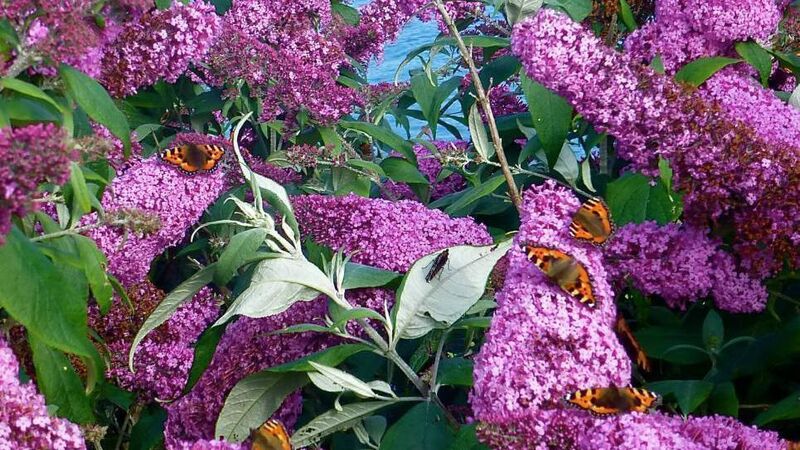
Tortoiseshell butterflies on a buddleia bush, on the Seven Heads peninsula, West Cork.
The world is alive with the sight and sound of butterflies. At least, that’s how it seems in my Instagram inbox right now. Lots of people kindly sending me on pics of their garden plants smothered with butterflies.
Sedums and in particular, Sedum spectabile are proving a real hit once more this year. I love their colour and texture in the garden anyway, particularly at this time of the year as much of the earlier summer colour is fading or already gone, add to that, the insect life that they attract and they are an unbeatable addition to any garden during September.
The aptly named Butterfly Bush, Buddleias are also festooned with our fluttering friends all around the country, some of them, so heavily laden with butterflies that they look truly unreal.
Agastache is a genus of herbaceous perennials though I do find them to be very short-lived as perennials in Ireland, hence I collect seed. The blue forms such as ‘Blue Fortune’ and ‘Black Adder’ have been in flower now for about a month or so and are at their best right now. They will draw every butterfly in the parish to your garden and so, if butterflies are what you want, look no further. Another added benefit is that the foliage which smells strongly of liquorice, can be chopped up and used in a salad or as a tea.
The flowers of these plants will also attract butterflies to your garden: Aster, Borage, Cosmos, Verbena, Lavender and Achillea. Butterflies can make out a larger range of colours than either bees or humans and so it is likely that the larger the spectrum of colour in your garden, the more species you will attract.
However, it’s not just flowers that butterflies need in the garden. They feed on over-ripe fruit, as this contains necessary carbohydrates and minerals. They only feed on liquid and that’s why the fruit has to be over-ripe, so they can feed on the juice. You could try and create a butterfly feeder in your garden by placing a small plate or bowl inside a larger plate and surrounding the smaller plate with water to keep ants away. Cut up pieces of peach, nectarine, orange, apples or a mixture will attract hungry butterflies. You may need to regularly cut it up or mash it so that it is suitable. Over-use of pesticides, habitat loss and climate change have all had a detrimental effect on butterfly numbers so individual action now can make a difference.
The majority of butterflies that overwinter, do so as larvae however some of our garden favourites, such as the Small Tortoiseshell, Peacock and Comma will overwinter in a dormant state as adults and plenty of feeding during the autumn months will help.
The recent warm and sunny weather has really afforded us plenty of opportunity to enjoy these winged beauties, however, we need to be careful of our wild areas to ensure their continuation. There has been, thankfully, much emphasis on bees over the last number of years and the importance of wildflowers and leaving part of our gardens go wild to help to sustain them. Butterflies too, need some of our native wild species on which to feed and to lay eggs at the moment.
Small tortoiseshell, red admiral and peacock butterflies will all lay their eggs on nettles and their caterpillars will later, feed on the leaves.
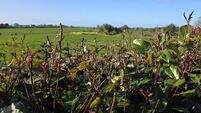
So once more we need to re-think what is “beautiful” in the garden. A hedgerow or margin of green nettles and wild plants sustaining many species and promoting biodiversity, to me, is far more beautiful than an area which is scorched and brown from use of weedkillers.
Several species of Eupatorium are referred to as different types of Joe Pye Weed. Some are annual and more are herbaceous perennials and all are great plants for butterflies during this season. Eupatorium purpureum referred to as Sweet Joe Pye Weed is not for the faint-hearted.
Nor is it suitable for a small garden. This species will grow as high as 2.5metres, that’s about 8ft in old money and whilst it’s not listed as an invasive plant, once you give it its preferred growing conditions, a damp soil in full sun, it will make itself quite at home.
A mature specimen is quite a sight at this time of the year, its height and girth giving it a large presence and the reddish-purple blooms which are borne in clusters making it extremely colourful as summer turns to autumn. One for the “wild” area perhaps, to be left to its own devices and if it does spread a bit too vigorously, parts can easily be dug out and removed with a garden spade.
- For more information on Irish butterflies and what you can do to help,you should visit the Butterfly Monitoring Scheme section of National Biodiversity Data Centre’s website: www.biodiversityireland.ie


Subscribe to access all of the Irish Examiner.
Try unlimited access from only €1.50 a week
Already a subscriber? Sign in
CONNECT WITH US TODAY
Be the first to know the latest news and updates