Could rising sea temperatures bring great white sharks to Ireland?
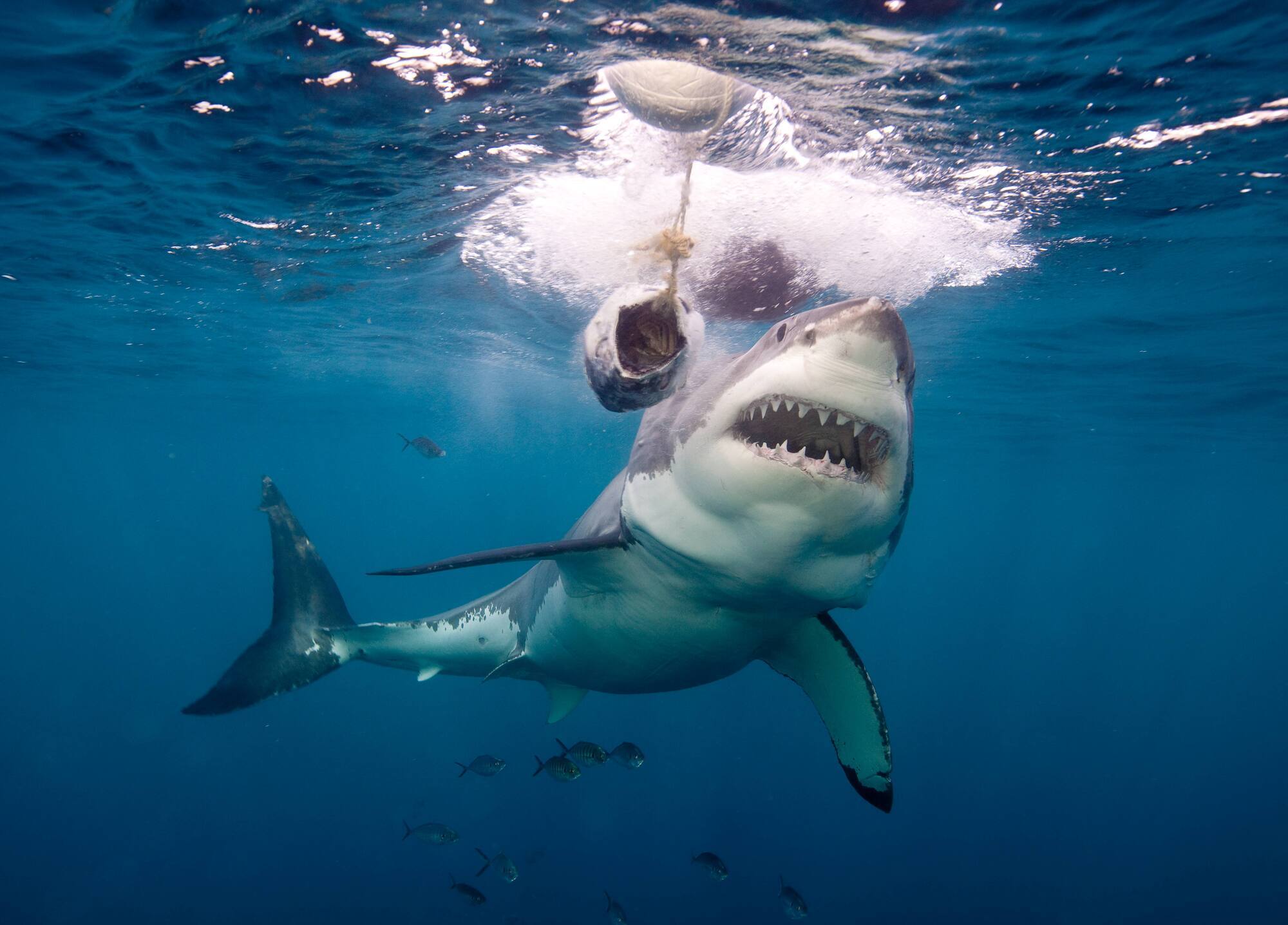
Great whites, itâs been suggested, became warm-blooded to allow them frequent both warm and cold waters.

Located off South Africaâs Dyer Island, âShark alleyâ is a Mecca for great white shark watchers. The huge fish, of Jaws fame, are lured to cages where they can be viewed up close and personal.
The cold Benguela current flows northwards from Antarctica there; you need a wet suit to watch the sharks in comfort. Temperature doesnât seem to matter to great whites; they frequent temperate seas all over the world.
The Bay of Biscay, where the water is warmer than off Dyer, is the regular haunt nearest to Ireland. Will they turn up here as sea temperatures rise?
Great whites, itâs been suggested, became warm-blooded to allow them frequent both warm and cold waters. However, a paper just published, rejects this âthermal niche expansionâ hypothesis. The lead author is Lucy Harding of Trinity College Dublin.

Thereâs a rival theory; the âelevated cruising speedâ hypothesis. It says that the sharks raise their body heat internally so as to swim faster.
They do so by harnessing the heat generated by their swimming muscles.

Mammals, the class to which humans belong, generate their own body heat, enabling them to survive cold spells and remain active during the cool of the night. Reptiles canât do so. They rely on the sun to warm them each day, the heat being lost at night. Iâm told that adders can be handled safely in the early morning; they are too torpid to bite!
Like reptiles and amphibians, most fish are cold-blooded. Great whites and blue-fin tuna are not the only fish to have evolved internal heat generation, but they are the most high-profile species doing so.
Trawling through 89 published studies of 41 fish species, Harding concluded âthat endothermsâ, those generating their own body heat, âdo not encounter broader temperature ranges than their ectothermic counterpartsâ, ones depending on heat from outside their bodies. This result seems to knock the thermal niche expansion theory on the head. However, speed tests were needed before the matter could be decided with confidence.
Fish, caught in the wild, had data loggers attached to their dorsal or pectoral fins. The devices recorded water temperatures and depths at which the fish swam.
The cruising speeds of 45 individual fish, of 16 species, were calculated. Four of the fish were endotherms.
They were found to cruise 1.6 times faster than the ectotherms, although they were not as fast as the researchers expected. Significantly, the endotherms did not frequent waters of a wider range of temperature than the cold-blooded fish.
âOur results suggest the significance of endothermy in fishes lies in the advantages it confers to swimming performance rather than facilitating the occupation of broader thermal niches,â the researchers say. They also calculated that âendotherms have lower routine energy requirements than current estimates.â
Will ocean warming change fish species distributions? The researchers âquestion the view that the trait confers resilience to climate change through broader thermal tolerance than ectothermsâ.
Warm-blooded fish âdo not encounter broader temperature ranges than their ectothermic counterparts, but they swim at elevated cruising speedsâ, so perhaps great whites wonât colonise Irish waters after all.

Cancel anytime
CONNECT WITH US TODAY
Be the first to know the latest news and updates