Vintage View: How to care for antique and precious glass
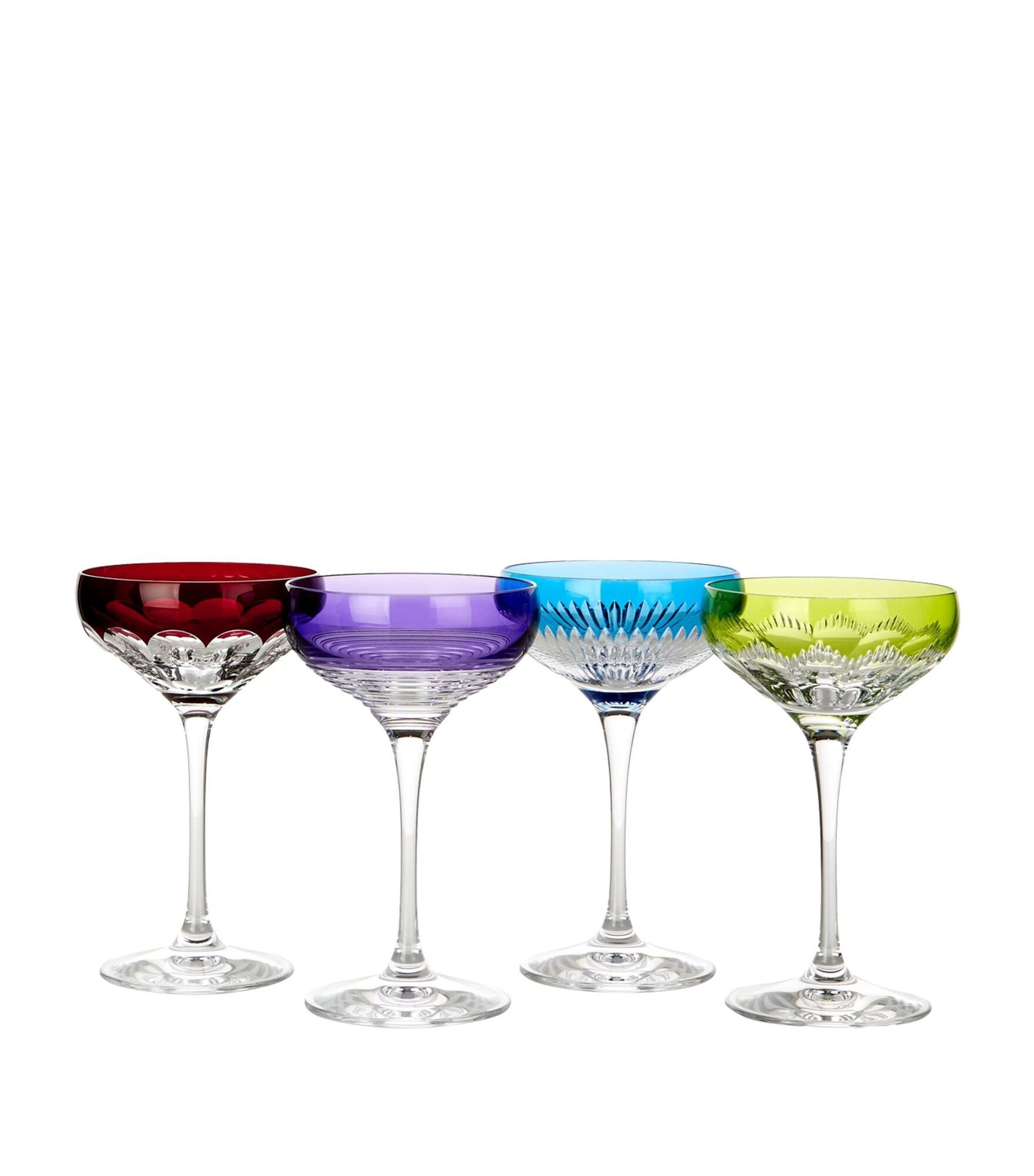
Very hot water in a dishwasher cycle can be just too much for fine crystal. Waterford advises not to twist the bowl against the stem when washing or polishing. Waterford Mixology, Kilkenny Design.
Handling glass? Under any circumstances? It’s brittle, it scratches if you so much as look at it, and countless peer-reviewed experiments have proven it doesn’t bounce very well. Approaching the cleaning of antique or precious vintage glass there are good reasons to plan ahead with slow, mincing, meticulous precision.
The graded scale of acceptable wear or distress for most antique materials, does not apply to glass. Collectors of everything from Georgian twist stem glasses to mid-century Vicki Lindstrom crystal, demand nothing short of exquisite perfection. Even tiny problems - bruises, pinpoints, nibbles, crizzling and flakes will decimate value.

A dealer or potential buyer will roll their loupe over an article, including the base, taking in even those sly scratches you can’t see when that Murano geode is upright.
The most vulnerable areas are generally the edges of the base, the top rim and any extremities on say a glass sculpture. All applied decoration like painted or printed on gold, silver or base metals should be as well preserved as possible. Take that Bristol Blue decanters with the laurel leaf badges back out of the dishwasher. Right now. I despair, I really do.
When you have to lay hands on your good glass, being completely neurotic is a good start. First off — and I’ll repeat this until you want to throw those old onion wind bottles directly at me — if you are going to smash or ding that gorgeous thing, it’s going to happen when you move.
It might be when it's being washed, and it’s wet, and you fumble and drop it, even plunging just a few centimetres onto a stainless steel sink bottom (even slowed by water). However, very often glass treasures don’t even get that far before they pick up a value-murdering chip.
Keep that in mind as you reach into the back of a cabinet, or up to a shelf, and hear that almost inaudibly clink as your favourite Daum butterfly connects with one of its equally fragile companions.
Managing a group of objects, rather than reaching across them to retrieve one piece, set up another surface and move them out en-masse front to back as a group, one by one, setting them on a soft, thin, unwrinkled material like baize.
Ensure you leave a safe gap between the pieces to ensure they don’t stagger after they land. Having done a quick condition review, just how dirty are they? Together with keeping them in a closed cabinet, regularly cleaning your glass with baby soft wipes with a soft, lint-free clean cloth dipped in distilled water, will free you of the scary chore of cleaning decorative glass by immersion. Don’t reach for a general spray polish loaded with silicone – it can build up on glass and dim its brilliance.
It’s important to note, that you cannot clean cloudiness out of most glass. Cloudiness, that’s not dust and dirt, is caused by tiny micro-fractures inside the glass and any effort to take it out, will in all likelihood damage the glass. Don’t rub any applied, gilded or painted decoration – it could well lift right off.

A blot with a damp microfiber cloth directly down on the surrounding clear glass is really all we should do here. Heavy, thick-walled vases with a skinny void inside them — very common in 1950s art glass, are better polished on the outside with a soft microfiber cloth rather than being immersed. If water gets into the small or oddly shaped interior of a vase that’s never intended to hold water, it can sit there and stain the glass over time — especially if the water is hard or has trace minerals. Try using a spooled up damp duster or a damp bottle brush instead.
If you do have mineral stains, rather than micro-fractures on a middling piece, like a 20th-century cut-glass dish, for instance, a dissolved denture tablet might take them out. White vinegar is generally safe used with a soft cloth to wipe off calcium marks and to even leave inside a vase or decanter overnight.
Never scrub on any precious glass with an abrasive cream concoction — even toothpaste. Skates on ice — you know what I mean. Baking soda is as far as I would go.
Presuming the glass is in good condition, and you need to wash it – we need luke-warm water (not cold and certainly not hot) with a little biodegradable washing up liquid.
Take off your knuckle-dusters and leave off the marigolds, and use a plastic bowl big enough for the object to sit into, not the sink itself. Even composite sinks have a tough, shattering finish. Some people like to use two plastic bowls to wash and then rinse their glassware.
Just sloshing the glass under a tap can be perilous as the pressure of a mixer can suddenly surge and knock the item out of your hand. Rudely and suddenly applied — evenly moderately hot water can crack old glass that’s already under pressure and imperceptibly disintegrating.
Only move one glass object at a time to the bowl. Dissolve any soapy cleaner well into the water, dispersing it completely with your hand, and don’t use much — a drip is fine. We want to wash the glass, not any metal or wood mounts. A very soft artist’s brush is ideal for working the solution into fine detail like engraving and cuts. A good soak can work wonders. If you have a decanter with a seized stopper – carefully dipping it into your warm water may free the stopper up. Be ready to catch it.
Cradle the bowl of stemmed glasses in your palm with the gap between two fingers lightly supporting the stem. Stems can snap or be separated from the bowl by too much pressure. With it sitting down safely on a soft, stable surface, blot it dry with a lint-free cloth or kitchen towelling. If the interior is wet and unreachable, leave the piece to dry out over time — don’t coax it by boiling up its rear end with a hairdryer. Prop it really carefully to drain out, while allowing air into the interior. Dry wine and liquor glasses immediately to avoid water spots and store them bowl up always.