Why humans are the biggest threat to Ireland's swallows
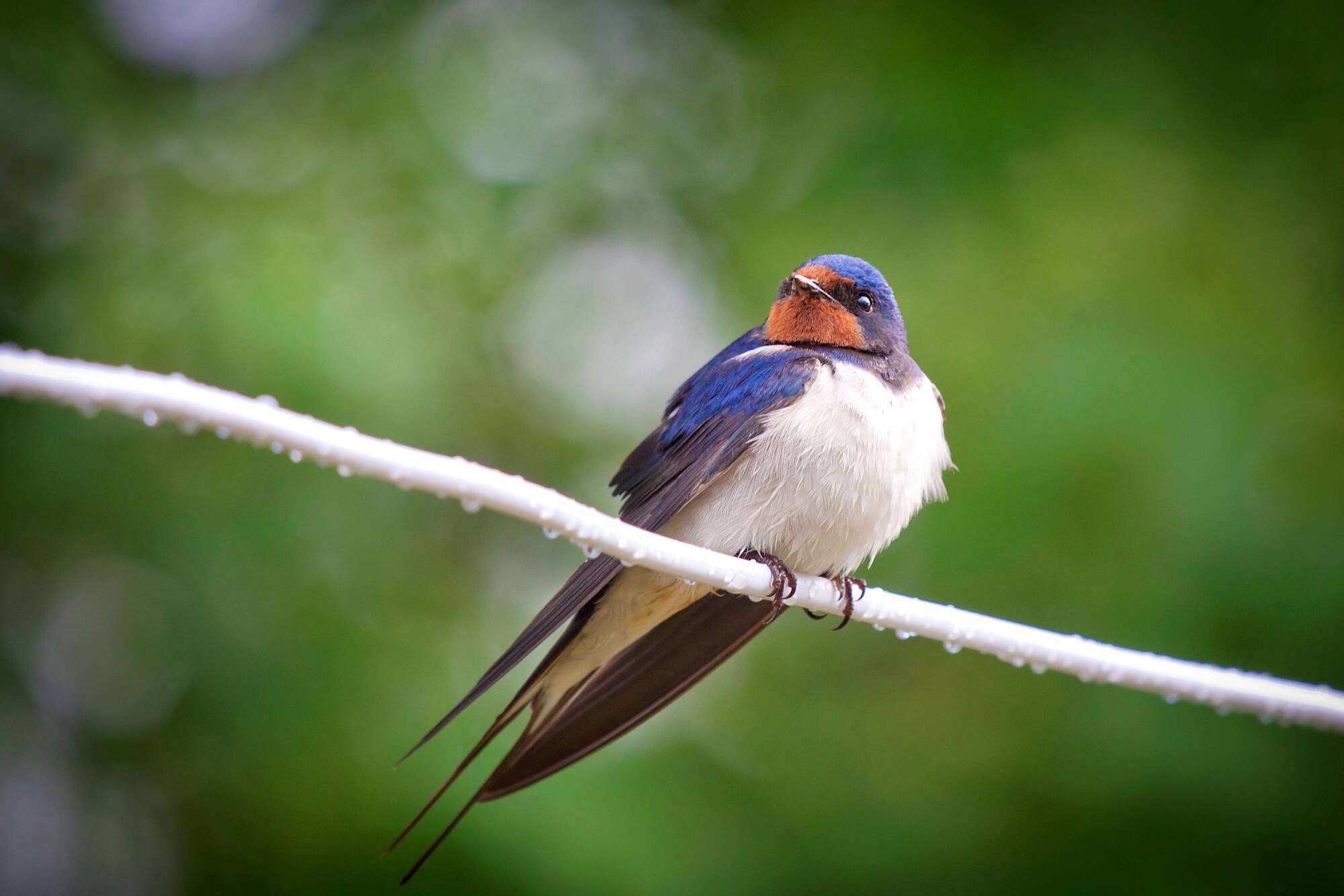
Threatening their continued presence in Ireland is the incessant destruction of habitat and widespread demise of the flying insects upon which they feed.
Why humans are the biggest threat to Ireland's swallows

for Outdoors Beautiful nestling barn swallows (Hirundo rustica) sitting on a cable after the rain.Ā 

THE vexed question of theĀ Department of Agriculture ban against swallows nesting in dairies arose when I wasĀ chatting with a farmer over the weekend. He’s at his wit’s end to keep a particular pair of birds out of the dairy.Ā 

Whenever the door is opened, even if only long enough to allow him or his wife to enter, they appear out of nowhere and rocket inside.

Getting them out again is no easy task. As we all know, swallows are among the fastest and most agile of avian flyers; they duck and dodge every effort to shoo them back into the open air.

The exclusion of swallows from traditional nest sites will, of course, have unfortunate results for the
swallows. However, traditional farms may have enough outhouses with rafters left to accommodate them.

More threatening their continued presence in Ireland is the incessant destruction of habitat and widespread demise of the flying insects upon which they feed. The intervention of the Department of Agriculture is prompted by a justifiable concern to ensure hygiene in the dairy.

The unimpeachable quality of our dairy produce is a major factor in its success as a profitable export
worldwide. In modern milking sheds, rafters are prohibited as a measure to deter swallows, and other birds, in the ā€œfood-producing areasā€, where milk is stored in bulk tanks, sealed against the danger of pathogens, possible vectors of disease, falling into them from the plumage or droppings of birds.

The pity of it, of course, is that my friend, like many farmers, have no objection to their presence and, in fact, welcome the twittering of the adults and calls of the young for food while they go about their solitary twice-daily chore of milking the herd. ā€˜Chore’ it may be, but a welcome one. It puts the food on the table, sends the kids toĀ college, pays the bills, and so on. God bless the cows and every other udder swollen with their milk!

However, the same farmers admit that, once the sweetly-twittering swallows have five or six fledglings in the nest, it’s all but impossible for the parents, already hard-pressed to feed them, to carry their droppings
outdoors as well.

Our swallow, Hirundo domestica, is the most widespread of the six species that breed across the Northern
Hemisphere. For the four migratory species, their range and habitat is neatly divided by the equator. They summer, breed, and feed, north of it, and winter and feed south of it. From North America, Europe, Russia, China in summer, they fly south to Argentina, South Africa, and Australia in winter. The huge range of Hirundo domestica means it is not endangered, although there may be local population declines, as in Ireland.

Their marathon migratory journeys are the stuff of legend, an annual testament to nature’s resilience, to its mysteries and processes of navigation, meteorology and climatology. How the brain of a bird with a body weight averaging 20 g (0.65 oz) can include the ability to read and forecast weather patterns, be guided by the magnetism of the earth, encompass DNA that will take the owner, unerringly, on a 10,000 km journey and return the same distance to the exact site at which they were born, is the stuff of magic, still a cause of wonderment, and still not understood by our superior species, Mankind.

But these miracles-dressed-in-feathers are threatened most certainly by the human species, which
perennially admires it, but makes no serious provision for it. BirdWatch
Ireland notes that swallows are ā€œamber-listed in Ireland due to concerns over the entire European population. This has undergone large decline and has been evaluated as ā€œdepleted and still declining in several countriesā€.

Swallows arriving in Ireland have travelled from South Africa, flying up to 300km per day, and are here to build nests, lay eggs, and raise their young. After travelling over 9,500km, they return to the same nesting site every year. The males arrive first, the females about two weeks later. They remain here until late September and often gather in flocks as they prepare for their departure. Migration is a hazardous time and many birds die from starvation or exhaustion and in storms. The young swallows born in Ireland make the journey to South Africa at just three months old. With no experience or knowledge of the route, it is estimated that only about 30% of them survive the journey.

In their wintering areas, swallows feed in small flocks, which join together to form roosting flocks of thousands or even millions of birds. Mount Moreland Reedbed on the outskirts of Durban, holds 10% of the European swallow population during the winter months — a total of 3,000,000 birds!

More in this section

Revoiced

Newsletter

Sign up to the best reads of the week from irishexaminer.com selected just for you.

Cookie Policy Privacy Policy Brand Safety FAQ Help Contact Us Terms and Conditions

Ā© Examiner Echo Group Limited