Could artificial rearing save Ireland's curlew?
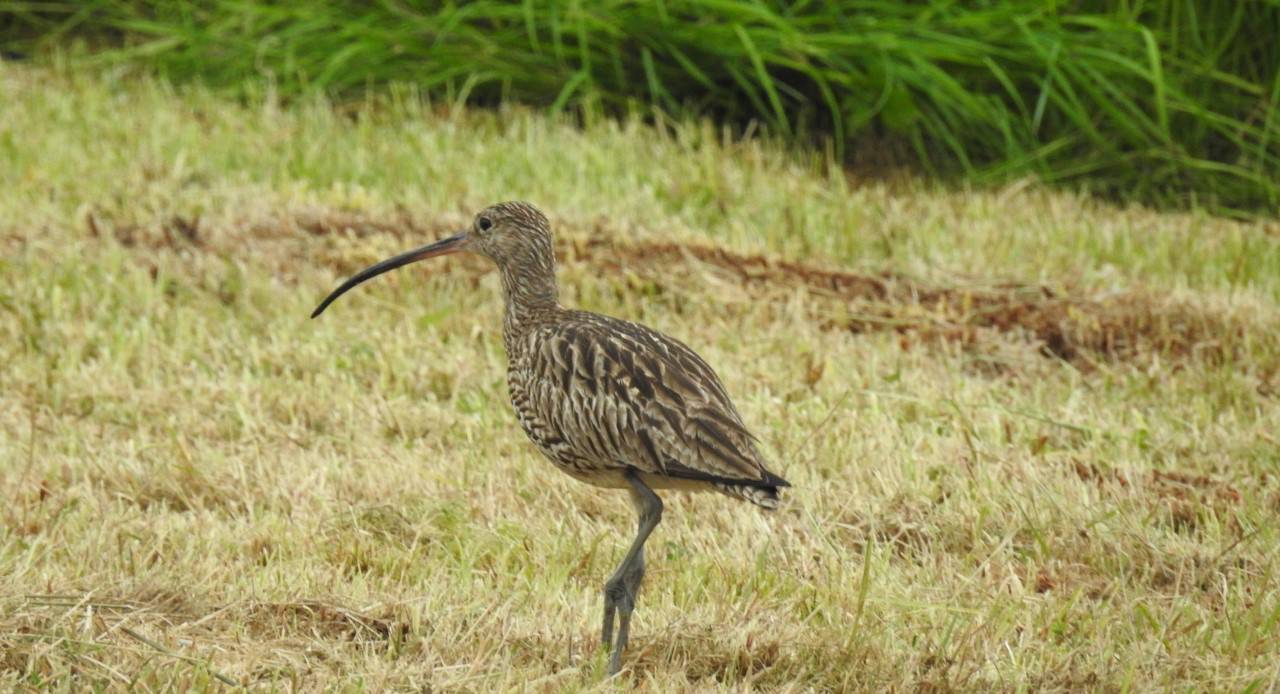
The adult Curlew. Pic. Courtesy Joe Shannon
One hundred years ago, the corn bunting’s “jangling of a bunch of keys” could be heard in every Irish county.

Alas, the dumpy little songbird is no longer with us. Up to the 1950s, the corncrake’s rasping was ubiquitous and the cuckoo could be heard almost everywhere.
Both species are still here, just about, their calls reminding bus-pass holders, like me, of their long-lost childhoods. Our landscape has changed utterly and, with it, the soundscape.
Featuring even in television advertisements, the wistful call of the curlew is ‘part of what we are’, as symbolic of Ireland as the harp and the round tower.
But the much-loved ‘crotach’ of misty wild wetlands is disappearing. Soon, its bubbling song may be heard no more.

Survey results, published in 2019, show that breeding curlew numbers declined by 97% in the Republic and by 82% in Northern Ireland over the last 30 years. Nor is the problem confined to our island; curlews are in trouble throughout Europe. Loss of breeding habitat, silage cutting, and the collapse of insect populations are to blame, while scavenging crows and foxes take eggs and chicks. The International Union for the Conservation of Nature has classified the species as ‘near-threatened’.
The forces confronting the curlew are formidable but “it is better to light a candle than to curse the darkness”. Could captive breeding be such a candle? The grey partridge, thanks to intensive-care measures, was saved from extinction in the midlands. Could artificial rearing also help the curlew?
Is it possible to raise its chicks in captivity? Kerry Mackie and colleagues have shown that it is. In the current edition of Irish Birds, they describe how they managed to raise curlews artificially and release them to the wild. The project arose out of necessity. Two curlew nests, on a site southwest of Lough Neagh, were threatened with imminent destruction from bog-fires during the summer of 2020. The four eggs in each nest were removed, under licence.
Placed in insulated vibration-proof containers, they were taken to a facility 60km away. One clutch, it is thought, had been incubated for a day at that stage. The other was deemed to be seven days under way. The eggs were placed in incubators under state-of-the-art protocols.
One egg in each clutch proved to be infertile. Six chicks hatched and were kept under heat lamps for several days. To minimise the risk of imprinting, “all elements of conditioning during rearing were kept to a minimum”. In due course, the birds were transferred to an enclosed outdoor area where they learned to forage naturally. One chick swallowed a feather-shaft and died. The five remaining ones were released to the wild.
The fledging rate for curlews in the wild is thought to be less then 0.5 young per clutch, indicating “the acute extinction risk this population now faces”, the authors note. “Our captive-rearing has illustrated the
potential increased productivity of captive-rearing above natural levels,” they claim. Captive breeding is “an essential conservation tool”, which can help slow population decline if the technique is combined with “improving the suitability of habitat and reducing the impacts of predators”.
CONNECT WITH US TODAY
Be the first to know the latest news and updates