Meet our makers: Irish designers talk about sustainable choices
Balancing ethical purchases for the home with budget considerations can be challenging, but it’s also achievable
Meet our makers: Irish designers talk about sustainable choices

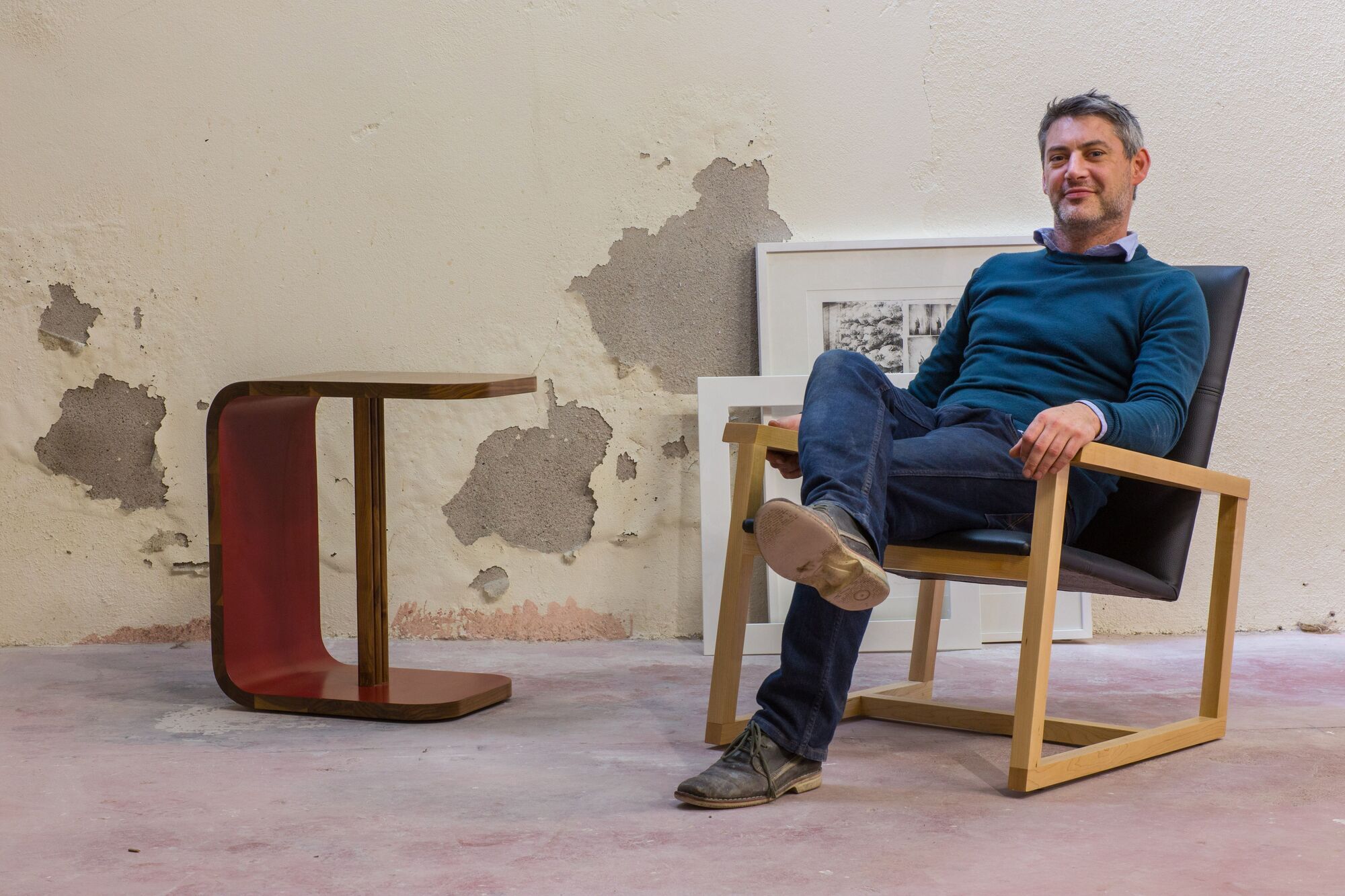
Furniture designer and maker Fergal O'Leary with his Stanley chair in oak and leather (€1,150) and the Jack sofa table in solid walnut with red lacquer interior (€1,000).


The last year has put the kibosh on our in-store shopping habits, but while it’s been fantastic to have online options, have we turned a blind eye to how far our products are travelling?

What about the bulk packaging involved and whether the materials are draining natural resources for styling our homes just to alleviate the monotony of lockdown?

Of course, we assume something handmade and local will leave our wallets bereft, but what seems to be a financial saving, initially, by opting for mass-produced, may lead to greater expenditure when the cheaper and poorer made item needs replacing.

 Fergal O’Leary’s Gazelle console table is made from walnut with maple inlay (€2,000). Bespoke sizes available on request.
Fergal O’Leary’s Gazelle console table is made from walnut with maple inlay (€2,000). Bespoke sizes available on request.

CLIMATE & SUSTAINABILITY HUB

Going bespoke, according to designer and maker Fergal O’Leary of Cork-based Horizon Furniture, “is the best way to ensure that each piece reflects your style and blends in or stands out with surroundings.

 Textile designer and maker Jennifer Slattery in her Dublin studio where she produces table linens and blankets using Irish made materials.
Textile designer and maker Jennifer Slattery in her Dublin studio where she produces table linens and blankets using Irish made materials.

“Having your furniture designed and made for you gives you more flexibility and control, increases your ownership of the creative process and investment in the finished piece and makes them yours. With the right professional guidance, you can be certain that style and materials are fit for purpose and that the finished piece meets your requirements and budget.”

When it comes to materials, sustainability is paramount from an MDF board to an African hardwood, Fergal tells me, but other hidden aspects need consideration too. “Oils, glues and finishes also have to be studied to see what environmental impact they have,” he adds.

“Wasteful industrial processes need to be monitored and changed to protect us humans more.

“While a customer may not be thinking this, the furniture maker has to consider their processes to align with future-proofing our only Earth.”

Unsure where to start? Fergal advises the following considerations: “What is the function and size of the piece? What do you want it to look like? Have some idea of a budget but be prepared to be flexible depending on realistic wants.

 Jennifer Slattery's Herbarium Irish linen table runner with hand embroidery is inspired by the Botanical Gardens and can be matched with six napkins (runner €95, napkins €120).
Jennifer Slattery's Herbarium Irish linen table runner with hand embroidery is inspired by the Botanical Gardens and can be matched with six napkins (runner €95, napkins €120).

“A furniture designer-maker worth their salt will incorporate all these considerations when liaising with a customer to make sure that the piece designed is unique, beautiful, well made, has longevity and is the right piece in the right space at the right time for a fair price.”

With 2022 set to be the year of the wedding, incorporating those postponed in 2020 and 2021, think sustainable even if it means having a whip-around among close friends to buy a gift of lasting value, although it doesn’t necessarily have to be furniture.

Contemporary textile maker Jennifer Slattery designs and makes table linens including cloths, runners and napkins, finished with motifs of her grandmother’s cutlery and embroidered Irish wildflowers, from her studio in Dublin’s Smithfield.

It’s something we have a long history of here in Ireland, from Donegal tweed to northern linens, and south to Kilkenny weavers and west to Cork where in every granny’s house lurks a Dripsey blanket, long replaced by the more serviceable duvet, and now consigned to picnic duty.

“It can be expensive to buy a handmade product,” Jennifer says, “but if you consider that a well-made piece can last many years, I think it is better value to buy quality in the long term. I have a scarf that my mother bought me 25 years ago by designer Liz Claiborne. I know it was very expensive at the time. I still wear it. It’s in great condition and the design is timeless. 

 Jennifer Slattery's Irish Wild Flower embroidered napkins made from Irish linen (set of 12 €210).
Jennifer Slattery's Irish Wild Flower embroidered napkins made from Irish linen (set of 12 €210).

“I think it is important to consider the value of a handmade piece. I would rather save for something I really love and know I will cherish for life than buy a piece that either won’t last very long because it’s poor quality or I end up wanting to get rid of a year later.”

Jennifer also cites the importance of using local materials which haven’t travelled the globe to get here, including Irish linens, and Irish lambswool for luxury blankets. “For my own pieces I work with manufacturers throughout Ireland and the embroidery production happens in my studio,” she says. “I have always worked in small-batch manufacturing so nothing is ever mass-produced, and in recent years I began making to order to reduce waste.

“When I design a new collection, it has been carefully considered in terms of both design and quality. My intention is not to follow trends but to create timeless pieces that are made to last.”

x

More in this section

Revoiced

Newsletter

Sign up to the best reads of the week from irishexaminer.com selected just for you.

Cookie Policy Privacy Policy Brand Safety FAQ Help Contact Us Terms and Conditions

© Examiner Echo Group Limited