Islands of Ireland: Watching island like a hawk
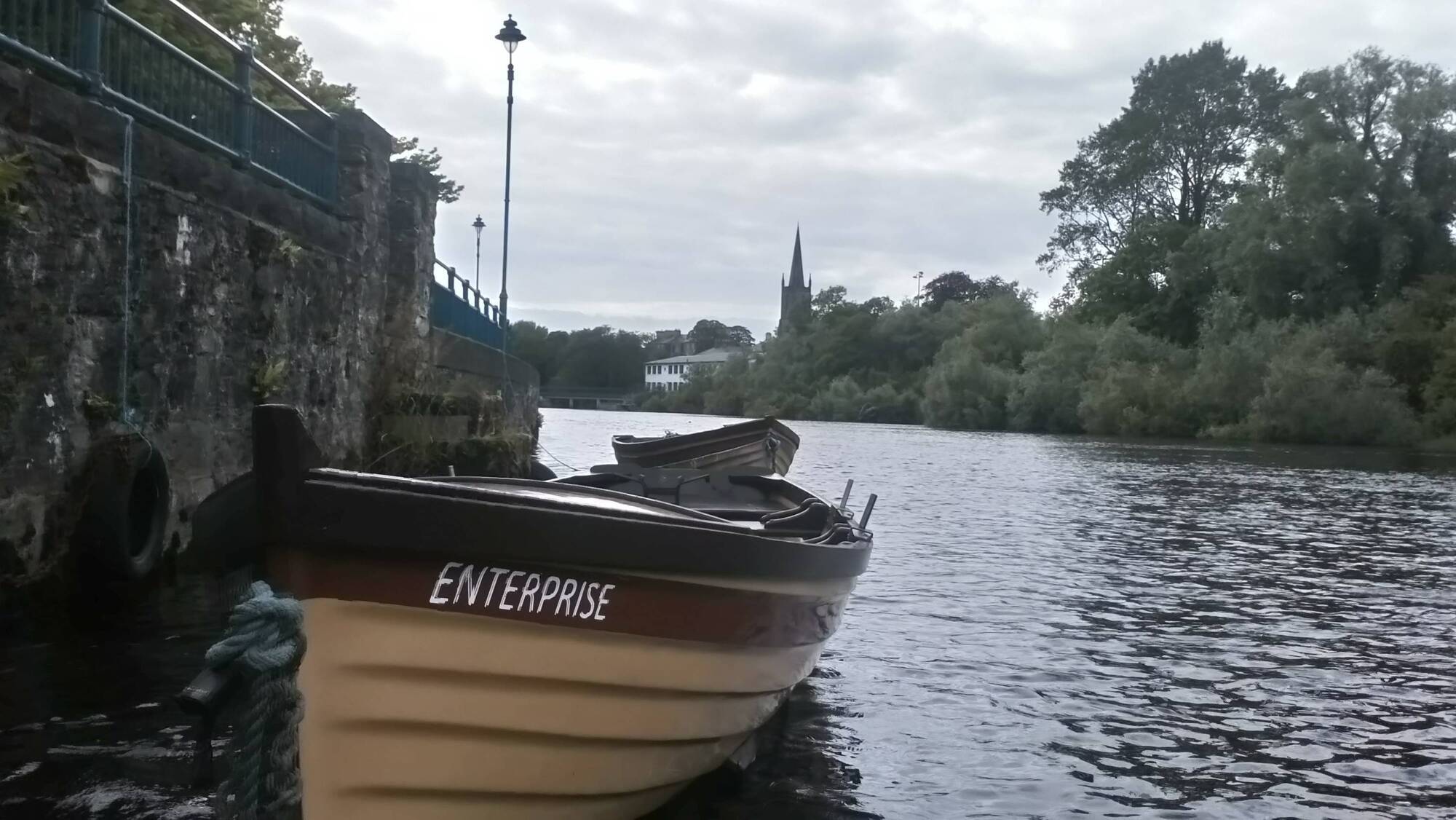
Garavogue River, which links Sligo town to Lough Gill. Picture: Dan MacCarthy
We return to the glimmering Lough Gill, Co Sligo, this week as suggested in the headline with due nod to poetic licence. Famous for harbouring WB Yeats’ Innisfree and also possessing the sylvan Cottage Island where the eccentric Beezie Gallagher lived alone, the lough is a magical place. The Strawberry tree (Arbutus uneda), with white bundles of blossoms at year-end, can be found on the lake margins. It is rare to this area but common at Killarney, Co Kerry, where there is even an Arbutus Island on Lough Leane. On the north side of Lough Gill is the 17th century Parke’s Castle, along with several more islands.
With about 22 islands in its collection, Lough Gill’s total is nothing special when compared to other lakes in the country, some of which have several dozen: The aforementioned Lough Leane; Lough Derg on the Shannon; even a relatively small lake like Lough Ennell in Westmeath has many — it's the scene of the recent magical murmuration as recorded by James Crombie’s brilliant photograph for the .
Hawk Island is a small, heavily wooded island exactly like its near neighbours, but, despite appearances, is suffused with its own character. It lies just south of the heavily wooded Stony Point and is flanked by Green Island to the west, Cottage Island to the east, and, nearby, Bernard’s Island and Wolf Island. It is unpopulated and has no pier, and it is safe to say no one has ever lived there. The lack of human presence would have enticed hawks to build their nests there, but then again, there are no shortage of wooded islands or woods on the lakeshore for that bird of prey to populate. Still, it is nice to contemplate an island given over as a hawk sanctuary, though this was probably not the case. Wolf Island, too, was so named as that apex predator likely found refuge there.
The Ordnance Survey 6in maps of 1837 to 1842 showed Hawk Island as Flat Island — a pretty uninspiring name, let’s face it. By 1883-1913, the island had acquired its present name in the 25inseries of maps. This suggests those who renamed it did so due to the prevalence of hawks in the area but also to the popularity of the bird at the time. It was not known as Oilean Seabhac or Inisseabhac which it might have been. In fact it was also recognised as an tOileán Leathan (‘Wide Island’).
Lough Gill is thought to have inspired several of Yeats’ poems in addition to ‘The Lake Isle of Innisfree’.
Also, there is a Hawk’s Rock about 15km away which was the locale for his play . Ben Bulben, he notes, was famous for its hawks. The bird is a recurring motif in his work and Hawk Island could well have stirred the idea in his mind for the play.
Hawk Island is dominated by sycamore and beech, with ferns, meadowsweet, and purple loosestrife providing a summer fringe. Dozens of species of plants are evident. Botanist supremo Robert Lloyd Praeger visited the island in 1932 with his wife Hedwig as part of their comprehensive botanical survey of the area. Though it had been renamed Hawk Island by then, Praeger refers to it by its old name, Flat Island. They found examples of the strawberry tree growing there too, along with varieties of yew and oak. Praeger indicates the four acres of Hawk Island were deliberately planted with several species of trees. The margins of the lake saw more planting with exotic species by the occupants of the grand demesnes Hazlewood, Cleaveragh, and Belvoir — evergreen oaks and conifers principally.
Several Irish islands are named for animals, but this is the only Hawk. We have Bird of course, and others including Crane Island (Lough Ramor); Crow Island (Lough Leane); and Cormorant Island (Lough Derg).
For tours on Lough Gill: roseofinnisfree.com; sligokayaktours.com; adventuregentlyireland.com
, Kevin Connolly, O’Brien Press
CONNECT WITH US TODAY



Be the first to know the latest news and updates