Islands of Ireland: Soul-searching in Connemara
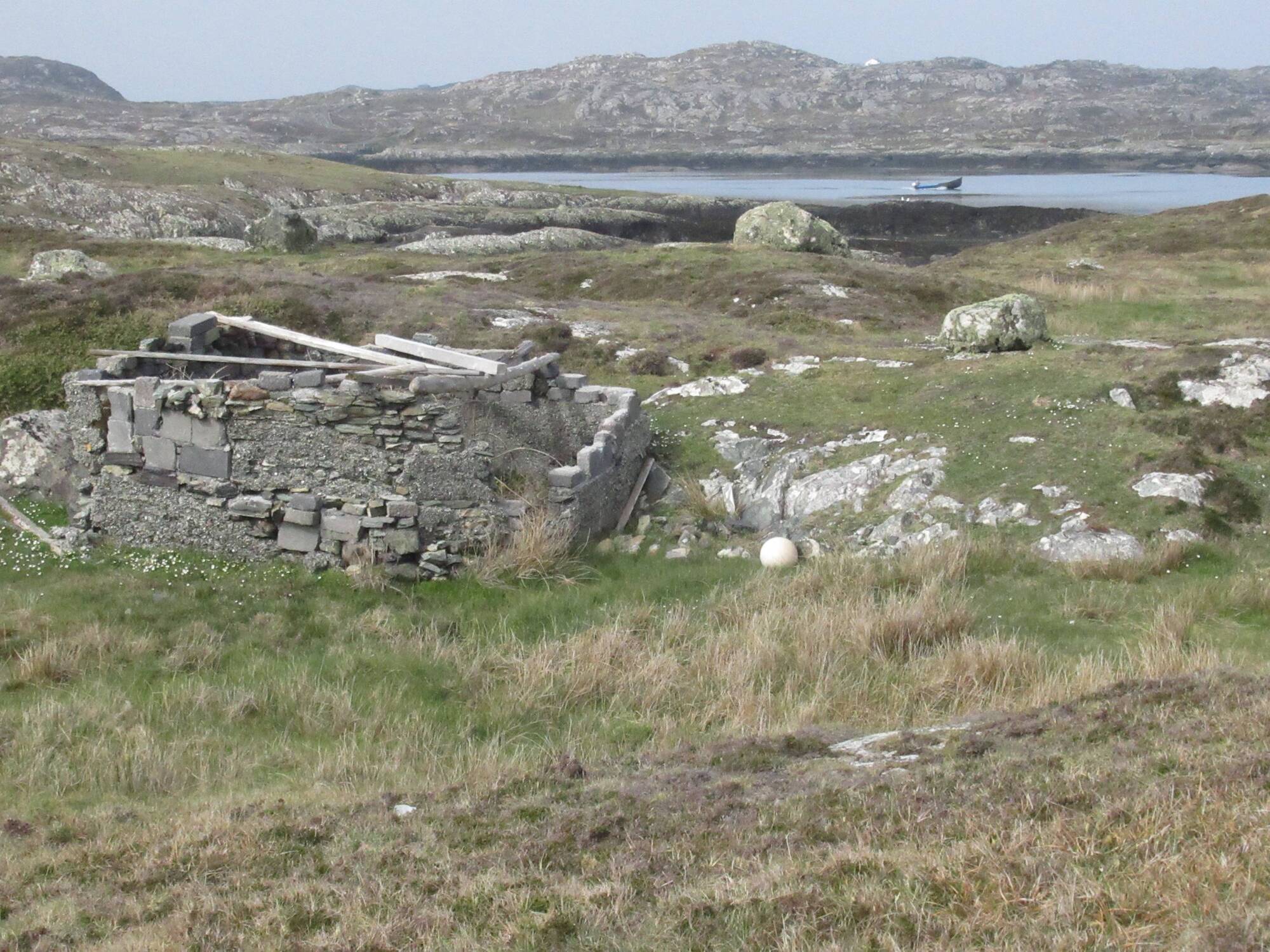
Illaunnanownim, Connemara, Co Galway, is between Gretaman Bay and Kilkieran Bay. Despite its many syllables, the name 'Illaunnanownim' has no meaning. Picture: Dan MacCarthy
The anglicisation doesn't tell the story behind the name of this Connemara island, but, then, it rarely does. For all its mellifluous-sounding syllables, 'Illaunnanownim', Co Galway, connotes nothing. 'Oileán an Anama', however, imparts a much more evocative definition: Island of the Soul. To this desolate island someone ascribed the term that gives life, or a kind of meaning, to things.
'Anama' occurs in several placenames around the country, including Cnoc an Anama (Hill of Souls), in Co Tipperary, and Achadh an Anama (Aghananimy), The Field of the Soul, in Co Monaghan.
Illaunnanownim is between Greatman Bay and Kilkieran Bay and is the first of many islands in this part of southern Connemara. The entire area is known as Ceantar na nOileán and is distinguished by a series of causeways that link the islands of Gorumna and Lettermullan and a few others besides.
Several variations have been recorded for the Connemara island, including Illaunananima, Oileán an Anama, Illaunanammun, and Oileán na Nóinín. A rare version occurs in the 17th century and renders the island as 'Sauleylen' and 'I Saule', which is the French version of 'Soul Island'. It was assigned by French cartographers to help the passage of their vessels, which were trading up and down the coast.
The Aran Islands, 7km distant, do not act as any kind of breakwater for Illaunnanownim and Gorumna, for the seas here can rage furiously. Some interesting flotsam and jetsam must have been washed up over the years. The 24 rugged acres also have a storm beach and even a salt lagoon.
The soul is a recurrent theme in literature. Many Irish writers have tackled this evanescent concept, which has engaged philosophers from Aristotle to Descartes. In his poem , Irish philosopher John Moriarty says journeying is an attempt to settle the tribulations of the soul. It may well have been a similar thought that brought someone to name this barren island 'Illuannanownim'. The power of the elegy is inherent in its simplicity and the narrator's search for solace.
"Clear days bring the mountains down to my doorstep, Calm nights give the rivers their say, The wind puts its hand to my shoulder some evenings, And then I don't think, I just leave what I'm doing, And I go the soul’s way." As can be seen in the photograph, someone made a half-baked attempt to construct a house or shelter on what looks like the ruins of a previous effort. It is just possible that a family once lived there, though no other ruins were apparent. A living could have been eked from the abundance of seaweed that was sold for fertiliser.
That caved-in cabin is the solitary structure on the island and no archaeological monuments, other than a cairn, have been noted. All along the coast, however, are a series of holy wells, including on the mainland opposite Illuannanownim. There is one next to the small pier under the high-water mark, called Céibh Poll Uí Mhuirin. A little to the east is Tobairín Pádraig, and to the west there are more, at Lettermullan and Golam. These are very isolated locations and their construction obviously had that in mind.
For all the philosophical possibilities in its name, Illuannanownim, its immediate neighbour, just metres to the south, is the more prosaically titled Loughcarrick Island, though not possessed of a lough, curiously enough.
For an area with such an inhospitable coast, it is amazing that no ships were recorded as having sunk at these pair of islands. A few kilometres east and west, two ships did founder: Pretty Polly, in 1918, and the Magpie, in 1864. Boats navigating from Loop Head, in Co Clare, to Slyne Head, in Co Galway, will pass by Illuannanownim. The easily identified cairn is a useful pointer for boats. Perhaps it is the resting place of the island’s forgotten souls.
- How to get there: R374 from village of Costelloe. Then, the road directly south of Ballynakill Lough. May be possible to wade through mountains of seaweed to reach the island at low tide.
- Other: arcgis.com; Galway Bay, Louis XIV's Navy and the 'Little Bougard' Jane Conroy, 'Journal of the Galway Archaeological and Historical Society,' Vol. 49


CONNECT WITH US TODAY



Be the first to know the latest news and updates