Islands of Ireland: The ghosts and gold of Feenish
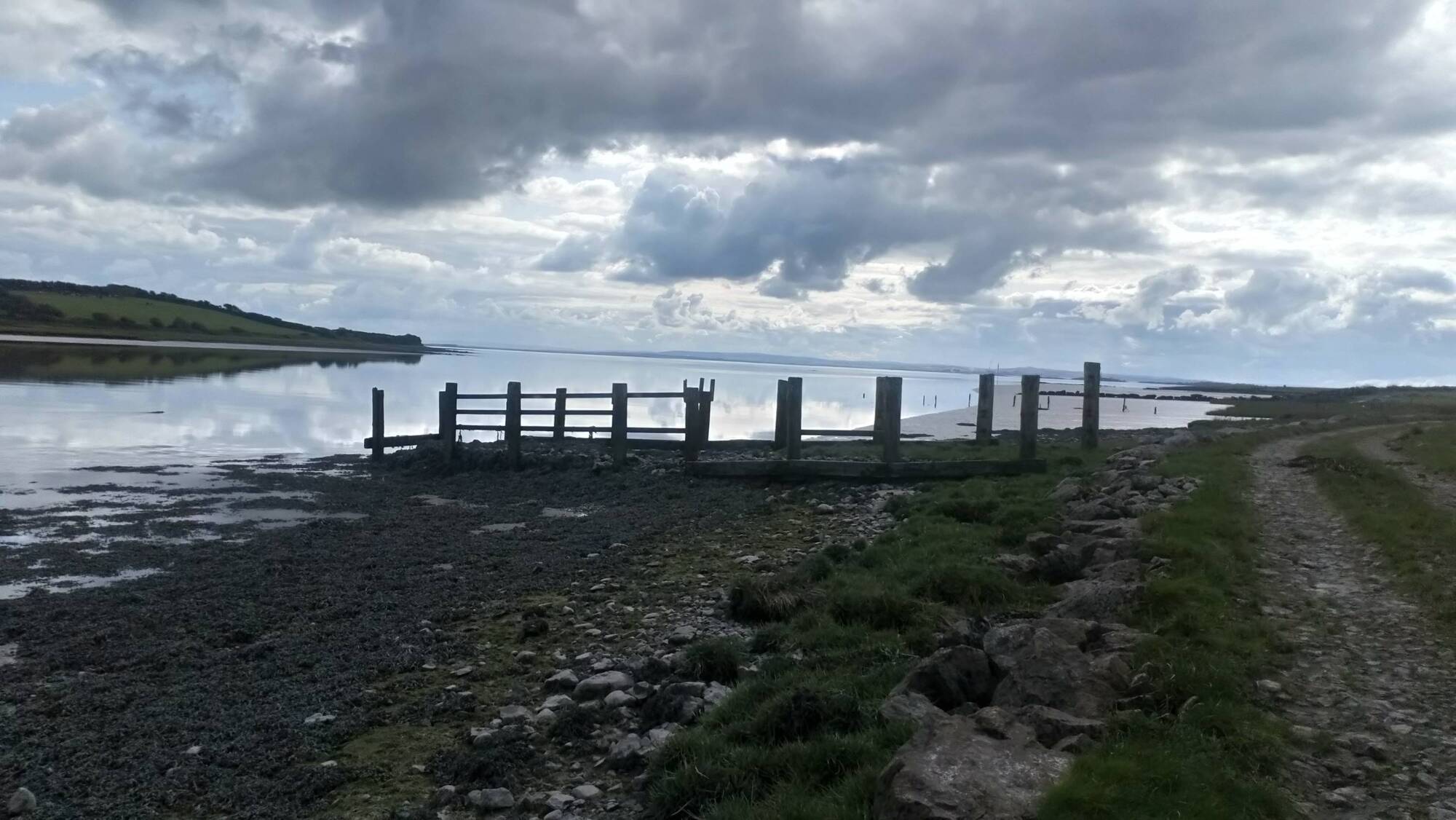
According to local legend, there is gold hidden either between Feenish, Co Clare and neighbouring island Inishmanaghtan, or somewhere in a ruined castle on the island, although the ghost of a soldier is said to be guarding it.
The dominant island adjacent to Shannon Airport, Co Clare, is the rectangular Inishmacnaghton, which is cut off from the land west of the airport by a channel from the River Fergus. This island was the scene of a disaster in 1946 when a TWA aircraft crashed with the loss of nine lives.
On the western end of the island is an entirely separate island, though it was once attached: Feenish. To the east of Feenish, is a large marshy area where the remnants of two islands known as Big Venture and Little Venture cling on to their topographical identity, though it is difficult to discern them today among the mounds of mud and reeds. It is hard to distinguish where water ends and land starts here.
A clue to the frequent flooding in the area is contained in the name of the adjacent townland. Ballycalla is the anglicisation of Baile Uí Cheallaigh, which itself derives from Ceallachán, which has been attributed to come from the old English word ‘callow’, meaning ‘low-lying wet place’. Across the Fergus Estuary, the feature finds an echo in Ballynacally. And at the start of the River Shannon, as vividly described in the recent by Paul Clements, is an area known as the Callows, rich in flora and fauna, but liable to cause nightmare floods for the locals.
On landing at the 179-acre Feenish, tracks are visible on the shoreline, and on looking back towards Inishmacnaghton it is possible to pick up an old roadway on the other side. A paddock on the shore demonstrates that the island is in use as grazing for sheep. The owners of the two islands found themselves in court in 1858 in a case listed as O’Farrell v Frost. The former asserted his right of way through the bigger island as the latter had prevented him accessing the mainland by this route. A few years prior to this case, seven families lived on the island. It was uninhabited by the 1901 census.
In the sixth century, the Fergus Estuary was synonymous with Saint Senan who, having established a church at Inniscarra just outside Cork, turned his attention homeward and riverward. He built monasteries at Scattery Island, Inishloe, and Deer Island. And on Feenish he built a convent for a community of nuns under the command of St Bridget. Not a stone of the convent remains today, however.
In their excellent study of the islands in the Fergus Estuary, Jackie Elger and Dolores Meaney record several names for Feenish including Fidh-Inis; Insula Sylvae; Inisfidhe, and Cluan-Fidhe.
There is a sole house on Feenish, a fine building, which looks like it is frequently, though not always, occupied. The other notable feature is the ruin of a small castle on the northeastern side which is thoroughly overgrown. Ownership of the castle was attributed to the O’Brien or MacMahon clans, but the records are sketchy. Archaeological evidence suggests that there may have been a village associated with the castle.
Local folklore relates that gold is hidden somewhere in the castle and that the ghost of a soldier is guarding it.
The above authors impart another story as told by local historian PJ Reidy: A local chieftain came across 60 men slumbering at the highest point of the island. Fearing an attack, he ordered his men to slaughter them, only to later discover that they had been sent to aid him. Three large stones stand near their graves in an area known as Poll na dTrí Fiche (Grave of the 60). A variation of the story has it that it was the chieftain MacMahon who slew the men and prior to his surrender managed to hide his gold between Feenish an Inishmanaghtan at a place known as Poll á Bhordáil. There’s gold in them there waters.
There is another Feenish in Co Galway. On the day the visited the island recently, a kingfisher on urgent business shot by.
Difficult. Gaze out the window of a plane?
http://snap.waterfordcoco.ie/collections/ebooks; by Jackie Elger and Dolores Meaney, Cat Beag Books; www.clarelibrary.ie


CONNECT WITH US TODAY



Be the first to know the latest news and updates