Dan McCarthy: Hidden history of St Thomas's Island
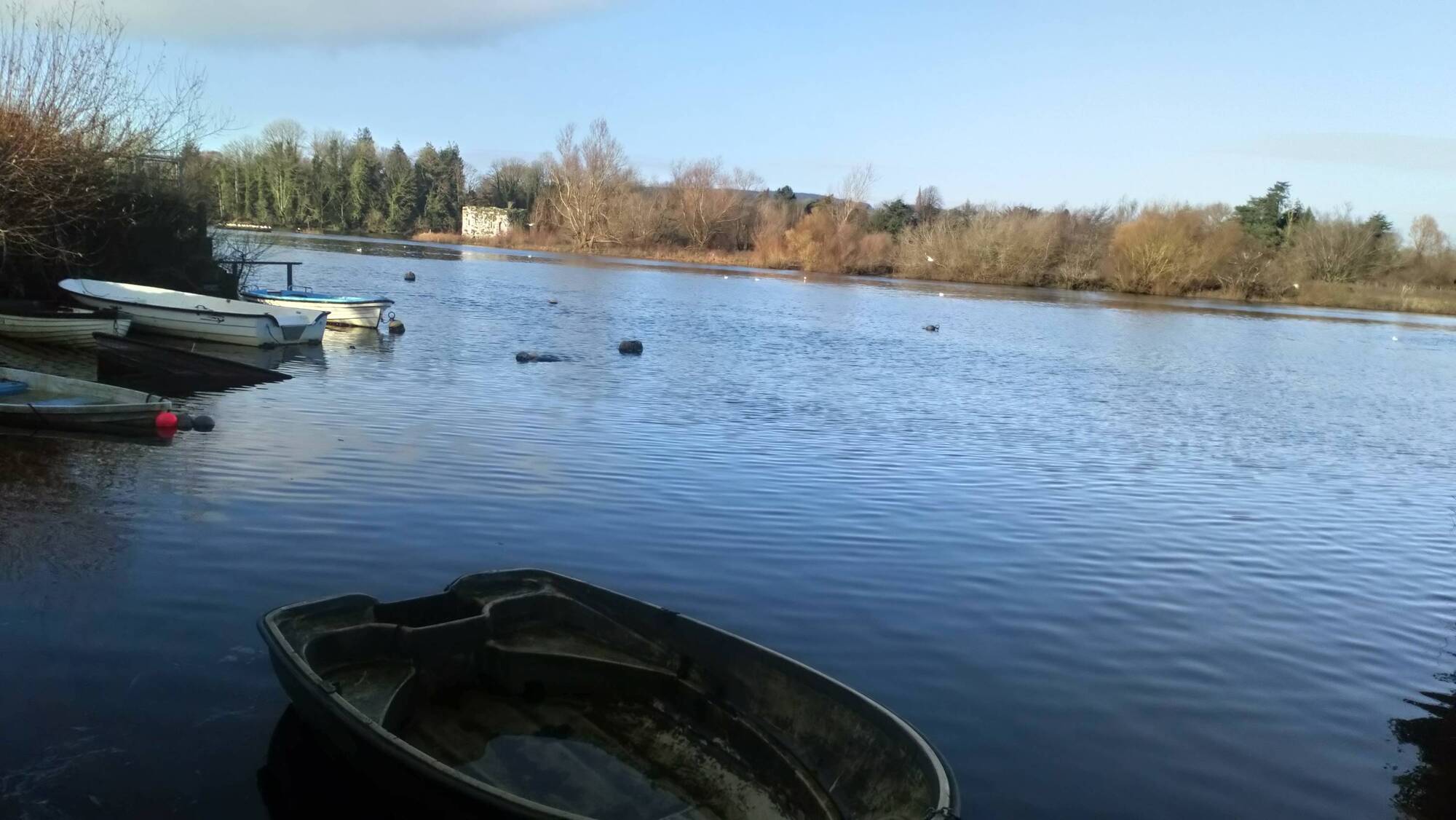
Now privately owned, the island has an intriguing past
Dan McCarthy: Hidden history of St Thomas's Island

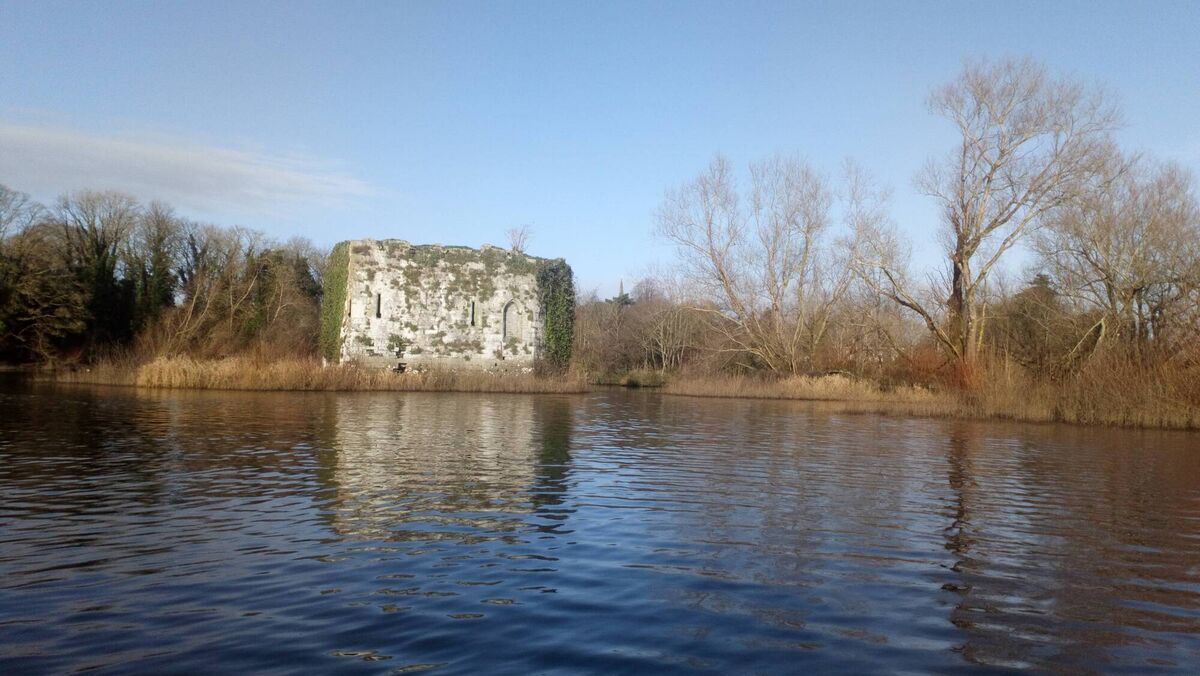
St Thomas's Island, on the River Shannon, Co Clare. Picture: Dan MacCarthy
As the River Shannon spreads its wings and becomes an estuary it scatters several islands along its banks: Sod Island, Waller’s Island, Saint’s Island and several others. There were islands that once existed but no longer do including Dernish and Piggott’s Island. Further upstream there are many islands where the Shannon courses through Lough Derg. In between, the lough and the estuary are several more. The largest of these is St Thomas’s Island where the river turns northwards at Corbally before making a U-turn and heading southwards.

This riverine island is very flat as is to be expected as when a river reaches the sea it deposits its load. It is privately owned and grazed by a rag of colts which imperiously guards the banks. At first sight there is
nothing to behold, but a profusion of dark ivy gives the game away. Buried beneath are the walls of a former residence.

'It is privately owned and grazed by a rag of colts which imperiously guards the banks.'

The remains of a salmon weir known as the lax weir stretches from the southern side of the Shannon to the northern bank. It was established by the Danes (lax is old Danish for salmon) before coming under the possession of Norman and then English power. The operation of the weir was discontinued in the 1930s when the Shannon Hydro-Electric Scheme was established and the company was given the fishery rights. In medieval times it was known as one of the most lucrative salmon fisheries in Europe.

The limestone castle of Caslaunnacorran (Caislean na Coran) marks the western tip, though strictly speaking it is detached from St Thomas’s Island. It was an outpost of the Irish garrison during the siege of Limerick in 1651 when Cromwell’s son-in-law Henry Ireton attacked the city.

The oratory was constructed in the 12th century by Dominican friars after their St Saviour’s Friary on King’s Island was deemed too small. It was dedicated to the giant of medieval intellectual thought, Thomas Aquinas, hence the name. The monks lived in harmony on the island till the 16th century Reformation. Henry VIII deprived the monks of all their possession including the lax (salmon in Danish) weir and lands at Monabraher. The oratory was obliterated and no trace of it remains today.

Caslaunnacorran, St Thomas's Island on the River Shannon, Co Clare. Picture: Dan MacCarthy

St Thomas’s Island played an important role in the siege of Limerick in 1691 when the Williamite general Ginkell bombarded the city. St Thomas’s Island was a crucial part of his strategy and his forces stormed across the island and eventually surrounded the city. The Irish army under
Patrick Sarsfield was forced to surrender and the Treaty of Limerick was thus signed. In the course of the siege 200 Protestants, mainly women and children, were brought off the island by the Williamites having been in “great misery” and “starved for want of food”. A differing view held that the prisoners were so well treated that they only reluctantly accepted liberation.

There are the ruins of a second building on the island. A Georgian mansion was
the residence of a milling family called the Russells. This house was later owned by a
J Tuthill. Its 21 acres comprised elegant gardens, villas, a greenhouse, and grazing for cattle. A visitor to Tuthill wrote: “His unaffected politeness made us enjoy our little excursion very much. The view upwards to the enchanting Shannon cannot be excelled. His verdant banks are covered with cattle, adorned by charming villas at intervals.” One of the last occupants of the island was a farmer who was known to
frequent the milk market with more tanks than the milk from his cows could possibly fill. When apprehended by a suspicious constable, the tanks were found to contain poteen.

The heyday of St Thomas’s Island was undoubtedly in the medieval period. Its quotidian life was captured in an evocative poem of the same name by Arthur Lysaght.

Faint comes the slap of water against wood/
As black bows hover darkened pools
And peak-capped men ply cobwebs out of boats
An arc of silver breaks the water surface
A monk is silhouetted on the weir

  • How to get there: Pat Lysaght in Corbally, Limerick: 086 848 7042
  • Other: Shannon Country: A River Journey Through Time, Paul Clements, Lilliput Press

More in this section

Revoiced

Newsletter

Sign up to the best reads of the week from irishexaminer.com selected just for you.

Cookie Policy Privacy Policy Brand Safety FAQ Help Contact Us Terms and Conditions

© Examiner Echo Group Limited