How to use electric space heating to have a cosy home
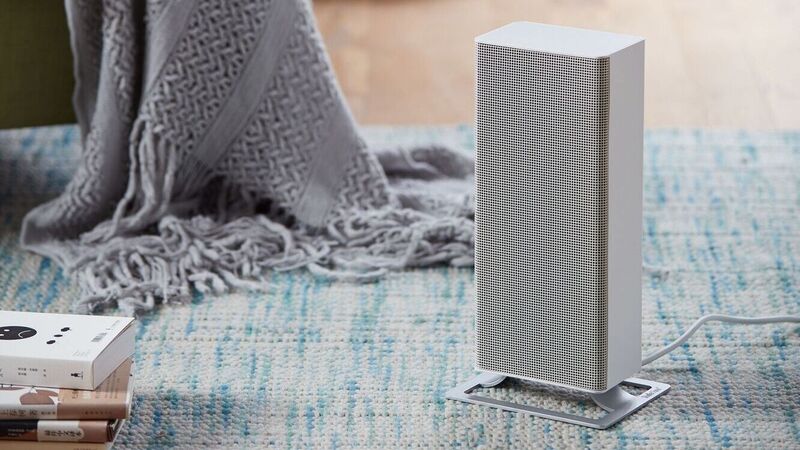
The Stadler Form Anna, a Bluetooth operational 2kW Scandi-style lovely that could be mistaken for a floor-standing Bang & Olsen 1970s speaker, from €144, Amazon.
Stranded in our social bubble, warm personal space has become increasingly important since Covid has sealed many of us into our homes 24/7, where we’re paying for another 8-10 hours of space heating.
There are periods and places in the passive regressive home with a winsome BER of C2 or worse, which need a bit of thermal salvation from late November to early April.Â
Working from home, stoking the boiler from dawn to dusk is not something we can claw back in a tax credit. A dense Aran to the ankles is not enough when you’re sitting still for any period of time and it’s less than 10C outside (and potentially under the daytime misery threshold of around 18C/65F inside).
Depending on your age or medical condition, the daytime temperature of your house, or at least the rooms you’re in, should be in the area of 18C-20C, and around 18C or a little less overnight. The HSE advise on keeping the living-room as warm as 24C in some personal circumstances. In energy inefficient homes, the heat loss through windows, walls and draughts may instil a feeling of cold even where the thermostat says otherwise. Having lived in Sweden, I came home and continued sleeping with the window open all night — weird, very Scandinavian, and not recommended by health experts.
Every degree tweaked up on the standard gas or oil-fed CH will cost you in the area of 10% or possibly more in your heating bill. This is wildly variable — as you might have disastrously expensive old electric storage heaters to deal with and cold walls just wicking the kWs straight into the masonry. Wearing shorts around the house? The thermostat is probably set too high, even in an A3 rated super home. Air Source Heat Pump (ASHP) heating is fantastic — but it’s electrically powered and not entirely free.
So what’s out there for that dedicated thermal boost if the house-wide central heating isn’t cutting it? First, look up our tips for tailoring standard CH here:Â
www.irishexaminer.com/property/homeandoutdoors/arid-30954004.html
The vast majority of portable space heaters are electrically powered. Good news on several fronts. First of all, they are 100% efficient — every kW consumed, goes into heat. Secondly, enclosed in a housing and without an open flame, their safety protocols are easy to follow. Armed with a thermostat and other features a properly detailed unit should turn off before overheating or if say, they tip over.Â
Thirdly, unlike plotting for extra briquettes on the fire, their potential running costs with an electric unit are easy to figure out — we’ll be matching the kWh performance (units of power to heat delivered) to the room size — that’s it. Using thermostats and variable heat settings you can dial that kW rating down periodically.
Finally, electric personal space heating has improved immeasurably in the past ten years, and matched to aid including the Home Heating Package (see our sidebar) — electric space heating is a good call for elders who don’t want to muck around with gas bottles or hot fossil fuel stoves. Before you set out to buy — follow one all-important rule — don’t buy a second-hand unit, ever.
Marketed for well-insulated spaces and occasional use, blow or fan heaters are expensive to run for long periods, but work fast, making them ideal for say - getting dressed in the morning in a chill bedroom or huffing quick warmth into a well-insulated area. Heating and then dispersing that heat from an element or ceramic panel, their heat dissipated quickly, and it’s important to check that kWh rating to avoid a shock bill from General Blow-Blow (our name for the heater my teen uses in the bathroom). Cheap blowers are noisy and their placement is important —ensure there is enough room for a draw from behind the fan.

2kW–3kW would be standard with variable fan speed. Extra detailing will concentrate on Bluetooth connectivity for example and thermostat qualities. Prices start at €20 for a squat 2kW floor standing style-dud to something impressive like the De’longhi Max with its ‘intelligent’ Eco-air mode, 12-hour runback timer and motorised oscillation sending hot or cool air to wider parts of the room, €275.44, Argos. The De'longhi 1.8kW Capsule heater — a refreshing boxy style, with ceramic element and a useful lifting handle — my ideal for office spaces, €59, Argos.
All but silent, and better at spreading even heat throughout a room, convection heaters or positive temperature coefficient (PTC) ceramic heaters, can be set to a timer in just the same way you would set your CH. They are slightly slower to actually start heating and pulling the air across their surface. The heat travels up and out by convection — not ideal for asthma suffers. Standing as a panel, and with a slender profile, they look quite smart and carry tip-over protection.

Married to an internal fan (look for a ceramic heater with this talent) your convector can be set up on an electronically controlled thermostat for quicker performance when you need it — for example, the Dimplex 3kW Turbo Convector Heater which is a plug and go contemporary radiator style that can be wall or free-standing, €108.20.Â
In the mid-range, look for 1-3 heating settings, 1C incremented, intelligent thermostats, timers and a model matched to your room size above all. Best looking convector? The Stadler Form Anna, a Bluetooth operational, Scandi-style lovely that could be mistaken for a floor-standing Bang & Olsen 1970s speaker, from €144, Amazon.
Efficient for day-long use, and outstripping blowers and most convection heaters for heating large rooms, oil-filled radiators are styled as a ribbed or panel radiator on wheels. Unlike your CH rads’ they are filled with oil that is heated by an electric element. The materials of the radiator are heavier than convectors. This does make them slightly more awkward to move but as a better thermal store, they continue to send off heat up to 20 minutes after the unit has been switched off. Be wary of hot surface temperatures around tiny children/
Additional digital control and variable thermostats have increased their energy efficiency. Check how easy the piece is to move when hot — an often overlooked annoyance. Challenging standard oil fills, the Dimplex Cadiz 2kW radiator features oil-free technology, superfast warm-up and is said to be 10% more efficient than an equivalent oil-filled 2kW. It has twin heating panels which can be operated independently, so you can heat yourself and switch the opposite panel off to save energy. Includes programmable 24-hour timer. €179, Harvey Norman.
There are some known and new technologies which directly heat at our bodies rather than the cubic metres of the whole room. IR heaters are a relatively fresh arrival on the Irish market, are proving impressive for their efficiency and method. Unlike other heaters, IR heating heats you, rather than the room. With running costs of as little as €0.06 per hour, they are ideal for a healthy adult living in a well-insulated home for an area of warmth while say sitting and working. Because they don’t "move" air, they are suitable for allergy sufferers who can’t take convection heating.

Taken house wide or used in dedicated rooms, with smart operation, IR can literally follow you around the house, coming on as you enter a room. Proximity is important here, so think about IR if you want an under or over desk heater with low running costs. Plusheat offers a 400-watt proximity heater, ideal for under desk, watching TV, warming up your pets, conservatory, caravan or for the mobile home, €48.60,Â
www.plusheat.ie. Halogen heaters (using halogen light) are energy-efficient, run continuously, heating what’s in front of them, rather than the air, and are often matched to oscillating settings. Their ugliness and close-range operation has cooled the market — but they are a favourite for garages.