The best ways to feed the birds in your garden this winter
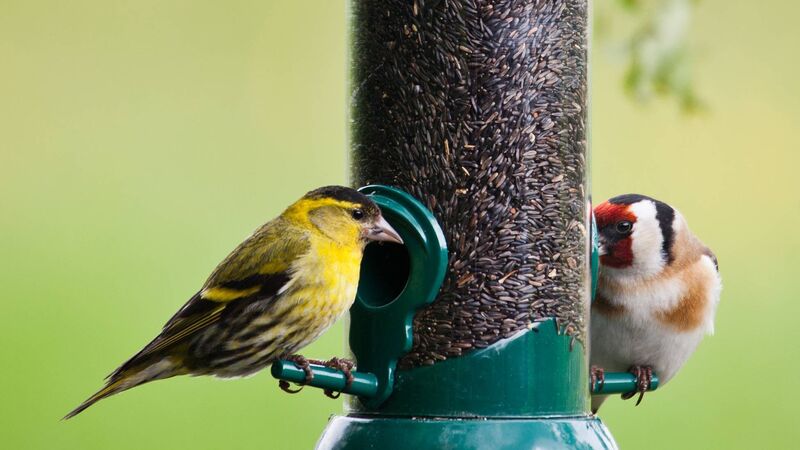
The greater the variety of feed, the greater the variety of birds. Male goldfinch and siskin, both Irish natives feeding on nyjer seed, a big favourite with finches. Picture: iStock
By supplementing the diet of a little feathered posse in our gardens in the grimmest months of the year, we really can contribute towards sending them into spring in tip-top condition to breed. New farming practices and the removal of natural habitat continue to decimate the numbers of many small birds in Ireland.
Still, feeding wild animals brings responsibilities. If we don’t do it correctly, and consistently correctly, we could be doing more harm than good. There’s a huge industry based around feeders, tables, nest-boxes and foodstuffs. Still, cutesy birdhouses are simply staging. It’s up to us to carry out intelligent, informed, forward planning and to stick to healthy, protective bird feeding routines.
This is a great time to get your feeding station set up — as birds that were flush with insect activity, autumn seeds and fruits are now feeling the sting of winter. Distributing feed (and water) should be done in a way that keeps the birds as safe as possible during a highly vulnerable moment. What might seem a perfect place for you to watch those siskin antics, could be a dodgy spot where cats can too easily nab a distracted bird.
Some 27 million wild birds are taken by domestic cats every year in the UK alone. That doesn’t include the 57 million mammals they also take (The Mammal Society).
Bells on safe release collars offer some warning. If you’re home, try keeping your free-roaming cats in during the early morning hours and at dusk when birds are very active. Read Richard Collins’ measured and fascinating piece covering the damage our 700,000 Irish cats do to our native wildlife here: https://www.irishexaminer.com/property/homeandoutdoors/arid-30996167.html
Birds need to feel secure enough to land, and we can strategise to ensure that slower, younger or compromised individuals have a better chance. The RSPB suggests a freestanding bird table 1.2m to 1.75m off the ground, on a spot out of the worst of the wind, with a bush about 2m away for birds to perch, rest and “queue” up. Sharp bramble clippings scattered at the base of the bush can dissuade cats. Shrubs also provide birds with shelter together with berries, seeds and invertebrates year-round. To make your garden more wildlife “woke”, take a look at Birdwatch Ireland’s Gardening for Wildlife section, birdwatchireland.ie
The wider the choice of feeding positions and feed type on offer, the greater the variety of birds that will visit the garden during the course of the year. In winter this can provide a dynamic, colourful display when the garden is otherwise rather dingy. Redwings, bramblings and other unexpected migrants can be an uplifting surprise.
When you buy, consider how robust the feeders are and how easily you can take them apart to dispose of spoiled feed and to give them a rinse. Use a single table or pitch roofed house, or set up a high pole with hooks to attach individual cassette feeders. The timber stage and pole of a large bird feeder can also take hooks underneath for additional unit positions. A dished catcher will save smaller seed from being scattered on the ground.
Open tables attract large birds. However you deliver the goods, they will have always have a go (not so adorable — they have to live through winter too). Still, there are plenty of designs that make it harder for even clever birds like jackdaws to decimate a food supply. A small, swinging light feeder will be easily handled by an agile blue tit, but will be impossible for a pigeon to mount. Peanut feeders with slots and mesh for small bills, will save you a fortune.
Where you don’t have enough room to go out into the lawn or patio, free-draining, wall fixed feeders can handle seed mixes, scraps, fat balls and peanut cake squares (in cages). Again, don’t go close to a fence top where your cat can be waiting for an opportunity. Multiple feeding stages — cater for more birds, stopping gorgeous tiny thugs like coal tits and goldfinches, from holding the whole feast to ransom.
If you have suitable trees, feeders can be hung in high, safe positions all over the garden so long as the birds can see any trouble coming and the feeders are not regularly disturbed by foot or vehicle traffic. I’ve found my flock are increasingly cheeky, with one or two hand-feeding already — one of the joys of the routine.
Thread any metal hanging cable or chain through a short section of garden hose to stop heavier vessels sawing through the supporting branch, damaging your tree. Use at least two hanging points to prevent the table whirling in the wind.
Instances of dozens of small birds dying after consuming inappropriate poor quality spoiled, cheap suet balls are too common. Buy from a supplier and brand dedicated to the demands of Irish birds. Mixes should not be fattened with too much cheap filler like wheat kernels and millet. The local pound shop is not ideal — check the labelling and do a texture test on peanuts. Feed little and often to avoid waste building up on the grass and inside the unit — decomposing feed is extremely unhealthy and could be carried back to a nest in the spring.
Think about it. You’re inviting in flocks of various species — and they are mixing together in a small, unnatural area where disease transmission like finch trichomonosis can really take off through their saliva and droppings. Let’s keep things relatively clean.
Occasionally, put on a pair of gloves, scrape the guano and waste seeds off the tabletop and give it a wash with household disinfectant or (mild) 5% bleach in a solution, followed by a careful rinse. Plastic and metal containers can be rinsed out from time to time too. Wooden tables will eventually rot — five seasons would be a success.
One of the shockers of feeding birds is how expensive it becomes once you are committed to an A1 job. Watching the bigger birds blithely stuff themselves with pricey mealworms can be seriously frustrating. When I’m feeling the pinch — I put the more expensive goodies like sunflower hearts and oil-rich nyjer seed back through a standard seed. The birds do tend to go rooting for the peanuts – quite annoying. Avian peanut jars are a relatively new arrival — never feed anything salted.
Ground feeding is important to many species of birds, but dropped seed will attract vermin (hard to avoid) and it can rot and or sprout. The answer is a low timber platform or tray around 10cm-15cm off the ground with a mesh stage on legs or a seed dispenser designed to sit on the ground. It’s vital to ensure ground feeders are positioned away from vegetation where predators can hide. A caged version will also stop mammals and large birds from emptying the feeder overnight, though they are a bit pricey.
Enthusiastic birders use 4cm wire made hanging baskets and even shopping baskets joined up with zip ties, and other hacks to fudge a solution — just make sure that any cage doesn’t trap or injure your birds.
Every good bird station will include a place to drink, and again, the water should be kept as pristine as possible. Birds have to keep their feathers clean all year. If you already have a pond, see if you can incorporate an area of shallow, pooled water and even a little clean sand — lovely.
CONNECT WITH US TODAY



Be the first to know the latest news and updates