Damien Enright: Hedgehog mushrooms were not plentiful but worth the effort
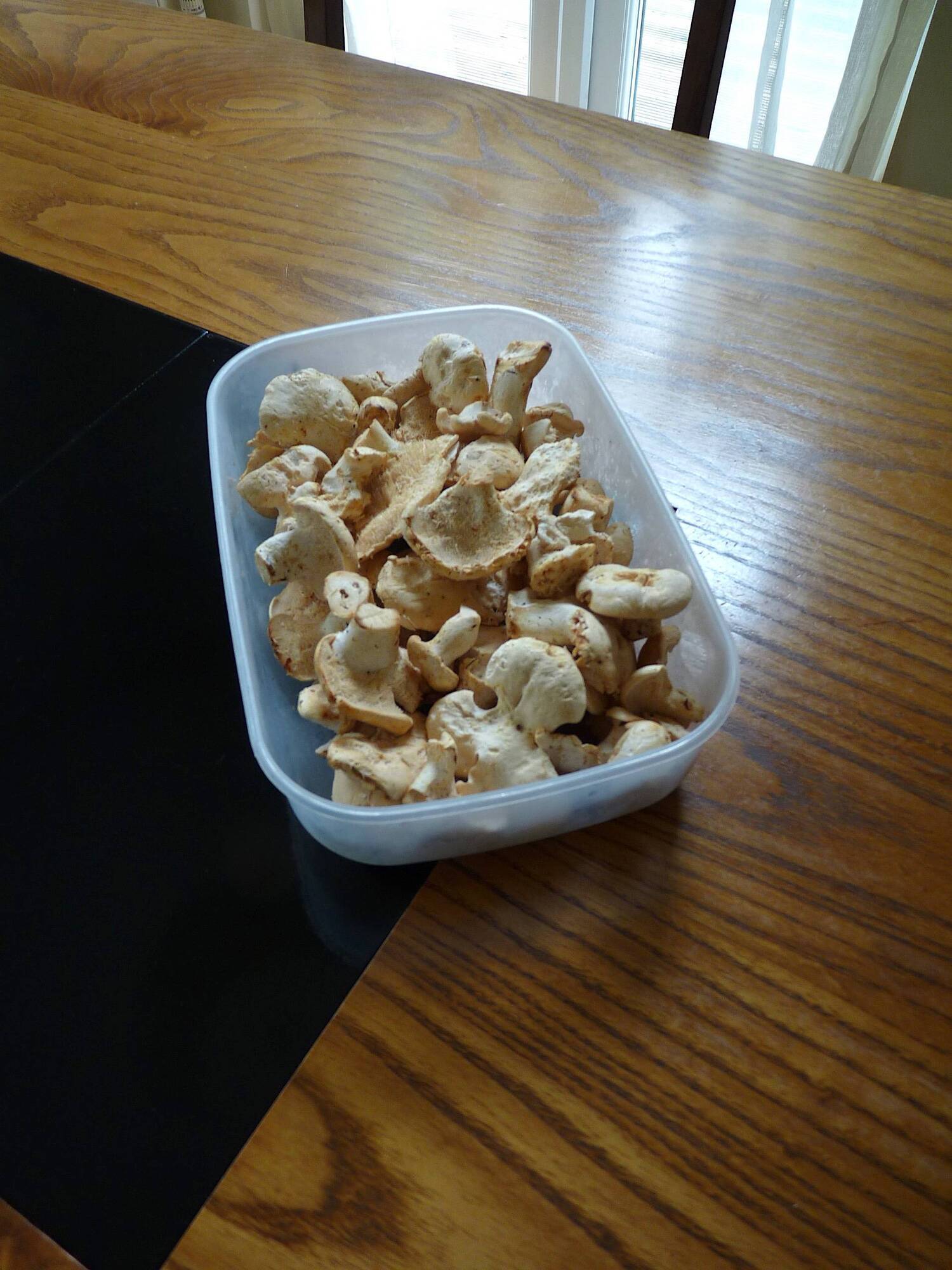
Hedgehog mushrooms, also known as Sweet Tooth, were foraged in forests in Kerry.
After a day's foraging in the wet woods of Kerry, we had hedgehogs with bacon in a creamy sauce for supper.
Fungi foragers will agree that Hydnum repandum, also known as Sweet Tooth, wood hedgehog or, simply, hedgehog mushroom, is a treasured find when they come upon them.
They aren't plentiful — not like the golden chanterelle which we also picked, sometimes found in carpets — but, when discovered, are worth the effort. White, and with caps up to 7cm (3 inches) wide, they are easy to spot in the dense shade of the forest undergrowth, and usually grow in small groups. Spines, rather than the usual gills, hang from the undersides of the caps.
Hedgehogs have a firm consistency, perhaps the Sweet Tooth name refers to their being 'toothsome'. They were classified as Dentinum by a British botanist in 1821; it was Carl Linnaeus whom first described the species in 1751.
What a man, was Linnaeus. We come across his name in the story of almost every species of flora and fauna we ever seek to research. Before continuing the tale of our weekend foraging, I feel I should divert to him. He is surely as interesting as the mushrooms, and all else, he named.
Wikipedia, the free online encyclopedia, tells me that he was born in the countryside, in Småland, meaning Small Lands, in southern Sweden. He studied botany at the famous Uppsala University and, over the 30 years (1740 to 1770) walked and otherwise travelled throughout Sweden finding and classifying animals, plants and minerals, and writing about them. No doubt, scholars, naturalists, and plain people from everywhere in Europe brought specimens to his attention.
He was so respected for his scholarship that he was ennobled by the Swedish crown and his contemporaries were unsparing in their praise. Rousseau, the philosopher, said of him: "I know no greater man on earth"; Goethe wrote: "With the exception of Shakespeare and Spinoza, I know no one among the no longer living who has influenced me more strongly", and Strindberg said: "Linnaeus was in reality a poet who happened to become a naturalist."
Using Latin as a universally-understood scientific language, Linnaeus standardised the two-name classification system, the first part of the name referring to the genus to which the subject belonged (as in Homo, ie, mankind) and the second to the species to which it belonged within that genus (as in sapiens, meaning 'wise', this distinguishing us from Homo neanderthalensis, Neanderthal man, etc). Linnaeus was a genius, no doubt about it, and all of us amateur naturalists appreciate him.
Naming the golden, subtle-tasting chanterelle mushroom is another example of the usefulness of Linnean taxonomy. Our weekend mushrooming companion and friend Horst, a German who is married into Kerry and first contacted me through a column I wrote in this paper 10 years ago, always calls chanterelles by their French name, 'girolles'. Were we at odds, we could resolve the difference by calling them Cantharellus cibarius, the Linnean name that derives from the diminutive of kantharos, the Greek name for a small cup.
Chanterelle caps do often, when mature, resemble small cups of egg-yolk or apricot colour, dramatic against the dead leaves on the forest floor. They are delicate in taste but almost rubbery in consistency; in the raw state, they are 'chewy'. Beneath the caps are deep veins, the gills. The shapes are often convoluted, and smaller caps may be found thriving, but hidden, beneath the larger.
Deferring to my German friend, and calling them girolles, I can mention a few more delightful characteristics of the species. Not only are they of apricot colour but, freshly picked in dry weather, they may smell of apricots. Also, they last very well, even out of the fridge, and are not slug susceptible and are never 'wormed'. They were already on palace menus in the 16th century. They are expensive in shops because they cannot be farmed, but must be gathered in the wild.
I'm told that, this week, fat, white field mushrooms, the old favourites, abound on chemically-free fields in my part of the world, the Seven Heads in West Cork. Unfortunately, for some reason, they are as attractive to worms as they are to us. Too often, the gills and caps of larger specimens are riddled with tiny, crawly creatures, as one of my daughters used to call them.
The only answer is to pick them as soon after dawn as possible, before the flies that lay the eggs that engender the worms wake up. Few breakfasts can compete for flavour with the caps of flat-headed, fat field mushrooms, big as the back of one's hand, fried in butter and laid on a slice of toast. A tincture of rasher bacon improves them even more.

CONNECT WITH US TODAY



Be the first to know the latest news and updates