How pandemic life is transforming homes and workplaces
Eve Kelliher consults a Munster designer to find out what our future residences, offices and businesses will look like
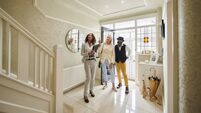
The pandemic’s influence on interiors and home design could be far-reaching. Because Covid-19 has confined us to base, we’re more aware of our home’s flaws and possibilities than ever before.
As our haven, it’s protected us from the outside world through these unsettled times. -The words “snug” and “den” both shot into the most-searched terms list on home and interiors website Houzz during March 2020.- Munster interior designer Marette Cronin, like so many others, has been spending a huge amount of time at home. “It certainly has had its challenging moments, but it also brought the opportunity to get productive around the house by getting jobs done that usually are reserved for a quick spring clean or a freshen-up before Christmas,” Marette tells the Irish Examiner.
The Kerry woman’s biggest undertaking was to declutter, she adds: “Nothing was safe, from wardrobes, dressers, the office to the kitchen cupboards — much more time-consuming than I had anticipated, but so worthwhile.”
MULTIFUNCTIONALITY
So how could life in the time of coronavirus shape future homes? Multifunctionality will be the key legacy of the stay-at-home culture, Marette believes. “I think that space will be utilised to its fullest potential. I think spatial planning and separate living/recreational areas will become not just more important but imperative for our way of life,” she says.
“This will include more aspects, such as play areas for kids, exercising space and dedicated socialising areas — for instance, a cocktail/bar section might be incorporated into kitchen designs.”
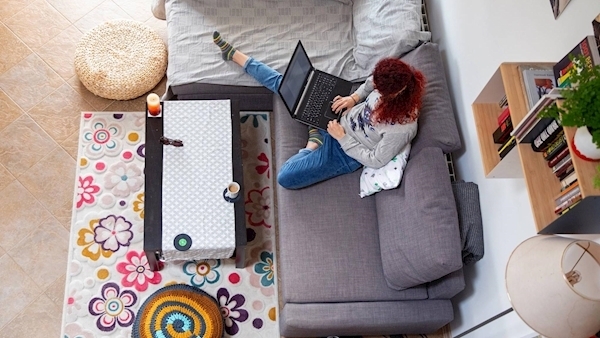
And from playtime to the nine-to-five, the concept of home as remote workspace is here to stay, she believes.
“I think that home offices will no longer be an afterthought,” says Marette.

But what about those of us who don’t have the luxury of a well-appointed spare room? “Not everyone has a room to sacrifice as dedicated office space and this also may not be necessary for most people. A workspace area might well suffice,” according to the Killorglin-based interior designer.
“Depending on the home dynamic, there are different options.
“If it’s just one or two people you could incorporate a workspace area into the living space; however, if it’s a busy family home you might have to allocate some space in your bedroom.
"If this is the case then I would advise putting a partition or faux wall blocking this from the rest of the room as psychologically you need to switch off and relax in this space and not have work in sight if possible.”
LIGHT YEARS
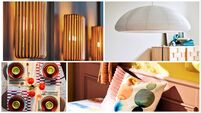
Also on the subject of wellbeing, considered lighting will play a key role in future homes, she believes. “I don’t mean just in terms of artificial lighting but also taking more time to factor in the amount of natural light that’s allowed in,” says Marette. “This is also important for our moods and mental health.”
The pandemic fallout will have a pronounced effect on commercial property designs, she adds. “As we move forward we might ironically be looking to the past for design inspiration, where comfort and personal space was more prevalent.
For example, we could see supermarkets doing more home deliveries and having wider shopping aisles with fewer people crowding in and airports, bus terminals and banks having more social barriers allowing for more personal space,” says Marette.

“Some commercial businesses will have more changes to implement, such as restaurants. Having wider spaces between tables will not just be in the higher end of the market but in larger chain restaurants and takeaways.
“On the flipside of this we could be seeing higher-end restaurants incorporating takeaway services and having a designated area for this as losing tables in an industry where there is already a tight profit margin means they will have to diversify to survive.”
And it will be a case of back to the future in other respects, from business hubs working those 1980s vibes to leisure destinations motoring back to the 1950s.
“Offices could possibly bring back more of the cubicle-style workspaces, especially in larger more open-plan offices,” adds Marette.
MOVIE NIGHTS
“Cinemas might need to incorporate a drive-in movie space. But if bringing back some of our old values of customer comfort and space can be done within the realm of a positive economic end benefit then, again, I would like to see these as positive changes.”
Permanent outdoor zones will be factored into house designs of all sizes, says Marette. “Where possible put as much consideration into this space as the interior, think of it as another space or room.

The temporary gazebos are brilliant but unfortunately our weather is not always suitable for these, I can personally attest to this as I have previously lost a gazebo after it took flight in a ‘little’ summer storm last year.” One of the last full projects Marette completed before lockdown was a show apartment.
“It went from concrete to completion in five weeks — this is including prep time! The pressure was on and it certainly had its challenges but was also very rewarding.”
END GOAL
Domestic and commercial projects all start with the same objective, says Marette: “That is, taking a space and making it into the best possible version of itself.” As for this version’s evolving shape?
“I don’t see that these changes are a negative spin-off of a terrible situation, but more a positive, as we will be making the absolute best use out of our homes,” says Marette.
www.marettecronin.com
CONNECT WITH US TODAY



Be the first to know the latest news and updates