Richard Collins: Vampire bats don’t deserve the bad reputation
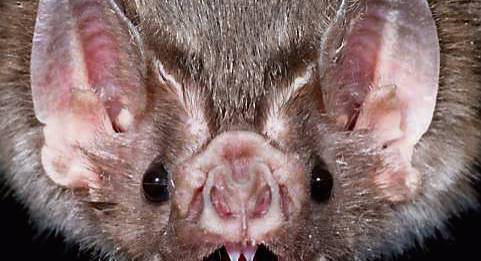

The name ‘Dracula’, it’s sometimes claimed, comes from the Irish ‘droch fhola’, or ‘evil blood’. The cognoscenti, however, say its origin is ‘drac’ — ‘dragon’ in old Romanian.
However, it was Dubliner Bram Stoker who first spread fake news about bats and the ‘un-dead’ in his 1897 novel. Nor are there blood-feeding ones in Transylvania, where vampire folklore flourished long before real vampire bats were even discovered.
The three extant species are found in South and Central America, the only regions where they occur. Darwin documented them in 1839. The bats’ ancestors probably took to feeding on blood-sucking parasites, such as ticks, on the bodies of large animals.
Eventually they began tapping into the host’s blood supply directly.
Vampires don’t suck; they create a small wound and, in the words of bat-expert Amy Wray, “lap up the blood like a kitten”. One species will occasionally target people sleeping outdoors. About 20g of blood, a tiny fraction of the amount in a standard donation to the blood bank, is taken during a 20-minute feed. Bats often target the big toe.
Although there’s a risk of rabies infection, vampire bats’ demonic reputation is undeserved. Indeed these creatures may benefit us. Their bite injects a protein, ‘Draculin’, an anti-coagulant which helps the bat take ‘more blood for its bite’. This contains a substance which may break up clots in stroke victims.
Nor are vampire bats malevolent; research just published reveals a soft, generous side to them. Ohio State University zoologist Gerald Carter and colleagues captured bats at two geographically separated sites in Panama. Individuals from both locations were kept captive and their behaviour monitored.
Vampire bats can starve to death if deprived of a blood meal for three days or more.
Hunting for a suitable large mammal to target is a hit-and-miss affair. A bat will be lucky and gorge itself on blood during some nights, but fail to find a host during others.
But the bats have evolved a rescue procedure — ‘reciprocal altruism’, analogous to friendship in humans. When starvation threatens, a bat can rely on others to donate a top-up of blood to tide it over. Only close kin, it was assumed, would provide such bail-outs.
In doing so a donor, being a relative, is helping to promulgate its own genes. Carter’s team, however, observed individuals ministering to complete strangers, even ones which had come from a different colony. Vampire bats are willing to share blood even with ones to which they are unrelated.
Grooming is central to bat social interactions. Bats groom each other even when all skin parasites have been removed from their bodies. As with blood hand-outs, grooming was thought to be confined to kin but some of Carter’s bats reached out to strangers.
“Bats appeared to use low-cost grooming to test the waters before sharing food,” say the researchers, and the “first food donations were preceded by an increasing rate of reciprocal grooming”.
Grooming plays a central role in bat pair-formation. Some of those which groomed strangers went on to establish “new social bonds” with them.
There are darknesses in life and there are lights, and you are one of the lights – Bram Stoker.
Gerald Carter et al. Development of new food-sharing relationships in vampire bats. Current Biology, March 2020.

CONNECT WITH US TODAY



Be the first to know the latest news and updates