Richard Collins: Glimmer of hope for the dwindling hedgehog

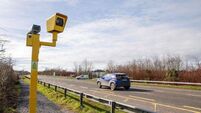
There are almost three million motor vehicles in Ireland, more than one for every two people.
Countless nesting birds, and their newly fledged chicks, are being slaughtered by them on our roads.
Barn owls are particularly vulnerable, not just during the breeding season, but throughout the year, as they hunt rodents along road margins. Badgers, foxes and hares fall victim to the carnage but the mammal most at risk is the hedgehog.
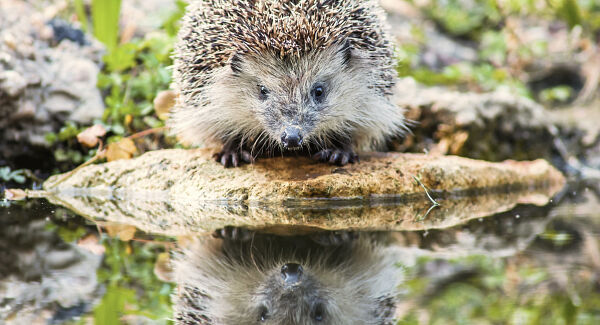
Gráinneog, ‘the ugly one’, has awoken from its winter slumbers. Body-fat depleted, it may travel up to 3km each night in search of food.
Despite having short legs and a chubby body, this is a fairly agile creature, able to climb walls and negotiate obstacles. It can swim. The eyesight is poor but the sense of smell is acute.
Hedgehogs have smaller brains than other mammals of their size.
Intellectually challenged, and ‘set in their ways’, they do the wrong thing when trying to cross a road.
Confused in the glare of headlights, they opt for their traditional defence; rolling into a spiky ball. Medieval body-armour, alas, can’t prevent these poor creatures from being squashed flat under the tyres of trucks.
According to Red List No. 12, published by the National Parks and Wildlife Service, ‘many hedgehogs are killed on roads, although these incidents tend to be most frequent when hedgehog population densities are high and road-kill is probably not a factor controlling populations’.
We may be complacent in Ireland, but there is concern for the future of hedgehogs elsewhere. It’s estimated that Britain had about 30 million of them in 1950.
A 2011 report, by the British Trust for Ornithology, concluded that there had been ‘an alarming fall in the numbers of hedgehogs in urban and rural areas’.
In 2016, the People’s Trust for Endangered Species estimated that about 100,000 hogs were being killed on British roads each year.
The State of Britain’s Hedgehogs, published by the Trust in 2018, claimed that the population had declined by 30% since 2000 in urban areas and that rural numbers had been halved.
These reports don’t lay all of the blame for the decline on motor vehicles.
As Red List No. 12 notes, hedgehogs ‘are vulnerable to pesticides used in gardens and many are killed by eating poisoned slugs.
Severe winters may kill hibernating hedgehogs’. Habitat loss, disturbance of nests by dogs and reduced food availability, take their tolls. Thirsty hogs become trapped in water-tanks or under cattle-grids.
But there’s a glimmer of hope on the horizon.
Researchers at Nottingham Trent University are embarking on a detailed examination of the road-casualty problem. A dozen study sites have been chosen, at which the local hedgehog populations will be surveyed. Samples of body-tissue hair and droppings will be examined genetically. Road collisions will be monitored and the age and sex profiles of victims analysed.
Six of the chosen sites have tunnels under roads.
Do hedgehogs use these, rather than crossing an open road? If so, what is the best design for such tunnels and how many are needed on the various types of road?
The researchers hope to make recommendations, for planners and road engineers, on reducing hedgehog deaths.
CONNECT WITH US TODAY



Be the first to know the latest news and updates