The Islands of Ireland: Footprints in the sand on Dinish
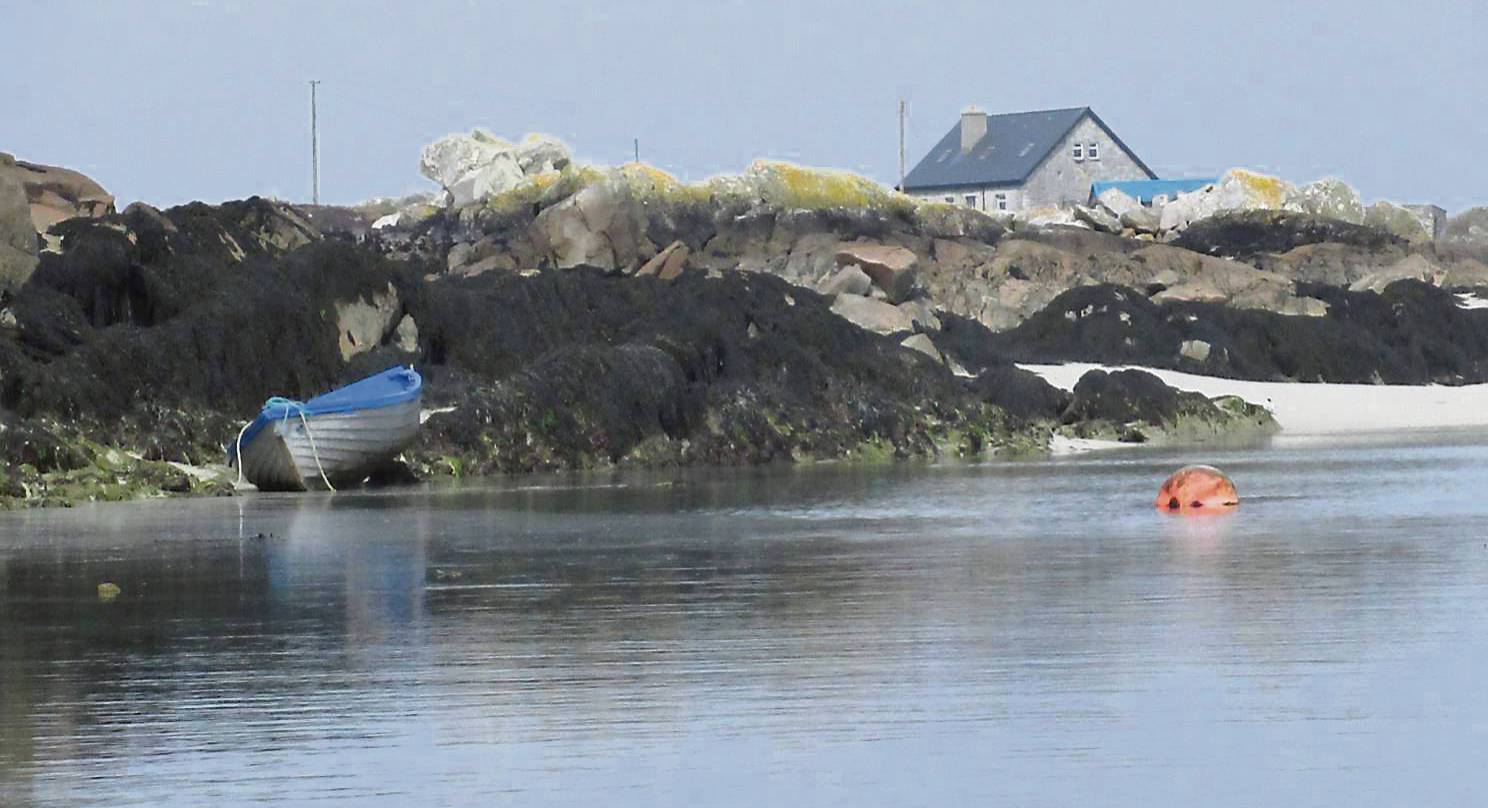
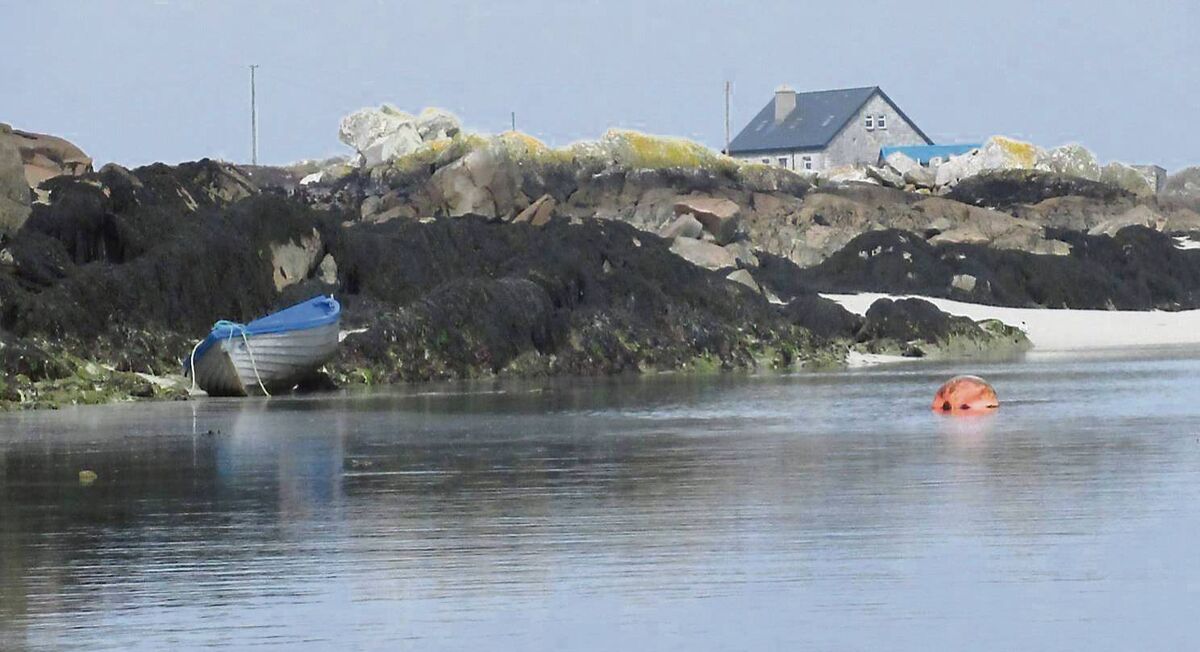
This 95-acre island in Co Galway is separated by a very narrow channel from the causewayed island of Furnace which is itself connected to the causewayed island of Lettermullan.
This entire area of interconnected islands in south Connemara is known as Ceantar na nOileán and behaves like a sequence of Russian dolls, where one island seems to disappear into the next.
Dinish is the most outlying of this group of islands at Casheen Bay, while across Kilkieran Bay myriad other islands await discovery. Due west lie many more islands, including the saintly retreat of MacDara’s Island.
It is possible to while away a few pleasant hours kayaking the channels which divide the islands hereabouts and explore the islands at your leisure. Dinish has a lattice of boreens which cling to the folds and contours of its gentle hills like a discarded silk handkerchief. Scattered about are the ruins of former dwellings which in some cases almost look good enough to be restored. The island even has its own lake which was patrolled on this visit by a pair of alert swans.
When the Irish Examiner landed recently on one of its two gorgeous beaches, a set of footprints wound mysteriously over the sand as if left by Daniel Defoe’s eponymous hero, Robinson Crusoe. Dinish is now unpopulated, like most of the other islands between Casheen Bay and Golam Head, but it once boasted a significant population of 75 people. The island possesses a few holiday homes — the source, presumably, of the footprints.
The population peaked at 75 in 1861 in 14 houses, indicating a comparatively low density per house. The numbers remained fairly static up to the turn of the 20th century, when they fell into decline. According to to local history group Oughterard Heritage, the 1901 Census recorded 12 houses listed in the townland of Dinish. All were Catholics. At the time, 56 people lived in Dinish (35 males and 21 females). There was a national school, five farm buildings and out offices which included cow houses and piggeries.
One extract indicates a typical family: “Pat Loftus aged 30 was head of the family; single. He lived with his cousins Bridget Feeny aged 56, a widow and John Feeny aged 10.
Pat was a farmer and John was a scholar; they could read and write. Bridget could not read. Pat, Bridget and John spoke Irish and English. The family were Roman Catholic. They lived in a 3rd class house with 2 rooms and 1 front window. This was a private dwelling.
Other names on the island included Audley, Loftus, McDonogh, and Larkin.
Daighinis was the original name in Irish of the island but that became shortened to Dinish of which there are many examples around the county.
However, its main claim to fame is artistic. Where other islands in the vicinity owe their reputation to great rowers (Inishbarra), production of poitín (Inisherk), or Golam as an island where Saint Colmcille visited, Dinish’s fame rests on a visit in 1905 by the playwright JM Synge and the artist Jack B Yeats. Why did they chose Dinish in particular when there were so many more islands that could have wielded more stories of the lives of the people? Their journey was part of an assignment by the Manchester Guardian looking at the Congested Districts of the west of Ireland and they also took in Gorumna Island and Carna. The newspaper was supporting relief work in the west and hired the writer and artist to depict life in the west for the readers.
Synge wrote a full article on his trip to Daighinis, as it was known at the time, and focused on the stories told to him by the boatman who brought him the short distance. The school had closed by the time the illustrious pair visited the island. They were informed that all the children on the island would one day go to America.
- About an hour’s drive west of Galway on the R336. At Costelloe take the R374.
- https://tuairisc.ie/synge-agus-yeats-i-gconamara-gan-ach-5-bliana-no-10-mbliana-fagtha-ag-an-ngaeilge-i-gconamara-i-1905/’ ; oughterardheritage.org


CONNECT WITH US TODAY



Be the first to know the latest news and updates